Status checked on October 6, 2026 plasticsurgery.org
Arm lift (brachioplasty) explained: who it suits after weight loss, incision options and scars, recovery timeline, complication rates from a meta-analysis, ASPS 2024 fees, insurance rules and alternatives. Not weight loss.
Fact-checked against FDA labels and official sources; not yet reviewed by a licensed clinician. This page is education, not medical advice. Talk to your doctor before starting, stopping or changing any treatment.
Key facts
- Type
- Cosmetic (not weight loss)
- Approach
- Surgical
- Sedation
- Intravenous sedation or general anesthesia (ASPS)
- Time
- Varies with technique and combined procedures
- Downtime
- 1-2 weeks
- Permanence
- Permanent
- Body areas
- Arms
- Performed by
- Plastic surgery
Key takeaways
- An arm lift removes sagging upper-arm skin and fat; ASPS says this kind of sagging cannot be corrected through exercise.[1]
- In a meta-analysis of 1,578 patients, the most common problems were abnormal scarring (9.9%), returning sagging (7.8%), wound separation (6.8%) and seroma (5.9%).[9]
- Arm lifts rose 21% to 26,088 in 2025, and 84% of ASPS surgeons reported GLP-1-related arm lift consults.[13]
- The 2024 ASPS surgeon's fee range was $6,000 to $10,500, before anesthesia and facility fees.[14]
- Some insurers cover excess-skin removal only with documented medical problems and a stable weight for at least six months.[11]
In short: An arm lift (brachioplasty) is surgery that removes sagging skin and fat from the underside of the upper arm and tightens the tissue underneath, usually through an incision on the inner or back of the arm from the armpit toward the elbow. It is the main option for loose upper-arm skin after major weight loss, which exercise cannot tighten. The trade-off is a long, permanent scar. Arm lifts rose 21% in the U.S. in 2025, and the 2024 ASPS surgeon’s fee range was $6,000 to $10,500. It is not weight loss.

This page explains who an arm lift is generally for, the incision options and scars, the operation, a recovery timeline, how often complications happen (from a meta-analysis of 29 studies and 1,578 patients), cost, when insurance may pay, and how it compares with liposuction and skin tightening. It is general information; InstaTuck does not sell or arrange surgery. Research it, talk with a board-certified plastic surgeon and get evaluated before deciding.
Arm lift at a glance
- 26,088arm lifts in the U.S. in 2025, up 21% from 2024ASPS 2025 Procedural Statistics
- 84%of ASPS surgeons had GLP-1-related arm lift consults in 2025ASPS 2025 survey
- $6,000-$10,5002024 surgeon's fee range (surgeon only)ASPS 2024 statistics
- 9.9%had abnormal scarring, the most common complication, in a meta-analysisAljerian et al., PRS 2022
Checked on October 6, 2026
What an arm lift does
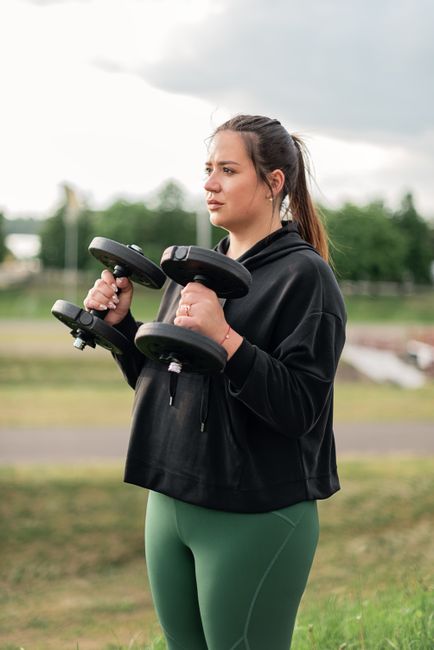
The American Society of Plastic Surgeons (ASPS) describes three things an arm lift does: it reduces excess sagging skin that droops downward, tightens and smooths the supportive tissue that shapes the upper arm, and reduces localized pockets of fat in the area. Weight changes, aging and heredity can leave the upper arms drooping, which ASPS says cannot be corrected through exercise. Strength training builds the muscle underneath and is worth doing, but it does not shrink stretched skin (see strength training).
Who it is generally for, and when
ASPS lists general candidates as adults with significant upper-arm skin laxity, whose weight is relatively stable and who are not significantly overweight, who are healthy without conditions that impair healing or raise surgical risk, who do not smoke, and who have realistic expectations. In an ASPS article, one member surgeon described the right time as generally after a reasonably stable weight for at least 12 to 18 months, warning that losing more weight after surgery can leave more loose skin. That timing matters for people still losing weight on GLP-1 medications: in the ASPS 2025 survey, 84% of surgeons reported arm lift consultation requests related to GLP-1 use. Our loose skin after weight loss guide and the arms page explain the options for this area.
Incisions and scars
ASPS explains that the length and pattern of the incision depend on how much skin is removed and where. Incisions are generally placed on the inside or the back of the arm and may run from the armpit to just above the elbow; more limited incisions are possible when there is less excess skin. In an ASPS article, a member surgeon noted that a traditional arm lift leaves a scar from the armpit to the elbow, and that mini arm lifts with a scar in the armpit leave much less scarring but are less effective at contouring. Excess fat may be removed directly or with liposuction, and the deeper tissue is tightened with internal sutures before the skin is closed.
| Approach | Scar | Best suited to |
|---|---|---|
| Traditional (full) arm lift | Inner or back of the arm, armpit to above the elbow | Significant hanging skin, for example after major weight loss |
| Limited or mini arm lift | In the armpit | Smaller amount of loose skin near the armpit; less contouring |
| Liposuction alone | Small puncture scars | Extra fat with firm, elastic skin; does not remove loose skin |
The operation
ASPS describes four steps: anesthesia (intravenous sedation or general anesthesia), the incision, closing the incisions with absorbable sutures or stitches removed within one to two weeks, and the result, which is apparent almost immediately, though swelling and bruising hide it at first. A small drain may be placed, and the arms are usually wrapped in an elastic bandage or compression garment.
Recovery timeline
Arm lift recovery (ASPS and ASPS member surgeons)
- First daysDressings, compression on the arms, possibly a drain; limit arm movement; arrange help at home.
- Weeks 1-2Stitches that need removal come out within one to two weeks; most people return to work within about two weeks, longer for physical jobs.
- First few weeksLift no more than about 10 pounds with the arms, as one ASPS member surgeon advises; no heavy lifting or intense exercise.
- Around 6 weeksIncisions approach full strength, so activity can be increased gradually as your surgeon allows.
- MonthsSwelling settles and scars slowly fade.
Ask your surgeon the ASPS recovery questions: where you go after surgery, what medicines you will take, when dressings, stitches and drains come out, when you can resume normal activity and exercise, and when your follow-up visits are. Your own surgeon’s instructions take priority over any general timeline.
Risks and complication rates
ASPS lists these arm lift risks: anesthesia risks, bleeding, damage to deeper structures such as nerves, blood vessels and muscles, fat necrosis, fluid collection (seroma), infection, numbness or other changes in skin sensation, pain that may persist, poor wound healing, the possible need for revision, sutures that surface through the skin and cause irritation, and unsightly scarring.
A 2022 systematic review and meta-analysis in Plastic and Reconstructive Surgery pooled 29 observational studies with 1,578 patients. The most common problem was abnormal scarring (9.9%), followed by recurrence of sagging (7.8%), wound separation (6.8%) and seroma (5.9%). Infection occurred in 3.6%, nerve-related complications in 2.5%, lymphedema or lymphocele in 2.5%, skin necrosis or delayed healing in 2.3% and hematoma in 2.1%. About 7.5% had a further operation for appearance reasons and 1.6% for non-cosmetic reasons. Incisions placed on the inner (medial) arm were linked with more complications, while adding liposuction lowered some.
Insurance
ASPS says most health plans do not cover an arm lift or its complications. Some insurers may cover removal of excess skin from the arms when it causes a documented medical problem. For example, Cigna’s redundant skin surgery policy (0470, effective September 15, 2026), where the plan includes the benefit, requires all of the following: a functional deficit from severe deformity, surgery expected to improve it, photographs, interference with daily activities, and persistent rashes, skin infection or ulcers despite at least three months of treatment. After significant weight loss, weight must have been stable for at least six months, and at least 18 months must have passed since bariatric surgery; for weight loss with GLP-1 medicines, a stable weight on or after treatment. Surgery mainly to improve appearance is considered cosmetic. Rules differ by plan, so ask yours in writing; our insurance hub explains how.
Alternatives
For extra fat with firm skin, liposuction may be enough. For mild laxity, non-surgical skin tightening can give a modest change; the Ulthera device’s FDA clearance includes improving the appearance of skin laxity on the front and back of the arms. When loose skin continues onto the chest and back, an upper body lift may be planned, and arm lifts are often combined with a breast lift; combining operations raises risk, so ask how your surgeon stages them.
Choosing a surgeon
An ASPS member surgeon in the arm lift article recommends a plastic surgeon certified by the American Board of Plastic Surgery. Ask where your scar will be and how long, whether liposuction will be added, how many arm lifts they perform, how they reduce the risk of scarring, seroma and nerve injury, and the cost of a revision. Our guide to finding a plastic surgeon shows how to check credentials, and the body contouring hub compares every option.
Contouring is not weight loss
This treatment changes the shape of a specific area. It does not lead to meaningful overall weight loss or improve metabolic health. Every proven approach to losing weight
Who explores it
ASPS: adults with significant upper-arm skin laxity, relatively stable weight and not significantly overweight, healthy, nonsmokers, with realistic expectations.
How it works
Removes excess skin and fat from the underside of the upper arm and tightens the supporting tissue with internal sutures, through an incision on the inner or back of the arm (ASPS).
Typical results
Smoother, tighter upper-arm contour apparent almost immediately once swelling settles; permanent scar from the armpit toward the elbow with the traditional technique (ASPS).
Ranges from published studies; individual results vary.
Recovery
Stitches out within 1 to 2 weeks (ASPS); most return to work within about 2 weeks; lift no more than about 10 pounds for the first few weeks; incisions near full strength around 6 weeks (ASPS member surgeons).
Risks
- Abnormal scarring 9.9%, recurrence of sagging 7.8%, wound separation 6.8%, seroma 5.9% (meta-analysis of 1,578 patients)
- Infection 3.6%, nerve complications 2.5%, lymphedema or lymphocele 2.5%, hematoma 2.1%
- Reoperation for appearance 7.5%
- Sutures surfacing through the skin, persistent pain, numbness (ASPS)
Cost and insurance
| Price | Amount | Basis | Checked on |
|---|---|---|---|
| Typical total (national data) | 6,000-10,500 USD | surgeon's fee only, 2024 ASPS range | October 6, 2026 |
| Typical total (national data) | 6,192 USD | average surgeon's fee, 2023 ASPS | October 6, 2026 |
Prices change often and depend on pharmacy, plan and location. Insurance can change what you pay. Every price shows the date we checked it.
ASPS: most plans do not cover arm lifts. Some insurers (e.g. Cigna policy 0470, effective 2026-09-15) may cover excess-skin removal with a documented functional deficit, refractory skin problems for 3+ months, and a stable weight for 6+ months (18+ months after bariatric surgery).
Insurance information checked on October 6, 2026.
Advantages and limitations
Advantages
- Removes loose upper-arm skin that exercise cannot tighten
- Result visible almost immediately, long-lasting at a stable weight
- Can be combined with liposuction or other lifts
Limitations
- Long, visible scar with the traditional technique
- Scarring, wound separation and seroma are fairly common
- Usually self-pay; anesthesia and facility fees are extra
- Not weight loss; further weight loss can bring back loose skin
Choosing a provider
Check board certification, where the procedure is done (accredited facility), how many of these procedures the provider performs, and what follow-up care is included. Find a Board-Certified Plastic Surgeon for Body Contouring
Alternatives
 CosmeticSurgicalLiposuction: what it removes, what it does notSurgical · 1-2 weeks
 CosmeticFDA cleared deviceNon-invasiveSkin Tightening: radiofrequency, ultrasound and surgery comparedDevice, non-invasive · None
 CosmeticSurgicalBody Lift After Massive Weight Loss: lower and upper body liftsSurgical · 2+ weeks
 CosmeticSurgicalBreast Lift After Weight LossSurgical · 1-2 weeks
Related procedures



Research mentioning it

Related guides
 Body Contouring: fat reduction and shaping, surgical and non-surgicalBody contouring explained: non-invasive fat reduction vs surgery, what CoolSculpting, Kybella and liposuction can and cannot…
 Loose Skin After Weight Loss: what helps, from exercise to surgeryLoose skin after weight loss: why it happens, what affects it, options by body area, non-invasive…
 Find a Board-Certified Plastic Surgeon for Body ContouringHow to find a board-certified plastic surgeon for body contouring after weight loss: ABPS checks, facility…
Tools for this topic

Questions to ask a professional
- Do I need a full arm lift, a limited lift or liposuction alone?
- Where will my scar be, how long, and how do you help it heal well?
- Is my weight stable enough, and what if I lose more weight later?
- How do you reduce the risk of seroma, nerve injury and wound separation?
- Would you combine this with another procedure, and how does that change my risk?
- What is the all-inclusive cost, and could any part be covered by my insurance?
Frequently asked questions
Can exercise fix loose upper-arm skin?
Exercise strengthens the muscle underneath, but ASPS says the drooping, sagging appearance from loose skin cannot be corrected through exercise. Removing the skin requires surgery.
How big is the arm lift scar?
With a traditional arm lift, the scar usually runs on the inner or back of the arm from the armpit to just above the elbow. A limited lift places the scar in the armpit but contours less.
How long is recovery after an arm lift?
Stitches come out within one to two weeks, most people return to desk work within about two weeks, and heavy lifting waits several weeks; incisions reach near-full strength around six weeks.
When should I have an arm lift after weight loss?
ASPS lists a relatively stable weight among candidate criteria, and one ASPS member surgeon suggests a stable weight for at least 12 to 18 months. Losing more weight afterwards can leave more loose skin.
What are the most common complications?
In a meta-analysis of 1,578 patients: abnormal scarring 9.9%, returning sagging 7.8%, wound separation 6.8%, seroma 5.9%, infection 3.6% and hematoma 2.1%.
How much does an arm lift cost?
ASPS reported a 2024 surgeon's fee range of $6,000 to $10,500 and a 2023 average of $6,192. Anesthesia, the facility and garments are extra.
Will insurance pay for an arm lift?
Usually not. Some plans may cover excess-skin removal when it causes documented problems such as persistent rashes or infections despite three months of treatment and you meet weight-stability rules. Ask your plan in writing.
Is liposuction enough for flabby arms?
Liposuction removes fat but does not remove loose skin. ASPS notes it works best when skin is firm and elastic; with significant laxity, an arm lift is the usual option.
References
- Arm Lift (Brachioplasty). American Society of Plastic Surgeons. (accessed October 6, 2026) Society statement
- Arm Lift Candidates. American Society of Plastic Surgeons. (accessed October 6, 2026) Society statement
- Arm Lift Procedure Steps. American Society of Plastic Surgeons. (accessed October 6, 2026) Society statement
- Arm Lift Recovery. American Society of Plastic Surgeons. (accessed October 6, 2026) Society statement
- Arm Lift Risks and Safety. American Society of Plastic Surgeons. (accessed October 6, 2026) Society statement
- Arm lift cost. American Society of Plastic Surgeons. (accessed October 6, 2026) Society statement
- Bat wings begone: How an arm lift can help you look your best. American Society of Plastic Surgeons, 2024. (accessed October 6, 2026) Society statement
- Body Contouring After Weight Loss. American Society of Plastic Surgeons. (accessed October 6, 2026) Society statement
- Aljerian A, Abi-Rafeh J, Ramirez-GarciaLuna J, Hemmerling T, Gilardino MS. Complications in brachioplasty: a systematic review and meta-analysis. Plastic and Reconstructive Surgery, 2022. doi:10.1097/PRS.0000000000008652 · PMID 34936607 (accessed October 6, 2026) Meta-analysis
- Marouf A, Mortada H. Complications of body contouring surgery in postbariatric patients: a systematic review and meta-analysis. Aesthetic Plastic Surgery, 2021. doi:10.1007/s00266-021-02315-2 · PMID 34018015 (accessed October 6, 2026) Meta-analysis
- Medical Coverage Policy 0470: Redundant Skin Surgery (effective 2026-09-15). Cigna Healthcare. (accessed October 6, 2026) Other
- 510(k) K260618: Ulthera System, indications for use. U.S. Food and Drug Administration, 2026. (accessed October 6, 2026) Government page
- 2025 ASPS Procedural Statistics Release. American Society of Plastic Surgeons, 2026. (accessed October 7, 2026) Society statement
- 2024 ASPS Procedural Statistics Release (archived copy captured 2026-01-02). American Society of Plastic Surgeons, 2025. (accessed October 7, 2026) Society statement
- 2023 ASPS Procedural Statistics Release (archived copy). American Society of Plastic Surgeons, 2024. (accessed October 7, 2026) Society statement
Facts checked on October 6, 2026
Educational information, not medical advice. Talk with a qualified healthcare professional about your own situation. In an emergency call 911.