
Status checked on October 6, 2026 accessdata.fda.gov
CoolSculpting and cryolipolysis explained: exact FDA clearance and BMI limits, how fat freezing works, sessions, how much fat it removes, FDA-listed side effects, PAH risk estimates, cost and alternatives. Not weight loss.
Fact-checked against FDA labels and official sources; not yet reviewed by a licensed clinician. This page is education, not medical advice. Talk to your doctor before starting, stopping or changing any treatment.
Key facts
- Type
- Cosmetic (not weight loss)
- Approach
- Device, non-invasive
- Sedation
- None (ASPS)
- Time
- About an hour per applicator cycle (ASPS); one or more sessions
- Downtime
- None
- Permanence
- Permanent
- Body areas
- Abdomen, Arms, Back, Buttocks, Neck and jawline, Thighs, Waist
- Device status
- ZELTIQ dermal cooling device (De Novo) · De Novo
- Performed by
- Dermatology, Plastic surgery
Key takeaways
- CoolSculpting is FDA cleared to affect the appearance of visible fat bulges in named areas, at a BMI of 30 or less for most body areas.[5]
- The FDA says non-invasive body contouring does not result in weight loss or treat obesity.[4]
- ASPS reports an average fat reduction of about 20% in the treated bulge, seen over several months.[1]
- A 2025 meta-analysis estimated PAH in about 0.22% of patients (1 in 455), far higher than the first 2014 estimate.[9]
- Non-surgical fat reduction averaged $1,157 per procedure in 2023, and most plans need more than one.[13]
In short: Cryolipolysis, best known by the brand CoolSculpting, uses controlled cooling through a skin applicator to damage fat cells in a visible bulge; the body then clears them over the following months. The FDA has cleared CoolSculpting to affect the appearance of visible fat bulges in specific areas, in most areas for people with a BMI of 30 or less. The American Society of Plastic Surgeons (ASPS) reports an average fat reduction of about 20% in the treated bulge. It is not weight loss, results are gradual, and a rare complication called paradoxical adipose hyperplasia (PAH) makes the area grow larger instead.

This page covers the FDA clearance in detail, how the treatment works, who it is and is not for, what a session is like, how much fat it removes according to studies, every side effect the FDA lists, what we know about PAH (including newer estimates that are much higher than early ones), cost and how it compares with liposuction. It is general information; InstaTuck does not sell treatments. Research the device and the provider, talk to a licensed doctor and get evaluated in person first.
Cryolipolysis at a glance
- About 20%average fat reduction in the treated bulgeASPS
- BMI 30 or lessfor most cleared body areas (chin area up to 46.2)FDA 510(k) K233732
- 0.22%pooled PAH incidence across 28 studies (about 1 in 455 patients)Mah et al., 2025
- $1,1572023 average fee per non-surgical fat reduction procedure (all devices)ASPS 2023 statistics
Checked on October 6, 2026
FDA status: what CoolSculpting is cleared for
CoolSculpting is a medical device that reached the market through the FDA’s 510(k) clearance pathway; the FDA first granted a De Novo request for the ZELTIQ dermal cooling device on August 24, 2010 (DEN090002), and has cleared many updates since. The most recent clearance we found, for the CoolSculpting Elite System on September 12, 2024 (K233732), is indicated for cold-assisted lipolysis (breakdown of fat) of the upper arm, bra fat, back fat, banana roll (under the buttock), thigh, abdomen and flank in people with a BMI of 30 or less, and of the submental (under the chin) and submandibular (along the jaw) areas in people with a BMI up to 46.2. It is “intended to affect the appearance of visible fat bulges” in those areas. Clearance means the FDA found the device substantially equivalent to a legally marketed device for those uses; it is not FDA approval as a drug would be, and it is not a weight-loss indication.
The FDA’s page on non-invasive body contouring adds that cryolipolysis is for prescription use only, that safety for home or over-the-counter use has not been established, and that no non-invasive contouring device is FDA cleared or approved for the breasts. Similar-sounding “fat freezing” gadgets sold for home use are not the same as the cleared clinic device. Other cleared non-invasive fat-reduction devices use heat instead of cold, such as the SculpSure laser (K182741), whose clearance covers the abdomen, flanks, back and thighs at a BMI of 30 or less.
How it works
ASPS explains that fat cells are particularly sensitive to cold, so controlled cooling injures them while the skin and other structures are spared. The FDA says the body clears the released fat over about 2 to 3 months; ASPS describes the injured fat cells being eliminated over 4 to 6 months, during which the bulge slowly shrinks. Either way, this is a gradual change in one area, not a change in total body weight.
Who it is for, and who should not have it
ASPS says cryolipolysis is aimed at people who want to reduce a localized fat bulge that has persisted despite diet and exercise, and that people with loose skin or poor tone may not be suitable. The FDA lists conditions in which it should not be used: Raynaud’s disease, cold urticaria (hives from cold), cryoglobulinemia, cold agglutinin disease, paroxysmal cold hemoglobinuria and poor circulation in the area. ASPS adds that people who are pregnant or breastfeeding should not have any non-surgical fat-reduction treatment. The FDA also asks you to tell the provider if you take blood thinners, have a bleeding or clotting disorder, uncontrolled diabetes, an active skin infection, an autoimmune disease, keloids, a hernia or past surgery in the area, or an implanted device.
What a session is like
A cryolipolysis treatment, step by step (ASPS and FDA)
- AssessmentThe provider measures the bulge and picks an applicator of the right size and curve; the area is marked.
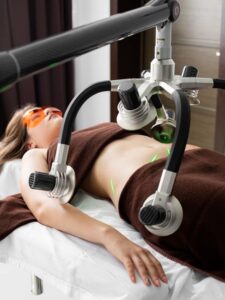
- Applicator onA gel pad protects the skin; the bulge is drawn into the applicator by vacuum. The pull can be uncomfortable for a few minutes.
- CoolingThe area goes numb as it cools; ASPS describes about an hour per cycle with no anesthesia.
- AfterwardsThe applicator is removed and the area is massaged; no activity restrictions, but soreness like after a workout is common.
- Weeks to monthsThe bulge shrinks gradually: FDA says fat is cleared over 2 to 3 months, ASPS says 4 to 6 months.
- ReviewSome people choose more than one area, or a repeat treatment of the same area.
How much fat it removes
ASPS reports an average fat reduction of about 20% in the treated bulge. A 2015 review of the published studies in Plastic and Reconstructive Surgery found reductions in the thickness of the fat layer of 14.67% to 28.5% when measured with calipers and 10.3% to 25.5% when measured with ultrasound. Put simply, a successful treatment trims part of a bulge; it does not remove it the way surgery can. Not everyone responds, and the FDA notes that results may be temporary and that several treatments are often needed.
| Item | Low | High |
|---|---|---|
| Measured with calipers | 14.67% | 28.50% |
| Measured with ultrasound | 10.30% | 25.50% |
Ranges of study results by measurement method. ASPS cites an average of about 20%.
Source: Ingargiola MJ et al., Plastic and Reconstructive Surgery 2015 (review) (checked on October 6, 2026)
Side effects the FDA lists
- Common and short-lived: redness, bruising, swelling, pain and discoloration.
- Less common, sometimes long-lasting: numbness that can last weeks, nodules (lumps you can feel), freeze burns of the skin that can be severe, nerve damage that changes the position of the lip or tongue when the jawline is treated, and a feeling of fullness in the throat.
- Serious, may need surgery: paradoxical adipose hyperplasia (PAH) and hernias.
How long do the common effects last? In a 2025 prospective study from clinics in Japan, the share of patients with any side effect fell from 71.6% immediately after treatment to 1.3% at three months; pain had disappeared within a month and numbness lasted about three months. That study saw no PAH, but it followed patients for only three months, which is too short to detect it.
Paradoxical adipose hyperplasia (PAH): the risk to understand
PAH is an overgrowth of fat in the treated area that appears weeks to months after treatment, leaving a firm, well-defined bulge larger than before. It does not go away on its own in the cases described, and correcting it usually means liposuction, a tummy tuck or both. ASPS says it occurs in less than 1% of patients, is three times more likely in men than women and is seen more often in people of Hispanic or Latino descent.
Estimates have risen over time. When PAH was first described in 2014, the incidence was given as 0.0051%, about 1 in 20,000. A single academic center later calculated 0.67% among its own patients. A 2025 systematic review and meta-analysis of 28 studies and 13,078 patients found a pooled incidence of 0.22%, about 1 in 455, and concluded that PAH appears more common than manufacturer reports; the authors rated the evidence low certainty and noted that only 4 studies followed patients for 16 weeks or more.
Cost
ASPS reported an average fee of $1,157 per procedure in 2023 for non-surgical fat reduction, a category that includes CoolSculpting and other devices such as Liposonix, Emsculpt, Vanquish, Zerona and Kybella (down from $1,226 in 2022). ASPS says this is only part of the total; most people need more than one applicator or session, so ask for a written price for the whole plan, including any repeat. ASPS did not publish fees for non-surgical treatments in its 2024 or 2025 reports. Cosmetic fat reduction is not covered by insurance. See the costs hub.
| Item | Value |
|---|---|
| 2022 | 682,932 |
| 2023 | 745,967 |
| 2024 | 447,581 |
ASPS reported a 40% drop in 2024. The 2025 report lists only the top five minimally invasive treatments, without counts.
Source: ASPS 2023 and 2024 Procedural Statistics Releases (CoolSculpting, Liposonix, Emsculpt, Vanquish, Zerona, Kybella) (checked on October 6, 2026)
Cryolipolysis compared with other options
| Option | Type | What it does | Typical change |
|---|---|---|---|
| Cryolipolysis | Non-invasive device, FDA cleared | Cold damages fat cells in a bulge | About 20% of the bulge (ASPS) |
| Liposuction | Surgery | Suctions fat out | Larger, immediate (seen as swelling settles) |
| Kybella | Prescription injection, FDA approved | Destroys fat cells under the chin only | Grade-based in trials |
| Muscle stimulation | Non-invasive device, cleared for muscle toning | Makes muscles contract | Tone; small studies |
ASPS says none of the non-surgical options replaces liposuction. They suit people who cannot or do not want surgery and who have a small, pinchable bulge with good skin tone. Our full comparison is liposuction vs fat freezing. If the issue is loose skin, look at skin tightening or loose skin instead; for under-chin fat, see double chin; for belly fat linked to health, see belly fat.
Choosing a provider
The FDA calls body contouring a medical procedure with risks. Ask who performs the treatment and which physician supervises it, which device and applicator they use (and whether it is the FDA-cleared clinic system), how many treatments they have done, how many cases of PAH or burns they have seen and how they would handle one, whether disposable parts are new for each session, and the full price. A board-certified plastic surgeon or dermatologist can also tell you whether surgery would serve your goal better. Our plastic surgeon guide explains how to check credentials, and the body contouring hub lists every option.
Contouring is not weight loss
This treatment changes the shape of a specific area. It does not lead to meaningful overall weight loss or improve metabolic health. Every proven approach to losing weight
Who explores it
FDA clearance (K233732): visible fat bulges of the upper arm, bra fat, back fat, banana roll, thigh, abdomen and flank at BMI 30 or less; submental and submandibular areas at BMI up to 46.2. ASPS: localized bulges despite diet and exercise; not for loose skin, cold-related conditions, pregnancy or breastfeeding.
How it works
Controlled cooling through a vacuum applicator injures fat cells, which are more sensitive to cold than skin; the body clears them over about 2 to 3 months (FDA) or 4 to 6 months (ASPS).
Typical results
ASPS: average fat reduction of about 20% in the treated bulge. 2015 review: fat-layer reduction 14.67-28.5% (calipers) and 10.3-25.5% (ultrasound).
Ranges from published studies; individual results vary.
Recovery
No activity restrictions (ASPS). Redness, swelling, bruising and soreness are common; numbness can last weeks. In one 2025 study, side effects fell from 71.6% right after treatment to 1.3% at 3 months.
Risks
- Redness, bruising, swelling, pain, discoloration (FDA)
- Numbness lasting weeks, nodules, freeze burns, nerve damage affecting lip or tongue position when treating the jawline (FDA)
- Paradoxical adipose hyperplasia: ASPS less than 1%; pooled estimate 0.22% (about 1 in 455) in a 2025 meta-analysis; may need surgery
- Hernias (FDA)
- Surface irregularities, asymmetry, or no visible result (ASPS)
FDA authorization
| Device | Pathway | Number | Date |
|---|---|---|---|
| ZELTIQ dermal cooling device (De Novo) | De Novo | DEN090002 | August 24, 2010 |
| CoolSculpting Elite System | 510(k) clearance | K233732 | September 12, 2024 |
Clearance (510(k)) means the FDA found a device similar to one already on the market; it is not the same as approval.
Cost and insurance
| Price | Amount | Basis | Checked on |
|---|---|---|---|
| Typical total (national data) | 1,157 USD | average fee per non-surgical fat reduction procedure (all devices), 2023 ASPS | October 6, 2026 |
Prices change often and depend on pharmacy, plan and location. Insurance can change what you pay. Every price shows the date we checked it.
Cosmetic; not covered by insurance. Most people need more than one applicator or session, so ask for a written price for the whole plan.
Insurance information checked on October 6, 2026.
Advantages and limitations
Advantages
- No incisions or anesthesia; no activity restrictions afterwards
- FDA-cleared device for specific body areas
- Gradual, natural-looking change in a small bulge
Limitations
- Modest change (about 20% of a bulge); several sessions often needed
- Results take 2 to 6 months to appear; not everyone responds
- Rare PAH can enlarge the area and may need surgery
- Not for loose skin, larger fat volumes or weight loss
Choosing a provider
Check board certification, where the procedure is done (accredited facility), how many of these procedures the provider performs, and what follow-up care is included. Find a Board-Certified Plastic Surgeon for Body Contouring
Alternatives
 CosmeticSurgicalLiposuction: what it removes, what it does notSurgical · 1-2 weeks
 CosmeticFDA approved for another useInjectableKybella: injections for under-chin fatInjectable · 1-3 days
 CosmeticFDA cleared deviceNon-invasiveEmsculpt and Muscle-Stimulation Body ContouringDevice, non-invasive · None
 CosmeticFDA cleared deviceNon-invasiveSkin Tightening: radiofrequency, ultrasound and surgery comparedDevice, non-invasive · None
Comparisons
Research mentioning it
 Can You Spot-Reduce Fat? What Studies Say About Targeted Fat LossCan crunches burn belly fat? What the studies, including a 2022 meta-analysis of 13 trials, say…
 From Corsets to CoolSculpting: A History of Body ShapingA history of body shaping from 1760s corsets, crinolines and rubber girdles to liposuction (1975-1977), fat…
 Non-Surgical Tummy Tuck: What These Treatments Can and Can’t DoNon-surgical tummy tuck claims checked against the FDA, ASPS and AAD: what fat freezing, skin tightening…
Related guides
 Body Contouring: fat reduction and shaping, surgical and non-surgicalBody contouring explained: non-invasive fat reduction vs surgery, what CoolSculpting, Kybella and liposuction can and cannot…
 Find a Board-Certified Plastic Surgeon for Body ContouringHow to find a board-certified plastic surgeon for body contouring after weight loss: ABPS checks, facility…
Tools for this topic

Questions to ask a professional
- Is my bulge pinchable fat that suits cryolipolysis, or loose skin or deeper fat?
- Which device and applicator will you use, and is it the FDA-cleared clinic system?
- How many sessions do you expect, and what is the total written price?
- How many cases of PAH or freeze burns have you seen, and how were they treated?
- Do I have any condition on the FDA list of reasons not to have it?
Frequently asked questions
Does CoolSculpting help you lose weight?
No. The FDA says non-invasive body contouring will not result in weight loss or improve health. It reduces part of a small fat bulge in a treated area.
How much fat does CoolSculpting remove?
ASPS reports an average reduction of about 20% in the treated bulge. A 2015 review found fat-layer reductions of roughly 10% to 28% across studies, depending on how they were measured.
When will I see results?
Gradually. The FDA says the body clears the damaged fat over about 2 to 3 months; ASPS describes 4 to 6 months.
Is CoolSculpting FDA approved?
It is FDA cleared through the 510(k) pathway, most recently in September 2024 (K233732), to affect the appearance of visible fat bulges in specific areas. That is a device clearance, not a weight-loss approval.
What is paradoxical adipose hyperplasia?
A rare complication in which the treated area grows larger and firmer weeks to months later. ASPS says it occurs in less than 1% of patients and is more common in men; a 2025 meta-analysis estimated 0.22%. It usually needs surgery to correct.
Who should not have cryolipolysis?
The FDA lists Raynaud's disease, cold urticaria, cryoglobulinemia, cold agglutinin disease, paroxysmal cold hemoglobinuria and poor circulation. ASPS adds pregnancy and breastfeeding, and says loose skin may not respond well.
Does it hurt?
The vacuum pull can be uncomfortable for a few minutes until the area numbs. Afterwards, soreness, redness, swelling and bruising are common, and numbness can last for weeks.
How much does CoolSculpting cost?
ASPS reported an average of $1,157 per non-surgical fat reduction procedure in 2023 across devices. Most plans need several applicators or sessions, so ask for a written total.
References
- Cryolipolysis. American Society of Plastic Surgeons. (accessed October 7, 2026) Society statement
- Nonsurgical Fat Reduction. American Society of Plastic Surgeons. (accessed October 6, 2026) Society statement
- Nonsurgical fat reduction cost. American Society of Plastic Surgeons. (accessed October 6, 2026) Society statement
- Non-Invasive Body Contouring Technologies (content current as of 2025-10-15). U.S. Food and Drug Administration. (accessed October 7, 2026) Government page
- 510(k) K233732: CoolSculpting Elite system (indications for use). U.S. Food and Drug Administration, 2024. (accessed October 7, 2026) Government page
- De Novo DEN090002: ZELTIQ Aesthetics dermal cooling device. U.S. Food and Drug Administration, 2010. (accessed October 7, 2026) Government page
- 510(k) K182741: Cynosure SculpSure, indications for use. U.S. Food and Drug Administration, 2019. (accessed October 6, 2026) Government page
- Ingargiola MJ, Motakef S, Chung MT, Vasconez HC, Sasaki GH. Cryolipolysis for fat reduction and body contouring: safety and efficacy of current treatment paradigms. Plastic and Reconstructive Surgery, 2015. doi:10.1097/PRS.0000000000001236 · PMID 26017594 (accessed October 6, 2026) Review
- Mah AE, Razeghi P, Li C, et al.. Incidence of paradoxical adipose hyperplasia after cryolipolysis: a systematic review and meta-analysis. Aesthetic Surgery Journal Open Forum, 2025. doi:10.1093/asjof/ojaf142 · PMID 41322038 (accessed October 7, 2026) Meta-analysis
- Jalian HR, Avram MM, Garibyan L, Mihm MC, Anderson RR. Paradoxical adipose hyperplasia after cryolipolysis. JAMA Dermatology, 2014. doi:10.1001/jamadermatol.2013.8071 · PMID 24382640 (accessed October 6, 2026) Other
- Cox EA, Nichols DS, Riklan JE, et al.. Characteristics and treatment of patients diagnosed with paradoxical adipose hyperplasia after cryolipolysis: a case series and scoping review. Aesthetic Surgery Journal, 2022. doi:10.1093/asj/sjac219 · PMID 35961054 (accessed October 6, 2026) Review
- Nishikawa A, Aikawa Y, Kono T. Adverse events associated with cryolipolysis treatment for body contouring: a prospective observational study with 3-month follow-up. Plastic and Reconstructive Surgery, 2026. doi:10.1097/PRS.0000000000012406 · PMID 40875252 (accessed October 6, 2026) Other
- 2023 ASPS Procedural Statistics Release (archived copy). American Society of Plastic Surgeons, 2024. (accessed October 7, 2026) Society statement
- 2024 ASPS Procedural Statistics Release (archived copy captured 2026-01-02). American Society of Plastic Surgeons, 2025. (accessed October 7, 2026) Society statement
Facts checked on October 6, 2026
Educational information, not medical advice. Talk with a qualified healthcare professional about your own situation. In an emergency call 911.