The Mediterranean diet for weight loss: what to eat, what two big trials show for weight and heart health, difficulty, pros and cons, and a 7-day starter week.
Key facts
- Evidence
- High
- Difficulty
- Easy
- Sustainability
- Easier to sustain
- Goals
- Improve metabolic health, Lose a little weight, Maintain weight loss
Key takeaways
- In a 2-year trial of 322 adults, people lost 4.4 kg on average on a Mediterranean diet vs 2.9 kg on a low-fat diet.[1]
- Without eating less, a Mediterranean diet changed weight very little over about 5 years: portions still matter.[3]
- In PREDIMED, Mediterranean diets with olive oil or nuts had fewer heart attacks, strokes and cardiovascular deaths than a reduced-fat diet.[2]
- Healthy diets with different labels tend to give similar weight loss, so the one you can keep is the one that works.[4]
In short: The Mediterranean diet is a way of eating built on vegetables, fruits, beans, whole grains, nuts, fish and olive oil, with less red meat and fewer sweets. It is one of the best-studied eating patterns for heart health, and when it is combined with eating a bit less, it supports weight loss about as well as other healthy diets. Its biggest advantage is that many people find it easy and enjoyable to keep up.
This page explains what the Mediterranean diet is, what the research shows for weight and health, what to eat, how hard it is to follow and a simple starter week. It is general information, not a personal plan; if you have a health condition, a registered dietitian can help you adapt it. To see how it compares with other approaches, visit our diets hub.
What the Mediterranean diet is
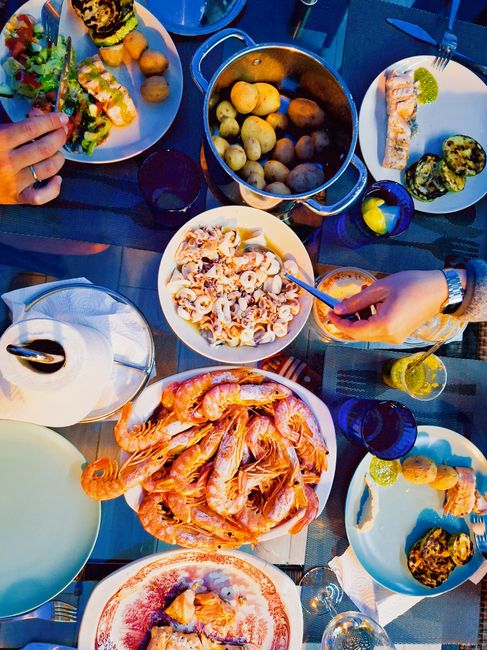
The Mediterranean diet is not a branded plan with rules to buy. It describes the traditional way of eating in countries around the Mediterranean Sea: meals built mostly from plants, olive oil as the main fat, fish and seafood a few times a week, moderate amounts of dairy such as yogurt and cheese, and red meat and sweets as occasional foods. Meals are often shared and unhurried, which is part of its appeal.
Because it is a pattern rather than a calorie formula, the Mediterranean diet does not cause weight loss by itself. Weight comes off when the overall amount you eat is a little lower than what your body uses, the calorie deficit every working diet creates. The Mediterranean pattern makes that easier for many people because it is high in fiber and filling foods, and it does not ban any food group.
The approach: how it works day to day
- Plants fill most of the plate. Vegetables at lunch and dinner, fruit as a snack or dessert, and beans, lentils or chickpeas several times a week.
- Olive oil is the main fat. It replaces butter and most other spreads. It is calorie-dense, so if weight loss is the goal, measure it for a while rather than pouring freely.
- Fish and seafood a few times a week, poultry and eggs in moderate amounts, red and processed meat only now and then.
- Whole grains instead of refined ones, such as whole-wheat bread, bulgur, farro, oats or brown rice.
- A small handful of nuts most days, and yogurt or cheese in modest portions.
- Water as the default drink. Traditional versions include wine with meals, but alcohol adds calories and is not needed for the pattern’s benefits.
What the evidence shows
For weight loss. In the two-year DIRECT trial, published in the New England Journal of Medicine in 2008, 322 adults with obesity followed a low-fat, a Mediterranean or a low-carbohydrate diet. All three groups lost weight: on average 2.9 kg (about 6 pounds) on low-fat, 4.4 kg (about 10 pounds) on Mediterranean and 4.7 kg (about 10 pounds) on low-carbohydrate, and the Mediterranean group had the most favorable effect on blood sugar control. More than 8 in 10 participants were still following their diet at two years, a sign that this kind of eating can be kept up.
| Item | Value |
|---|---|
| Low-fat | 2.9 kg |
| Mediterranean | 4.4 kg |
| Low-carbohydrate | 4.7 kg |
322 adults with obesity; 4.4 kg is about 10 pounds. All three diets led to weight loss.
Source: Shai I et al., New England Journal of Medicine 2008 (DIRECT) (checked on October 6, 2026)
Without cutting calories. The large Spanish PREDIMED trial tested a Mediterranean diet with extra olive oil or nuts against advice to cut fat, in about 7,400 older adults at high heart risk, without asking anyone to eat less. After about five years, weight changed very little in any group, and the Mediterranean groups did not gain more weight despite eating more fat. In other words, a Mediterranean diet that is not also lower in calories should not be expected to produce much weight loss on its own.
For heart health. The same PREDIMED trial found fewer heart attacks, strokes and cardiovascular deaths in the Mediterranean groups than in the reduced-fat group: the hazard ratio was 0.69 for the olive-oil group and 0.72 for the nut group. The trial was re-analyzed and republished in 2018 after problems with how some participants were assigned, and the results held. This is the main reason the pattern is so often recommended: even modest weight loss on it comes with benefits that go beyond the scale.
PREDIMED at a glance
- About 7,400older adults at high heart risk, followed for about five yearsEstruch R et al., NEJM 2018
- 0.69hazard ratio for heart attack, stroke or cardiovascular death: Mediterranean diet with extra olive oil vs reduced-fat dietEstruch R et al., NEJM 2018
- 0.72hazard ratio for the same events: Mediterranean diet with nuts vs reduced-fat dietEstruch R et al., NEJM 2018
Checked on October 6, 2026
Evidence rating (InstaTuck)High
Across diets, the bigger lesson is the same one our how to lose weight guide describes: in head-to-head trials, healthy diets with different labels tend to produce similar weight loss, so the one you can keep is usually the one that works.
Foods to eat more of, and less of
The lists in the summary box above show the core foods. A few practical swaps make the change easier: olive oil and lemon instead of creamy dressings, beans or lentils in place of some of the meat in soups and stews, fruit and yogurt instead of a baked dessert on weeknights, and nuts or hummus with vegetables instead of chips. Our healthy snacks guide lists dozens of Mediterranean-friendly options with calories and protein.
Protein on a Mediterranean diet
Protein comes from fish, seafood, poultry, eggs, yogurt, cheese, beans, lentils and nuts. That variety makes it easy to include a protein food at every meal, which helps with fullness and with keeping muscle while you lose weight. If you want a number to aim for, our protein calculator gives a daily range, and our high-protein diet guide explains why protein matters during weight loss.
Difficulty, sustainability and cost
Most people rate the Mediterranean diet as one of the easier diets to follow: there is nothing to count by rule, no food group is off-limits and it works at restaurants and family meals. The harder part for weight loss is portion size, because olive oil, nuts and cheese are calorie-dense. Food costs depend on what you buy: fresh fish and extra-virgin olive oil can be pricey, while canned fish, frozen vegetables, dried beans and seasonal produce keep it affordable. We have not found a reliable national figure for its weekly cost, so we do not quote one.
Pros and cons
The main strengths are strong evidence for heart health, flexibility, and a high fiber, high-variety way of eating that can last for years. The main limitations are that it does not cause weight loss without some attention to portions, it is less structured than a plan with set menus, and it takes some cooking. The summary box above lists the pros and cons in detail, and the scorecard compares it with other diets on evidence, convenience, cost and upkeep.
Safety: who should check with a clinician first
For most adults the Mediterranean diet is a safe, balanced way to eat. People with kidney disease who have been told to limit certain foods, and anyone with a food allergy to nuts, fish or shellfish should talk to their clinician or a registered dietitian about the details. If you take medicine for diabetes, changing what and how much you eat can change your blood sugar, so ask your care team how to monitor it.
A 7-day starter week
The starter week in the box below is a template, not a prescription: portions depend on your size, activity and goals. Use our calorie calculator for a first estimate, then adjust portions of oil, nuts, cheese and grains up or down. Cook once, eat twice: a big pot of lentil soup or a tray of roasted vegetables covers several meals. Our meal prep guide shows a simple weekly system, and our recipes add dishes that fit.
Alternatives if the Mediterranean diet is not for you
The DASH diet is close to the Mediterranean pattern but more structured, with set servings and a sodium target, which suits people focused on blood pressure. A plant-based diet goes further toward plants. If you prefer clear rules about timing, intermittent fasting can be combined with Mediterranean foods. And if eating changes alone have not been enough, our medical weight loss guide explains the options a clinician can discuss.
The approach
A pattern, not a formula: mostly vegetables, fruits, beans, whole grains and nuts; olive oil as the main fat; fish and seafood a few times a week; moderate dairy, poultry and eggs; red meat and sweets only occasionally. Weight loss comes when portions also create a modest calorie deficit.
What the evidence shows
In the 2-year DIRECT trial (322 adults), mean weight loss was 4.4 kg on a Mediterranean diet and 4.7 kg on low-carbohydrate vs 2.9 kg on low-fat, with better blood sugar control on the Mediterranean diet. In PREDIMED (about 7,400 adults, no calorie restriction), weight changed little but major cardiovascular events were lower than with a reduced-fat diet (hazard ratios 0.69 and 0.72).
Foods
Emphasized
- Vegetables and fruit at most meals
- Beans, lentils and chickpeas
- Whole grains (whole-wheat bread, bulgur, oats, brown rice)
- Extra-virgin olive oil as the main fat
- Fish and seafood a few times a week
- Nuts and seeds in small handfuls
- Yogurt and cheese in modest portions
- Herbs, spices, garlic and lemon for flavor
Limited
- Red and processed meat
- Sweets, pastries and sugary drinks
- Refined grains and white bread
- Butter and highly processed spreads
- Ultra-processed snack foods
Protein
Protein comes from fish, seafood, poultry, eggs, yogurt, cheese, beans, lentils and nuts, so a protein food fits easily at every meal. Use the protein calculator for a daily range.
Scorecard
- Evidence
- High
- Invasiveness
- None
- Medical supervision
- None
- Convenience
- Simple
- Cost
- $$
- Maintenance
- Low
No overall score: each dimension stands on its own. Hover a value for its definition.
Advantages and limitations
Advantages
- Strong evidence for heart health from a large randomized trial
- No food group is banned; works at restaurants and family meals
- High in fiber and filling foods
- Weight loss similar to or better than low-fat diets in a 2-year trial
Limitations
- Does not cause much weight loss unless portions are also watched
- Olive oil, nuts and cheese are calorie-dense
- Less structure than plans with set menus
- Needs some cooking; fresh fish and olive oil can be costly
Check with a clinician first if
- People with kidney disease who have been told to limit certain foods or nutrients
- People with fish, shellfish or nut allergies
- People taking diabetes medicines, since eating changes can change blood sugar
A starter week
| Day | Meals |
|---|---|
| Monday | Greek yogurt with berries and a few walnuts; lentil and vegetable soup with whole-grain bread; baked salmon, roasted vegetables and bulgur. |
| Tuesday | Oatmeal with sliced pear; leftover lentil soup and a big green salad with olive oil and lemon; chickpea, tomato and spinach stew. |
| Wednesday | Whole-grain toast with tomato, olive oil and an egg; tuna, white bean and cucumber salad; chicken skewers with peppers, onions and farro. |
| Thursday | Yogurt, orange and a few almonds; leftover chicken and farro bowl with greens; whole-wheat pasta with vegetables, garlic and a little parmesan. |
| Friday | Oatmeal with blueberries; hummus, vegetables and whole-grain pita with a hard-boiled egg; grilled fish, green beans and roasted potatoes. |
| Saturday | Vegetable omelet with whole-grain toast; Greek salad with chickpeas and a little feta; bean and vegetable soup with a side salad. |
| Sunday | Yogurt with sliced fruit; leftover soup; roast chicken, roasted vegetables and brown rice; fruit for dessert. |
Similar diets
 DASH Diet: lower blood pressure and weight togetherEvidence: High · Moderate
 Intermittent Fasting: 16:8, 5:2 and what the evidence showsEvidence: Moderate · Moderate
 High-Protein Diet for Weight Loss: how much and from whatEvidence: Moderate · Moderate
 Keto Diet: how it works, risks and who it suitsEvidence: Moderate · Hard
Research mentioning it
 15 Best High-Fiber Foods for Weight LossFifteen high-fiber whole foods ranked by fiber per calorie, from raspberries and artichokes to beans and…
 10 Best Low-Calorie, High-Volume DinnersTen of our own low-calorie, high-volume dinner recipes, each under 500 calories with 27-46 g protein,…
 Fibermaxxing: Is the 2026 Fiber Trend Worth It?Fibermaxxing checked against the research: how much fiber you need, what it does for health and…
Related guides
 Calorie Deficit: how much, how to create one, how to keep itCalorie deficit explained: how big a deficit is reasonable, how to create one you can live…
 Healthy Snacks for Weight Loss: 40 ideas by calories and proteinHealthy snacks for weight loss: 40 ideas with calories, protein and fiber from USDA data, grouped…
 How to Lose Weight: every proven approach in one placeHow to lose weight: the calorie deficit, food, activity, sleep and habits with the best evidence,…
Tools for this topic
 Calorie Calculator: calories to maintain or lose weightFree calorie calculator: estimate your maintenance calories and gentle weight-loss options, how accurate the estimate is…
 Protein Calculator: how much protein per dayFree protein calculator: grams of protein per day for weight loss, strength training, older age and…
Questions to ask a professional
- Is a Mediterranean-style diet a good fit with my health conditions and medicines?
- How many calories, or what portion sizes, make sense for me to lose weight at a safe pace?
- Do I need to limit anything specific because of my health history or medicines?
- Could a registered dietitian help me adapt the diet to my culture, budget and cooking time?
- Which numbers besides weight, such as blood pressure, cholesterol or A1C, should we track?
Frequently asked questions
Can you lose weight on the Mediterranean diet?
Yes, when it is combined with eating somewhat less than your body uses. In the DIRECT trial, a calorie-restricted Mediterranean diet led to more weight loss over two years than a low-fat diet. Without any calorie reduction, as in the PREDIMED trial, weight changed very little.
How fast will I lose weight on it?
It depends on the size of your calorie deficit, not on the diet label. A pace of about 1 to 2 pounds a week is the pace the CDC links with keeping weight off. Our weight-loss timeline calculator shows a realistic range.
Is olive oil fattening?
Olive oil is a healthy fat but it is calorie-dense, so the amount matters when you are trying to lose weight. Measuring it for a week or two helps you learn what a reasonable pour looks like.
Do I have to drink wine?
No. Wine is part of some traditional Mediterranean eating, but alcohol adds calories and is not needed for the diet's benefits. Water is the best everyday drink.
Is the Mediterranean diet good for diabetes?
In the DIRECT trial the Mediterranean diet had the most favorable effect on blood sugar control of the three diets tested. If you take diabetes medicines, talk to your care team before changing how you eat, because your doses may need review.
References
- Shai I, Schwarzfuchs D, Henkin Y, et al.. Weight loss with a low-carbohydrate, Mediterranean, or low-fat diet (DIRECT). New England Journal of Medicine, 2008. doi:10.1056/NEJMoa0708681 · PMID 18635428 · NCT00160108 (accessed October 7, 2026) Randomized trial
- Estruch R, Ros E, Salas-Salvadó J, et al.. Primary Prevention of Cardiovascular Disease with a Mediterranean Diet Supplemented with Extra-Virgin Olive Oil or Nuts (PREDIMED, republished). New England Journal of Medicine, 2018. doi:10.1056/NEJMoa1800389 · PMID 29897866 (accessed October 6, 2026) Randomized trial
- Estruch R, Martínez-González MA, Corella D, et al.. Effect of a high-fat Mediterranean diet on bodyweight and waist circumference: a prespecified secondary outcomes analysis of the PREDIMED randomised controlled trial. The Lancet Diabetes & Endocrinology, 2019. doi:10.1016/S2213-8587(19)30074-9 · PMID 31003626 (accessed October 6, 2026) Randomized trial
- Gardner CD, Trepanowski JF, Del Gobbo LC, et al.. Effect of Low-Fat vs Low-Carbohydrate Diet on 12-Month Weight Loss in Overweight Adults (DIETFITS randomized clinical trial). JAMA, 2018. doi:10.1001/jama.2018.0245 · PMID 29466592 · NCT01826591 (accessed October 7, 2026) Randomized trial
- Steps for Losing Weight. Centers for Disease Control and Prevention. (accessed October 7, 2026) Government page
- Healthy Eating for a Healthy Weight. Centers for Disease Control and Prevention. (accessed October 7, 2026) Government page
Facts checked on October 6, 2026
Educational information, not medical advice. Talk with a qualified healthcare professional about your own situation. In an emergency call 911.