
Status checked on October 6, 2026 plasticsurgery.org
Liposuction explained: what it can and cannot do, techniques (tumescent, laser, VASER) and FDA status, candidates, recovery week by week, complication rates, ASPS costs and insurance. Not weight loss.
Fact-checked against FDA labels and official sources; not yet reviewed by a licensed clinician. This page is education, not medical advice. Talk to your doctor before starting, stopping or changing any treatment.
Key facts
- Type
- Cosmetic (not weight loss)
- Approach
- Surgical
- Sedation
- Intravenous sedation or general anesthesia (ASPS); some tumescent procedures use local anesthesia only (MedlinePlus)
- Time
- Varies with the number of areas and volume removed
- Downtime
- 1-2 weeks
- Permanence
- Permanent
- Body areas
- Abdomen, Arms, Back, Hips, Neck and jawline, Thighs, Waist
- Device status
- Cynosure SmartLipo laser (laser-assisted lipolysis) · 510(k) clearance
- Performed by
- Plastic surgery
Key takeaways
- ASPS: liposuction is not a treatment for obesity or a substitute for diet and exercise, and it does not fix loose skin or cellulite.[1]
- Ideal candidates are within about 30% of their ideal weight with firm, elastic skin, according to ASPS.[2]
- Done alone, liposuction had a 0.7% major complication rate in 11,490 cases; combining procedures raised risk about 4.8 times.[10]
- Most people feel much better after 2 to 3 weeks; swelling keeps improving after 6 weeks (ASPS).[4]
- The 2024 ASPS surgeon's fee range was $4,300 to $7,500, before anesthesia and facility fees.[13]
In short: Liposuction (“lipo”) is surgery that suctions fat out of specific areas through small incisions, using a thin tube called a cannula. It reshapes areas such as the abdomen, flanks, thighs, arms and chin; it does not tighten loose skin, does not treat cellulite and is not a treatment for obesity. The American Society of Plastic Surgeons (ASPS) says the best candidates are within about 30% of their ideal weight, with firm, elastic skin. It was the most common cosmetic surgery in the U.S. in 2025, and done on its own it had a major complication rate of 0.7% in a large insurance database.

Below you will find what liposuction can and cannot do, the techniques (including laser-assisted and ultrasound-assisted) and their FDA status, who it is generally meant for, the steps of surgery, a week-by-week recovery timeline, complication rates with numbers, costs from ASPS, insurance rules and alternatives. This is general education. InstaTuck does not sell or arrange procedures; research carefully, talk with a board-certified plastic surgeon and get evaluated before deciding.
Liposuction at a glance
- 317,196liposuction procedures in the U.S. in 2025, the most common cosmetic surgeryASPS 2025 Procedural Statistics
- $4,300-$7,5002024 surgeon's fee range (surgeon only)ASPS 2024 statistics
- 0.7%major complications when liposuction was the only procedure (11,490 cases)Kaoutzanis et al., Aesthetic Surgery Journal 2017
- Within 30%of ideal weight: ASPS description of ideal candidatesASPS
Checked on October 6, 2026
What liposuction can and cannot do
ASPS lists the areas liposuction can treat: abdomen and waist, back, calves and ankles, chest, face, cheeks, chin and neck, hips and buttocks, inner knee, thighs and upper arms. It can be done alone or combined with other operations such as a tummy tuck, breast reduction or facelift. MedlinePlus describes it as surgery “with risks” that “may involve a painful recovery”.
The limits are clear in both sources. ASPS says liposuction works for people of normal weight who have some extra fat, that skin which is soft and thin from stretch marks, weight loss or aging will not reshape as well, that more surgery may be needed to remove and tighten extra skin, and that it is not an effective treatment for cellulite. MedlinePlus adds that it is not used as a substitute for exercise and diet or for excess skin. After large weight loss, the loose skin is usually the main issue, which is why lifts such as an arm lift, thigh lift or body lift are discussed instead of, or together with, liposuction.
Who it is generally for
According to ASPS, ideal candidates are adults within 30% of their ideal weight who have firm, elastic skin and good muscle tone; healthy people without a life-threatening illness or a condition that impairs healing; nonsmokers and non-vapers; and people with specific goals for body contouring. MedlinePlus says heart problems, high blood pressure, diabetes, lung problems, drug allergies and tobacco, alcohol or drug use should be checked and under control first, and that a consultation includes a history, physical exam and a psychological evaluation. Use the BMI calculator for context, but only an in-person assessment can tell whether liposuction is reasonable for you.
Techniques and their FDA status
All liposuction uses a cannula inserted through small incisions to loosen fat with a back-and-forth motion and remove it with a surgical vacuum or syringe. Most procedures start by infusing a diluted local anesthetic solution to reduce bleeding and trauma. The techniques differ in how the fat is loosened. The devices are regulated by the FDA as surgical devices; for example, the FDA cleared the Cynosure SmartLipo laser for “laser assisted lipolysis” in October 2006 (510(k) K062321). A clearance means the device is substantially equivalent to one already on the market; it is not a ranking of techniques.
| Technique | How it loosens fat | Notes from the sources |
|---|---|---|
| Tumescent | Large volume of lidocaine, epinephrine and salt solution injected first | Most common type (MedlinePlus); can sometimes be done with local anesthesia only |
| Super-wet | Fluid volume about equal to the fat removed | Faster; often needs sedation or general anesthesia |
| Traditional (suction-assisted) | Cannula and high-pressure vacuum | ASPS standard description |
| Power-assisted | Vibrating cannula | Breaks up stubborn fat into smaller pieces (ASPS) |
| Ultrasound-assisted (UAL, VASER) | Ultrasonic energy liquefies fat | Helpful in dense, fibrous areas such as the upper back or male chest (MedlinePlus); risk of thermal burn (ASPS) |
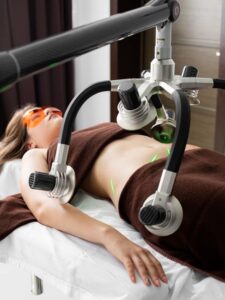
| Laser-assisted (LAL) | Laser energy liquefies fat | Smaller cannula, used for confined areas such as chin and jowls (MedlinePlus) |
| Water-assisted | Pressurized saline stream | Loosens fat cells (ASPS) |
What happens on the day
Anesthesia is given (intravenous sedation, general anesthesia or, for some tumescent procedures, local anesthesia). The treatment areas are infused with fluid, the cannula is inserted through small incisions and the fat is suctioned out; several punctures may be needed for large areas. MedlinePlus explains that removed fat is sometimes processed and injected into another area (fat grafting), that small drains may be placed, that IV fluid replacement may be needed when a lot of fluid or blood is lost, and that a transfusion is needed only very rarely. A compression garment goes on before you leave. Liposuction may be done in an office-based facility, a surgery center or a hospital, and may or may not involve an overnight stay. ASPS notes that special care is needed when large amounts, usually more than five liters of fat, are removed.
Recovery timeline
Liposuction recovery (ASPS timeline)
- Week 1Watch pain, swelling and bruising (medicine may be needed); significantly limit activity; compression garment on.
- Weeks 2-3You start to feel much better; many return to work, depending on the job; still limit exercise.
- Weeks 4-5Bruising should be gone and swelling starts to go down.
- Week 6 and beyondSwelling keeps improving; gradually increase activity and gentle exercise as your surgeon allows.
- Several monthsFinal contour shows once swelling fully settles.
MedlinePlus adds practical detail: bandages stay on for at least 2 weeks, the compression garment is usually worn for several weeks, stitches come out in 5 to 10 days, numbness, tingling and pain can last for weeks, walking early helps prevent blood clots, and strenuous exercise is usually avoided for about a month. Bruising and swelling usually fade within about 3 weeks, though some swelling can last months; the new shape becomes more visible 4 to 6 weeks after surgery. ASPS says results are long lasting if you keep a stable weight, but substantial weight gain can change them.

Risks and complication rates
ASPS lists anesthesia risks, bruising, cannula breakage, lasting changes in skin sensation, damage to deeper structures such as nerves, blood vessels, muscles, lungs and abdominal organs, deep vein thrombosis and heart and lung complications, fluid collection, infection, irregular contours or asymmetry, irregular pigmentation, need for revision, poor wound healing, rippling or loose skin and worsening of cellulite, swelling, and thermal burns with ultrasound-assisted technique. MedlinePlus adds shock (when not enough fluid is replaced), fluid overload, fat embolism (fat globules blocking blood flow), lidocaine reactions or overdose, and notes that liposuction “can have serious or rare fatal complications”.
How often? A study of the CosmetAssure database (2008 to 2013) looked at 31,010 liposuction procedures; only 11,490 (37.1%) were done as the only procedure. When performed alone, the major complication rate (emergency visit, hospital admission or reoperation within 30 days) was 0.7%. The most common were hematoma (0.15%), lung complications (0.1%), infection (0.1%) and confirmed blood clots (0.06%). Combining liposuction with other operations was the strongest risk factor (relative risk 4.81); higher age, higher BMI and hospital setting also raised risk.
Liposuction compared with other options
ASPS says none of the non-surgical fat-reduction treatments, such as cryolipolysis (CoolSculpting), injection lipolysis with Kybella, radiofrequency or laser lipolysis, is a replacement for liposuction; they are options for people who cannot or do not want surgery and give smaller changes over several sessions. A tummy tuck removes skin as well as fat. Our side-by-side guides are liposuction vs fat freezing and tummy tuck vs liposuction. For lasting changes in overall body fat, body recomposition and steady weight management do what liposuction cannot.
Choosing a surgeon
Liposuction is real surgery. Choose a surgeon certified by the American Board of Plastic Surgery, working in an accredited facility, and ask how much fat they plan to remove, which technique and device they use and why, who gives the anesthesia, how they prevent blood clots and what a touch-up would cost. Be cautious with very large-volume plans, multiple procedures in one long session, and prices that seem far below the ASPS ranges. Our plastic surgeon guide explains how to check certification, and the body contouring hub compares every option.
Contouring is not weight loss
This treatment changes the shape of a specific area. It does not lead to meaningful overall weight loss or improve metabolic health. Every proven approach to losing weight
Who explores it
ASPS: adults within 30% of their ideal weight with firm, elastic skin and good muscle tone, in good health, nonsmokers, with specific contouring goals. Not a treatment for obesity, cellulite or loose skin.
How it works
A cannula inserted through small incisions loosens fat (by suction, vibration, ultrasound, laser or water) and removes it with a vacuum or syringe after the area is infused with a dilute anesthetic solution.
Typical results
Removes localized fat permanently from the treated area; ASPS says results are long lasting with a stable weight but substantial weight gain can alter them. Final shape after swelling settles over several months.
Ranges from published studies; individual results vary.
Recovery
ASPS: week 1 limit activity; weeks 2-3 feel much better and many return to work; weeks 4-5 bruising gone; week 6+ gentle exercise. MedlinePlus: stitches out 5-10 days, garment several weeks, no strenuous exercise for about a month.
Risks
- Major complications in 0.7% of solo liposuctions; risk about 4.8 times higher when combined with other procedures (CosmetAssure)
- Hematoma, infection, blood clots, lung complications
- Contour irregularities, asymmetry, rippling or loose skin, pigment changes
- Damage to nerves, blood vessels, muscles, lungs or abdominal organs; thermal burn with ultrasound (ASPS)
- Fluid shifts (shock or overload), fat embolism, lidocaine toxicity (MedlinePlus)
FDA authorization
| Device | Pathway | Number | Date |
|---|---|---|---|
| Cynosure SmartLipo laser (laser-assisted lipolysis) | 510(k) clearance | K062321 | October 31, 2006 |
Clearance (510(k)) means the FDA found a device similar to one already on the market; it is not the same as approval.
Cost and insurance
| Price | Amount | Basis | Checked on |
|---|---|---|---|
| Typical total (national data) | 4,300-7,500 USD | surgeon's fee only, 2024 ASPS range | October 6, 2026 |
| Typical total (national data) | 4,711 USD | average surgeon's fee, 2023 ASPS | October 6, 2026 |
Prices change often and depend on pharmacy, plan and location. Insurance can change what you pay. Every price shows the date we checked it.
ASPS: most plans do not cover liposuction or its complications. Medicare LCD L39051: liposuction for body contouring or weight reduction is cosmetic and not covered. Liposuction for lipedema is classed as reconstructive by ASPS; coverage varies.
Insurance information checked on October 6, 2026.
Advantages and limitations
Advantages
- Removes fat from chosen areas in one operation
- Small incisions; low major complication rate when done alone (0.7%)
- Long-lasting result at a stable weight
Limitations
- Does not tighten loose skin or treat cellulite; not a treatment for obesity
- Surgery with anesthesia, weeks of swelling and a compression garment
- Risk rises sharply when combined with other operations
- Usually self-pay; anesthesia and facility fees are extra
Choosing a provider
Check board certification, where the procedure is done (accredited facility), how many of these procedures the provider performs, and what follow-up care is included. Find a Board-Certified Plastic Surgeon for Body Contouring
Alternatives
 CosmeticFDA cleared deviceNon-invasiveCoolSculpting and Cryolipolysis (Fat Freezing): results, risks and costDevice, non-invasive · None
 CosmeticFDA approved for another useInjectableKybella: injections for under-chin fatInjectable · 1-3 days
 CosmeticSurgicalBody Lift After Massive Weight Loss: lower and upper body liftsSurgical · 2+ weeks
 CosmeticSurgicalTummy Tuck (Abdominoplasty): types, recovery and resultsSurgical · 2+ weeks
Comparisons

Related procedures
 CosmeticSurgicalArm Lift (Brachioplasty): who it suits, scars, recovery and costSurgical · 1-2 weeks
 CosmeticSurgicalBreast Lift After Weight LossSurgical · 1-2 weeks
 CosmeticSurgicalPanniculectomy: medical vs cosmetic, insurance criteria and recoverySurgical · 2+ weeks
 CosmeticSurgicalThigh Lift (Thighplasty): techniques, recovery, risks and costSurgical · 2+ weeks
Research mentioning it
 From Corsets to CoolSculpting: A History of Body ShapingA history of body shaping from 1760s corsets, crinolines and rubber girdles to liposuction (1975-1977), fat…
 Questions to Ask Before Body Contouring or a Tummy TuckThe questions to ask before a tummy tuck, liposuction, a lift or a non-surgical device: certification,…
Related guides
 Body Contouring: fat reduction and shaping, surgical and non-surgicalBody contouring explained: non-invasive fat reduction vs surgery, what CoolSculpting, Kybella and liposuction can and cannot…
 Find a Board-Certified Plastic Surgeon for Body ContouringHow to find a board-certified plastic surgeon for body contouring after weight loss: ABPS checks, facility…
Tools for this topic

Questions to ask a professional
- Is my concern mainly fat, or loose skin that liposuction will not fix?
- Which technique and device will you use, and why for my body?
- How much fat do you plan to remove, and in how many areas?
- Who gives the anesthesia, and where will the surgery take place?
- How do you reduce the risk of blood clots and contour irregularities?
- What is the all-inclusive cost, including a possible touch-up?
Frequently asked questions
Is liposuction a way to lose weight?
No. ASPS says liposuction is not a treatment for obesity or a substitute for diet and exercise. It removes fat from specific areas to change their shape; the scale changes very little.
Who is a good candidate for liposuction?
ASPS describes adults within 30% of their ideal weight with firm, elastic skin and good muscle tone, in good health and not smoking. Loose skin after weight loss usually needs skin-removal surgery instead.
How long does liposuction recovery take?
ASPS describes limited activity in week 1, feeling much better in weeks 2 to 3, bruising gone by weeks 4 to 5 and gentle exercise from week 6, with swelling improving for months. Your surgeon sets your own plan.
Is laser liposuction better?
Laser-assisted liposuction is one of several techniques. MedlinePlus notes it uses a smaller cannula suited to confined areas such as the chin. FDA clearance means a device can be marketed; it does not rank techniques. Ask your surgeon why they choose one.
Does fat come back after liposuction?
ASPS says results are long lasting if you maintain a stable weight and fitness, but substantial weight gain can alter them.
How much does liposuction cost?
ASPS reported a 2024 surgeon's fee range of $4,300 to $7,500 and a 2023 average of $4,711. Anesthesia, the facility and garments are extra, and more areas cost more.
Is liposuction safe?
Done alone, it had a 0.7% major complication rate in a large database. Serious and rare fatal complications such as blood clots and fat embolism can occur, and risk rises with combined procedures, higher BMI and age.
Does insurance cover liposuction?
Usually not. ASPS says most plans do not cover it, and Medicare's rule L39051 treats liposuction for body contouring or weight reduction as cosmetic. Liposuction for lipedema is handled differently; ask your plan.
References
- Liposuction. American Society of Plastic Surgeons. (accessed October 7, 2026) Society statement
- Liposuction Candidates. American Society of Plastic Surgeons. (accessed October 6, 2026) Society statement
- Liposuction Procedure Steps. American Society of Plastic Surgeons. (accessed October 6, 2026) Society statement
- Liposuction Recovery. American Society of Plastic Surgeons. (accessed October 7, 2026) Society statement
- Liposuction Risks and Safety. American Society of Plastic Surgeons. (accessed October 6, 2026) Society statement
- Liposuction Results. American Society of Plastic Surgeons. (accessed October 6, 2026) Society statement
- Liposuction cost. American Society of Plastic Surgeons. (accessed October 6, 2026) Society statement
- Nonsurgical Fat Reduction. American Society of Plastic Surgeons. (accessed October 6, 2026) Society statement
- Liposuction (review date 2025-05-06). MedlinePlus, U.S. National Library of Medicine, 2025. (accessed October 6, 2026) Government page
- Kaoutzanis C, Gupta V, Winocour J, et al.. Cosmetic liposuction: preoperative risk factors, major complication rates, and safety of combined procedures. Aesthetic Surgery Journal, 2017. doi:10.1093/asj/sjw243 · PMID 28430878 (accessed October 6, 2026) Other
- 510(k) K062321: Cynosure SmartLipo Laser. U.S. Food and Drug Administration, 2006. (accessed October 6, 2026) Government page
- 2025 ASPS Procedural Statistics Release. American Society of Plastic Surgeons, 2026. (accessed October 7, 2026) Society statement
- 2024 ASPS Procedural Statistics Release (archived copy captured 2026-01-02). American Society of Plastic Surgeons, 2025. (accessed October 7, 2026) Society statement
- 2023 ASPS Procedural Statistics Release (archived copy). American Society of Plastic Surgeons, 2024. (accessed October 7, 2026) Society statement
- LCD L39051: Cosmetic and Reconstructive Surgery (revision effective 2026-08-27). Centers for Medicare and Medicaid Services. (accessed October 6, 2026) Government page
Facts checked on October 6, 2026
Educational information, not medical advice. Talk with a qualified healthcare professional about your own situation. In an emergency call 911.