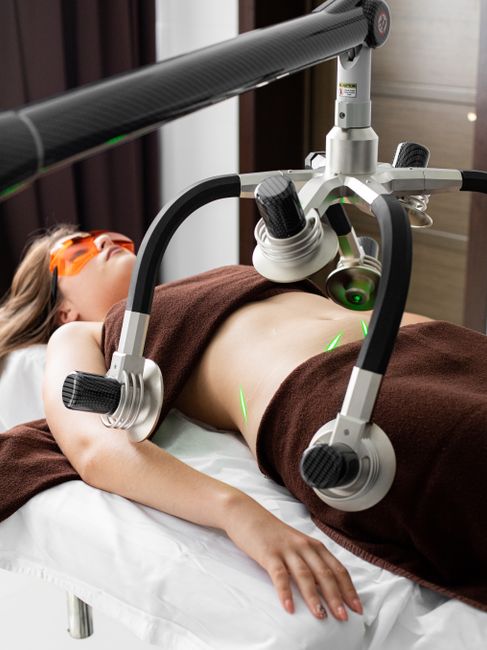
Liposuction vs fat freezing (CoolSculpting): how each works, expected fat reduction, recovery, risks including PAH, and ASPS average fees. Body contouring is not weight loss.
Fact-checked against FDA labels and official sources; not yet reviewed by a licensed clinician. This page is education, not medical advice. Talk to your doctor before starting, stopping or changing any treatment.
Key takeaways
- Liposuction and cryolipolysis both reduce localized fat to reshape an area; neither is a treatment for obesity.[1]
- Cryolipolysis reduces the treated fat layer by about 20% on average, with results over 4 to 6 months and no activity restrictions.[7]
- Liposuction is surgery; in a large database, major complications within 30 days occurred in 0.7% of people who had liposuction alone.[13]
- A 2025 meta-analysis estimated paradoxical adipose hyperplasia after cryolipolysis in about 1 in 455 patients (0.22%).[12]
- ASPS average fees are $4,711 for the liposuction surgeon's fee alone and $1,157 for nonsurgical fat reduction (checked 2026-10-06).[6]
The short answer
Both reduce localized fat to change body shape; neither is a weight-loss treatment. Liposuction is surgery with sedation or general anesthesia and weeks of recovery that removes more fat in one session; cryolipolysis (CoolSculpting) is a nonsurgical device treatment with no downtime that reduces the treated fat layer by about 20% on average over 4 to 6 months, with a rare risk of the fat growing instead (PAH).
Scorecards
| Liposuction: what it removes, what it does notCosmeticSurgical | CoolSculpting and Cryolipolysis (Fat Freezing): results, risks and costCosmeticFDA cleared deviceNon-invasive | |
|---|---|---|
| Evidence | — | Moderate |
| Invasiveness | Surgical | None |
| Medical supervision | Required | Required |
| Cost | $$$ | $$ |
No overall score and no winner: what matters depends on you. Hover a value for its definition.
Facts side by side
| Liposuction: what it removes, what it does notCosmeticSurgical | CoolSculpting and Cryolipolysis (Fat Freezing): results, risks and costCosmeticFDA cleared deviceNon-invasive | |
|---|---|---|
| Purpose | Cosmetic contouring (not weight loss) | Cosmetic contouring (not weight loss) |
| Class or type | Cosmetic surgery | Non-invasive contouring |
| Regulatory status | CosmeticSurgical | CosmeticFDA cleared deviceNon-invasive |
| Prescription required | Performed by a clinician | Performed by a clinician |
| How it works | A cannula inserted through small incisions loosens fat (by suction, vibration, ultrasound, laser or water) and removes it with a vacuum or syringe after the area is infused with a dilute anesthetic solution. | Controlled cooling through a vacuum applicator injures fat cells, which are more sensitive to cold than skin; the body clears them over about 2 to 3 months (FDA) or 4 to 6 months (ASPS). |
| How it is done or taken | Surgical | Device, non-invasive |
| How often | One-time | Course of sessions |
| Invasiveness | Surgical | None |
| Time / sessions | Varies with the number of areas and volume removed | About an hour per applicator cycle (ASPS); one or more sessions |
| Evidence strength | — | Moderate |
| Average outcomes in studies |
|
|
| Main risks |
|
|
| Downtime | 1-2 weeks | None |
| Cost (dated) | from 4,300-7,500 USD surgeon's fee only, 2024 ASPS range (checked October 6, 2026) $$$ | from 1,157 USD average fee per non-surgical fat reduction procedure (all devices), 2023 ASPS (checked October 6, 2026) $$ |
| Insurance | Not covered (cosmetic) | Not covered (cosmetic) |
| Advantages |
|
|
| Limitations |
|
|
| Who performs or prescribes it | Plastic surgery | Dermatology, Plastic surgery |
| Official resources | plasticsurgery.org | accessdata.fda.gov |
What the trials showed
- No randomized head-to-head trial found Evidence comes from separate studies: cryolipolysis review of 19 studies (fat-layer reduction 10.3% to 28.5% by method) and liposuction safety data (0.7% major complications when done alone, CosmetAssure).
Side effects compared
| Liposuction: what it removes, what it does notCosmeticSurgical | CoolSculpting and Cryolipolysis (Fat Freezing): results, risks and costCosmeticFDA cleared deviceNon-invasive | |
|---|---|---|
| From the label |
|
|
Cost and coverage
| Option | Price | Amount | Basis | Checked on |
|---|---|---|---|---|
| Liposuction: what it removes, what it does not | Typical total (national data) | 4,300-7,500 USD | surgeon's fee only, 2024 ASPS range | October 6, 2026 |
| Liposuction: what it removes, what it does not | Typical total (national data) | 4,711 USD | average surgeon's fee, 2023 ASPS | October 6, 2026 |
| CoolSculpting and Cryolipolysis (Fat Freezing): results, risks and cost | Typical total (national data) | 1,157 USD | average fee per non-surgical fat reduction procedure (all devices), 2023 ASPS | October 6, 2026 |
Prices change often and depend on pharmacy, plan and location. Insurance can change what you pay. Every price shows the date we checked it.
Things people weigh up
- Amount of change: liposuction removes more fat in one session; cryolipolysis gives a gradual, modest reduction per area.
- Surgery and downtime: liposuction needs anesthesia and weeks of recovery; cryolipolysis has no activity restrictions.
- Risks: liposuction carries surgical risks (major complications 0.7% when done alone in one large database); cryolipolysis carries a rare risk of paradoxical fat growth (about 0.22% in pooled studies).
- Timing: liposuction results show as swelling settles; cryolipolysis results appear over 4 to 6 months.
- Cost: ASPS averages are $4,711 for the liposuction surgeon's fee alone and $1,157 for nonsurgical fat reduction; totals vary by areas and sessions.
- Skin: liposuction works best with firm, elastic skin; neither treatment tightens much loose skin.
- Insurance: cosmetic contouring is usually not covered.
These are the differences people commonly consider, not a recommendation. A clinician can help you decide what fits you.
In short: Liposuction and cryolipolysis (fat freezing, best known by the brand CoolSculpting) both reduce stubborn pockets of fat to change body shape. Neither is a weight-loss treatment. Liposuction is surgery: fat is suctioned out through small incisions under sedation or general anesthesia, results show once swelling settles, and recovery takes weeks. Cryolipolysis is a nonsurgical device treatment that cools fat cells so the body clears them over four to six months, with an average fat-layer reduction of about 20% per treatment area and no activity restrictions. Liposuction removes more fat in one session and carries surgical risks; fat freezing has a rare side effect in which the treated fat grows instead of shrinking (sources checked on October 6, 2026).
This page is for research before a consultation. Results, risks and costs depend on your body, the area, the provider and the device or technique. Talk with a board-certified plastic surgeon or dermatologist and get an in-person evaluation before choosing any procedure. InstaTuck does not sell or book treatments.
Liposuction vs fat freezing at a glance
- 317,196liposuctions in the U.S. in 2025, the most common cosmetic operation for the fifth yearASPS 2025 statistics
- About 20%average fat-layer reduction in a treated area after cryolipolysisASPS
- $4,711 vs $1,157ASPS average fees: liposuction surgeon's fee vs nonsurgical fat reductionASPS
Checked on October 6, 2026
The basics side by side
| Liposuction | Cryolipolysis (fat freezing, CoolSculpting) | |
|---|---|---|
| Type | Surgery (lipoplasty) | Nonsurgical device treatment; FDA-cleared devices (510(k)) |
| How it works | A thin hollow tube (cannula) is inserted through small incisions to loosen fat, which is suctioned out | A cooling applicator chills the skin and fat; fat cells are more sensitive to cold than other cells, and the injured fat cells are cleared by the body over 4 to 6 months |
| Anesthesia | Intravenous sedation or general anesthesia, plus diluted local anesthetic in the area | None needed; a session takes about an hour per area |
| Areas | Abdomen and waist, back, calves and ankles, chest, face and neck, hips and buttocks, inner knee, thighs, upper arms | CoolSculpting clearance: upper arm, bra fat, back fat, under the buttocks, thigh, abdomen, flank, and under the chin and jaw |
| Who it is described for | Adults within 30% of their ideal weight with firm, elastic skin and good muscle tone; healthy; nonsmokers | People with a localized fat bulge that has persisted despite diet and exercise; CoolSculpting body areas cleared for a BMI of 30 or less (chin area: BMI up to 46.2) |
| Downtime | Significant activity limits in week 1; many return to work at 2 to 3 weeks; gentle exercise from about 6 weeks | No activity restrictions |
| When results show | As swelling and fluid settle over weeks to months | Gradually over 4 to 6 months |
| Who performs it | A surgeon, typically a board-certified plastic surgeon, in an accredited facility | A trained provider using an FDA-cleared device; ask who performs it and who supervises |
What results to expect
Cryolipolysis. The ASPS describes an average fat reduction of about 20% in the treated area. A systematic review of 19 studies in Plastic and Reconstructive Surgery found average reductions of 14.7% to 28.5% when fat thickness was measured with calipers and 10.3% to 25.5% when measured by ultrasound. Some people choose more than one area or repeat an area. The FDA clearance wording is that the device can “affect the appearance of visible fat bulges”; it is not cleared for weight loss.
| Item | Low | High |
|---|---|---|
| Measured with calipers | 14.67% | 28.50% |
| Measured by ultrasound | 10.30% | 25.50% |
Ranges of study averages for one treatment cycle; ASPS cites about 20% on average. Results differ by area, device and person.
Source: Ingargiola MJ et al., Plastic and Reconstructive Surgery 2015 (systematic review, 19 studies) (checked on October 6, 2026)
Liposuction. Because fat is physically removed, liposuction can change the contour of an area more in one session, and it can treat several areas at once or be combined with other operations such as a tummy tuck. The ASPS says the fat removed should stay gone with a healthy diet and fitness, but substantial weight gain can alter results. It works best with firm, elastic skin; skin that is thin or loose from stretch marks, weight loss or aging does not reshape as well and may need a skin-removal procedure (see tummy tuck vs liposuction). Liposuction does not treat cellulite. We found no randomized trial comparing liposuction with cryolipolysis directly.
Liposuction techniques you may hear about
The ASPS describes several ways surgeons loosen fat before suctioning it: traditional liposuction (a cannula and high-pressure vacuum), power-assisted (a vibrating cannula), ultrasound-assisted, including the newer VASER technique (ultrasonic energy), laser-assisted (laser energy) and water-assisted (a pressurized stream of saline). Ask your surgeon which technique they use, why, and whether it changes the risks, such as the burn risk the ASPS lists for ultrasound-assisted methods. Liposuction is also used as a medical treatment for lipedema, a chronic condition in which fat builds up under the skin of the arms, legs, buttocks and hips; the ASPS counted 10,713 of these reconstructive procedures in 2025, separate from cosmetic liposuction.
Recovery compared
Liposuction recovery timeline (ASPS)
- Week 1Monitor pain, swelling and bruising; medicine may be needed; significantly limit activity; compression garment.
- Weeks 2 to 3You start to feel much better; many return to work, depending on the job; still limit exercise.
- Weeks 4 to 5Bruising should be gone and swelling starts to go down.
- Week 6 and beyondSwelling keeps improving; you may gradually increase activity and start gentle exercise.
After cryolipolysis, the ASPS lists no activity restrictions. Temporary redness, swelling and pain in the treated area were the main short-term side effects reported in the studies reviewed. Changes appear slowly as the body clears the injured fat cells over four to six months.
Risks and side effects
Liposuction is surgery and carries surgical risks. The ASPS lists anesthesia risks, bruising, swelling, infection, fluid buildup, irregular contours or asymmetry, changes in skin sensation, rippling or loose skin, damage to deeper structures (nerves, blood vessels, muscles, lungs and abdominal organs), blood clots and heart or lung complications, burns with ultrasound-assisted techniques and the need for revision. Special considerations apply when large amounts, usually more than five liters, are removed. In a large insurance database study (CosmetAssure, 2008-2013), major complications needing an emergency visit, hospital admission or reoperation within 30 days occurred in 0.7% of people who had liposuction alone; the risk was about five times higher when liposuction was combined with other procedures (relative risk 4.81).
Cryolipolysis has no incisions, but it has its own risks. The ASPS lists surface irregularities and asymmetry, and a rare reaction called paradoxical adipose hyperplasia (PAH), in which the treated fat grows larger and firmer instead of shrinking. A 2025 meta-analysis of 28 studies (13,078 patients) estimated PAH in 0.22% of patients, about 1 in 455, which is 6.67 times higher than the most recent manufacturer-reported rate of 0.033%. PAH usually appears 2 to 4 months after treatment, and reported treatments include corrective liposuction. Cryolipolysis is not for people with cold-related conditions such as cryoglobulinemia, cold urticaria or paroxysmal cold hemoglobinuria, and the ASPS says nonsurgical fat reduction is not for use during pregnancy or breastfeeding.
| Item | Value |
|---|---|
| Pooled rate in 28 studies (2025 meta-analysis) | 0.22% |
| Most recent manufacturer-reported rate | 0.03% |
About 1 in 455 patients in the pooled studies; only 4 studies had at least 16 weeks of follow-up, so the true rate is uncertain.
Source: Mah AE et al., Aesthetic Surgery Journal Open Forum 2025 (systematic review and meta-analysis) (checked on October 6, 2026)
Cost (checked on October 6, 2026)
- What a liposuction quote may add: anesthesia fees, hospital or surgical facility costs, medical tests, post-surgery garments and prescriptions, according to the ASPS. Prices depend on the surgeon’s experience, the technique and the location.
- Fat freezing: priced per applicator cycle or per area at most clinics, so the total depends on how many areas and cycles are planned.
- Insurance: the ASPS says most health plans do not cover liposuction or its complications. Medicare does not cover most cosmetic surgery, and the IRS generally does not allow cosmetic procedures as medical expenses. Many surgeons offer financing; read the terms carefully (see tummy tuck cost for financing cautions that apply to any cosmetic procedure).
Things people weigh up
- How much change: liposuction can remove more fat in one session; cryolipolysis gives a more gradual, modest reduction per area.
- Surgery or not: anesthesia, incisions and weeks of recovery with liposuction versus no downtime but months of waiting with fat freezing.
- Skin quality: neither tightens loose skin much; if loose skin is the main concern, see loose skin and skin tightening.
- Areas: under the chin, the injectable Kybella is another option (see double chin).
- Weight stability: both work on fat cells in one area; weight gain afterward can change the results.
All options are on the body contouring hub, and our directory of plastic surgeons is being built. If the area you want to change is the belly, see abdomen and belly fat, which explains the difference between fat under the skin and the deeper visceral fat that contouring does not touch.
Compared with the items


Related comparisons

Related guides
 Body Contouring: fat reduction and shaping, surgical and non-surgicalBody contouring explained: non-invasive fat reduction vs surgery, what CoolSculpting, Kybella and liposuction can and cannot…
 How to Lose Weight: every proven approach in one placeHow to lose weight: the calorie deficit, food, activity, sleep and habits with the best evidence,…
 Loose Skin After Weight Loss: what helps, from exercise to surgeryLoose skin after weight loss: why it happens, what affects it, options by body area, non-invasive…
Tools for this topic

Questions to ask a professional
- Given my skin quality and the areas I want to change, which approach makes sense and why?
- How much change can I realistically expect, and how many sessions or areas would it take?
- Who will perform the treatment, how often do they do it, and in what kind of facility?
- What are the risks for me, and what is the plan if a complication such as PAH occurs?
- What is the full, written price, including anesthesia, facility, garments and follow-up?
Frequently asked questions
Is CoolSculpting better than liposuction?
Neither is better for everyone. Liposuction removes more fat in one session but is surgery with weeks of recovery; cryolipolysis has no downtime but gives a smaller, gradual reduction (about 20% per area on average) over months. A board-certified specialist can tell you what fits your goals and body.
Can fat freezing or liposuction help me lose weight?
No. Both reshape specific areas. The ASPS says liposuction is not a treatment for obesity or a substitute for diet and exercise, and CoolSculpting is FDA cleared to affect the appearance of visible fat bulges, not for weight loss.
How long until I see results?
With cryolipolysis, the ASPS says the body clears the injured fat cells over 4 to 6 months. With liposuction, the new contour becomes apparent as swelling and fluid settle, over weeks to months.
What is paradoxical adipose hyperplasia?
A rare side effect of cryolipolysis in which treated fat grows larger and firmer instead of shrinking, usually appearing 2 to 4 months later. A 2025 meta-analysis estimated it in about 0.22% of patients; reported treatments include corrective liposuction.
How painful is recovery after liposuction?
The ASPS describes pain, swelling and bruising in the first week, with significantly limited activity and a compression garment; many people feel much better by weeks 2 to 3 and start gentle exercise from about week 6. Your surgeon will give specific instructions.
How much do they cost?
ASPS averages are $4,711 for the liposuction surgeon's fee alone (anesthesia and facility are extra) and $1,157 for nonsurgical fat reduction. Totals depend on the number of areas and sessions and your location.
Does insurance cover liposuction or CoolSculpting?
Usually not. The ASPS says most health plans do not cover liposuction or its complications, Medicare does not cover most cosmetic surgery, and the IRS generally does not treat cosmetic procedures as medical expenses.
Is the fat gone for good?
The ASPS says fat removed by liposuction should stay gone with a healthy diet and fitness, but substantial weight gain can change results. The same principle applies to treated areas after cryolipolysis.
References
- Liposuction. American Society of Plastic Surgeons. (accessed October 7, 2026) Society statement
- Liposuction Candidates. American Society of Plastic Surgeons. (accessed October 6, 2026) Society statement
- Liposuction Procedure Steps. American Society of Plastic Surgeons. (accessed October 6, 2026) Society statement
- Liposuction Recovery. American Society of Plastic Surgeons. (accessed October 7, 2026) Society statement
- Liposuction Risks and Safety. American Society of Plastic Surgeons. (accessed October 6, 2026) Society statement
- Liposuction cost. American Society of Plastic Surgeons. (accessed October 6, 2026) Society statement
- Cryolipolysis. American Society of Plastic Surgeons. (accessed October 7, 2026) Society statement
- Nonsurgical Fat Reduction. American Society of Plastic Surgeons. (accessed October 6, 2026) Society statement
- Nonsurgical fat reduction cost. American Society of Plastic Surgeons. (accessed October 6, 2026) Society statement
- 510(k) K193566: CoolSculpting System, indications for use. U.S. Food and Drug Administration, 2020. (accessed October 6, 2026) Government page
- Ingargiola MJ, Motakef S, Chung MT, Vasconez HC, Sasaki GH. Cryolipolysis for fat reduction and body contouring: safety and efficacy of current treatment paradigms. Plastic and Reconstructive Surgery, 2015. doi:10.1097/PRS.0000000000001236 · PMID 26017594 (accessed October 6, 2026) Review
- Mah AE, Razeghi P, Li C, et al.. Incidence of paradoxical adipose hyperplasia after cryolipolysis: a systematic review and meta-analysis. Aesthetic Surgery Journal Open Forum, 2025. doi:10.1093/asjof/ojaf142 · PMID 41322038 (accessed October 7, 2026) Meta-analysis
- Kaoutzanis C, Gupta V, Winocour J, et al.. Cosmetic liposuction: preoperative risk factors, major complication rates, and safety of combined procedures. Aesthetic Surgery Journal, 2017. doi:10.1093/asj/sjw243 · PMID 28430878 (accessed October 6, 2026) Other
- 2025 ASPS Procedural Statistics Release. American Society of Plastic Surgeons, 2026. (accessed October 7, 2026) Society statement
- Cosmetic surgery. Medicare.gov (Centers for Medicare & Medicaid Services). (accessed October 6, 2026) Government page
- Publication 502 (2025), Medical and Dental Expenses. Internal Revenue Service, 2025. (accessed October 6, 2026) Government page
Facts checked on October 6, 2026
Educational information, not medical advice. Talk with a qualified healthcare professional about your own situation. In an emergency call 911.