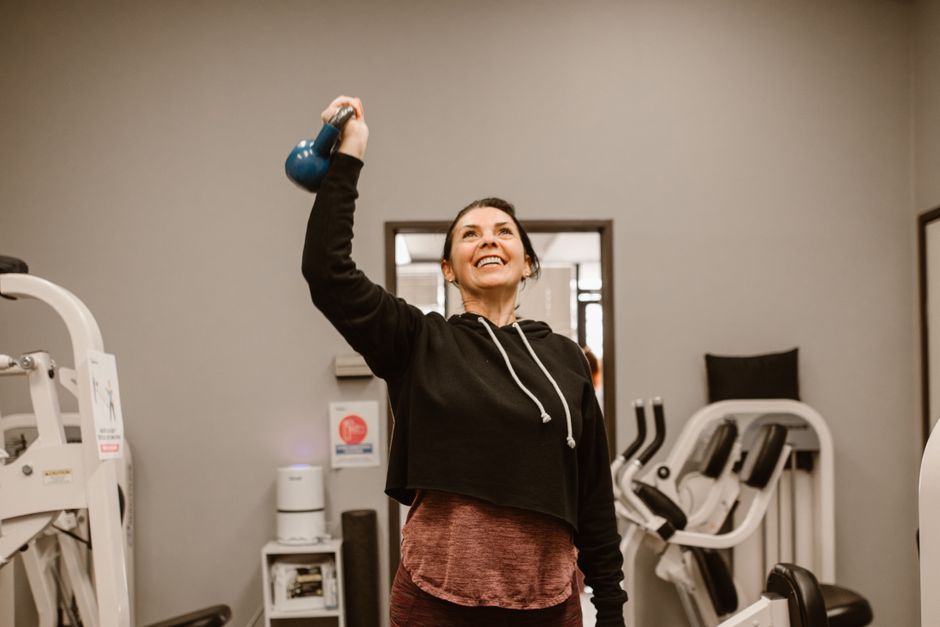
Body recomposition explained: how to lose fat and build muscle at the same time, who sees it, training, protein, calories, measuring progress and creatine evidence.
Key takeaways
- In a 4-week trial, a higher-protein group gained about 1.2 kg of lean mass while losing 4.8 kg of fat in a calorie deficit with hard training.[1]
- In a 2024 trial, postmenopausal women gained lean mass and lost body fat over 16 weeks with no change in weight.[2]
- Resistance training reduced lean mass loss during weight loss by about 0.8 kg in pooled studies.[4]
- Studies have used 1.4 to 2.0 g of protein per kg a day for most people who exercise.[6]
This article contains affiliate links: if you buy through them we may earn a commission, at no extra cost to you. Learn more.
In short: Body recomposition means losing fat and gaining muscle at the same time, so your shape and strength change even if the scale barely moves. Studies show it is possible, especially when regular resistance training is combined with enough protein, and sometimes with a modest calorie deficit. It is slower and less dramatic than social media suggests, and progress is best measured with strength, waist size and how clothes fit rather than weight alone.
This guide explains how recomposition differs from weight loss and from body contouring, who tends to see it, how to train and eat for it, how to set calories and how to measure progress. It is general information; if you have a health condition or take medicines that affect appetite or weight, talk to your clinician before changing your diet or training. For more activity guides, see our exercise hub.
Weight loss vs body contouring vs recomposition
These three goals are often mixed up, and they are different things:
- Weight loss lowers your total body weight through a calorie deficit. Some of what you lose is fat, some is lean tissue and water. Our how to lose weight guide covers it.
- Body contouring is a cosmetic procedure, such as fat freezing or liposuction, that removes or reduces fat in one area. It is not weight loss and does not build muscle; see our body contouring guide.
- Body recomposition shifts the ratio of fat to muscle through training and nutrition. Weight may go down a little, stay the same or even rise slightly while you look and feel leaner.
The three can overlap: many people lose weight and recompose at the same time, and some consider contouring after weight loss. Knowing which one you are after helps you choose the right plan and the right way to measure it.
Does it really work? What studies show
In a calorie deficit. In a 4-week trial published in the American Journal of Clinical Nutrition in 2016, 40 young men ate about 40% fewer calories than they needed and trained hard six days a week (resistance training plus intervals). The group eating more protein (2.4 grams per kilogram a day) gained about 1.2 kg of lean mass and lost about 4.8 kg of fat; the group eating 1.2 grams per kilogram gained almost no lean mass (0.1 kg) and lost 3.5 kg of fat. This was a short, intense, closely controlled study, but it shows that gaining muscle while losing fat is possible.
| Item | Higher protein, 2.4 g per kg | Lower protein, 1.2 g per kg |
|---|---|---|
| Lean mass gained | 1.2 kg | 0.1 kg |
| Fat lost | 4.8 kg | 3.5 kg |
40 young men, about 40% fewer calories than needed, resistance training plus intervals 6 days a week. A short, closely controlled study.
Source: Longland TM et al., American Journal of Clinical Nutrition 2016 (checked on October 6, 2026)
Without weight change. In a 2024 randomized trial of 96 postmenopausal women, 16 weeks of functional or combined training increased lean mass from week 8 and lowered body-fat percentage from week 12, with no change in body weight. A 2023 study of 99 older women found that 24 weeks of resistance training, three times a week, improved body composition and strength in all fat-mass groups; recomposition was greatest in women who started with less fat, while strength gains were similar across groups.
During weight loss. A 2021 overview of 12 systematic reviews found that resistance training reduced lean mass loss during weight loss by about 0.8 kg. In other words, even when net muscle gain is not realistic, training shifts more of the loss toward fat.
Who tends to see recomposition
The studies above include young men on a strict, high-protein program and older and postmenopausal women starting a structured training program. In the study of older women, those who started with less body fat showed the most recomposition, while strength improved similarly in everyone. Expectations matter: recomposition is measured in months, not weeks, and it looks different for every body. If body image is weighing on you, our guide to body image and confidence may help.
Training: lift with progression
Muscle needs a reason to grow. The American College of Sports Medicine recommends that beginners train 2 to 3 days a week with loads they can lift 8 to 12 times, and increase the load by about 2% to 10% when they can do one or two reps beyond their target. Cover the whole body: squat, hip hinge, push, pull and core. Our strength training guide has a 6-week beginner plan for home or gym. Keep moving on other days too: walking adds activity without interfering with recovery.
Protein: the building material
Protein is the nutrient most closely tied to recomposition. In the 2016 trial above, the higher-protein group was the one that gained lean mass. The International Society of Sports Nutrition considers 1.4 to 2.0 grams of protein per kilogram of body weight a day sufficient for most people who exercise to build and keep muscle, with higher intakes studied in trained people during calorie deficits. These are ranges from studies, not a personal target; people with kidney disease need personal advice. Our protein calculator turns ranges into grams, and the high-protein diet guide lists food sources.
Recomposition basics in numbers
- 2-3 daysa week of resistance training for beginners, 8 to 12 repsACSM Progression Models position stand 2009
- 1.4-2.0 g/kgprotein a day, sufficient for most people who exerciseInternational Society of Sports Nutrition 2017
- 7+ hoursof sleep a night recommended for adultsCDC, About Sleep
Checked on October 6, 2026
Calories: a small deficit, or about maintenance
Recomposition plans usually aim for about maintenance calories or a modest deficit, since a surplus adds fat. In the 2016 trial, gaining muscle in a large deficit took very high protein and six hard training days a week, which is more than most people can sustain. Start with an estimate from our TDEE calculator, then adjust based on how your waist and strength change over several weeks rather than daily weight. If your main goal is weight loss, our calorie deficit guide explains how to set one sensibly.
Measuring progress
Because body weight can stay flat during recomposition, as it did in the 2024 trial, the scale alone can be misleading. Use a few measures together:
- Strength: log your lifts. Getting stronger is a sign you are building or keeping muscle.
- Waist: measure at the same spot every two to four weeks; our waist-to-height calculator puts it in context.
- Body-fat estimate: our body fat calculator uses the U.S. Navy tape method. Bathroom scales that show body fat give estimates; our smart scales guide explains what they measure.
- Photos and clothes: monthly photos in the same light and how your clothes fit often show change the scale misses.
- Weight trend: if you also want to lose weight, look at the weekly average in our weight tracker rather than single days.
Creatine: what the evidence says
Creatine is one of the most studied sports supplements. The International Society of Sports Nutrition’s 2017 position stand concludes that creatine supplementation increases muscle creatine, improves high-intensity exercise performance and leads to greater training adaptations, and that it has been safe and well tolerated in healthy people in short- and long-term studies. It is a supplement, not a shortcut: without training and protein, it does little for body composition. The FDA does not approve dietary supplements before they are sold; manufacturers are responsible for their safety and labeling. Our page on creatine covers the evidence, safety and who should check with a clinician first.
A simple recomposition week
- Strength: 3 full-body sessions (for example Monday, Wednesday, Friday), adding load or reps when the target feels easy.
- Movement: walks on most other days, building toward the 150-minute guideline.
- Food: a protein food at every meal, plenty of vegetables and fruit, calories near maintenance or a little below.
- Recovery: 7 or more hours of sleep, which the CDC recommends for adults.
- Check-in: every 4 weeks, review lifts, waist and photos and adjust one thing at a time.
Equipment that helps
You can recompose with body weight alone, but a set of bands and a food scale make progression and protein tracking easier. Two widely sold examples, with specifications as stated by the makers:
Fit Simplify Resistance Loop Exercise Bands, Set of 5
- 5 color-coded resistance levels (maker-stated)
- 12 x 2 in loop bands, natural latex
- Instruction guide and carry bag
- Not for people with a latex allergy
Amazon Basics Digital Kitchen Scale
- Weighs up to 11 lb, from 2 g (maker-stated)
- Tare button
- Grams, ounces, pounds, fl oz and ml
- 2 AAA batteries included
Related guides

Tools for this topic


Latest research
 The 10,000 Steps Myth: How Many Steps You Really NeedWhere the 10,000 steps goal came from and what the big studies found: most of the…
 Brown Fat, Cold Plunges and Saunas: Do They Help Weight Loss?Do cold plunges, brown fat and saunas help weight loss? What human studies show: brown fat…
 10 Best Exercises for Adults Over 50 Losing WeightThe 10 best exercises for adults over 50 losing weight, ranked by energy cost (adult and…
Questions to ask a professional
- Is it safe for me to start resistance training, and are there movements I should adapt?
- What protein range suits me, given my kidney health and other conditions?
- Should I aim for weight loss, recomposition or both, given my health goals?
- Is creatine or any other supplement appropriate for me with my medicines?
- Which measurements beyond weight should we use to track my progress?
Frequently asked questions
Can you lose fat and build muscle at the same time?
Yes. Trials in young men on a high-protein program and in older and postmenopausal women show lean mass going up while fat goes down, especially with regular resistance training and enough protein.
How long does body recomposition take?
Changes in studies appeared over weeks to months: lean mass rose from week 8 and body fat fell from week 12 in a 16-week trial. Expect gradual change and judge progress every month or so.
Should I eat in a deficit or at maintenance?
Many people aim for maintenance or a modest deficit. Gaining muscle in a large deficit took very high protein and intense training in a trial. Start with an estimate from a TDEE calculator and adjust from your measurements.
Why is my weight not changing?
During recomposition, fat loss and muscle gain can balance out on the scale. Track strength, waist size and photos alongside weight.
Do I need creatine for recomposition?
No. Training and protein matter most. Creatine is well studied and can support training adaptations, but it is optional; check with a clinician if you have kidney disease or take medicines.
References
- Longland TM, Oikawa SY, Mitchell CJ, Devries MC, Phillips SM. Higher compared with lower dietary protein during an energy deficit combined with intense exercise promotes greater lean mass gain and fat mass loss: a randomized trial. American Journal of Clinical Nutrition, 2016. doi:10.3945/ajcn.115.119339 · PMID 26817506 · NCT01776359 (accessed October 6, 2026) Randomized trial
- Pereira-Monteiro MR, Aragão-Santos JC, Vasconcelos ABS, et al.. Functional and Combined Training Promote Body Recomposition and Lower Limb Strength in Postmenopausal Women: A Randomized Clinical Trial and a Time Course Analysis. Healthcare (Basel), 2024. doi:10.3390/healthcare12090932 · PMID 38727489 (accessed October 6, 2026) Randomized trial
- Ribeiro AS, Oliveira AV, Kassiano W, et al.. Effects of resistance training on body recomposition, muscular strength, and phase angle in older women with different fat mass levels. Aging Clinical and Experimental Research, 2023. doi:10.1007/s40520-022-02313-7 · PMID 36526940 (accessed October 6, 2026) Other
- Bellicha A, van Baak MA, Battista F, et al.. Effect of exercise training on weight loss, body composition changes, and weight maintenance in adults with overweight or obesity: An overview of 12 systematic reviews and 149 studies. Obesity Reviews, 2021. doi:10.1111/obr.13256 · PMID 33955140 (accessed October 7, 2026) Review
- American College of Sports Medicine. American College of Sports Medicine position stand. Progression models in resistance training for healthy adults. Medicine & Science in Sports & Exercise, 2009. doi:10.1249/MSS.0b013e3181915670 · PMID 19204579 (accessed October 7, 2026) Society statement
- Jäger R, Kerksick CM, Campbell BI, et al.. International Society of Sports Nutrition Position Stand: protein and exercise. Journal of the International Society of Sports Nutrition, 2017. doi:10.1186/s12970-017-0177-8 · PMID 28642676 (accessed October 6, 2026) Society statement
- Kreider RB, Kalman DS, Antonio J, et al.. International Society of Sports Nutrition position stand: safety and efficacy of creatine supplementation in exercise, sport, and medicine. Journal of the International Society of Sports Nutrition, 2017. doi:10.1186/s12970-017-0173-z · PMID 28615996 (accessed October 6, 2026) Society statement
- About Sleep. Centers for Disease Control and Prevention. (accessed October 7, 2026) Government page
- Dietary Supplements. U.S. Food and Drug Administration. (accessed October 6, 2026) Government page
Facts checked on October 6, 2026
Educational information, not medical advice. Talk with a qualified healthcare professional about your own situation. In an emergency call 911.