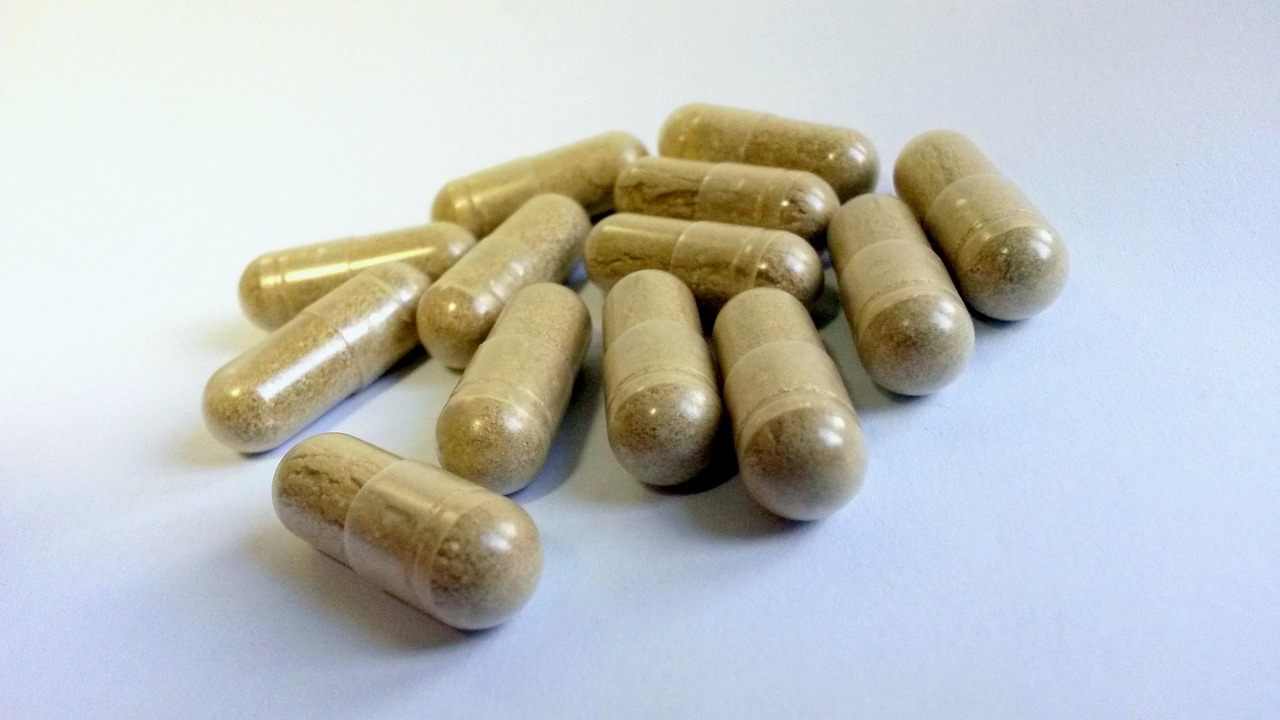
Status checked on October 6, 2026 fda.gov
Berberine for weight loss: what meta-analyses show, the "nature's Ozempic" claim, blood-sugar evidence, doses studied, side effects and drug interactions.
Fact-checked against FDA labels and official sources; not yet reviewed by a licensed clinician. This page is education, not medical advice. Talk to your doctor before starting, stopping or changing any treatment.
Key facts
Is the weight-loss claim established?Partly
- Evidence level
- Limited
- Regulation
- Dietary supplement: not reviewed by the FDA for safety or effectiveness before sale
Key takeaways
- Berberine is a dietary supplement, not an FDA-approved weight-loss medicine and not a GLP-1 drug, despite the "nature's Ozempic" nickname.[7]
- Meta-analyses of weight disagree: from no significant change (-0.11 kg) to -2.07 kg compared with control.[2]
- The evidence is stronger for blood sugar in type 2 diabetes: HbA1c fell 0.63 points on average across 37 trials.[4]
- Berberine raised cyclosporine exposure by 34.5% in transplant patients and can interact with other medicines.[7]
- NCCIH advises against goldenseal (a berberine source) in pregnancy and breastfeeding; berberine can harm newborns.[8]
In short: Berberine is a plant compound sold as a dietary supplement and promoted on social media as “nature’s Ozempic”. It is not FDA approved for weight loss and it is not a GLP-1 medicine. Pooled trials show small and inconsistent effects on weight, between about 0 and 2 kg (0 to 4.5 pounds) more than placebo, and somewhat clearer effects on blood sugar in people with type 2 diabetes. It can interact with prescription medicines, so it is not a harmless add-on (checked on 2026-10-06).
Evidence for weight loss (InstaTuck rating)Limited
This page explains what berberine is, what the research shows for weight and blood sugar, the doses that trials used (not a recommendation), the side effects, the drug interactions and who should be especially careful. It is information only; InstaTuck sells no supplements and links to no sellers. Please talk with a doctor or pharmacist and get evaluated before taking berberine, especially if you take any prescription medicine.
What berberine is
Berberine is an alkaloid found in several plants, including barberry (Berberis species), Chinese goldthread (Coptis chinensis) and goldenseal (Hydrastis canadensis). It has a long history in traditional medicine, and in the U.S. it is sold as a dietary supplement, which means, the FDA explains, that it was not reviewed for safety or effectiveness before sale. Very little of an oral dose reaches the bloodstream: a 2026 review notes oral bioavailability of 0.68% in rats and low nanogram-per-milliliter blood levels in humans, yet high concentrations in the gut and liver, where many drug interactions start. NCCIH adds that so little berberine may be absorbed from goldenseal that berberine studies may not apply to goldenseal products.
Why people call it “nature’s Ozempic”
The nickname comes from social media, not from science. The 2026 interaction review describes how that label “generated a wave of unsupervised use”. Berberine is not semaglutide, is not a GLP-1 receptor agonist and has never been compared with Ozempic or Wegovy in a weight trial. Our Ozempic and Wegovy pages explain what those prescription medicines are and how they were tested.
What the research shows for weight
Three meta-analyses of randomized trials reached different answers. A 2020 review of 10 studies found that berberine lowered BMI by 0.29 and waist size by 2.75 cm, but did not significantly reduce body weight (-0.11 kg). Another 2020 review of 12 trials found a moderate weight reduction of 2.07 kg, plus lower BMI, waist and C-reactive protein, with no effect on liver enzymes. A 2026 review of 23 articles in the International Journal of Obesity found -0.88 kg in weight, -0.48 in BMI and a smaller waist, and called for better trials with standardized products, proper blinding and randomization.
Why the spread? Each review pooled a different set of trials, products and doses (the 2020 reviews included 10 and 12 studies, the 2026 review 23 articles). The 2026 authors specifically flagged missing information on purity, potency and amounts, and common biases such as lack of blinding and randomization.
Blood sugar: the stronger signal
Most berberine research is about type 2 diabetes. A 2022 meta-analysis of 37 trials with 3,048 patients found that berberine, alone or with diabetes pills, lowered fasting glucose by 0.82 mmol/L, HbA1c by 0.63 percentage points and 2-hour glucose by 1.16 mmol/L, with larger effects in people with higher starting levels. In a 2008 randomized trial of 116 adults with type 2 diabetes and high cholesterol, 1.0 g a day for 3 months lowered HbA1c from 7.5% to 6.6% and lowered triglycerides and LDL cholesterol compared with placebo.
Berberine and type 2 diabetes (2022 meta-analysis)
- -0.63 pointsaverage change in HbA1c across 37 trialsFrontiers in Pharmacology 2022
- -0.82 mmol/Laverage change in fasting glucose (about -15 mg/dL)Frontiers in Pharmacology 2022
- 3,048patients in the pooled trialsFrontiers in Pharmacology 2022
Checked on October 6, 2026
That is exactly why berberine is risky to combine with diabetes medicines without supervision: it adds to their glucose-lowering effect. People with diabetes should never swap a prescribed medicine for berberine. Our insulin resistance and PCOS pages explain the treatments clinicians use.
Cholesterol and other markers
In the 2008 randomized trial, berberine also improved blood fats compared with placebo: triglycerides fell from 2.51 to 1.61 mmol/L, total cholesterol from 5.31 to 4.35 mmol/L and LDL cholesterol from 3.23 to 2.55 mmol/L over 3 months. The 2020 review that found a 2.07 kg weight reduction also found lower C-reactive protein, a marker of inflammation, and no change in the liver enzymes ALT and AST. These are surrogate markers; no trial in our sources showed that berberine prevents heart attacks or other hard outcomes.
| Item | Before | After 3 months |
|---|---|---|
| Total cholesterol | 5.31 mmol/L | 4.35 mmol/L |
| LDL cholesterol | 3.23 mmol/L | 2.55 mmol/L |
| Triglycerides | 2.51 mmol/L | 1.61 mmol/L |
116 adults with type 2 diabetes and high cholesterol; changes in the berberine group, all significantly different from placebo.
Source: Zhang Y et al., Journal of Clinical Endocrinology and Metabolism 2008 (checked on October 6, 2026)
How long the trials lasted
The reviews describe inconsistent results and common biases in the trials, and the 2008 diabetes trial lasted 3 months. The longest in our sources, the colorectal-adenoma trial, followed people for up to 2 years, but it was designed to prevent polyps, not weight gain, and enrolled 1,108 people in China. So there is little long-term evidence on berberine for weight, and none on what happens to weight after stopping.
Doses used in studies (not a recommendation)
Trials have commonly used total daily amounts of about 0.6 to 1.0 g, split through the day: for example 0.3 g twice a day in a 2-year colorectal-adenoma trial and 1.0 g a day in the 2008 diabetes trial. Supplement labels vary, and the 2026 review warns that botanical identity and alkaloid content vary considerably between products and that European limits differ by more than tenfold. Because supplements are not standardized like medicines, the amount in a capsule may not match the label.
Side effects
Digestive effects are the most commonly reported. In the 2008 diabetes trial, five people on berberine had mild to moderate constipation. In a large Chinese trial of 0.3 g twice daily for colorectal adenoma prevention, the most common adverse event was constipation (6 of 446 people, about 1%, versus fewer than 0.5% on placebo), and no serious adverse events were reported. The 2022 diabetes meta-analysis did not find more total adverse events or more low blood sugar with berberine than with control treatments, but those trials did not test unsupervised use with many medicines.
Drug interactions: the main concern
A 2026 review of berberine-drug interactions concluded that, despite low blood levels, berberine should be treated “as an active pharmacological perpetrator rather than as an inert supplement”, especially with drugs that have a narrow safety margin. The best-documented human examples:
| Medicine | What was seen | Strength of evidence |
|---|---|---|
| Cyclosporine (transplant medicine) | Exposure rose 34.5% (AUC) and trough levels were 29.3% higher in kidney-transplant recipients | Clinical study in patients (the review’s top grade) |
| Metformin | A berberine-standardized goldenseal extract reduced metformin exposure; NCCIH reports a 25% drop in metformin levels with goldenseal | Probe study in 16 healthy volunteers; NIH-funded study |
| Midazolam and other drugs cleared by CYP3A | Goldenseal raised midazolam exposure about 1.43-fold | Probe studies in healthy volunteers |
| Diabetes and blood pressure medicines | Added lowering of glucose and blood pressure | Pharmacodynamic studies |
| Drugs that affect heart rhythm (QT) | Possible added QT prolongation | Mostly case reports and lab data |
Who should be especially careful
- Pregnancy, breastfeeding and newborns. NCCIH says women who are pregnant or breastfeeding should not use goldenseal, and that its berberine constituent can be harmful to newborns.
- People taking several medicines, especially transplant drugs, diabetes medicines, blood pressure medicines, blood thinners or heart-rhythm drugs.
- Older adults, who the 2026 review says often use berberine without telling their clinicians.
- Anyone planning surgery, who should list every supplement for the surgical team.
How berberine compares with options that have stronger evidence
For weight, the changes seen with berberine are small next to lifestyle programs and approved medicines. If blood sugar or weight is your concern, a clinician can check your numbers and discuss proven options. Start with our supplements hub, which rates other ingredients, the appetite suppressants guide, GLP-1 medications and the Mediterranean diet, which has strong evidence for heart and metabolic health. Our fiber page covers another supplement with modest effects, and how to lose weight brings the basics together. Use the BMI calculator before your visit.
What research suggests
Three meta-analyses disagree: -0.11 kg (not significant, 10 studies, 2020), -2.07 kg (12 trials, 2020) and -0.88 kg (23 articles, 2026), with small reductions in BMI and waist size. Evidence is stronger for blood sugar in type 2 diabetes (HbA1c -0.63 points across 37 trials). Trials are small, short and use unstandardized products.
Known risks
- Constipation and other digestive effects (constipation in about 1% vs under 0.5% on placebo in a large 2-year trial)
- Drug interactions, including higher cyclosporine levels in transplant patients
- Added blood-sugar lowering with diabetes medicines
- Possible added effects with blood pressure and heart-rhythm medicines
- Not for pregnancy, breastfeeding or newborns (goldenseal/berberine, NCCIH)
- Product content varies; not standardized
Drug interactions
| Drug or class | Reported effect |
|---|---|
| Cyclosporine | Exposure (AUC) rose 34.5% and trough levels were 29.3% higher in kidney-transplant recipients. |
| Metformin | A berberine-standardized goldenseal extract reduced metformin exposure in healthy volunteers; NCCIH reports a 25% drop with goldenseal. |
| Drugs cleared by CYP3A (for example midazolam) | Goldenseal raised midazolam exposure about 1.43-fold in a probe study. |
| Semaglutide: one ingredient, several brands | Added glucose lowering; the combination with GLP-1 medicines has not been studied. |
| Blood pressure and QT-prolonging medicines | Possible added blood-pressure lowering and QT effects (mostly lab data and case reports). |
Doses studied
Trials commonly used about 0.6 to 1.0 g a day in divided doses, for example 0.3 g twice daily for 2 years (colorectal adenoma trial) and 1.0 g daily for 3 months (type 2 diabetes trial). Not a recommendation: product content varies and interactions depend on your medicines.
What studies used, not a recommendation. Ask a pharmacist before combining supplements with medicines.
Supplements are not a substitute for prescription treatment, and they are not approved by the FDA for weight loss.
Interacts with

Approved alternatives and other approaches
 Mediterranean Diet for Weight Loss: foods, evidence and a 7-day starterEvidence: High · Easy
 Walking for Weight Loss: steps, pace and a 6-week planModerate · Low impact
 FDA approved for weight managementPrescriptionInjectionWegovy (semaglutide): uses, side effects, cost and FDA statusSemaglutide: one ingredient, several brands · Injection · Weekly
 Dietary supplement: not FDA approvedEvidence: ModerateFiber Supplements for Weight Loss: psyllium, glucomannan and moreEvidence: Moderate
Research mentioning it
 How to Read a Weight-Loss Study Headline in 5 StepsFive questions to ask before believing a weight-loss headline: who was studied, how many, how long,…
 Fake and Counterfeit Weight-Loss Drugs: How to Spot ThemCounterfeit Ozempic has reached U.S. pharmacies three times. The FDA alerts, what online test buys found,…
 How to Read a Supplement Label (and Spot Red Flags)How to read a dietary supplement label: serving size, proprietary blends, structure/function claims, quality seals and…
Related guides
 Weight-Loss Supplements Rated by EvidenceWeight-loss supplements rated by evidence: what pooled trials show for fiber, berberine, green tea, creatine and…
 Appetite Suppressants: prescription options vs supplement claimsAppetite suppressants compared from FDA labels: phentermine, Qsymia, Contrave and GLP-1s, plus supplement claims rated and…
 GLP-1 Medications: how they work and which are approved for weightGLP-1 medications explained: what GLP-1 is, how the drugs work, which brands are FDA approved for…
Tools for this topic

Questions to ask your doctor or pharmacist
- Could berberine interact with any of my medicines, including diabetes, blood pressure or transplant drugs?
- Would berberine change my blood sugar enough to need monitoring?
- Is there a treatment with stronger evidence for my weight or blood-sugar goal?
- Is it safe for me given pregnancy plans, breastfeeding or upcoming surgery?
- If I try it, which side effects should make me stop and call you?
Frequently asked questions
Is berberine "nature's Ozempic"?
No. That is a social-media nickname. Berberine is a plant compound sold as a supplement; it is not semaglutide or a GLP-1 medicine, and pooled trials show far smaller weight effects than approved GLP-1 drugs.
How much weight can you lose with berberine?
Meta-analyses report between no significant change and about 2 kg (4.5 pounds) more than control over the trial periods. Results vary because trials are small and products differ.
Does berberine lower blood sugar?
In people with type 2 diabetes, pooled trials found lower fasting glucose and HbA1c. That is why it can add to diabetes medicines and should only be used with your clinician's knowledge.
What are the side effects of berberine?
Digestive effects, especially constipation, are the most common in trials. The bigger concern is drug interactions.
Can I take berberine with metformin or a GLP-1?
Ask your prescriber first. Goldenseal, a berberine source, lowered metformin levels in an NIH-funded study, and berberine adds glucose-lowering effects. The combination with GLP-1 medicines has not been studied.
Is berberine safe in pregnancy?
NCCIH says women who are pregnant or breastfeeding should not use goldenseal and that berberine can be harmful to newborns. Talk with your clinician.
Is berberine FDA approved?
No. It is sold as a dietary supplement. The FDA does not approve supplements for safety or effectiveness before they are sold.
How much berberine did studies use?
Commonly about 0.6 to 1.0 g a day in divided doses. That is a description of research, not a recommendation, and product content varies.
References
- Elahi Vahed I, Shahir-Roudi E, Nojumi S, et al.. The effect of berberine on obesity indices: a systematic review and meta-analysis. International Journal of Obesity, 2026. doi:10.1038/s41366-025-01943-x · PMID 41310257 (accessed October 6, 2026) Meta-analysis
- Xiong P, Niu L, Talaei S, et al.. The effect of berberine supplementation on obesity indices: a dose-response meta-analysis. Complementary Therapies in Clinical Practice, 2020. doi:10.1016/j.ctcp.2020.101113 · PMID 32379652 (accessed October 6, 2026) Meta-analysis
- Asbaghi O, Ghanbari N, Shekari M, et al.. The effect of berberine supplementation on obesity parameters, inflammation and liver function enzymes. Clinical Nutrition ESPEN, 2020. doi:10.1016/j.clnesp.2020.04.010 · PMID 32690176 (accessed October 6, 2026) Meta-analysis
- Xie W, Su F, Wang G, et al.. Glucose-lowering effect of berberine on type 2 diabetes: a systematic review and meta-analysis. Frontiers in Pharmacology, 2022. doi:10.3389/fphar.2022.1015045 · PMID 36467075 (accessed October 6, 2026) Meta-analysis
- Zhang Y, Li X, Zou D, et al.. Treatment of type 2 diabetes and dyslipidemia with the natural plant alkaloid berberine. Journal of Clinical Endocrinology and Metabolism, 2008. PMID 18397984 (accessed October 6, 2026) Randomized trial
- Chen YX, Gao QY, Zou TH, et al.. Berberine versus placebo for the prevention of recurrence of colorectal adenoma: a multicentre, double-blinded, randomised controlled study. Lancet Gastroenterology and Hepatology, 2020. PMID 31926918 · NCT02226185 (accessed October 6, 2026) Randomized trial
- Berberine-drug interactions: mechanisms, clinical relevance and risk stratification (narrative review). Pharmaceuticals, 2026. doi:10.3390/ph19081313 · PMID 42653808 (accessed October 6, 2026) Review
- Goldenseal: usefulness and safety. NCCIH (NIH). (accessed October 6, 2026) Government page
- Is it really ‘FDA approved’?. U.S. Food and Drug Administration. (accessed October 7, 2026) Government page
- Wilding JPH, Batterham RL, Calanna S, et al.. Once-Weekly Semaglutide in Adults with Overweight or Obesity (STEP 1). New England Journal of Medicine, 2021. doi:10.1056/NEJMoa2032183 · PMID 33567185 · NCT03548935 (accessed October 7, 2026) Randomized trial
Facts checked on October 6, 2026
Educational information, not medical advice. Talk with a qualified healthcare professional about your own situation. In an emergency call 911.