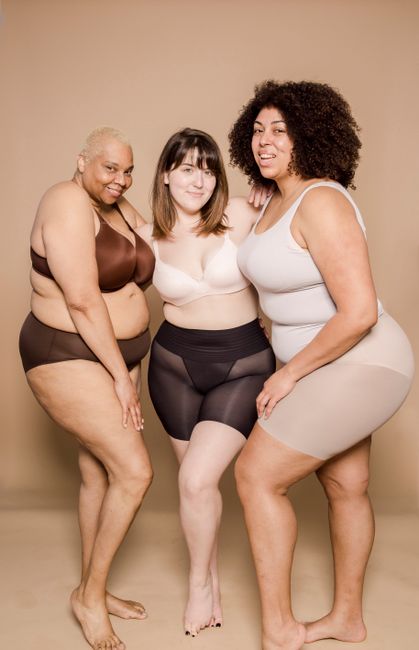
Shapewear explained: types, how to size it, comfort and health notes (reflux, nerve pressure), why it is not a weight-loss tool, and researched picks.
Key takeaways
- Compression garments change your shape only while you wear them; they do not reduce belly fat or cause weight loss.[1]
- In people with reflux, a tight waist belt increased acid reflux after a meal several-fold.[2]
- Tight trousers have been linked to meralgia paresthetica (thigh numbness and burning), which improved when the tight clothing was avoided.[3]
This article contains affiliate links: if you buy through them we may earn a commission, at no extra cost to you. Learn more.
In short: Shapewear is stretchy, firm underwear that smooths and holds in your shape under clothes for as long as you wear it. It does not burn fat or cause weight loss, and the effect ends when you take it off. The right piece fits your measurements (not a size smaller), suits the outfit and feels comfortable for the hours you plan to wear it. Very tight compression around the belly or hips can worsen reflux and press on nerves, so comfort is a health issue, not just a preference.
This guide covers the main types, how to size and wear shapewear comfortably, what it cannot do, and a few widely sold options with their maker-stated details. For other equipment, visit our gear hub. Feeling good in your clothes is a perfectly good reason to wear it. If you are also working on weight or body shape, see our guides to losing weight and shaping and looking better.
Shapewear is not a weight-loss tool
Shapewear compresses and redistributes soft tissue; it does not remove fat or change your body when it comes off. The American Board of Cosmetic Surgery makes the same point about waist trainers, the more extreme cousin of shapewear: they squeeze the torso for a temporary change in appearance and do not reduce belly fat or cause weight loss. Lasting change in body fat comes from a calorie deficit, activity and, for some people, medical treatment; changes in shape also come from strength training and body recomposition.
Shapewear and waist trainers are different products for different intents: shapewear is flexible underwear for smoothing under clothes, while waist trainers are rigid, corset-style garments sold with slimming claims that the evidence does not support. Our waist trainer guide looks at those claims and risks.
Types of shapewear
| Type | Areas it smooths | Good under | What to check |
|---|---|---|---|
| Brief (regular or high-waisted) | Tummy, hips; high-waisted reaches the waist | Fitted skirts, trousers | Waistband that does not roll; leg openings that do not dig in |
| Shorts / thigh slimmer | Tummy, hips, thighs | Dresses, skirts | Leg bands that stay put; length for your hemline |
| Bodysuit (with or without bra) | Torso from bust to hips | Fitted dresses, tops | Torso length, gusset opening for bathroom breaks, strap comfort |
| Camisole / tank | Waist and back, upper tummy | Tops and blouses | Length so it stays tucked; bra compatibility |
| Slip (half or full) | Hips and thighs, light smoothing | Lined or unlined dresses and skirts | Length and fabric weight |
| Medical or post-surgical compression | Areas treated after surgery | Prescribed use only | Follow your surgeon’s instructions; not the same as everyday shapewear |
Control levels are usually labeled light, medium or firm. Light control smooths lines and is the most comfortable for all-day wear; firm control holds in more but is harder to wear for long. Men’s shapewear, usually compression shirts or tanks, follows the same principles.
How to size shapewear
- Measure your waist (narrowest point), hips (widest point) and, for bodysuits, your bust and torso, with a soft tape.
- Use the maker’s size chart, not your dress size. Charts differ between brands.
- Do not size down for more control. A piece that is too small rolls, digs in and is more likely to cause discomfort; choose a firmer control level in your true size instead.
- Between sizes, most people are more comfortable in the larger one, especially for long days or sitting.
- Try it sitting down. If the waistband cuts in when you sit or you cannot take a full breath, it is too tight.
Comfort and health notes
Reflux and heartburn. Pressure on the abdomen pushes up on the stomach. In a 2017 study in Gastroenterology, 14 people with reflux disease wore a tight belt inflated to a set pressure; it raised the pressure in the stomach and increased acid reflux after a meal several-fold. Firm shapewear around the waist works on the same principle, so if you have heartburn or reflux, choose light control, avoid wearing firm pieces right after big meals and take them off if symptoms appear.
Nerve pressure on the thigh. Meralgia paresthetica is burning, tingling or numbness on the outer thigh caused by pressure on a sensory nerve near the hip. A report of 12 cases linked it to tight low-cut trousers, and all improved with conservative care including avoiding the tight clothing. Very tight waistbands and leg bands can press on the same area, so numbness or burning in the thigh is a signal to loosen up.
What the studies found
- 14people with reflux disease tested with and without a tight waist beltGastroenterology 2017
- About 8xmore acid reflux after a meal with the belt onGastroenterology 2017
- 12cases of thigh nerve pressure linked to tight low-cut trousers; all improvedInt J Surg 2008
Checked on October 6, 2026
Everyday comfort. Give your skin breaks, choose breathable fabrics in hot weather, wash shapewear according to the label so it keeps its stretch, and do not sleep in firm pieces unless a clinician has prescribed compression. After surgery, wear only the garment your surgeon recommends, for the time they recommend.
Researched picks
These widely sold pieces cover the most common needs. Details are as stated by the makers, checked on 2026-10-06; check the size chart for each before buying.
SPANX SPANXsculpt Power Series High-Waisted Brief
- High-waisted brief (maker-stated)
- 51% nylon, 49% spandex
- Machine wash cold, lay flat to dry
- Sized by waist and hip chart
SPANX SPANXsculpt Power Series High-Waisted Mid-Thigh Short
- High-waisted, mid-thigh length (maker-stated)
- 55% nylon, 45% elastane
- Machine wash
- Sized by the maker's chart
Maidenform High-Waist Thigh Slimmer, Firm Control
- High-waist thigh slimmer (maker-stated)
- 64% nylon, 36% spandex
- Machine wash cold, line dry
- Firm control: size carefully
Maidenform Shapewear Cami
- Tummy and back smoothing camisole (maker-stated)
- 87% nylon, 13% elastane
- Pull-on; plus sizes available
- Hand wash
Shapewear after weight loss
After a large weight loss, many people use shapewear to smooth loose skin under clothes. That can help you feel comfortable while your body changes. If loose skin bothers you, our loose skin guide explains what improves on its own, what exercise can and cannot do, and when surgery is an option. And if you are feeling down about how your body looks, our guide to body image and confidence has practical support.
Related guides
 Waist Trainers: an honest look at claims and risksWaist trainers, honestly: what they do (temporary compression), which claims fail, risks for breathing, reflux and…
 Loose Skin After Weight Loss: what helps, from exercise to surgeryLoose skin after weight loss: why it happens, what affects it, options by body area, non-invasive…
 Body Recomposition: lose fat and build muscle at the same timeBody recomposition explained: how to lose fat and build muscle at the same time, who sees…
 Body Image and Confidence During and After Weight LossBody image during and after weight loss: what research says about stigma, social media and loose…
Latest research
 10 Best Air Fryers for Lighter Cooking (2026)Ten air fryers for lighter cooking, ranked by safety, fit, specs, price and warranty, with USDA…
 10 Best Blenders for Smoothies and Protein Shakes (2026)10 blenders for smoothies and protein shakes, ranked by safety, fit, specs vs price and warranty,…
 10 Best Rowing Machines for Home Cardio (2026): Researched Picks10 rowing machines researched by use case: air, magnetic, water and connected rowers, with user limits,…
Questions to ask a professional
- Could tight clothing be making my reflux or thigh numbness worse?
- After my surgery, which compression garment should I wear and for how long?
- Is it safe for me to wear firm compression during pregnancy or postpartum?
- If loose skin after weight loss bothers me, which options make sense for me?
Frequently asked questions
Does shapewear help you lose weight?
No. Shapewear smooths and holds your shape while you wear it. It does not burn fat or change your body after you take it off.
Is it bad to wear shapewear every day?
Comfortable, well-fitting light-control shapewear is fine for many people. Very tight pieces can worsen reflux and press on nerves, so choose your true size, give your body breaks and stop if you feel numbness, tingling or heartburn.
What is the difference between shapewear and a waist trainer?
Shapewear is flexible underwear for smoothing under clothes. Waist trainers are rigid, corset-style garments marketed with slimming claims that are not supported; our waist trainer guide covers the risks.
Should I size down in shapewear?
No. A smaller size tends to roll and dig in. Pick your size from the maker's chart and choose a firmer control level if you want more hold.
Can I wear shapewear after surgery?
Only the compression garment your surgeon recommends, for as long as they recommend. Everyday shapewear is not a substitute for a prescribed post-surgical garment.
References
- 4 Reasons to Throw Your Waist Trainer in the Trash. American Board of Cosmetic Surgery, 2016. (accessed October 7, 2026) Society statement
- Mitchell DR, Derakhshan MH, Wirz AA, Ballantyne SA, McColl KEL. Abdominal Compression by Waist Belt Aggravates Gastroesophageal Reflux, Primarily by Impairing Esophageal Clearance. Gastroenterology, 2017. doi:10.1053/j.gastro.2017.02.036 · PMID 28267445 (accessed October 7, 2026) Other
- Moucharafieh R, Wehbe J, Maalouf G. Meralgia paresthetica: a result of tight new trendy low cut trousers (‘taille basse’). International Journal of Surgery, 2008. doi:10.1016/j.ijsu.2007.04.003 · PMID 17521975 (accessed October 7, 2026) Other
- Ahmed MS, Varrassi G, Hadjiconstanti D, Zis P. The Diagnosis and Management of Meralgia Paresthetica: A Narrative Review. Pain and Therapy, 2025. doi:10.1007/s40122-024-00693-4 · PMID 39673032 (accessed October 6, 2026) Review
- Steps for Losing Weight. Centers for Disease Control and Prevention. (accessed October 7, 2026) Government page
Facts checked on October 6, 2026
Educational information, not medical advice. Talk with a qualified healthcare professional about your own situation. In an emergency call 911.