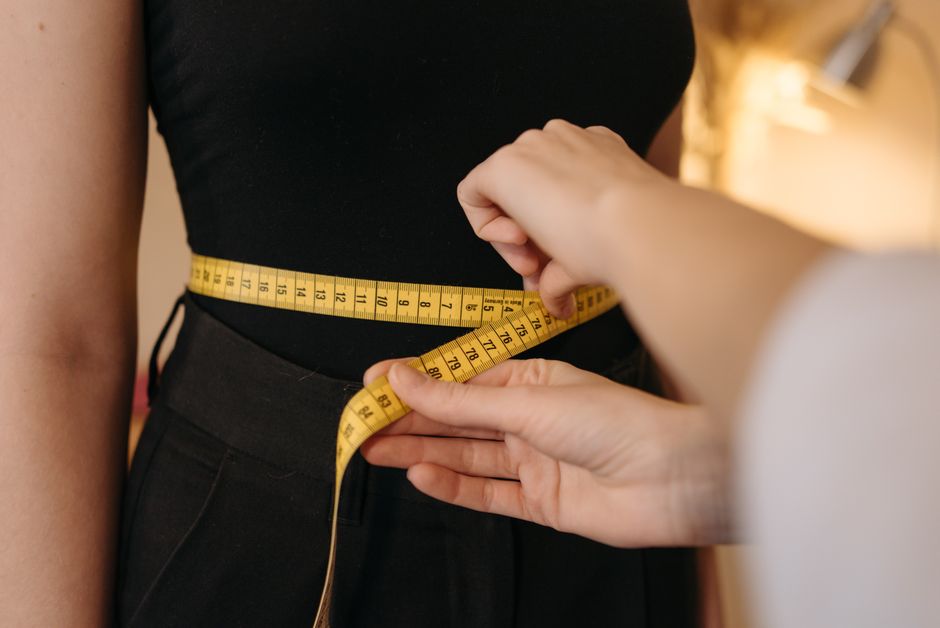
Smart scale vs DEXA vs tape measure compared: how close each comes to DEXA in validation studies, what a scan costs at university labs (checked October 6, 2026) and how to track consistently.
Key takeaways
- Three consumer smart scales differed from DEXA by 4.5 to 5.9 percentage points of body fat on average; a professional InBody and the Bod Pod by about 3.1.[1]
- For individuals, foot-only scales can stray much further from DEXA than hand-and-foot devices; the 2008 authors advise hand-and-foot devices for individual use.[2]
- The Navy tape method agreed with DEXA with coefficients of 0.83 in women and 0.72 in men, but overestimated by 2.4 points in women with larger waists.[3]
- Self-pay DEXA body-composition scans cost $75 to $210 at four university labs checked on October 6, 2026.[7]
In short: A DEXA scan is the most detailed way most people can measure body fat, but it costs about $75 to $210 at the university labs we checked and uses a very low dose of X-rays. Smart scales are cheap and convenient, yet in one recent study consumer models were off from DEXA by about 4.5 to 6 percentage points on average. A tape measure is free; the Navy circumference method agreed reasonably well with DEXA in military members, and your waist size is useful on its own. Whatever you use, the trend over weeks matters more than any single reading.
This page compares the common ways to estimate body fat using validation studies that measured them against DEXA or MRI. It doesn’t name a winner, because cost, access and what you want to track differ. To try the tape-measure method now, use our body fat calculator; if you are shopping for a scale, our list of smart scales covers maker-stated features and privacy.
The methods in one minute
| Method | How it works | Cost and access | How close to DEXA (studies below) |
|---|---|---|---|
| DEXA (DXA) scan | Low-dose X-ray scan that separates fat, lean tissue and bone, by body region | About $75 to $210 per scan at the labs we checked; some need a physician referral | The reference method in these studies |
| Bod Pod (air displacement) | Measures body volume in a sealed pod to estimate density | About $50 to $60 at the labs we checked | Average error about 3.1 points |
| Professional bioimpedance (hand and foot electrodes) | A small current through hands and feet; body water predicts lean and fat mass | Gyms, clinics and labs; often included or low cost | Average error about 3.1 to 4.7 points |
| Smart scale (foot electrodes) | A current through the feet and legs only | Home use; one-time cost | Average error about 4.5 to 5.9 points |
| Tape measure (Navy method) | Neck and waist (plus hips for women) and height in an equation | Free with a tape measure | Good agreement in a military study; less accurate for some body shapes |
| BMI | Weight and height only | Free | Poor agreement with DEXA body fat |
How far off each method can be
A 2022 study in npj Digital Medicine measured 134 adults (ages 21 to 76, BMI 18.5 to 51.6) at two U.S. research centers with DEXA and several other methods on the same visit. Three popular consumer smart scales differed from DEXA by 4.5 to 5.9 percentage points on average. Two professional hand-and-foot bioimpedance systems and the Bod Pod did better, at about 3.1 to 4.7 points. In plain terms: if DEXA says 32% body fat, a smart scale might say anything from the high 20s to the high 30s.
Two cautions about that study. Its authors were mostly from Amazon, which developed the phone-photo method it tested, so we report only its findings for the other devices. And the scale models it tested are a few years old; newer scales may do better or worse. An older study points the same way: in 2008, German researchers compared four consumer devices with MRI and DEXA in 106 adults. Group averages were close, but for individuals, a hand-and-foot device stayed within about -6.6 to +4.6 points of DEXA, while the least accurate foot-only scale ranged from -14.5 to +8.6 points.
The authors’ advice: foot-to-foot scales are fine for estimating group averages, but devices with hand and foot electrodes are preferable for individuals. For tracking yourself at home, that means treating a scale’s body-fat number as a rough trend line, not a precise measurement.
The tape measure: better than its reputation
The U.S. Navy circumference method estimates body fat from neck and waist measurements (plus hips for women) and height. A 2017 study in Military Medicine compared it, and an 8-point hand-and-foot bioimpedance device, with DEXA in 76 active-duty service members (average age 35, average BMI about 29). Agreement was good for all three methods, though waist size and sex affected accuracy.
Tape measure and bioimpedance vs DEXA (76 service members)
- 0.83 / 0.72agreement of the tape method with DEXA, women / men (1.0 = perfect)Combest et al., Military Medicine 2017
- 0.93 / 0.89agreement of 8-point bioimpedance with DEXA, women / menCombest et al., Military Medicine 2017
- +2.4 pointsaverage overestimate by the tape method in women with larger waistsCombest et al., Military Medicine 2017
Checked on October 6, 2026
The bioimpedance device also drifted with body shape: it underestimated DEXA by about 1.6 points in women with smaller waists and overestimated it by about 2.6 points in men with larger waists. The tape method’s big advantages are cost (nothing) and that the waist measurement itself carries information: fat around the middle, including visceral fat, is the kind most linked with health risks. Our body fat calculator runs the Navy equations for you.
DEXA: cost, access and what you get
DEXA (dual-energy X-ray absorptiometry) is best known for bone-density tests, and body-composition scans use the same machines. A scan reports fat, lean tissue and bone for the whole body and for regions such as arms, legs and trunk. Colorado State University’s lab calls it “the gold standard test for measuring body composition”, and Ohio State’s lab notes that the radiation dose “is considered very low and safe”. University exercise labs are one of the more affordable places to get one; here is what four of them charged when we checked:
| Item | Value |
|---|---|
| Boise State University | $75 USD |
| Utah State University (community) | $100 USD |
| Ohio State University | $125 USD |
| Colorado State University | $210 USD |
Total-body scan prices as listed on each lab's page. Utah State requires a physician referral. Bod Pod tests at Boise State and Utah State cost $50 to $60.
Source: University lab price pages (Boise State, Utah State, Ohio State, Colorado State) (checked on October 6, 2026)
Prices vary by city and facility, and some labs don’t take insurance at all (Ohio State’s, for example), so ask your plan before you book. Ohio State’s lab lists 30 minutes for a total-body scan appointment; you lie still on the scanner table while it measures. Because of the cost, most people who use DEXA scan once to get a baseline and again after a few months, while tracking the weeks in between with a tape measure or scale.
Other methods you may come across
- Skinfold calipers: a trained tester pinches skin at several sites and uses an equation. University labs such as Boise State’s offer skinfold testing on request; accuracy depends heavily on the tester’s skill.
- Underwater (hydrostatic) weighing: an older density method that some labs still offer, including Boise State and Utah State. It means being weighed fully underwater after breathing out, which many people find uncomfortable.
- Phone-photo apps: some apps estimate body fat from photos. In the 2022 study, the developer’s own photo method had the smallest average error (2.16 points), but it was tested by the company that made it, and results for other apps can’t be assumed from it.
- Ultrasound and bioimpedance spectroscopy: research tools in some labs (Utah State lists both), not usually available to the public as a quick test.
What about BMI?
BMI uses only weight and height, so it can’t tell fat from muscle. In the 2022 study, BMI’s agreement with DEXA body fat was poor (a concordance of 0.45, against 0.67 to 0.91 for the scales, bioimpedance systems and Bod Pod, where 1.0 is perfect). BMI is still a quick screening number, and our BMI calculator explains how it is used, but it is not a body-fat measurement.
What people weigh up
- Detail and precision: DEXA gives the most detail, including where fat and muscle are, which helps when you are trying to keep muscle during weight loss.
- Cost and frequency: a tape measure costs nothing and a smart scale is a one-time purchase, so both suit weekly tracking; DEXA suits occasional check-ins.
- Convenience: a scale takes seconds each morning; the tape takes a minute and some practice; DEXA needs an appointment.
- Body shape: both tape and bioimpedance estimates drifted with waist size in the military study, so the error isn’t the same for everyone.
- Medical devices: bioimpedance sends a small current through the body, so if you have a pacemaker or another implanted electronic device, read the scale’s manual for warnings and ask your clinician before using the body-fat feature.
How to get readings you can compare
Bioimpedance depends on body water, and tape measurements depend on where and how tight you measure, so consistency matters more than the method. These habits make week-to-week numbers more useful (general guidance):
Five habits for consistent body-fat tracking
- Same time, same conditionsMeasure first thing in the morning, after using the bathroom and before eating, drinking or exercising.
- Same spot on the tapeMeasure the waist at the same landmark each time (for the Navy method, as the calculator describes), with the tape snug but not tight.
- Bare feet, dry skinFor a smart scale, stand barefoot on a hard floor with dry feet in the same position.
- Look at the trendCompare 2- to 4-week averages, not day to day; water, salt and meal timing move single readings.
- Don't mix methodsCompare a scale with the same scale, the tape with the tape, and DEXA with DEXA.
Using the numbers while you lose weight
For most people losing weight at home, a practical mix is a weekly waist measurement, regular weigh-ins on the same scale, and an optional DEXA scan at the start and after a few months if you want detail on muscle. If the scale and the tape disagree for a few weeks, give it time: water shifts can hide fat loss on the scale, and a waist that is shrinking is good news either way. Our belly fat guide explains what actually reduces waist size, and our guide to losing weight covers where to start.
What a body-fat number can’t tell you
Body fat is one number among many. Strength, fitness, blood pressure, blood sugar, sleep and how you feel all matter, and none of these methods measures them. If you are building muscle while losing fat, your weight may change slowly even as your body fat falls; our guide to body recomposition explains why, and cardio vs strength training shows what trials found for fat and lean mass. People on GLP-1 medicines who want to protect muscle can read our guide to muscle loss on GLP-1s, and our strength training guide covers the main tool for keeping muscle.
If tracking numbers starts to feel stressful, it is fine to measure less often or to focus on habits instead; our page on body image has ideas, and the weight loss calculator helps you set a realistic pace. Our guide to keeping weight off covers which habits matter most once you reach your goal, and more side-by-side pages are in our comparisons hub.
Related guides
 Body Recomposition: lose fat and build muscle at the same timeBody recomposition explained: how to lose fat and build muscle at the same time, who sees…
 Visceral Fat: why it matters and how to reduce itVisceral fat explained: what it is, why it matters for heart and metabolic health, how to…
 Muscle Loss on GLP-1s: protein, strength training and what studies showMuscle loss on GLP-1 medicines: what DXA studies found, lean mass vs muscle, who is at…
 Alternate-Day Fasting vs 16:8 vs 5:2: Fasting Methods ComparedTypes of intermittent fasting compared: 16:8, 5:2 and alternate-day fasting, what a week looks like on…
Tools for this topic


Latest research
 10 Best Air Fryers for Lighter Cooking (2026)Ten air fryers for lighter cooking, ranked by safety, fit, specs, price and warranty, with USDA…
 10 Best Blenders for Smoothies and Protein Shakes (2026)10 blenders for smoothies and protein shakes, ranked by safety, fit, specs vs price and warranty,…
 10 Best Rowing Machines for Home Cardio (2026): Researched Picks10 rowing machines researched by use case: air, magnetic, water and connected rowers, with user limits,…
Questions to ask a professional
- Which body measurements are most useful for my health goals?
- Would a DEXA scan help me track muscle while I lose weight?
- Is it safe for me to use a smart scale with my implanted device or condition?
- What waist size or body-fat range is a sensible target for me?
Frequently asked questions
What is the most accurate way to measure body fat?
Of the methods most people can access, a DEXA scan is the most detailed and is used as the reference in validation studies. Bod Pod and professional hand-and-foot bioimpedance come next; consumer smart scales and BMI are less accurate for individuals.
How accurate are smart scales for body fat?
In a 2022 study of 134 adults, three consumer smart scales differed from DEXA by about 4.5 to 5.9 percentage points on average. They are better for tracking a trend under the same conditions than for a precise number.
How much does a DEXA scan cost?
At four university labs we checked on October 6, 2026, a self-pay body-composition DEXA scan cost $75 to $210. Some require a physician referral, and some labs do not accept insurance.
Is the Navy tape-measure method accurate?
Reasonably. In 76 service members it agreed well with DEXA, with coefficients of 0.83 for women and 0.72 for men, but it overestimated body fat by about 2.4 points in women with larger waists.
Is a DEXA scan safe?
It uses low-dose X-rays; Ohio State's exercise lab describes the dose as very low and safe. If you are or may be pregnant, tell the lab and ask your clinician before a scan.
References
- Majmudar MD, Chandra S, Yakkala K, et al.. Smartphone camera based assessment of adiposity: a validation study. npj Digital Medicine, 2022. doi:10.1038/s41746-022-00628-3 · PMID 35768575 · NCT04854421 (accessed October 6, 2026) Other
- Bosy-Westphal A, Later W, Hitze B, et al.. Accuracy of bioelectrical impedance consumer devices for measurement of body composition in comparison to whole body magnetic resonance imaging and dual X-ray absorptiometry. Obesity Facts, 2008. doi:10.1159/000176061 · PMID 20054195 (accessed October 7, 2026) Other
- Combest TM, Howard RS, Andrews AM. Comparison of Circumference Body Composition Measurements and Eight-Point Bioelectrical Impedance Analysis to Dual Energy X-Ray Absorptiometry to Measure Body Fat Percentage. Military Medicine, 2017. doi:10.7205/MILMED-D-16-00344 · PMID 28810989 (accessed October 6, 2026) Other
- Body Composition Tests (prices). Boise State University Human Performance Lab. (accessed October 6, 2026) Other
- Body Composition Lab (community testing prices). Utah State University. (accessed October 6, 2026) Other
- Body Composition (DEXA pricing and radiation note). The Ohio State University Exercise Science Laboratory. (accessed October 6, 2026) Other
- DEXA Scan. Colorado State University Human Performance Clinical Research Laboratory. (accessed October 6, 2026) Other
Facts checked on October 6, 2026
Educational information, not medical advice. Talk with a qualified healthcare professional about your own situation. In an emergency call 911.