
Cardio vs strength training for weight loss: what the STRRIDE AT/RT and LITOE trials found about weight, fat and muscle, and how people combine both.
Key takeaways
- In the 8-month STRRIDE AT/RT trial, aerobic training cut fat mass by 1.66 kg and resistance training by 0.26 kg (not significant), while resistance training added 1.09 kg of lean mass.[1]
- Combining both in STRRIDE took about twice the time and did not lower fat or weight significantly more than aerobic training alone.[1]
- In older adults losing 9% of body weight, combined training improved physical performance most (21%) and lost less lean mass than aerobic training alone.[2]
- Resistance training reduced lean-mass loss during weight loss by about 0.8 kg across trials.[3]
In short: Cardio burns more calories per minute and, in the largest head-to-head trial, led to more weight and fat loss than strength training alone. Strength training builds and protects muscle, which matters while you are losing weight. Doing both gave the best overall change in body composition in that trial and the biggest gains in everyday physical function in a trial of older adults. The two aren’t rivals: the guidelines ask for both.
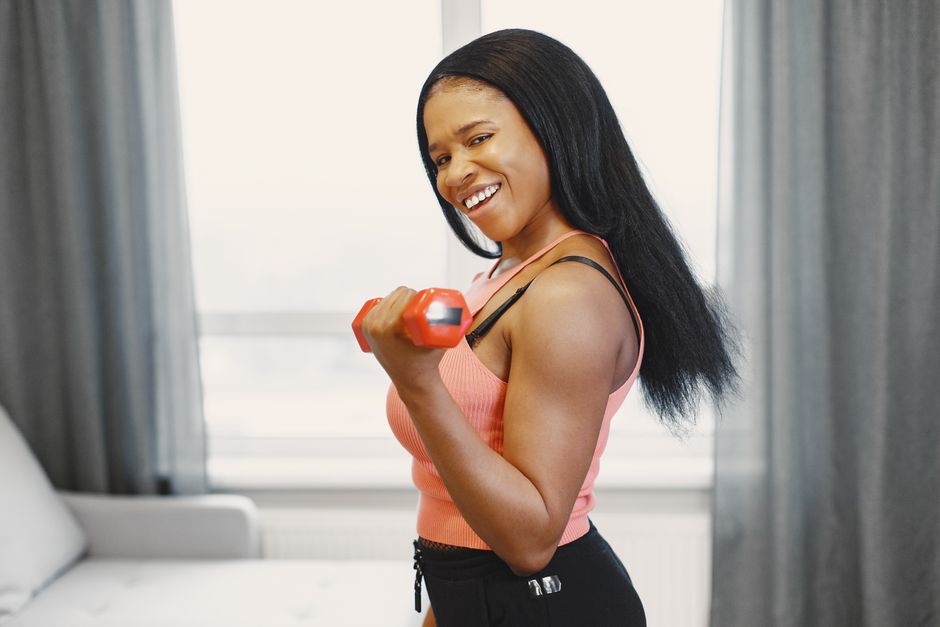
This page sets the two side by side using randomized trials that compared them directly. It does not name a winner, because they do different jobs. For the full background on each, see our strength training guide and our guide to walking for weight loss, the most common form of cardio. This is general education; if you have a heart, lung or joint condition, ask your clinician which kinds and amounts of exercise suit you.
The two in one minute
| Cardio (aerobic exercise) | Strength training (resistance exercise) | |
|---|---|---|
| Examples | Brisk walking, jogging, cycling, swimming, rowing, dancing | Weights, resistance bands, machines, push-ups, squats |
| Calories per minute | Moderate to high (brisk walk 4.8 METs, running at 6 mph 9.3) | Lower for standard sets (3.5 METs); higher for fast circuits (7.5) |
| Main effect on the body | Fitness of heart and lungs; burns more energy per session | Muscle strength and size; helps keep muscle while losing weight |
| In STRRIDE AT/RT (8 months) | More weight and fat lost than strength alone | Lean mass gained; little change in weight or fat |
| Weekly guideline | 150 to 300 min of moderate activity | At least 2 days, all major muscle groups |
| Cost | Free (walking) to a gym or machine | Free (bodyweight) to bands, dumbbells or a gym |
Calories per minute: what the Compendium says
The 2024 Adult Compendium of Physical Activities rates the energy cost of activities in METs; one MET is the energy you use sitting quietly. Typical cardio sits well above a standard weight-training session, though fast circuits close much of the gap:
For a 150-pound person, 30 minutes of standard weight training at 3.5 METs is about 119 calories, a brisk walk about 163 and a 6 mph run about 316 (calories = MET x body weight in kg x hours). Our calories burned calculator works this out for your weight.
What the head-to-head trials found
STRRIDE AT/RT, Journal of Applied Physiology 2012 (8 months)
This trial randomly assigned sedentary adults with overweight or obesity (average age about 50, average BMI about 30) to 8 months of aerobic training, resistance training or both. The aerobic plan was equal to about 12 miles of jogging a week at 65 to 80% of peak fitness (about 133 minutes prescribed). The resistance plan was 3 days a week, 3 sets of 8 to 12 reps on 8 machines (about 180 minutes prescribed). The combined group did both, so it spent about twice as long exercising. 119 people completed the study.
| Item | Fat mass lost | Lean mass gained |
|---|---|---|
| Resistance only | 0.6 lb | 2.4 lb |
| Aerobic only | 3.7 lb | 0 lb |
| Aerobic + resistance | 5.4 lb | 1.8 lb |
Reported in kg: fat mass -0.26 (not significant), -1.66 and -2.44; lean mass +1.09, -0.10 (shown as 0) and +0.81. Body weight: +0.83, -1.76 and -1.63 kg.
Source: Willis LH et al., Journal of Applied Physiology 2012 (STRRIDE AT/RT, 119 adults) (checked on October 6, 2026)
Aerobic training and the combination both reduced body weight and fat mass more than resistance training, but the two did not differ from each other. Resistance training and the combination increased lean mass more than aerobic training. The resistance-only group gained a little weight (0.83 kg, about 1.8 lb), mostly lean mass. Waist size shrank by about 1 cm with aerobic training and 1.7 cm with both, with no change for resistance alone. The authors concluded that aerobic training was the most time-efficient way to cut fat mass and body weight, while a program that includes resistance training is needed to increase lean mass.
LITOE, New England Journal of Medicine 2017 (6 months, older adults)
160 older adults with obesity joined a weight-management program plus aerobic, resistance or combined exercise; a control group had neither. All three exercise groups lost about 9% of body weight. The difference was in what was lost and what people could do afterward: physical performance scores rose 21% with combined exercise versus 14% with either one alone, strength rose 18 to 19% in the groups that lifted versus 4% with aerobic only, and fitness (peak oxygen use) rose 17 to 18% in the groups that did aerobic work versus 8% with resistance only.
| Item | Value |
|---|---|
| Aerobic + weight management | 5% |
| Resistance + weight management | 2% |
| Combined + weight management | 3% |
Lean mass fell from 55.0 to 52.3 kg (aerobic), 58.1 to 57.1 kg (resistance) and 56.5 to 54.8 kg (combined). Hip bone density fell less in the groups that lifted.
Source: Villareal DT et al., New England Journal of Medicine 2017 (LITOE, 160 older adults) (checked on October 6, 2026)
Lean mass and hip bone density fell less in the groups that included strength training than in the aerobic-only group. Exercise-related problems included some musculoskeletal injuries, which is a reminder to build up gradually.
The pooled evidence
What reviews of many trials say
- 1.5 to 3.5 kgaverage weight loss with exercise training compared with no exercise, across systematic reviewsBellicha et al., Obesity Reviews 2021
- 0.8 kgless lean mass lost during weight loss with resistance trainingBellicha et al., Obesity Reviews 2021
- 250+ mina week of moderate activity linked with clinically significant weight lossACSM position stand, 2009
Checked on October 6, 2026
A 2021 overview of 12 systematic reviews (149 studies) found that exercise training led to modest weight loss and fat loss, including visceral fat, and that aerobic training and high-intensity interval training worked equally well when they burned the same energy. Resistance training reduced lean-mass loss during weight loss by about 0.8 kg (1.8 lb). The American College of Sports Medicine’s position stand reached a similar view: resistance training does not add much weight loss on its own but may increase fat-free mass and fat loss and lowers health risks, while more than 250 minutes a week of moderate activity is linked with clinically significant weight loss.
Why the results look this way
- Energy in a session. Steady cardio keeps large muscles working continuously, so more calories go out per minute. Standard sets have rest between them.
- What the scale can’t see. Strength training adds muscle while fat goes down, so weight can stay flat even when body shape changes. That is why the resistance-only group’s waist and fat changed little but its lean mass rose.
- Fitness is a separate win. Heart-and-lung fitness (peak oxygen use) rose by 3.43 ml/kg/min with aerobic training and 4.25 with both in STRRIDE, against 1.26 with resistance alone. Fitness matters for health at any weight, so cardio pays off even in weeks the scale doesn’t move.
- Weight loss takes muscle with it. When people lose weight through diet or medicine, some of the loss is lean tissue. Strength work is the main tool for limiting that, which is why it matters more as weight comes off. Our page on protecting muscle on GLP-1 medicines covers this for people on those treatments.
- Food still does most of the work. In LITOE, where everyone also followed a weight-management program, all exercise groups lost about 9% of their weight; in STRRIDE, with exercise alone, average weight changes were under 2 kg (4.4 lb). A moderate calorie deficit remains the main driver of weight loss.
Where HIIT and circuits fit
High-intensity interval training (HIIT) and circuit training sit between the two. HIIT is a form of cardio done in hard bursts; circuits string strength moves together with little rest, so your heart rate stays up. The Compendium rates moderate HIIT at 7.0 METs and a vigorous circuit at 7.5, close to a rowing machine at a steady 100 to 149 watts. The 2021 overview found that HIIT and steady aerobic training led to similar weight, fat and visceral-fat loss when they burned the same energy, so the choice comes down to time and taste rather than a hidden advantage.
Circuits are a practical answer for people who want both effects in less time, though they are not identical to either: a circuit with light loads builds less strength than heavier sets with rest, and it is harder on beginners’ form. Build up to them once the basic moves feel steady.
Measuring progress beyond the scale
Because strength training can add muscle while fat comes off, the bathroom scale tells only part of the story. In STRRIDE, the resistance-only group gained weight while its body-fat percentage went down slightly. Waist measurements, how your clothes fit, the weights you can lift and how far you can walk all show progress the scale misses. Our comparison of smart scales, DEXA and tape measures explains which body-fat methods are worth using, and our body fat calculator uses a tape measure.
What people weigh up
Most people don’t have to pick one. But time, joints and preferences differ, so here is how the trade-offs tend to play out:
- Short on time: in STRRIDE, adding strength to cardio doubled the time but did not add significant fat loss. Some people use circuits (7.5 METs) to combine both in one session.
- Worried about losing muscle (older age, a large weight loss, GLP-1 medicines): the strength groups kept more lean mass and bone in LITOE.
- Sore knees or hips: low-impact cardio (cycling, swimming, the elliptical) and machine or band strength work can both be joint-friendly; see our low-impact workouts.
- Everyday function (stairs, carrying, getting up from the floor): the combined group improved most in LITOE.
- Enjoyment: the plan you keep doing beats the plan that looks best on paper. Either style counts toward your weekly total.
Putting both into a week
The Physical Activity Guidelines for Americans recommend at least 150 to 300 minutes of moderate aerobic activity a week plus muscle-strengthening activity for all major muscle groups on at least 2 days. For beginners, the ACSM suggests strength sessions 2 to 3 days a week with a load you can lift 8 to 12 times. A simple week that meets both:
Sample week with cardio and strength
- Cardio, 3 to 5 days30 to 45 minutes of brisk walking, cycling, swimming or another activity you enjoy.
- Strength, 2 to 3 days20 to 30 minutes covering legs, back, chest, shoulders and core: squats, rows, presses, lunges, planks.
- Combine when busyA 20-minute circuit with little rest between moves counts toward both.
- Progress slowlyAdd 5 to 10 minutes of cardio or one set of strength work every week or two.
- Move more, sit lessShort walks after meals and on breaks all add up.
For equipment ideas, see our lists of adjustable dumbbells, resistance band sets and bodyweight home workouts; for cardio, the best exercises for weight loss ranks options by calories burned. If your goal is to lose fat and gain muscle at the same time, read our guide to body recomposition. Keeping up both kinds of activity is also one of the most useful habits for keeping weight off, and the TDEE calculator shows how activity changes your daily energy needs. More side-by-side pages are in our comparisons hub.
Related guides
 Body Recomposition: lose fat and build muscle at the same timeBody recomposition explained: how to lose fat and build muscle at the same time, who sees…
 Alternate-Day Fasting vs 16:8 vs 5:2: Fasting Methods ComparedTypes of intermittent fasting compared: 16:8, 5:2 and alternate-day fasting, what a week looks like on…
 Every FDA-Approved Weight-Loss Medication Compared (2026)Every FDA-approved weight-loss medication side by side (checked October 6, 2026): how each is taken, who…
 Every Way to Lose Weight in 2026: 40 Methods Compared by Evidence, Cost and EffortEvery main way to lose weight compared: 40 diets, activities, programs, FDA-approved medicines, procedures and popular…
Tools for this topic
 Calories Burned Calculator for 100+ activitiesFree calories burned calculator for 100+ activities using 2024 Compendium MET values, with examples, walking pad…
 TDEE and Maintenance Calories CalculatorFree TDEE calculator: estimate your total daily energy expenditure and maintenance calories, learn TDEE vs BMR…
Latest research
 The 10,000 Steps Myth: How Many Steps You Really NeedWhere the 10,000 steps goal came from and what the big studies found: most of the…
 How to Read a Weight-Loss Study Headline in 5 StepsFive questions to ask before believing a weight-loss headline: who was studied, how many, how long,…
 Brown Fat, Cold Plunges and Saunas: Do They Help Weight Loss?Do cold plunges, brown fat and saunas help weight loss? What human studies show: brown fat…
Questions to ask a professional
- Which types and intensities of exercise are safe for my heart and joints?
- Should I focus more on strength work because of my age, bone health or medicines?
- How should I combine exercise with my eating plan for weight loss?
- Would a physical therapist or trainer help me start strength training safely?
Frequently asked questions
Is cardio or strength training better for weight loss?
For weight and fat loss alone, cardio did more in the main head-to-head trial. Strength training builds and protects muscle. The guidelines recommend both, and combining them gave the best body composition and function in trials.
Can I lose weight with only strength training?
You can lose fat, especially with a calorie deficit, but in STRRIDE AT/RT strength training alone changed weight and fat little while adding lean mass. The scale may move slowly even as your shape changes.
Does strength training burn more calories at rest?
Muscle uses some energy at rest, but the trials here measured weight, fat and lean mass rather than resting burn. Strength training's proven benefit during weight loss is keeping more lean mass.
Should I do cardio and weights on the same day?
Either works. Some people do both in one session or use a circuit; others alternate days. What matters most is reaching the weekly totals and recovering between hard strength sessions.
How much of each do I need?
The Physical Activity Guidelines recommend 150 to 300 minutes of moderate aerobic activity a week plus muscle strengthening for all major muscle groups at least 2 days a week.
References
- Willis LH, Slentz CA, Bateman LA, et al.. Effects of aerobic and/or resistance training on body mass and fat mass in overweight or obese adults. Journal of Applied Physiology, 2012. doi:10.1152/japplphysiol.01370.2011 · PMID 23019316 (accessed October 6, 2026) Randomized trial
- Villareal DT, Aguirre L, Gurney AB, et al.. Aerobic or Resistance Exercise, or Both, in Dieting Obese Older Adults. New England Journal of Medicine, 2017. doi:10.1056/NEJMoa1616338 · PMID 28514618 · NCT01065636 (accessed October 7, 2026) Randomized trial
- Bellicha A, van Baak MA, Battista F, et al.. Effect of exercise training on weight loss, body composition changes, and weight maintenance in adults with overweight or obesity: An overview of 12 systematic reviews and 149 studies. Obesity Reviews, 2021. doi:10.1111/obr.13256 · PMID 33955140 (accessed October 7, 2026) Review
- Donnelly JE, Blair SN, Jakicic JM, et al.. American College of Sports Medicine Position Stand: Appropriate physical activity intervention strategies for weight loss and prevention of weight regain for adults. Medicine & Science in Sports & Exercise, 2009. doi:10.1249/MSS.0b013e3181949333 · PMID 19127177 (accessed October 7, 2026) Society statement
- American College of Sports Medicine. American College of Sports Medicine position stand. Progression models in resistance training for healthy adults. Medicine & Science in Sports & Exercise, 2009. doi:10.1249/MSS.0b013e3181915670 · PMID 19204579 (accessed October 7, 2026) Society statement
- 2024 Adult Compendium (activity lists and PDF). Compendium of Physical Activities, 2024. (accessed October 7, 2026) Other
- Physical Activity Guidelines for Americans, 2nd edition: top 10 things to know. U.S. Department of Health and Human Services (ODPHP). (accessed October 7, 2026) Guideline
Facts checked on October 6, 2026
Educational information, not medical advice. Talk with a qualified healthcare professional about your own situation. In an emergency call 911.