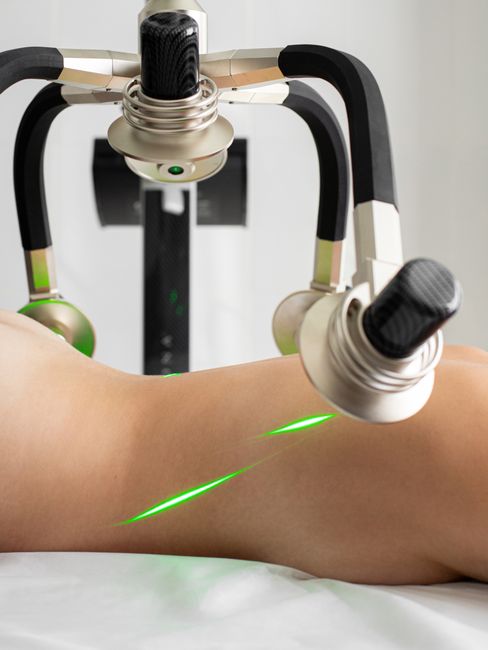
Non-surgical fat reduction compared: cryolipolysis, radiofrequency, laser, focused ultrasound, low-level light, magnetic muscle stimulation and Kybella, with each FDA clearance, results, downtime and 2023 ASPS fees. Not weight loss.
Fact-checked against FDA labels and official sources; not yet reviewed by a licensed clinician. This page is education, not medical advice. Talk to your doctor before starting, stopping or changing any treatment.
Key takeaways
- The FDA says non-invasive body contouring is not intended to treat obesity or improve health and will not result in weight loss.[1]
- Each device is cleared for narrow uses, such as the appearance of visible fat bulges (CoolSculpting), abdominal circumference (UltraShape) or muscle tone (Emsculpt).[2]
- In a review of 19 studies, cryolipolysis reduced the treated fat layer by 10.3% to 25.5% measured by ultrasound.[14]
- Paradoxical adipose hyperplasia after cryolipolysis was estimated at about 1 in 455 treatments in a 2025 review.[15]
- ASPS says none of the non-surgical treatments replaces liposuction; the average 2023 fee for non-surgical fat reduction was $1,157.[12]
In short: Fat freezing (cryolipolysis), radiofrequency, laser, focused ultrasound, low-level light and the injectable Kybella can each shrink a small, pinchable pocket of fat, and magnetic muscle stimulators firm the muscle underneath. None of them is weight loss: the FDA says non-invasive body contouring “will not result in weight loss” and does not treat obesity. Each technology is cleared for something narrower than its ads suggest, such as “visible fat bulges”, “reduction in abdominal circumference” or “muscle toning”, results are modest and often need repeat sessions, and the American Society of Plastic Surgeons (ASPS) says none of them replaces liposuction.

This page puts the non-surgical options side by side using the FDA’s own clearance documents, ASPS statistics and the published studies we could read. It does not rank them or name a winner, because they do different jobs and were never tested against each other in one trial. For each treatment in depth, see our guides to cryolipolysis (CoolSculpting), muscle stimulation (Emsculpt), skin tightening and Kybella; the whole field is mapped on our body contouring hub. This is general education, not advice about your body: what suits you is a conversation with a board-certified plastic surgeon or dermatologist.
Non-surgical fat reduction in four numbers
- About 20%average reduction in the treated fat layer after cryolipolysis, according to ASPSASPS, Cryolipolysis
- 1 in 455pooled rate of paradoxical adipose hyperplasia (fat that grows instead of shrinking) after cryolipolysis in a 2025 review of 28 studiesMah AE et al., Aesthetic Surgery Journal Open Forum 2025
- $1,157ASPS average fee for non-surgical fat reduction in 2023, before other costsASPS 2023 Procedural Statistics
- 447,581non-surgical fat reduction procedures by ASPS members in 2024, down 40% from 2023ASPS 2024 Procedural Statistics
Checked on October 6, 2026
The options side by side
The FDA groups non-invasive body contouring by the energy each device uses. The table below shows how each one works, what the FDA has cleared that kind of device for, and one example clearance we read. A “510(k) clearance” means the FDA agreed a device is substantially equivalent to one already on the market for the stated use; it is not a finding that the device is the best choice for anyone, and every device is cleared only for the exact wording in its “indications for use”.
| Technology | How it works | What the FDA cleared it for (example) | What the FDA says it is not |
|---|---|---|---|
| Cryolipolysis (fat freezing) | Controlled cold damages fat cells, which the body clears over 2 to 3 months | CoolSculpting Elite (K233732, 2024): “intended to affect the appearance of visible fat bulges” on the upper arm, bra and back fat, banana roll, thigh, abdomen and flank in people with a BMI of 30 or less; under the chin up to a BMI of 46.2 | Not weight loss; not cleared for the breasts; not for home use |
| Radiofrequency (RF) | Electrical energy heats the fat layer and connective tissue | truSculpt (K180709, 2018): one setting cleared for “reduction in circumference of the abdomen and non-invasive lipolysis (breakdown of fat) of the abdomen”; the massage device for a temporary reduction in the appearance of cellulite | Results are usually temporary |
| Laser (heat) | Infrared light heats and damages fat cells | SculpSure (K182741, 2019): non-invasive lipolysis of the abdomen, flanks, back and thighs in people with a BMI of 30 or less | Not weight loss |
| High-intensity focused ultrasound | Sound-wave energy disrupts fat cells | LipoSonix (K100874, 2011): “non-invasive waist circumference reduction”; UltraShape (K141708, 2014): “non-invasive reduction in abdominal circumference” | Circumference only, not body weight |
| Low-level light (photobiomodulation) | Very low doses of light change how cells work, without heating | Zerona (K120257, 2012): “reduction of the circumference of the upper arms” | The FDA describes the reduction as temporary |
| Magnetic muscle stimulation | Pulsed magnetic fields make muscles contract | Emsculpt (BTL 799-2, K180813, 2018): improvement of abdominal tone, strengthening of the abdominal muscles and a firmer abdomen; buttocks and thighs; later models added arms and calves | The magnetic-only clearances we read cover muscle, not fat or weight |
| Injection (deoxycholic acid) | A prescription drug destroys fat cells where it is injected | Kybella (FDA-approved drug, 2015): moderate to severe fat under the chin in adults only | Not approved anywhere else on the body |
Two things stand out. First, most clearances talk about “appearance”, “circumference” or “tone”, not fat loss in general and never weight. Second, the clearances are specific to body areas and, for some devices, to a BMI of 30 or less, which is one reason these treatments are meant for people near a stable weight with a small pocket of fat that diet and exercise have not changed.
Fat freezing (cryolipolysis)
Cryolipolysis is the most studied of the group. Fat cells are more sensitive to cold than skin, so an applicator cools a pinched area for about an hour, and the damaged fat cells are cleared over the following months. ASPS describes an average reduction of about 20% in the treated fat layer, with no activity restrictions afterward, and says results show over roughly 4 to 6 months. A 2015 systematic review in Plastic and Reconstructive Surgery, covering 19 studies, found fat-layer reductions of 14.67% to 28.5% when measured with calipers and 10.3% to 25.5% when measured by ultrasound.
| Item | Low | High |
|---|---|---|
| Measured with calipers | 14.67% | 28.50% |
| Measured by ultrasound | 10.30% | 25.50% |
Ranges across studies of the percent reduction in the treated fat layer, not body weight. Different studies used different devices, areas and follow-up times.
Source: Ingargiola MJ et al., Plastic and Reconstructive Surgery 2015 (systematic review of 19 studies) (checked on October 6, 2026)
The best-known rare side effect is paradoxical adipose hyperplasia (PAH), in which the treated fat grows larger and firmer instead of shrinking. The FDA notes it may need surgery to remove. Estimates have changed over time: a 2025 review of 28 studies with 13,078 patients put the pooled rate at 0.22%, or about 1 in 455, higher than earlier manufacturer reports, with low certainty because few studies followed people for 16 weeks or more. The FDA also lists cold-related conditions, such as Raynaud’s, cold urticaria and cryoglobulinemia, among the reasons not to have it. Our liposuction vs cryolipolysis comparison walks through these risks next to surgery.
Heat-based devices: radiofrequency, laser and focused ultrasound
These three use different kinds of energy for the same idea: heat or disrupt fat cells under the skin without cutting it. The FDA describes radiofrequency and laser devices as cleared for temporary improvement in the appearance of cellulite and for circumference reduction, and ultrasound devices for body circumference reduction. The clearances we read match that narrow wording: a radiofrequency setting for the abdomen, a laser for the abdomen, flanks, back and thighs, and two focused-ultrasound systems for the waist or abdominal circumference.
The FDA lists pain, redness, swelling, blisters, burns and nodules among the complications of heat-based devices, and nerve damage for ultrasound. The LipoSonix clearance, for example, rules out treatment during pregnancy or breastfeeding, over a hernia, or where there is less than 1 centimeter of fat below the device’s focal depth. We did not find independent, dated averages for how much fat each heat-based device removes, so this page does not give a number for them; ask the provider which published studies support the exact device they use, and on which body area. Some of the same energy types are also sold for loose skin, which is a different goal covered on our skin tightening guide.
Low-level light
Low-level light devices, also called photobiomodulation, shine very low doses of visible light on the skin without heating it. The FDA says devices of this type are cleared for temporary circumference reduction, and the clearance we read, for Zerona in 2012, covers reduction of the circumference of the upper arms. The FDA lists sensitivity, burns and pigment changes among possible complications. A circumference change of this kind is not the same as losing fat in a lasting way, and it says nothing about body weight.
Magnetic muscle stimulation
Muscle stimulators such as Emsculpt use pulsed magnetic fields to make muscles contract strongly. The FDA groups them with body contouring, but the clearances are for muscle: improved abdominal tone, strengthening and a firmer abdomen, buttocks and thighs, and later arms and calves. In a small 2019 study of 22 people who had four treatments, the abdominal fat layer measured 18.6% thinner and the abdominal muscle 15.4% thicker at two months, while body weight did not change. The studies were small and had no comparison group, so they show what is possible, not what is typical. Results may be temporary, and people with active implants or metal under the skin are not candidates. Strength training builds the same muscles for free: see our guide to body recomposition.
The injectable option: Kybella
Kybella (deoxycholic acid) is a prescription drug, not a device, and the only FDA-approved fat-dissolving injection. Its label limits it to adults with moderate to severe fat under the chin and says it has not been shown to be safe or effective elsewhere. In the two main trials, about two thirds of people improved by at least one grade on the chin-fat scale compared with about one fifth on placebo, and MRI showed at least a 10% reduction in 43% of treated people vs 5% on placebo. Swelling, bruising, pain and numbness were very common, and nerve injury causing an uneven smile and trouble swallowing were less common warnings. The FDA warns against unapproved “fat-dissolving” injections sold for other areas. Our double chin guide compares Kybella with other ways to treat that area.
| Item | Kybella | Placebo |
|---|---|---|
| Trial 1 | 70% | 18.6% |
| Trial 2 | 66.5% | 22.2% |
Composite of clinician and patient ratings of fat under the chin, up to six treatments. Approved only for the area under the chin in adults.
Source: KYBELLA prescribing information (DailyMed), clinical studies section (checked on October 6, 2026)
Sessions, downtime and what the results look like
The FDA’s general message for every technology is the same: most procedures give a temporary improvement, additional treatments are often needed to keep the effect, and not everyone responds. Downtime is usually short, which is the main appeal, but that is different from “no risk”: the FDA says most complications appear soon after a procedure and pass, while some last a long time, become permanent or need surgery.
| Option | Session and series (from the sources we read) | Downtime | When results show |
|---|---|---|---|
| Cryolipolysis | About an hour per applicator; repeat sessions are common | No activity restrictions (ASPS); some soreness afterward | Over 2 to 6 months |
| Radiofrequency, laser, ultrasound | Varies by device; ask for the device’s own protocol | Usually little; watch for burns or blisters | Varies; the FDA calls most effects temporary |
| Low-level light | Varies by device | Little | Temporary circumference change |
| Magnetic muscle stimulation | Four treatments in the main published studies | Muscle soreness or cramps | Weeks to months; may fade |
| Kybella | Most people need 2 or more treatments 4 to 6 weeks apart (ASPS); the label allows up to 6, at least 1 month apart | Swelling, bruising and numbness under the chin; in the trials some reactions, such as numbness, lasted more than 30 days | Often by about 6 to 8 weeks after a treatment |
What it costs
ASPS publishes average surgeon or physician fees, not total bills. Its 2023 report put the average fee for non-surgical fat reduction at $1,157 and for skin tightening at $2,326, compared with $4,711 for liposuction. These are national averages from members for one treatment, so a series of sessions or several areas costs more, and facility or product costs may be extra. Health insurance does not usually pay for cosmetic treatments, and the IRS generally does not count cosmetic procedures as a deductible medical expense. Our cost hub explains how to compare quotes.
| Item | Value |
|---|---|
| Non-surgical fat reduction | $1,157 USD |
| Skin tightening | $2,326 USD |
| Liposuction | $4,711 USD |
Fee for one procedure only; excludes anesthesia, facility and other costs. Non-surgical treatments often take more than one session. ASPS's 2025 report did not publish fees.
Source: ASPS 2023 Procedural Statistics Report, average surgeon/physician fees (checked on October 6, 2026)
How these compare with surgery
ASPS says none of the non-surgical treatments replaces liposuction, whose results it describes as long lasting as long as weight stays stable. Surgery has more risk and recovery: in a study of 31,010 liposuctions, 0.7% of people who had liposuction alone had a major complication. Neither liposuction nor any device removes loose skin or repairs separated stomach muscles; that is what a tummy tuck does. If loose skin after weight loss is the main concern, our loose skin guide explains the options, and what a “non-surgical tummy tuck” can and can’t do checks the claims behind that name.
Who these treatments are generally meant for
- People near a stable weight with a small, pinchable pocket of fat. Several clearances specify a BMI of 30 or less; you can check yours with our BMI calculator.
- Not during pregnancy or breastfeeding, according to ASPS.
- Not for loose skin: ASPS says people with loose skin are not good candidates for cryolipolysis.
- Not with certain conditions, such as cold-related disorders for cryolipolysis, active implants or metal near the area for magnetic devices, or a hernia in the area for focused ultrasound. Tell the provider about every condition, medicine and implant.
- Realistic expectations: a modest change in one area, often after several sessions, which may fade.
Before you book
- Check the goalIf you want to lose weight, start with diet, activity and, if needed, medical care. Contouring is for shape.
- Check the deviceAsk for the brand and its exact FDA clearance, and whether it matches the area you want treated.
- Check the personAsk who performs it and who supervises; board-certified plastic surgeons and dermatologists can be searched online.
- Check the totalAsk how many sessions are typical, the price per session and what happens if you don't respond.
Our questions to ask before body contouring turn those checks into a printable list, and our guide to finding a plastic surgeon shows how to confirm board certification. If side effects happen after any device treatment, the FDA asks patients and providers to report them through MedWatch.
Related guides
 Body Contouring: fat reduction and shaping, surgical and non-surgicalBody contouring explained: non-invasive fat reduction vs surgery, what CoolSculpting, Kybella and liposuction can and cannot…
 Loose Skin After Weight Loss: what helps, from exercise to surgeryLoose skin after weight loss: why it happens, what affects it, options by body area, non-invasive…
 Find a Board-Certified Plastic Surgeon for Body ContouringHow to find a board-certified plastic surgeon for body contouring after weight loss: ABPS checks, facility…
 Alternate-Day Fasting vs 16:8 vs 5:2: Fasting Methods ComparedTypes of intermittent fasting compared: 16:8, 5:2 and alternate-day fasting, what a week looks like on…
Tools for this topic

Latest research
 From Corsets to CoolSculpting: A History of Body ShapingA history of body shaping from 1760s corsets, crinolines and rubber girdles to liposuction (1975-1977), fat…
 Non-Surgical Tummy Tuck: What These Treatments Can and Can’t DoNon-surgical tummy tuck claims checked against the FDA, ASPS and AAD: what fat freezing, skin tightening…
 Questions to Ask Before Body Contouring or a Tummy TuckThe questions to ask before a tummy tuck, liposuction, a lift or a non-surgical device: certification,…
Questions to ask a professional
- Which device do you use, and what exactly is it FDA-cleared for?
- Am I a good candidate, given my weight, skin and health history?
- How many sessions do people usually need, and what is the total cost?
- Who performs the treatment, and who supervises and handles complications?
- What results are reasonable for me, and how long do they usually last?
Frequently asked questions
Which non-surgical fat reduction treatment works best?
No trial has compared them all head to head, and they are cleared for different uses, so there is no single best option. Cryolipolysis has the most published data for reducing a fat bulge; magnetic devices tone muscle; Kybella is approved only for fat under the chin. A board-certified plastic surgeon or dermatologist can explain what fits your goal.
Will non-surgical fat reduction help me lose weight?
No. The FDA says non-invasive body contouring will not result in weight loss and does not treat obesity. It changes the shape of a small area in people who are near a stable weight.
Are the results permanent?
The FDA says most procedures give a temporary improvement and more treatments are often needed to keep the effect. ASPS notes that liposuction results last as long as weight stays stable, so weight changes affect any contouring result.
How much does non-surgical fat reduction cost?
ASPS reported an average fee of $1,157 for non-surgical fat reduction in 2023, for one procedure and before other costs. Several sessions or areas cost more, and insurance usually does not pay.
What is paradoxical adipose hyperplasia?
A rare effect of cryolipolysis in which the treated fat grows larger and firmer instead of shrinking. A 2025 review estimated it at about 1 in 455 patients. The FDA notes it may need surgery to remove.
References
- Non-Invasive Body Contouring Technologies (content current as of 2025-10-15). U.S. Food and Drug Administration. (accessed October 7, 2026) Government page
- 510(k) K233732: CoolSculpting Elite system (indications for use). U.S. Food and Drug Administration, 2024. (accessed October 7, 2026) Government page
- 510(k) K180709: truSculpt RF Device, indications for use (decision 2018-06-06). U.S. Food and Drug Administration, 2018. (accessed October 6, 2026) Government page
- 510(k) K182741: Cynosure SculpSure, indications for use. U.S. Food and Drug Administration, 2019. (accessed October 6, 2026) Government page
- 510(k) K100874: LipoSonix System, indications for use and contraindications (decision 2011-08-19). U.S. Food and Drug Administration, 2011. (accessed October 6, 2026) Government page
- 510(k) K141708: UltraShape System, indications for use (decision 2014-10-06). U.S. Food and Drug Administration, 2014. (accessed October 6, 2026) Government page
- 510(k) K120257: Erchonia MLS Zerona, indications for use (decision 2012-05-14). U.S. Food and Drug Administration, 2012. (accessed October 6, 2026) Government page
- 510(k) K180813: BTL 799-2. U.S. Food and Drug Administration, 2018. (accessed October 6, 2026) Government page
- KYBELLA (deoxycholic acid) injection: prescribing information. Kythera Biopharmaceuticals (AbbVie), via DailyMed, 2026. (accessed October 6, 2026) Drug label
- Using Fat-Dissolving Injections That Are Not FDA Approved Can Be Harmful. U.S. Food and Drug Administration, 2023. (accessed October 6, 2026) Government page
- Cryolipolysis. American Society of Plastic Surgeons. (accessed October 7, 2026) Society statement
- Nonsurgical Fat Reduction. American Society of Plastic Surgeons. (accessed October 6, 2026) Society statement
- Injection lipolysis. American Society of Plastic Surgeons. (accessed October 6, 2026) Society statement
- Ingargiola MJ, Motakef S, Chung MT, Vasconez HC, Sasaki GH. Cryolipolysis for fat reduction and body contouring: safety and efficacy of current treatment paradigms. Plastic and Reconstructive Surgery, 2015. doi:10.1097/PRS.0000000000001236 · PMID 26017594 (accessed October 6, 2026) Review
- Mah AE, Razeghi P, Li C, et al.. Incidence of paradoxical adipose hyperplasia after cryolipolysis: a systematic review and meta-analysis. Aesthetic Surgery Journal Open Forum, 2025. doi:10.1093/asjof/ojaf142 · PMID 41322038 (accessed October 7, 2026) Meta-analysis
- Kinney BM, Lozanova P. High intensity focused electromagnetic therapy evaluated by magnetic resonance imaging: safety and efficacy study of a dual tissue effect based non-invasive abdominal body shaping. Lasers in Surgery and Medicine, 2019. doi:10.1002/lsm.23024 · PMID 30302767 (accessed October 6, 2026) Other
- Kaoutzanis C, Gupta V, Winocour J, et al.. Cosmetic liposuction: preoperative risk factors, major complication rates, and safety of combined procedures. Aesthetic Surgery Journal, 2017. doi:10.1093/asj/sjw243 · PMID 28430878 (accessed October 6, 2026) Other
- 2023 ASPS Procedural Statistics Release (archived copy). American Society of Plastic Surgeons, 2024. (accessed October 7, 2026) Society statement
- 2024 ASPS Procedural Statistics Release (archived copy captured 2026-01-02). American Society of Plastic Surgeons, 2025. (accessed October 7, 2026) Society statement
- Publication 502 (2025), Medical and Dental Expenses. Internal Revenue Service, 2025. (accessed October 6, 2026) Government page
Facts checked on October 6, 2026
Educational information, not medical advice. Talk with a qualified healthcare professional about your own situation. In an emergency call 911.