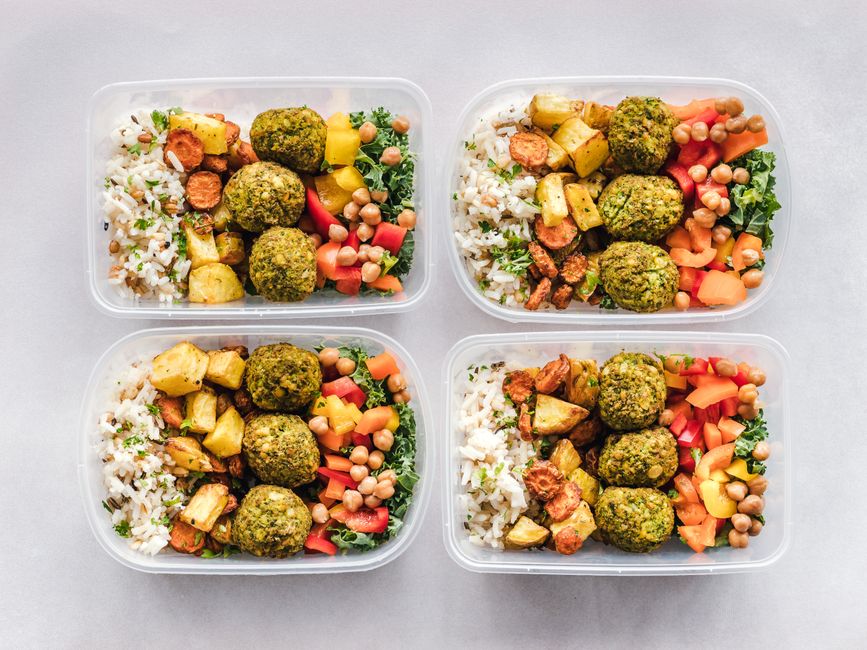
A free 7-day weight-loss meal plan at 1,500 and 1,800 calories, with grams and calories for every meal from USDA data, recipes, a shopping list and prep tips.
Fact-checked against FDA labels and official sources; not yet reviewed by a licensed clinician. This page is education, not medical advice. Talk to your doctor before starting, stopping or changing any treatment.
Key takeaways
- All 14 days in this plan land within 2.5% of their 1,500- or 1,800-calorie target, calculated from USDA FoodData Central.[1]
- Weight-loss eating plans of about 1,200 to 1,500 calories a day for women and 1,500 to 1,800 for men are suggested in the 2013 obesity guideline, adjusted for weight and activity.[4]
- The 2025-2030 Dietary Guidelines suggest protein foods at every meal and less than 2,300 mg of sodium a day; every day in this plan stays under that.[2]
- At 1,600 to 1,800 calories, the Guidelines list 3 servings of dairy, 1 1/2 of fruit and 2 1/2 to 3 of vegetables a day.[3]
In short: This free 7-day weight-loss meal plan gives you three meals and snacks a day at two levels, 1,500 calories and 1,800 calories, with the grams and calories of every meal. Each day has about 85 to 141 grams of protein and 31 to 51 grams of fiber, stays under 2,300 mg of sodium and lands within 2.5% of its calorie target. The 1,800 version is the same food with a few easy additions, such as almonds, milk or fruit. It is a starting point to adapt with your clinician or dietitian, not a personal prescription.
We built every meal from USDA FoodData Central nutrition data and our own recipes, and used the 2025-2030 Dietary Guidelines for Americans’ daily servings by calorie level as a guide. The breakfasts come from our high-protein breakfasts list and the dinners from our low-calorie, high-volume dinners, so you can find the full method for each there. Before you start, use our calorie calculator to see which level is closer to your needs, and read our guide to a calorie deficit for how much of a cut makes sense. For the bigger picture on eating well, start at our nutrition hub.
Which level is for you?
The 2013 obesity guideline from the American Heart Association, American College of Cardiology and The Obesity Society suggests that eating plans of about 1,200 to 1,500 calories a day for women and 1,500 to 1,800 for men usually lead to weight loss, adjusted for body weight and activity. Another way the guideline frames it is a daily deficit of 500 to 750 calories below what you need to maintain your weight. Very-low-calorie diets, under 800 calories a day, are only for limited cases with medical monitoring. So, as a rough guide, the 1,500 plan fits many women and smaller or less active men, and the 1,800 plan fits many men and taller or more active women. Your calorie needs depend on your age, sex, height, weight and activity, so the calculator, your clinician or a dietitian can point you to the right level.
The numbers behind the plan
- 1,200-1,500 / 1,500-1,800calories a day usually suggested for weight loss in women / men, adjusted for weight and activity2013 AHA/ACC/TOS obesity guideline
- 3 / 1 1/2daily servings of dairy and of fruit at both 1,600 and 1,800 caloriesDietary Guidelines for Americans 2025-2030, daily servings by calorie level
- 2 1/2 / 3daily servings of vegetables at 1,600 / 1,800 calories (1 cup cooked or raw, 2 cups leafy greens)Dietary Guidelines for Americans 2025-2030, daily servings by calorie level
- under 2,300 mgsodium a day for people 14 and olderDietary Guidelines for Americans 2025-2030
Checked on October 7, 2026
How the plan works
- Three meals and snacks. Breakfast 240 to 370 calories, lunch 310 to 430, dinner 370 to 575 and snacks 175 to 365 at the 1,500 level.
- The 1,800 level adds about 285 to 315 calories a day with simple extras: 1 ounce of almonds most days, plus milk, fruit, a slice of toast or a little more rice.
- Protein at every meal, as the 2025-2030 Dietary Guidelines suggest: eggs, Greek yogurt, fish, chicken, turkey, beans and lentils.
- Plenty of volume. Each day is about 1.8 to 2.3 kilograms (4 to 5 pounds) of food, mostly vegetables, fruit, soups and lean protein.
- No added sugar in the recipes and only plain dairy. The Guidelines now suggest full-fat dairy with no added sugars; we used nonfat Greek yogurt and 2% milk to leave room in the calories, and a whole-milk swap is noted below.
| Item | 1,500 plan | 1,800 plan |
|---|---|---|
| Monday | 1,484 kcal | 1,798 kcal |
| Tuesday | 1,505 kcal | 1,792 kcal |
| Wednesday | 1,485 kcal | 1,771 kcal |
| Thursday | 1,470 kcal | 1,764 kcal |
| Friday | 1,473 kcal | 1,760 kcal |
| Saturday | 1,484 kcal | 1,798 kcal |
| Sunday | 1,500 kcal | 1,788 kcal |
Every day is within 2.3% of its target; weekly averages are 1,486 and 1,782 calories.
Source: USDA FoodData Central (SR Legacy); InstaTuck calculation from the grams in each meal (checked on October 7, 2026)
The 7-day plan
Grams are the weight of the food as eaten, and calories are rounded per meal, so day totals can differ from the chart by a calorie. The “Add for 1,800” column lists what to add to that meal; everything else stays the same. Recipes for the lunches and snacks are below the plan.
Monday
| Meal | 1,500-calorie day | Grams | kcal | Add for 1,800 | kcal at 1,800 |
|---|---|---|---|---|---|
| Breakfast | Greek yogurt berry parfait | 317 | 241 | 1 slice (32 g) whole-wheat bread | 322 |
| Lunch | Tuna salad pita with an apple | 458 | 390 | 1 oz (28 g) almonds | 554 |
| Dinner | Turkey and bean chili; 1 cup (244 g) 2% milk | 936 | 571 | (no change) | 571 |
| Snacks | Baby carrots and hummus; Pear and pistachios | 307 | 282 | 1 navel orange (140 g) | 351 |
| Day total | 99 g protein, 42 g fiber, 1,134 mg sodium | 2,018 | 1,484 | 110 g protein, 51 g fiber, 1,281 mg sodium | 1,798 |
Tuesday
| Meal | 1,500-calorie day | Grams | kcal | Add for 1,800 | kcal at 1,800 |
|---|---|---|---|---|---|
| Breakfast | Peanut butter protein oatmeal | 440 | 366 | (no change) | 366 |
| Lunch | Hummus and chickpea veggie wrap; 1 navel orange (140 g) | 438 | 431 | (no change) | 431 |
| Dinner | Chicken and vegetable stir-fry | 654 | 473 | 1 cup (244 g) 2% milk | 595 |
| Snacks | Greek yogurt with blueberries; 3 cups (24 g) air-popped popcorn | 268 | 235 | 1 oz (28 g) almonds | 400 |
| Day total | 105 g protein, 41 g fiber, 1,687 mg sodium | 1,800 | 1,505 | 119 g protein, 45 g fiber, 1,802 mg sodium | 1,792 |
Wednesday
| Meal | 1,500-calorie day | Grams | kcal | Add for 1,800 | kcal at 1,800 |
|---|---|---|---|---|---|
| Breakfast | Veggie egg scramble with toast | 360 | 349 | 1 cup (244 g) 2% milk | 471 |
| Lunch | Black bean and quinoa bowl; 1 navel orange (140 g) | 558 | 401 | (no change) | 401 |
| Dinner | Shrimp marinara with zucchini noodles | 538 | 370 | (no change) | 370 |
| Snacks | Apple with peanut butter; String cheese and grapes | 377 | 365 | 1 oz (28 g) almonds | 529 |
| Day total | 95 g protein, 37 g fiber, 1,307 mg sodium | 1,833 | 1,485 | 109 g protein, 40 g fiber, 1,422 mg sodium | 1,771 |
Thursday
| Meal | 1,500-calorie day | Grams | kcal | Add for 1,800 | kcal at 1,800 |
|---|---|---|---|---|---|
| Breakfast | Greek yogurt overnight oats | 418 | 369 | 1 medium banana (118 g) | 474 |
| Lunch | Turkey and Swiss sandwich with carrots; 1 navel orange (140 g) | 442 | 383 | (no change) | 383 |
| Dinner | Sheet-pan salmon, broccoli and potatoes; 1 cup (244 g) 2% milk | 720 | 542 | (no change) | 542 |
| Snacks | String cheese and grapes | 179 | 176 | Apple with peanut butter | 365 |
| Day total | 99 g protein, 31 g fiber, 1,551 mg sodium | 1,759 | 1,470 | 104 g protein, 39 g fiber, 1,630 mg sodium | 1,764 |
Friday
| Meal | 1,500-calorie day | Grams | kcal | Add for 1,800 | kcal at 1,800 |
|---|---|---|---|---|---|
| Breakfast | Black bean breakfast burrito | 282 | 346 | 1 cup (244 g) 2% milk | 468 |
| Lunch | Tuna and white bean salad; 1 navel orange (140 g) | 638 | 385 | (no change) | 385 |
| Dinner | Chicken, lentil and vegetable soup; 1 slice (32 g) whole-wheat bread | 882 | 507 | (no change) | 507 |
| Snacks | Air-popped popcorn; Greek yogurt with blueberries | 268 | 235 | 1 oz (28 g) almonds | 400 |
| Day total | 127 g protein, 44 g fiber, 2,047 mg sodium | 2,070 | 1,473 | 141 g protein, 47 g fiber, 2,162 mg sodium | 1,760 |
Saturday
| Meal | 1,500-calorie day | Grams | kcal | Add for 1,800 | kcal at 1,800 |
|---|---|---|---|---|---|
| Breakfast | Chickpea shakshuka | 517 | 359 | 1 slice (32 g) whole-wheat bread | 439 |
| Lunch | Egg salad on greens with crackers | 349 | 311 | 1 navel orange (140 g) | 380 |
| Dinner | Turkey meatballs with spaghetti squash; 1 cup (244 g) 2% milk | 886 | 532 | (no change) | 532 |
| Snacks | Pear and pistachios; Baby carrots and hummus | 307 | 282 | 1 oz (28 g) almonds | 447 |
| Day total | 85 g protein, 34 g fiber, 1,380 mg sodium | 2,059 | 1,484 | 96 g protein, 42 g fiber, 1,527 mg sodium | 1,798 |
Sunday
| Meal | 1,500-calorie day | Grams | kcal | Add for 1,800 | kcal at 1,800 |
|---|---|---|---|---|---|
| Breakfast | Savory cottage cheese bowl; 1 medium banana (118 g) | 520 | 342 | (no change) | 342 |
| Lunch | Edamame, quinoa and veggie salad | 436 | 312 | (no change) | 312 |
| Dinner | Cod with white beans, tomatoes and spinach; 1 cup (244 g) 2% milk | 758 | 515 | 1/2 cup (101 g) cooked brown rice | 639 |
| Snacks | Greek yogurt with blueberries; Apple with peanut butter | 442 | 331 | 1 oz (28 g) almonds | 495 |
| Day total | 119 g protein, 35 g fiber, 2,025 mg sodium | 2,156 | 1,500 | 127 g protein, 40 g fiber, 2,029 mg sodium | 1,788 |
| Item | Protein | Fiber |
|---|---|---|
| Monday | 99 g | 42 g |
| Tuesday | 105 g | 41 g |
| Wednesday | 95 g | 37 g |
| Thursday | 99 g | 31 g |
| Friday | 127 g | 44 g |
| Saturday | 85 g | 34 g |
| Sunday | 119 g | 35 g |
Fiber is above the 14 g per 1,000 calories Adequate Intake on every day; if you eat much less fiber now, see the tips below.
Source: USDA FoodData Central (SR Legacy); InstaTuck calculation (checked on October 7, 2026)
The breakfasts and dinners
Breakfasts are, in order from Monday, the Greek yogurt berry parfait, peanut butter protein oatmeal, veggie egg scramble with toast, Greek yogurt overnight oats, black bean breakfast burrito, chickpea shakshuka and savory cottage cheese bowl. Each one is written out with its grams on our high-protein breakfasts page. Dinners are, in order, the turkey and bean chili, chicken and vegetable stir-fry, shrimp marinara with zucchini noodles, sheet-pan salmon with broccoli and potatoes, chicken, lentil and vegetable soup, turkey meatballs with spaghetti squash, and cod with white beans and spinach, all on our high-volume dinners page. Want a change? Swap any dinner for the Greek chicken and chickpea salad (429 calories) or the chicken burrito bowl (443) from the same list; the day stays within a few calories.
The lunches
- Tuna salad pita with an apple (390 kcal, 24 g protein). Mix 3 oz (85 g) drained light tuna in water with 1 tbsp (15 g) light mayonnaise and 1/4 cup (25 g) chopped celery. Fill 1 large whole-wheat pita (64 g) with it, 1 cup (47 g) shredded romaine and 2 tomato slices (40 g). Serve with 1 medium apple (182 g).
- Hummus and chickpea veggie wrap (362 kcal, 14 g protein, 12 g fiber). Spread 3 tbsp (45 g) hummus on a whole-wheat tortilla (41 g). Add 1.5 oz (41 g) drained canned chickpeas, 1/2 cup (52 g) cucumber, 1/2 cup (74.5 g) red pepper, 1 cup (30 g) spinach and 1/2 oz (14 g) feta.
- Black bean and quinoa bowl (332 kcal, 16 g fiber). Layer 1 cup (47 g) romaine, 1/2 cup (92.5 g) cooked quinoa, 1/2 cup (86 g) black beans, 1/4 cup (41 g) corn and 1/2 cup (90 g) chopped tomato. Top with 2 tbsp (36 g) salsa and 25 g (about 1/8) avocado.
- Turkey and Swiss sandwich with carrots (315 kcal, 26 g protein). On 2 slices (64 g) whole-wheat bread: about 2 oz (56 g) sliced turkey breast, 1 slice (28 g) low-fat Swiss, 1/2 cup (23.5 g) romaine, 2 tomato slices (40 g) and 1 tsp (5 g) mustard. Serve with 85 g baby carrots. Deli turkey is salty; this lunch has 975 mg of sodium.
- Tuna and white bean salad (316 kcal, 29 g protein). Toss 2 cups (94 g) romaine, 1 cup (149 g) cherry tomatoes and 2 tbsp (20 g) red onion with 3 oz (85 g) tuna and 1/2 cup (131 g) rinsed canned white beans. Dress with 1 tsp (4.5 g) olive oil and 1 tbsp (15 g) lemon juice.
- Egg salad on greens with crackers (311 kcal, 20 g protein). Mash 2 hard-boiled eggs (100 g) with 2 tbsp (35 g) Greek yogurt, 1 tsp (5 g) mustard and 1/4 cup (25 g) celery. Serve on 2 cups (94 g) romaine with 1/2 oz (14 g) whole-wheat crackers and 1/2 cup (76 g) grapes.
- Edamame, quinoa and veggie salad (312 kcal, 16 g protein). Combine 1/2 cup (77.5 g) cooked edamame, 1/2 cup (92.5 g) cooked quinoa, 1 cup (104 g) cucumber, 1/2 cup (74.5 g) red pepper and 1 medium (61 g) grated carrot. Dress with 1 tsp (4.5 g) olive oil, 1 tbsp (15 g) lemon juice and 1/2 tbsp (7 g) low-sodium soy sauce.
The snacks
Baby carrots (85 g) with 2 tbsp (30 g) hummus: 101 calories. One container (170 g) Greek yogurt with 1/2 cup (74 g) blueberries: 142 calories and 18 g protein. A medium apple (182 g) with 1 tbsp (16 g) peanut butter: 189 calories. One part-skim string cheese (28 g) with 1 cup (151 g) grapes: 176 calories. Three cups (24 g) air-popped popcorn: 93 calories. A medium pear (178 g) with 1/2 oz (14 g) pistachios: 182 calories. For more ideas at similar calories, see our healthy snacks guide.
Shopping list for the week (1,500 level)
Amounts are what the plan uses, rounded; buy a little extra. For the 1,800 level, add about 6 oz (170 g) almonds, 3 more cups of 2% milk, 2 navel oranges, 1 banana, 1 apple, 1 tbsp peanut butter, 2 slices of whole-wheat bread and 1/2 cup cooked brown rice.
- Vegetables: about 450 g red bell peppers (3 large), 470 g tomatoes and cherry tomatoes, 1 head romaine (400 g used), 390 g broccoli, 320 g zucchini, 200 g spinach, 1 cucumber, 2 medium onions, 3 medium carrots plus 255 g baby carrots, 100 g celery, 70 g mushrooms, 70 g cabbage, enough spaghetti squash for 2 cups cooked, 1 small red potato, garlic, 2 lemons.
- Fruit: 3 medium apples, 2 medium pears, 4 navel oranges, 1 banana, about 2 1/2 cups grapes, 2 cups fresh blueberries plus 1/2 cup frozen, 1 cup raspberries.
- Protein: 7 large eggs plus 5 egg whites, 2 cans light tuna in water, cooked chicken breast (about 6.5 oz, 185 g), 93% lean ground turkey (6 oz cooked, 170 g), 4 oz shrimp, a 3-oz salmon fillet and a 5-oz cod fillet (cooked weights), 2 oz sliced turkey breast.
- Dairy: 6 containers (170 g each) plain nonfat Greek yogurt, 4 cups 2% milk, 1 1/2 cups fat-free milk, 3/4 cup 1% cottage cheese, 2 part-skim string cheeses, about 1 oz feta, 2 tbsp parmesan, 1 slice low-fat Swiss, 1/2 oz reduced-fat cheddar.
- Beans and grains: 1/2 cup each cooked lentils, kidney beans and black beans, 1/4 cup low-sodium canned black beans, 1 cup canned white beans, 1/2 cup canned chickpeas, 1/2 cup frozen edamame, 1 cup cooked quinoa, 1/2 cup cooked brown rice, 1 cup rolled oats, 5 slices whole-wheat bread, 2 whole-wheat tortillas, 1 large whole-wheat pita, a small amount of whole-wheat spaghetti, whole-wheat crackers, popcorn kernels, 1/4 cup frozen corn.
- Pantry: 3 cups no-salt-added canned tomatoes, 1 cup low-sodium marinara, 1 1/2 cups low-sodium chicken broth, salsa, hummus (about 7 tbsp), peanut butter, 1 oz pistachios, a few almonds, chia seeds, olive oil, light mayonnaise, mustard, low-sodium soy sauce, 1/4 avocado, herbs and spices.
Prep once, eat all week
A one-hour Sunday prep
- Cook the grainsA pot of quinoa and one of brown rice; cool and refrigerate.
- Boil eggsHard-boil the eggs for Saturday's egg salad and any snacks.
- Make the chiliCook a double batch and freeze half for the next week.
- Wash and chopPeppers, onions, carrots, celery and greens, stored in containers.
- Portion the snacksCarrots and hummus, pistachios and popcorn in small containers.
Our meal-prep containers list covers containers that make this easier, and a kitchen scale is the simplest way to match the grams. If cooking every night isn’t realistic, our meal delivery picks compare portion-controlled options you can mix in. Cook chicken and turkey to 165 °F and fish to 145 °F, and reheat leftovers to 165 °F, as FoodSafety.gov advises.
Make it yours
- Swap within a group. Chicken for turkey or fish, any bean for another, berries for other fruit, quinoa for brown rice. Calories shift a little; check the label.
- Full-fat dairy. USDA lists plain whole-milk Greek yogurt at 97 calories per 100 g and nonfat at 59, so swapping one 170 g container adds about 65 calories.
- Plant-based. Replace the meat and fish with tofu, tempeh, edamame or extra beans; the tofu curry on our dinners list is dairy-free.
- Ease into the fiber. At 31 to 51 grams a day, this plan has more fiber than most people eat. MedlinePlus advises adding fiber over a few weeks and drinking plenty of fluids; our high-fiber foods page has tips.
- Fewer meals. If you prefer two meals and a snack, combine the snacks into a meal; the day total is what matters most.
What a meal plan can’t do
A plan gives you a week of structure, but the results come from what you can keep up. Weight loss usually slows after the first months, and keeping weight off depends on habits more than any menu; our guide to keeping weight off covers what the research shows. If this style of eating suits you, our best diets for weight loss list shows which longer-term eating patterns have the strongest evidence, such as the Mediterranean diet. If you take a GLP-1 medicine, you may not want this much food; our GLP-1 diet guide covers smaller, protein-first meals. To check your protein needs, try the protein calculator.
Related guides
 Healthy Snacks for Weight Loss: 40 ideas by calories and proteinHealthy snacks for weight loss: 40 ideas with calories, protein and fiber from USDA data, grouped…
 Calorie Deficit: how much, how to create one, how to keep itCalorie deficit explained: how big a deficit is reasonable, how to create one you can live…
 What to Eat on a GLP-1: protein, fiber and handling side effectsWhat to eat on a GLP-1 medicine: protein targets from the 2025 joint advisory, whole-food meals,…
Tools for this topic
 Calorie Calculator: calories to maintain or lose weightFree calorie calculator: estimate your maintenance calories and gentle weight-loss options, how accurate the estimate is…
 Protein Calculator: how much protein per dayFree protein calculator: grams of protein per day for weight loss, strength training, older age and…
Latest research
 The 10,000 Steps Myth: How Many Steps You Really NeedWhere the 10,000 steps goal came from and what the big studies found: most of the…
 How to Read a Weight-Loss Study Headline in 5 StepsFive questions to ask before believing a weight-loss headline: who was studied, how many, how long,…
 Brown Fat, Cold Plunges and Saunas: Do They Help Weight Loss?Do cold plunges, brown fat and saunas help weight loss? What human studies show: brown fat…
Questions to ask a professional
- Which calorie level, 1,500 or 1,800, fits my body, activity and health?
- Do my medicines or conditions mean I should change the protein, sodium, potassium or fiber in this plan?
- How fast should I expect to lose weight, and when should I adjust my calories?
- Would a registered dietitian help me adapt this plan to foods I like?
- If I take a GLP-1 medicine, how should my meals change?
Frequently asked questions
Is 1,500 calories a day enough to lose weight?
For many people it creates a deficit. The 2013 obesity guideline suggests about 1,200 to 1,500 calories a day for women and 1,500 to 1,800 for men, adjusted for weight and activity. Your own needs differ, so use the calorie calculator and talk with your clinician or a dietitian.
Should I choose the 1,500 or the 1,800 calorie plan?
As a rough guide, 1,500 suits many women and smaller or less active men, and 1,800 suits many men and taller or more active women. If you feel very hungry or tired on the plan, talk with your clinician or a dietitian about moving up a level.
Can I swap meals between days?
Yes. Breakfasts are 241 to 369 calories, lunches 311 to 431 and dinners 370 to 571, so swapping one meal for another of the same type changes the day by up to about 200 calories. Pick a swap with similar calories to keep the total close.
How much protein is in this meal plan?
About 85 to 127 grams a day at 1,500 calories and 96 to 141 grams at 1,800, with protein at every meal. The 2025-2030 Dietary Guidelines suggest 1.2 to 1.6 grams per kilogram of body weight a day, adjusted for calorie needs; the protein calculator gives an estimate for you.
Is this meal plan safe if I have diabetes?
It may need changes. People taking insulin or other medicines that can cause low blood sugar should plan any calorie change with their care team, who may adjust doses or carbohydrate timing.
References
- FoodData Central (SR Legacy, April 2018 release). U.S. Department of Agriculture, Agricultural Research Service, 2018. (accessed October 7, 2026) Government page
- Dietary Guidelines for Americans, 2025-2030. U.S. Department of Agriculture and U.S. Department of Health and Human Services, 2026. (accessed October 7, 2026) Guideline
- Daily Servings by Calorie Level (Dietary Guidelines for Americans, 2025-2030). U.S. Department of Health and Human Services and U.S. Department of Agriculture, 2026. (accessed October 7, 2026) Guideline
- Jensen MD, Ryan DH, Apovian CM, et al.. 2013 AHA/ACC/TOS Guideline for the Management of Overweight and Obesity in Adults. Circulation, 2014. doi:10.1161/01.cir.0000437739.71477.ee · PMID 24222017 (accessed October 7, 2026) Guideline
- Dahl WJ, Stewart ML.. Position of the Academy of Nutrition and Dietetics: Health Implications of Dietary Fiber. Journal of the Academy of Nutrition and Dietetics, 2015. doi:10.1016/j.jand.2015.09.003 · PMID 26514720 (accessed October 7, 2026) Society statement
- Fiber. MedlinePlus, U.S. National Library of Medicine. (accessed October 7, 2026) Government page
- Safe Minimum Internal Temperature Chart. FoodSafety.gov (U.S. Department of Health and Human Services). (accessed October 7, 2026) Government page
Facts checked on October 7, 2026
Educational information, not medical advice. Talk with a qualified healthcare professional about your own situation. In an emergency call 911.