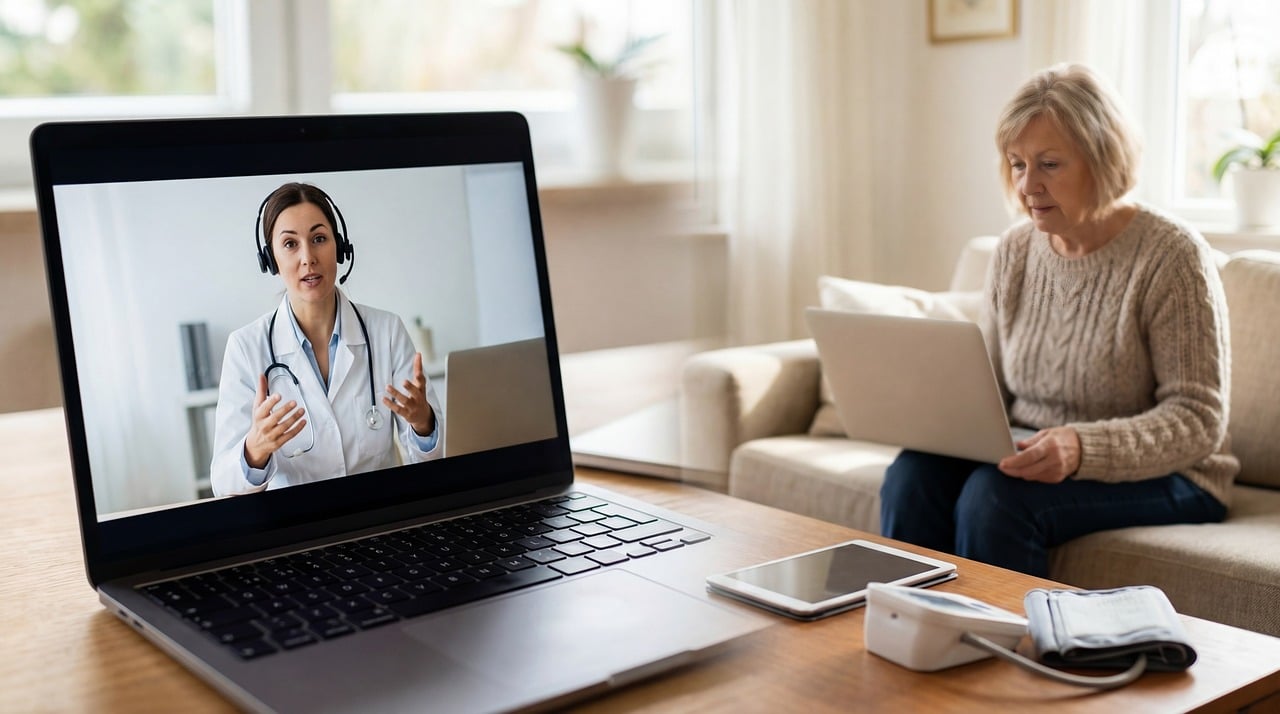
Telehealth weight-loss programs explained: how online GLP-1 care works, licensing, approved vs compounded medicines, pharmacy checks, dated membership and medication costs, privacy and red flags.
Fact-checked against FDA labels and official sources; not yet reviewed by a licensed clinician. This page is education, not medical advice. Talk to your doctor before starting, stopping or changing any treatment.
Key takeaways
- In a fall 2025 KFF poll, 17% of people who had taken a GLP-1 got it from an online provider or website; 76% got it from their own doctors.[1]
- A telehealth clinician typically needs a license in the state where you are located.[2]
- Compounded GLP-1s are not FDA approved; the FDA has received 990 adverse event reports for compounded semaglutide and more than 730 for compounded tirzepatide (as of May 31, 2026).[3]
- Telehealth memberships we checked cost $74 to $149 a month after the first month, with medication extra (checked 2026-10-06).[13]
- Telemedicine prescribing of controlled medicines such as phentermine relies on DEA flexibilities extended through December 31, 2026.[7]
In short: Telehealth weight-loss programs let you see a licensed clinician online, usually through a questionnaire, messages or a video visit, and, if the clinician thinks it is appropriate, get a prescription for a weight-loss medication such as a GLP-1. Most charge a monthly membership of roughly $74 to $149 on top of the medicine itself (prices checked 2026-10-06). Before you pay, check that the clinician is licensed in your state, which exact medicine you would receive (FDA-approved brand or compounded), the total monthly cost, how follow-up works and how to cancel.
This guide is information only: InstaTuck does not sell any telehealth program and there are no affiliate links here. Prescription weight-loss medicines can help many people, but they are not right for everyone. Research your options, talk with a licensed doctor, ideally including your own primary care doctor, and get properly evaluated before you start.
Telehealth and GLP-1s: the numbers
- 12%of U.S. adults said they were currently taking a GLP-1 drug (fall 2025)KFF Health Tracking Poll
- 17%of people who had taken a GLP-1 got it from an online provider or websiteKFF Health Tracking Poll
- 56%of GLP-1 users said the drugs were difficult to affordKFF Health Tracking Poll
- 990adverse event reports linked to compounded semaglutide received by the FDA (as of May 31, 2026)FDA
Checked on October 6, 2026
How telehealth GLP-1 programs work
Almost every online weight-loss prescriber follows the same basic path. Ro, Hims and Hers, WeightWatchers Med+ and Noom Med all describe versions of it on their own sites:
The usual path
- IntakeAn online health questionnaire, sometimes with ID checks, photos, your weight and recent lab results.
- Clinician reviewA licensed clinician reviews your answers by message (asynchronous) or in a video visit and decides whether medication is appropriate.
- Insurance or cashThe program checks coverage and handles prior authorization, or offers cash-pay prices.
- PharmacyThe prescription goes to your local pharmacy or a mail-order partner that ships to you.
- Follow-upMessaging, check-ins, dose increases, side-effect support and refills, as long as you keep the membership.
The convenience is real: no waiting room, fast answers and home delivery. The trade-off is that nobody examines you in person, and the clinician only knows what you tell them. A good program will ask detailed questions, request labs when needed, refuse to prescribe when a medicine is not appropriate and make it easy to share records with your own doctor. Our medical weight loss guide explains what a full in-person evaluation usually includes, for comparison.
Where people get GLP-1 medicines
Most people still get these medicines from their own doctors. In KFF’s poll of 1,350 adults (October 27 to November 2, 2025), 76% of people who had ever taken a GLP-1 said they got it from one of their doctors, 17% from an online provider or website and 9% from a medical spa or aesthetic center (the shares add up to slightly more than 100%).
The same poll found cost was one of the most common reasons people stopped: 14% of users said they had stopped because of cost and 13% because of side effects, while 5% stopped because their condition improved. Planning for both, the monthly bill and the side effects, is the heart of choosing a program.
| Item | Value |
|---|---|
| Cost | 14% |
| Side effects | 13% |
| Condition improved | 5% |
Share of all adults who have ever taken a GLP-1.
Source: KFF Health Tracking Poll, fielded Oct 27 to Nov 2, 2025 (checked on October 6, 2026)
Check 1: is the clinician licensed where you are?
When care is delivered by telehealth, it is generally considered to happen where the patient is, so the clinician typically needs a license in your state, according to the Center for Connected Health Policy, which tracks state telehealth laws. Some states have limited exceptions or special telehealth registrations. This is why many programs are “not available in all states”. Ask for your clinician’s full name and credentials, then look them up on your state medical or nursing board’s license search. Check that the license is active and see whether any disciplinary actions are listed.
Check 2: which medicine exactly, and is it FDA approved?
This is the single most important question. As of October 2026 there are three kinds of products sold through online programs:
- FDA-approved for weight management: for example Wegovy (injection and pill), Zepbound, Foundayo and Saxenda or its generics. These have FDA labels that set out who they are for, how they are taken, side effects and warnings.
- FDA-approved for another use, prescribed off-label: for example Ozempic and Mounjaro (type 2 diabetes) or metformin. Off-label prescribing is legal, but the weight-loss use is not what the FDA approved these products for.
- Compounded, not FDA approved: semaglutide or tirzepatide mixed by a pharmacy. The FDA says compounded drugs are not reviewed for safety, effectiveness or quality before they are sold, and it has received reports of dosing errors, some requiring hospital care. The national shortages that allowed widespread copies ended in 2024 (tirzepatide) and 2025 (semaglutide). On February 6, 2026 the FDA announced steps against non-approved GLP-1s mass-marketed as alternatives and said promotions cannot claim compounded products are generic versions of, or the same as, approved drugs.
Some sellers also offer products labeled “for research purposes” or “not for human consumption”. The FDA warns these are illegally sold for human use and may be of unknown quality. Never inject them. Our guide to compounded GLP-1s covers how to check a pharmacy and what the FDA says.
Check 3: is the pharmacy legitimate?
The FDA’s BeSafeRx campaign lists the signs of a safe online pharmacy: it requires a valid prescription, is licensed by your state board of pharmacy, has a licensed pharmacist available to answer questions, and has a U.S. physical address. You can check a pharmacy’s license through your state board. Ask the program which pharmacy fills your prescription, then look it up. Medicines should arrive sealed, labeled with your name and the drug, and, for GLP-1 injections, cold.
Check 4: what does it really cost each month?
Most telehealth programs charge two things: a membership for the clinical service, and the medicine. The memberships we checked were in the same range, but terms differ:
Then add the medicine. Manufacturers now sell several brands directly to people paying cash, so you can compare any program’s price with these (checked 2026-10-06):
| Item | Low | High |
|---|---|---|
| Wegovy pill | $149 USD | $299 USD |
| Foundayo pill (regular prices) | $149 USD | $349 USD |
| Zepbound KwikPen | $299 USD | $449 USD |
| Wegovy pen (incl. HD) | $349 USD | $399 USD |
Wegovy pen intro price $199 for two fills of the lowest doses through Dec 31, 2026; Foundayo 2.5 mg $149 and 5.5 mg $199 through Dec 31, 2026. Commercial insurance savings cards can bring eligible copays to $25.
Source: NovoCare Pharmacy (Wegovy); Eli Lilly coverage and savings pages (Zepbound, Foundayo) (checked on October 6, 2026)
Ask about all of this before you enter card details: the first-month price and the regular price, whether the plan renews automatically, whether a 6- or 12-month plan is a commitment you must pay out, whether lab tests cost extra, and what happens to prescriptions if you cancel. If you have Medicare, the CMS Medicare GLP-1 Bridge (July 1, 2026 to December 31, 2027) covers certain GLP-1s for weight management with a $50 copay for those who qualify; a program’s own fee is usually separate. Our GLP-1 coverage guide, Wegovy cost page and GLP-1 cost comparison tool help you add it up.
Check 5: follow-up, side effects and your own doctor
GLP-1 medicines start at a low dose and step up over weeks, and the most common side effects are digestive: nausea, vomiting, diarrhea and constipation. FDA labels also list serious risks, such as pancreatitis, gallbladder problems, kidney injury from dehydration and low blood sugar when combined with insulin or sulfonylureas, and a boxed warning about thyroid C-cell tumors, with a contraindication for people with a personal or family history of medullary thyroid cancer or MEN 2. Before you start, find out:
- How you reach a clinician quickly, including nights and weekends, and when they would tell you to go to urgent care.
- Who orders and reviews lab tests, and how often you will be checked.
- How the program coordinates with your primary care doctor, especially if you take diabetes or blood pressure medicines.
- What the plan is for nutrition, protein and strength training to protect muscle; see muscle loss on GLP-1s.
- What happens if you stop: in trials, many people regained much of the weight after stopping; see after a GLP-1.
Check 6: controlled medicines and the rules for online prescribing
GLP-1 medicines are not controlled substances, but some older weight-loss medicines are. Phentermine, for example, is a Schedule IV controlled substance, according to its FDA label. Prescribing controlled medicines by telemedicine without an in-person visit is allowed only under temporary federal rules: the DEA and HHS extended these telemedicine flexibilities through December 31, 2026, in a rule published on December 31, 2025. Rules after that date may change, and some states set their own limits, so ask how the program would continue your care.
Check 7: privacy, ads and cancellation
- Privacy: HIPAA covers most doctors, hospitals and insurers, but many health apps are not covered by HIPAA. The Federal Trade Commission’s Health Breach Notification Rule requires many of those non-HIPAA health apps to notify you if your health data is breached. Read the privacy policy and check whether your data is shared for advertising.
- Advertising: the FTC warns about weight-loss ads that promise results without changing habits, fake news stories and testimonials, and stock or altered before-and-after photos. Several programs state that people in their ads were paid.
- Cancellation: save the cancellation terms before you pay, note the renewal date, and keep the confirmation when you cancel.
Programs we have reviewed, side by side
| Program | Membership (after first month) | Medicines listed | Compounded GLP-1s | Checked |
|---|---|---|---|---|
| WeightWatchers Med+ | $74 (12-month) or $84 (6-month) a month | Wegovy, Zepbound, Saxenda, Wegovy pill, Foundayo; metformin, naltrexone-bupropion | No: “only FDA-approved” | 2026-10-06 |
| Noom Med | Varies by program; Medicare plan $387 per 12 weeks | Wegovy, Zepbound, Wegovy pill, Foundayo, Ozempic, Mounjaro, liraglutide, metformin | Yes (GLP-1Rx and Microdose programs) | 2026-10-06 |
| Ro Body | $149 a month, or as low as $74 prepaid annually | Wegovy pill and pen, Zepbound, Foundayo, Ozempic (off-label) | None listed | 2026-10-03 |
| Hims and Hers | $149 a month | Wegovy pill and pen, Zepbound, Foundayo, Ozempic, Mounjaro | “Limited scale”, not advertised | 2026-10-01 / 2026-08-10 |
Red flags: walk away if you see these
- A prescription after a few clicks, with no questions about your history, medicines or pregnancy.
- Claims that a compounded product is “generic Wegovy”, “the same as Zepbound” or “clinically proven”.
- Products labeled “for research use only” or “not for human consumption”, or vials without a patient-specific label.
- No way to find out who the clinician is or which pharmacy fills your order.
- Promises of a fixed number of pounds by a date, or “no side effects”.
- Prices that only appear after you enter card details, or no clear way to cancel.
If telehealth does not feel right, the alternatives are your own primary care doctor, a weight-loss clinic or an obesity medicine specialist. Our medical vs commercial programs guide compares the main routes, and Find My Options helps you sort your preferences. Back to all weight-loss programs.
Our disclosure
InstaTuck has no affiliate agreement with any program named on this page and earns nothing from it. We do not promote offers built around compounded versions of FDA-approved drugs. Read our editorial standards.
Related guides
 Weight-Loss Programs: commercial, telehealth and clinical comparedWeight-loss programs compared: commercial, app, meal-delivery, telehealth and clinical programs, what to check before signing up,…
 Compounded Semaglutide and Tirzepatide: what FDA says and the risksCompounded semaglutide and tirzepatide explained: not FDA approved, the dated shortage history, FDA safety reports, counterfeit…
 Medical Weight Loss: physician-supervised options explainedMedical weight loss explained: who provides it, what a visit and labs include, programs, medications, procedures,…
 Does Insurance Cover GLP-1s for Weight Loss? (checked quarterly)Does insurance cover GLP-1s for weight loss? Employer data, Medicare rules and the $50 GLP-1 Bridge,…
Tools for this topic

Latest research
 What’s Coming in 2027: Weight-Loss Treatments Awaiting FDA DecisionsWeight-loss treatments awaiting FDA decisions in 2027: CagriSema, retatrutide, survodutide, MariTide and more, with filing dates,…
 Weight-Loss Devices FDA Has Authorized: Balloons, Capsules and MoreEvery weight-loss device the FDA has authorized, from the Lap-Band to swallowable balloons and gel capsules:…
 Questions to Ask a Bariatric Surgeon (and How to Check Credentials)The questions to ask a bariatric surgeon and how to check credentials: American Board of Surgery…
Questions to ask a professional
- Should I start a weight-loss medicine through you, or is an online program a reasonable option for me?
- Which tests should I have before and during GLP-1 treatment?
- If an online clinician prescribes for me, how will we share records and avoid drug interactions?
- Is a compounded product ever the right choice for me, and what are the risks?
- What warning signs should make me stop the medicine and get help?
Frequently asked questions
Are online weight-loss programs legit?
Many are run by licensed clinicians and use FDA-approved medicines, but quality varies. Check the clinician's state license, the exact medicine and pharmacy, the total cost and the cancellation terms before paying.
Can I get Wegovy or Zepbound online?
Yes, with a prescription from a licensed clinician after an evaluation. Several telehealth programs prescribe them, and the manufacturers also sell them directly to cash-paying patients with a valid prescription.
How much do telehealth weight-loss programs cost?
The memberships we checked cost $74 to $149 a month after the first month (2026-10-06). Medication is extra: manufacturer self-pay prices started at $149 a month for the lowest-dose pills.
Is compounded semaglutide from a telehealth company safe?
Compounded drugs are not FDA approved, and the FDA has received hundreds of adverse event reports, including dosing errors. If one is offered, ask why an FDA-approved product would not work for you.
Do I need lab tests for a GLP-1 prescription?
It depends on your health. Programs differ on whether they require labs. A good clinician will ask about your history and order tests when needed; your own doctor may already have recent results.
Does the doctor have to be licensed in my state?
Generally yes. Telehealth care is usually considered to happen where the patient is, so the clinician typically needs a license in your state, with some state exceptions.
Can a telehealth program prescribe phentermine?
Phentermine is a Schedule IV controlled substance. Telemedicine prescribing of controlled medicines without an in-person visit relies on temporary DEA rules extended through December 31, 2026, and state rules also apply.
Will my health data be private?
Not every health app is covered by HIPAA. The FTC's Health Breach Notification Rule covers many that are not. Read the privacy policy and check how data is shared for advertising.
Can I use Medicare with a telehealth program?
Medicare's GLP-1 Bridge (July 2026 to December 2027) covers certain GLP-1s for weight with a $50 copay for those who qualify; the program's membership fee is usually separate and not covered.
References
- Poll: 1 in 8 adults say they are currently taking a GLP-1 drug. KFF, 2025. (accessed October 6, 2026) Other
- State telehealth policies: cross-state licensing. Center for Connected Health Policy. (accessed October 6, 2026) Other
- FDA’s concerns with unapproved GLP-1 drugs used for weight loss. U.S. Food and Drug Administration, 2026. (accessed October 7, 2026) Government page
- FDA intends to take action against non-FDA-approved GLP-1 drugs. U.S. Food and Drug Administration, 2026. (accessed October 6, 2026) Government page
- FDA clarifies policies for compounders as national GLP-1 supply begins to stabilize (content current as of 2026-04-01). U.S. Food and Drug Administration. (accessed October 6, 2026) Government page
- BeSafeRx: your source for online pharmacy information. U.S. Food and Drug Administration. (accessed October 6, 2026) Government page
- Fourth Temporary Extension of COVID-19 Telemedicine Flexibilities for Prescription of Controlled Medications. Drug Enforcement Administration and HHS (Federal Register), 2025. (accessed October 6, 2026) Government page
- Phentermine hydrochloride tablets: prescribing information. Via DailyMed (generic labeler), 2026. (accessed October 6, 2026) Drug label
- WEGOVY (semaglutide) injection and tablets: prescribing information. Novo Nordisk, via DailyMed, 2026. (accessed October 7, 2026) Drug label
- Wilding JPH, Batterham RL, Davies M, et al.. Weight regain and cardiometabolic effects after withdrawal of semaglutide: The STEP 1 trial extension. Diabetes, Obesity and Metabolism, 2022. doi:10.1111/dom.14725 · PMID 35441470 (accessed October 7, 2026) Randomized trial
- Complying with FTC’s Health Breach Notification Rule. Federal Trade Commission. (accessed October 6, 2026) Government page
- The Truth Behind Weight Loss Ads. Federal Trade Commission. (accessed October 7, 2026) Government page
- WeightWatchers Med+. WW International, Inc.. (accessed October 6, 2026) Other
- Medicare GLP-1 coverage with Noom. Noom, Inc.. (accessed October 6, 2026) Other
- GLP-1 Trust and Transparency. Noom, Inc.. (accessed October 6, 2026) Other
- Ro Body Membership (capture, 2026-10-03). Ro, via Internet Archive, 2026. (accessed October 6, 2026) Other
- Hims weight loss (capture, 2026-10-01). Hims & Hers Health, Inc., via Internet Archive, 2026. (accessed October 6, 2026) Other
- Hims & Hers Health, Inc. Form 10-Q, Q2 2026. Hims & Hers Health, Inc. (SEC EDGAR), 2026. (accessed October 6, 2026) Other
- Wegovy at NovoCare Pharmacy: self-pay prices. Novo Nordisk (NovoCare Pharmacy). (accessed October 7, 2026) Other
- Zepbound coverage and savings. Eli Lilly and Company. (accessed October 6, 2026) Other
- Foundayo coverage and savings. Eli Lilly and Company. (accessed October 6, 2026) Other
- Medicare GLP-1 Bridge. Centers for Medicare & Medicaid Services. (accessed October 6, 2026) Government page
Facts checked on October 6, 2026
Educational information, not medical advice. Talk with a qualified healthcare professional about your own situation. In an emergency call 911.