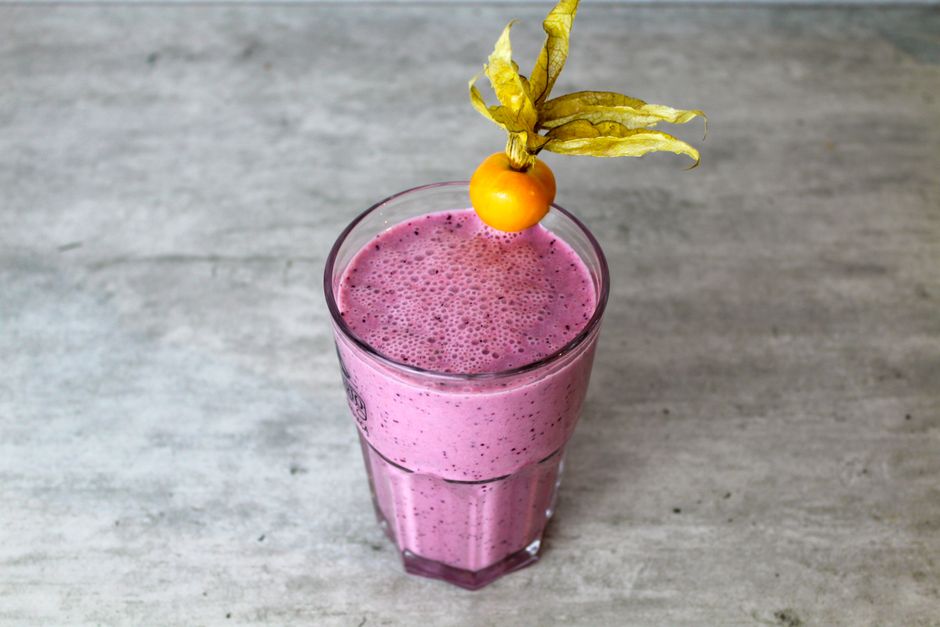
Best picks
Ten high-protein smoothie recipes for weight loss, each with about 20 to 27 grams of protein, ranked by fiber and energy density, with USDA nutrition numbers.
Fact-checked against FDA labels and official sources; not yet reviewed by a licensed clinician. This page is education, not medical advice. Talk to your doctor before starting, stopping or changing any treatment.
Key takeaways
- All ten recipes deliver about 20 to 27 grams of protein in 208 to 382 calories, calculated from USDA FoodData Central.[1]
- Whipping the same milkshake to a larger volume (600 vs 300 mL) cut calories eaten at the next meal by 12%.[2]
- Calories from sugary drinks were not offset by eating less in a crossover study, while the same calories as solid food were.[3]
- Higher-protein diets with about 25 to 30 grams of protein per meal improved appetite and weight management in research.[4]
In short: A smoothie helps with weight loss when it works like a small meal: at least 20 grams of protein, some fiber and lots of volume for its calories. Our top three are a chocolate cherry smoothie (27 g protein, 264 calories), a raspberry avocado smoothie (20 g protein, 11 g fiber) and a triple-berry Greek yogurt smoothie (25 g protein, 10 g fiber). All ten use everyday groceries, and every number comes from USDA nutrition data.
These are InstaTuck’s own recipes, built and calculated from the USDA’s FoodData Central database rather than taken from a brand. We did not test them in a lab; we did the math so you can check it. Each recipe makes one large serving (about 1.5 to 2.5 cups). The protein comes from foods such as Greek yogurt, milk, kefir, soy milk, cottage cheese and tofu, so no powder is needed, though you can add one; our list of the best protein powders covers certified options. If you want a ready-made drink that replaces a meal, see our meal-replacement shakes instead.
What makes a smoothie filling (and what doesn’t)
Drinks have a known weakness: calories you drink tend not to fill you up the way the same calories eaten as food do. In a small crossover study, people given 450 calories a day as soda did not eat less food to make up for it, and their weight went up; when the same calories came as jelly beans, they ate less at other times and their weight held steady. A smoothie made mostly of fruit juice and sweeteners can fall into the same trap.
Three things help a smoothie act more like a meal. Protein is the most filling nutrient; a research review on higher-protein diets suggested about 25 to 30 grams per meal. Fiber from whole fruit, oats, seeds, avocado and cocoa slows things down. And volume matters: in a Penn State study, men drank the same yogurt milkshake whipped with more or less air. After the biggest, airiest version (600 mL), they ate 12% less at lunch than after the smallest (300 mL), with the same calories. Blend longer, add ice and use frozen fruit, and your smoothie gets bigger without getting richer.
| Item | Value |
|---|---|
| 300 mL shake | 3,368 kJ |
| 600 mL shake | 2,966 kJ |
Each shake had the same 2,088 kJ (about 500 kcal) and the same ingredients. The 600 mL version cut lunch intake by 12% vs 300 mL.
Source: Rolls BJ et al., American Journal of Clinical Nutrition 2000 (checked on October 6, 2026)
The 10 best high-protein smoothies for weight loss
How we ordered them: first, every recipe had to reach about 20 grams of protein. Recipes with at least 5 grams of fiber come first, ordered by energy density (calories per gram, lower is more filling for the calories). The two recipes with less fiber follow. Sugar listed is total sugar, nearly all of it natural sugar from fruit and milk; none of the recipes uses added sugar, honey or juice.
Our 10 high-protein smoothies, ranked
1. Chocolate cherry smoothie
Best for A dessert-like breakfast
- 264 kcal
- 26.8 g protein
- 5.7 g fiber
- 0.46 kcal per gram
Maker-stated specs
Price Grocery staples (checked Oct 6, 2026)
Drawback Cocoa adds a little caffeine (about 12 mg)
2. Raspberry avocado smoothie
Best for The most fiber for the calories
- 244 kcal
- 20.1 g protein
- 10.8 g fiber
- 0.53 kcal per gram
Maker-stated specs
Price Grocery staples (checked Oct 6, 2026)
Drawback Fresh raspberries can be pricey out of season; frozen work too
3. Triple-berry Greek yogurt smoothie
Best for An easy everyday default
- 303 kcal
- 24.8 g protein
- 10.1 g fiber
- 0.57 kcal per gram
Maker-stated specs
Price Grocery staples (checked Oct 6, 2026)
Drawback 25 g of natural sugar from fruit and dairy
4. Strawberry tofu smoothie (dairy-free)
Best for People who avoid dairy
- 339 kcal
- 22.7 g protein
- 7.2 g fiber
- 0.58 kcal per gram
Maker-stated specs
Price Grocery staples (checked Oct 6, 2026)
Drawback Contains soy; the highest-calorie berry option
5. Pumpkin pie smoothie
Best for Fall flavor with lots of volume
- 286 kcal
- 26.3 g protein
- 6.3 g fiber
- 0.65 kcal per gram
Maker-stated specs
Price Grocery staples (checked Oct 6, 2026)
Drawback Needs plain canned pumpkin, not pie filling
6. Mango cottage cheese smoothie
Best for A thick, creamy texture
- 242 kcal
- 21.2 g protein
- 6.2 g fiber
- 0.73 kcal per gram
Maker-stated specs
Price Grocery staples (checked Oct 6, 2026)
Drawback Highest sodium on the list (about 513 mg) from cottage cheese
7. Blueberry oat kefir smoothie
Best for A tangy, gut-friendly breakfast
- 354 kcal
- 23.2 g protein
- 7.8 g fiber
- 0.74 kcal per gram
Maker-stated specs
Price Grocery staples (checked Oct 6, 2026)
Drawback One of the higher-calorie options
8. Peanut butter banana oat smoothie
Best for A post-workout meal
- 382 kcal
- 24.6 g protein
- 5.2 g fiber
- 0.89 kcal per gram
Maker-stated specs
Price Grocery staples (checked Oct 6, 2026)
Drawback The most calories per gram; measure the peanut butter
9. Mocha smoothie
Best for Coffee lovers who skip breakfast
- 250 kcal
- 27.4 g protein
- 3.5 g fiber
- 0.42 kcal per gram
Maker-stated specs
Price Grocery staples (checked Oct 6, 2026)
Drawback Low in fiber; about 60 mg caffeine
10. Green tropical smoothie
Best for Getting in leafy greens
- 208 kcal
- 19.9 g protein
- 4.2 g fiber
- 0.57 kcal per gram
Maker-stated specs
Price Grocery staples (checked Oct 6, 2026)
Drawback The least protein and fiber; add oats or chia to raise both
All 10 smoothies side by side
| # | Pick | Best for | Key specs (maker-stated) | Price range | Last checked |
|---|---|---|---|---|---|
| 1 | Chocolate cherry smoothie | A dessert-like breakfast | 264 kcal; 26.8 g protein; 5.7 g fiber; 0.46 kcal per gram | Grocery staples | Oct 6, 2026 |
| 2 | Raspberry avocado smoothie | The most fiber for the calories | 244 kcal; 20.1 g protein; 10.8 g fiber; 0.53 kcal per gram | Grocery staples | Oct 6, 2026 |
| 3 | Triple-berry Greek yogurt smoothie | An easy everyday default | 303 kcal; 24.8 g protein; 10.1 g fiber; 0.57 kcal per gram | Grocery staples | Oct 6, 2026 |
| 4 | Strawberry tofu smoothie (dairy-free) | People who avoid dairy | 339 kcal; 22.7 g protein; 7.2 g fiber; 0.58 kcal per gram | Grocery staples | Oct 6, 2026 |
| 5 | Pumpkin pie smoothie | Fall flavor with lots of volume | 286 kcal; 26.3 g protein; 6.3 g fiber; 0.65 kcal per gram | Grocery staples | Oct 6, 2026 |
| 6 | Mango cottage cheese smoothie | A thick, creamy texture | 242 kcal; 21.2 g protein; 6.2 g fiber; 0.73 kcal per gram | Grocery staples | Oct 6, 2026 |
| 7 | Blueberry oat kefir smoothie | A tangy, gut-friendly breakfast | 354 kcal; 23.2 g protein; 7.8 g fiber; 0.74 kcal per gram | Grocery staples | Oct 6, 2026 |
| 8 | Peanut butter banana oat smoothie | A post-workout meal | 382 kcal; 24.6 g protein; 5.2 g fiber; 0.89 kcal per gram | Grocery staples | Oct 6, 2026 |
| 9 | Mocha smoothie | Coffee lovers who skip breakfast | 250 kcal; 27.4 g protein; 3.5 g fiber; 0.42 kcal per gram | Grocery staples | Oct 6, 2026 |
| 10 | Green tropical smoothie | Getting in leafy greens | 208 kcal; 19.9 g protein; 4.2 g fiber; 0.57 kcal per gram | Grocery staples | Oct 6, 2026 |
| Item | Protein | Fiber |
|---|---|---|
| Chocolate cherry | 26.8 g | 5.7 g |
| Raspberry avocado | 20.1 g | 10.8 g |
| Triple-berry | 24.8 g | 10.1 g |
| Strawberry tofu | 22.7 g | 7.2 g |
| Pumpkin pie | 26.3 g | 6.3 g |
| Mango cottage cheese | 21.2 g | 6.2 g |
| Blueberry oat kefir | 23.2 g | 7.8 g |
| Peanut butter banana | 24.6 g | 5.2 g |
| Mocha | 27.4 g | 3.5 g |
| Green tropical | 19.9 g | 4.2 g |
One serving of each recipe as written below.
Source: USDA FoodData Central (SR Legacy); InstaTuck calculation from the grams in each recipe (checked on October 6, 2026)
The recipes
For each one: add the liquid first, then the soft ingredients, then frozen fruit and greens, and blend for 45 to 60 seconds, longer for a lighter, airier texture. “Greek yogurt” means plain nonfat Greek yogurt; “milk” means fat-free (skim) milk; “soy milk” means unsweetened. Swap in your own milk or yogurt and the numbers will change a little. Ice and a pinch of cinnamon, vanilla or salt add flavor without counted calories.
1. Chocolate cherry smoothie
1 cup (243 g) unsweetened soy milk, 1 container (170 g) Greek yogurt, 1 cup (155 g) frozen unsweetened tart cherries and 1 tablespoon (5 g) unsweetened cocoa powder. It tastes like chocolate-covered cherries, with 26.8 g protein, 5.7 g fiber and 264 calories. Frozen tart cherries have less sugar than fresh sweet cherries (9 g vs 13 g per 100 g in USDA data).
2. Raspberry avocado smoothie
1 container (170 g) Greek yogurt, 1 cup (123 g) raspberries, about 1/4 cup (38 g) cubed avocado and 1/2 cup (131 g) unsweetened almond milk. Avocado makes it silky and adds healthy fat; raspberries bring 6.5 g of fiber per 100 g, the most of any berry here. Total: 244 calories, 20.1 g protein, 10.8 g fiber.
3. Triple-berry Greek yogurt smoothie
1 container (170 g) Greek yogurt, 1 cup (149 g) frozen unsweetened strawberries, 1/2 cup (78 g) frozen blueberries, 1/2 cup (123 g) milk and 1/2 ounce (14 g) chia seeds. The chia thickens it as it sits. 303 calories, 24.8 g protein, 10.1 g fiber.
4. Strawberry tofu smoothie (dairy-free)
168 g silken firm tofu (about 6 ounces), 1 cup (243 g) unsweetened soy milk, 1 cup (149 g) frozen strawberries and 1/3 cup (27 g) rolled oats. Silken tofu blends smooth and has no taste of its own. 339 calories, 22.7 g protein, 7.2 g fiber, and the lowest sugar on the list (10 g).
5. Pumpkin pie smoothie
1/2 cup (123 g) plain canned pumpkin, 1 container (170 g) Greek yogurt, 1/2 cup (123 g) milk, 1/3 cup (27 g) rolled oats, plus cinnamon, ginger or pumpkin-pie spice and ice. 286 calories, 26.3 g protein, 6.3 g fiber. Pumpkin adds a lot of volume for very few calories (34 per 100 g).
6. Mango cottage cheese smoothie
1/2 cup (113 g) low-fat (1%) cottage cheese, 1/2 cup (83 g) mango, 1/2 cup (123 g) milk and 1/2 ounce (14 g) chia seeds. Cottage cheese blends into a cheesecake-like shake. 242 calories, 21.2 g protein, 6.2 g fiber. If you watch sodium, look for a no-salt-added cottage cheese.
7. Blueberry oat kefir smoothie
1 cup (243 g) plain low-fat kefir, 1/2 container (85 g) Greek yogurt, 3/4 cup (116 g) frozen blueberries, 1/3 cup (27 g) rolled oats and 1 tablespoon (7 g) ground flaxseed. Kefir is a tangy fermented milk. 354 calories, 23.2 g protein, 7.8 g fiber.
8. Peanut butter banana oat smoothie
1 cup (245 g) milk, 1/2 container (85 g) Greek yogurt, half a medium banana (59 g), 1 tablespoon (16 g) peanut butter and 1/3 cup (27 g) rolled oats. A good choice after a workout or as a full lunch. 382 calories, 24.6 g protein, 5.2 g fiber. Peanut butter is calorie-dense (588 per 100 g), so level the spoon.
9. Mocha smoothie
1/2 cup (119 g) cold brewed coffee, 1 cup (245 g) milk, 1 container (170 g) Greek yogurt, 1 tablespoon (5 g) unsweetened cocoa and half a medium banana (59 g), frozen. It has the lowest energy density on the list (0.42 calories per gram) and the most protein (27.4 g), but only 3.5 g fiber; add 1/2 ounce of chia to raise it. About 60 mg caffeine.
10. Green tropical smoothie
1 container (170 g) Greek yogurt, 1 cup (30 g) raw spinach, 1 cup (21 g) raw kale, 1/2 cup (83 g) pineapple, half a medium banana (59 g), plus water and ice to blend. Pineapple and banana hide the greens. 208 calories, 19.9 g protein, 4.2 g fiber: the lightest option, and an easy one to make more filling with oats or chia.
How to build your own weight-loss smoothie
The smoothie formula
- Protein baseGreek yogurt, milk, kefir, soy milk, cottage cheese or tofu, enough for about 20 to 30 g protein.
- Whole fruitAbout 1 to 1.5 cups, frozen for a thicker, colder drink; skip juice.
- Fiber boostOats, chia, ground flax, avocado, cocoa or a handful of greens.
- VolumeIce, water and a long blend add size without calories.
- Check the totalAim for a light-meal size, roughly 200 to 400 calories.
How much protein you need depends on your size and goals; our protein calculator gives a daily estimate, and the macro calculator shows how it fits with carbs and fat. A smoothie works best when it replaces something, such as a pastry breakfast, rather than being added on top of your usual meals, because weight loss still comes down to a calorie deficit. The calorie calculator estimates your daily needs.
- Watch the calorie-dense add-ins. Nut butters, seeds, avocado and coconut are healthy but rich: 1 tablespoon of peanut butter adds about 94 calories.
- Skip juice and sweeteners. Whole fruit brings fiber; juice brings sugar without it.
- Drink it slowly or eat it with a spoon. A thick smoothie bowl takes longer to finish, which some people find more satisfying.
- Prep freezer packs. Bag the fruit, greens, oats and seeds for each recipe; add the liquid and protein in the morning.
What a smoothie can’t do
No smoothie burns fat or “boosts metabolism” by itself, whatever the ingredient. These recipes help because they pack protein, fiber and volume into a moderate number of calories, which can make it easier to eat a bit less over the day. If you find that drinks don’t keep you full, chewing real food may work better for you; our list of the most filling foods and our healthy snacks guide have ideas. For drinks beyond smoothies, see the best weight-loss drinks. More on eating patterns is in the nutrition hub and our guide to the high-protein diet.
If you take a GLP-1 medicine and have a small appetite, a protein smoothie can be an easier way to reach your protein target and help protect muscle; our GLP-1 diet guide explains more, and strength training is the other half of keeping muscle.
Records in this article
Related guides
 Online Dietitian Services Compared: Insurance, Cost and What’s IncludedFive online dietitian services compared, alphabetical and not ranked: insurance, self-pay prices, visit length, messaging, states…
 Weight-Loss Meal Plan: A 7-Day Plan at 1,500 and 1,800 CaloriesA free 7-day weight-loss meal plan at 1,500 and 1,800 calories, with grams and calories for…
 Fiber Supplements Compared: Psyllium vs Glucomannan vs Inulin (Rated by Evidence)Fiber supplements compared and rated by evidence for weight: psyllium, inulin, beta-glucan, glucomannan, guar gum, wheat…
 Alternate-Day Fasting vs 16:8 vs 5:2: Fasting Methods ComparedTypes of intermittent fasting compared: 16:8, 5:2 and alternate-day fasting, what a week looks like on…
Questions to ask a professional
- How much protein should I aim for in a meal, given my health?
- Is a smoothie a good meal replacement for me if I have diabetes?
- Do I need to limit potassium, protein or vitamin K foods with my medicines?
- Would a registered dietitian help me plan meals that keep me full?
Frequently asked questions
Are smoothies good for weight loss?
They can be when they replace a meal or snack and include protein, fiber and whole fruit. Juice-based or very sweet smoothies add calories that drinks often fail to fill you up for.
How much protein should a weight-loss smoothie have?
About 20 to 30 grams is a useful target for a meal-sized smoothie, in line with research on higher-protein meals. Every recipe on this list reaches about 20 grams or more.
Can I replace a meal with a smoothie?
Yes, if it is meal-sized (roughly 200 to 400 calories) with protein and fiber, like the recipes here. If you have diabetes or kidney disease, plan meal swaps with your clinician or a dietitian.
Do I need protein powder for a high-protein smoothie?
No. Greek yogurt, milk, kefir, cottage cheese, soy milk and tofu provide 20 to 27 grams in these recipes. A scoop of powder is an option if you want more.
Is fruit sugar in smoothies a problem?
Whole fruit comes with fiber and water, and these recipes use no juice or added sugar. People with diabetes can ask their care team how to fit fruit-based smoothies into their plan.
References
- FoodData Central (SR Legacy, April 2018 release). U.S. Department of Agriculture, Agricultural Research Service, 2018. (accessed October 7, 2026) Government page
- Rolls BJ, Bell EA, Waugh BA. Increasing the volume of a food by incorporating air affects satiety in men. American Journal of Clinical Nutrition, 2000. doi:10.1093/ajcn/72.2.361 · PMID 10919928 (accessed October 6, 2026) Other
- DiMeglio DP, Mattes RD. Liquid versus solid carbohydrate: effects on food intake and body weight. International Journal of Obesity, 2000. doi:10.1038/sj.ijo.0801229 · PMID 10878689 (accessed October 6, 2026) Other
- Leidy HJ, Clifton PM, Astrup A, et al.. The role of protein in weight loss and maintenance. American Journal of Clinical Nutrition, 2015. doi:10.3945/ajcn.114.084038 · PMID 25926512 (accessed October 7, 2026) Review
- Warfarin. MedlinePlus, U.S. National Library of Medicine. (accessed October 6, 2026) Government page
Facts checked on October 6, 2026
Educational information, not medical advice. Talk with a qualified healthcare professional about your own situation. In an emergency call 911.
Leave a Reply