In short: After 50, the exercises that burn the most while staying kind to your joints are stationary cycling, social dancing and lap swimming, at roughly 200 calories per 30 minutes for a 150-pound person. But the best week mixes three kinds of movement: cardio for calories and heart health, strength training to keep muscle while you lose weight, and balance work such as tai chi to prevent falls. In a trial of older adults who were dieting, those who combined cardio and weights lost the same 9% of their weight but kept more muscle and gained the most physical function.
It is never too late to start. Federal guidelines say older adults gain substantial health benefits from regular activity, and that some activity is better than none. This list is for people in their 50s, 60s and beyond who want to lose weight and stay strong and steady on their feet. For the bigger picture, see our guide to losing weight and the exercise hub. If you have heart disease, diabetes, arthritis, osteoporosis, balance problems or have been inactive for a long time, ask your clinician which activities and intensities suit you before you step up your effort.
How we ordered them
We used our standard order for exercise lists: energy cost first, then muscle and strength benefit, then joint load and accessibility, then equipment. Energy costs come from two references. The 2024 Adult Compendium of Physical Activities covers adults aged 19 to 59, so it fits people in their 50s; the calorie estimates below use it (MET x body weight in kg x 0.5 hour, for 150 lb and 200 lb). The 2024 Older Adult Compendium covers people 60 and older and uses a lower resting value (2.7 instead of 3.5 ml of oxygen per kg per minute), because resting metabolism is lower later in life. Its “MET60+” numbers therefore look higher and can’t be compared one-to-one with adult METs. We show both.
One honest adjustment: for adults 65 and older, the guidelines ask for multicomponent activity, meaning cardio, strength and balance together, and the American College of Sports Medicine’s position stand on older adults also calls for aerobic, strengthening and flexibility exercise. Strength training and balance work rank lower here only because they burn fewer calories per minute. They are not optional, and the weekly plan below includes both. Ties were broken by muscle benefit, then joint load.
The 10 best exercises after 50
10 exercises for adults over 50 losing weight, ranked
1. Stationary cycling
Best for Steady cardio with your weight fully supported
- 6.0 METs at 90 to 100 watts (MET60+ 6.3)
- 4.3 MET60+ at an easy 30 to 50 watts
- about 204 kcal per 30 min at 150 lb, 272 at 200 lb
Maker-stated specs
Price Gym, or a home bike (checked Oct 7, 2026)
Drawback Little upper-body or balance work; set the seat so your knee stays slightly bent
2. Social or ballroom dancing
Best for Cardio and balance with company and music
- 6.0 METs for recreational ballroom (waltz, foxtrot, swing), MET60+ 6.0
- about 204 kcal per 30 min at 150 lb
- the guidelines count ballroom dancing as cardio plus balance
Maker-stated specs
Price Free at home, or a class (checked Oct 7, 2026)
Drawback Turns can bother unstable knees; slow ballroom is rated only 3.0 METs
3. Lap swimming
Best for Arthritis, back pain or a higher body weight
- 5.8 METs for slow, recreational freestyle
- about 197 kcal per 30 min at 150 lb, 263 at 200 lb
- water carries your weight
Maker-stated specs
Price Pool access (checked Oct 7, 2026)
Drawback Needs a pool and some skill; adds no bone-loading impact
4. Nordic walking (with poles)
Best for Turning a walk into upper- and lower-body work
- 5.3 METs at 3.6 to 4.4 mph (MET60+ 7.0)
- about 180 kcal per 30 min at 150 lb, 240 at 200 lb
- poles add support on uneven ground
Maker-stated specs
Price Walking poles (checked Oct 7, 2026)
Drawback Takes a few sessions to learn the arm swing
5. Water aerobics
Best for Group exercise with almost no joint stress
- 5.3 METs for water aerobics and water calisthenics
- about 180 kcal per 30 min at 150 lb, 240 at 200 lb
- NIA counts it as more than one type of exercise
Maker-stated specs
Price Pool class (checked Oct 7, 2026)
Drawback Class times and pool access vary; easy to underdo the effort
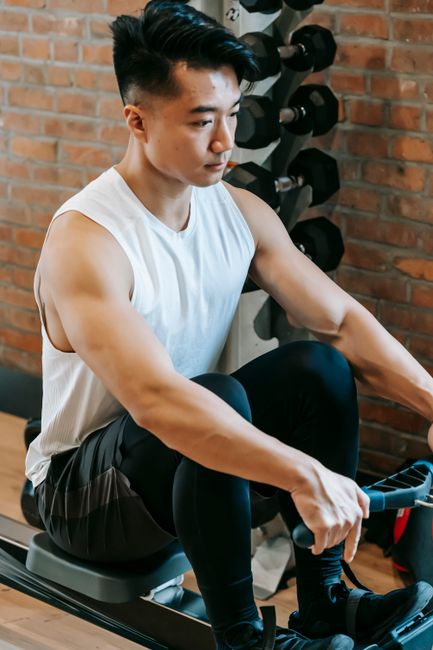
6. Rowing machine
Best for Seated full-body cardio
- 5.0 METs under 100 watts
- MET60+ 6.5 at 50 to 99 watts
- about 170 kcal per 30 min at 150 lb, 227 at 200 lb
- legs, back and arms
Maker-stated specs
Price Gym, or a home rower (checked Oct 7, 2026)
Drawback Poor technique strains the lower back; learn legs, then hips, then arms
7. Brisk walking
Best for Starting from zero and building a daily habit
- 4.8 METs at 3.5 to 3.9 mph (MET60+ 6.0 at 3.3 to 3.7 mph)
- about 163 kcal per 30 min at 150 lb, 218 at 200 lb
- can be split into short walks
Maker-stated specs
Price Free (supportive shoes) (checked Oct 7, 2026)
Drawback Slow, easy walking alone does not seem to cut fall injuries; add balance work
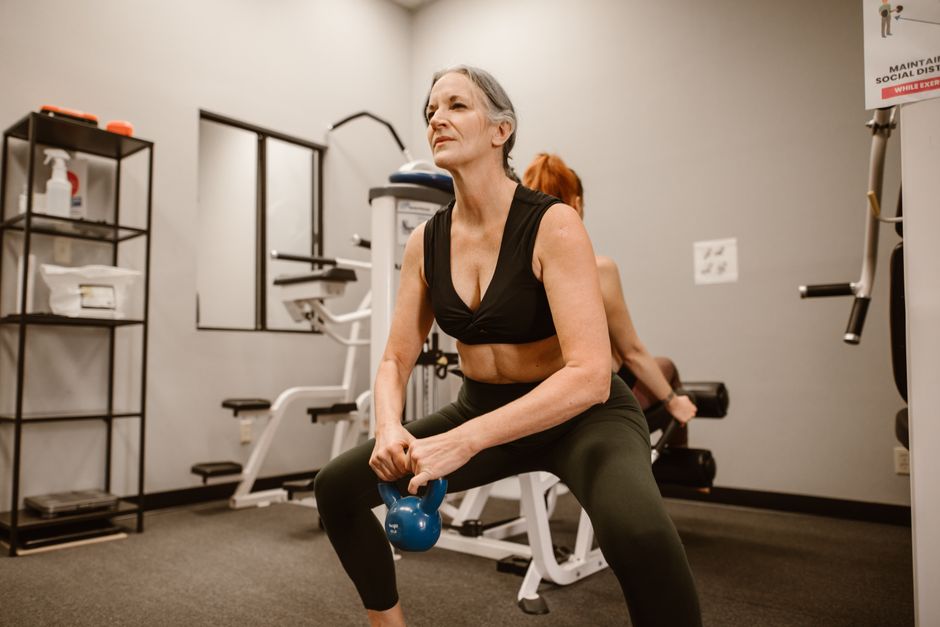
8. Strength training (weights, bands or machines)
Best for Keeping muscle while you lose weight
- 3.5 METs for 8 to 15 reps at varied resistance (MET60+ 4.3)
- about 119 kcal per 30 min at 150 lb
- in a 121-trial review it had a large effect on strength in older adults
Maker-stated specs
Price Free with body weight; bands or dumbbells help (checked Oct 7, 2026)
Drawback Burns less per minute; needs good form and gradual increases
9. Tai chi
Best for Balance, leg strength and calm
- 3.3 METs (MET60+ 3.8
- 2.8 seated)
- about 112 kcal per 30 min at 150 lb
- may cut the rate of falls by about 19%
Maker-stated specs
Price Free with videos, or a class (checked Oct 7, 2026)
Drawback Burns little; class quality varies, so look for a qualified instructor
10. Chair sit-to-stands and balance drills
Best for Beginners, people with sore knees and anyone working on steadiness
- 2.8 METs at 6 to 12 stands a minute, 4.0 at 18 to 24
- heel-to-toe walking and standing on one foot have no Compendium code
- strength training helped chair rising in trials
Maker-stated specs
Price Free (a sturdy chair) (checked Oct 7, 2026)
Drawback Low calorie burn; keep a counter or wall within reach
All 10 exercises side by side
| # | Pick | Best for | Key specs (maker-stated) | Price range | Last checked |
|---|---|---|---|---|---|
| 1 | Stationary cycling | Steady cardio with your weight fully supported | 6.0 METs at 90 to 100 watts (MET60+ 6.3); 4.3 MET60+ at an easy 30 to 50 watts; about 204 kcal per 30 min at 150 lb, 272 at 200 lb | Gym, or a home bike | Oct 7, 2026 |
| 2 | Social or ballroom dancing | Cardio and balance with company and music | 6.0 METs for recreational ballroom (waltz, foxtrot, swing), MET60+ 6.0; about 204 kcal per 30 min at 150 lb; the guidelines count ballroom dancing as cardio plus balance | Free at home, or a class | Oct 7, 2026 |
| 3 | Lap swimming | Arthritis, back pain or a higher body weight | 5.8 METs for slow, recreational freestyle; about 197 kcal per 30 min at 150 lb, 263 at 200 lb; water carries your weight | Pool access | Oct 7, 2026 |
| 4 | Nordic walking (with poles) | Turning a walk into upper- and lower-body work | 5.3 METs at 3.6 to 4.4 mph (MET60+ 7.0); about 180 kcal per 30 min at 150 lb, 240 at 200 lb; poles add support on uneven ground | Walking poles | Oct 7, 2026 |
| 5 | Water aerobics | Group exercise with almost no joint stress | 5.3 METs for water aerobics and water calisthenics; about 180 kcal per 30 min at 150 lb, 240 at 200 lb; NIA counts it as more than one type of exercise | Pool class | Oct 7, 2026 |
| 6 | Rowing machine | Seated full-body cardio | 5.0 METs under 100 watts; MET60+ 6.5 at 50 to 99 watts; about 170 kcal per 30 min at 150 lb, 227 at 200 lb; legs, back and arms | Gym, or a home rower | Oct 7, 2026 |
| 7 | Brisk walking | Starting from zero and building a daily habit | 4.8 METs at 3.5 to 3.9 mph (MET60+ 6.0 at 3.3 to 3.7 mph); about 163 kcal per 30 min at 150 lb, 218 at 200 lb; can be split into short walks | Free (supportive shoes) | Oct 7, 2026 |
| 8 | Strength training (weights, bands or machines) | Keeping muscle while you lose weight | 3.5 METs for 8 to 15 reps at varied resistance (MET60+ 4.3); about 119 kcal per 30 min at 150 lb; in a 121-trial review it had a large effect on strength in older adults | Free with body weight; bands or dumbbells help | Oct 7, 2026 |
| 9 | Tai chi | Balance, leg strength and calm | 3.3 METs (MET60+ 3.8; 2.8 seated); about 112 kcal per 30 min at 150 lb; may cut the rate of falls by about 19% | Free with videos, or a class | Oct 7, 2026 |
| 10 | Chair sit-to-stands and balance drills | Beginners, people with sore knees and anyone working on steadiness | 2.8 METs at 6 to 12 stands a minute, 4.0 at 18 to 24; heel-to-toe walking and standing on one foot have no Compendium code; strength training helped chair rising in trials | Free (a sturdy chair) | Oct 7, 2026 |
| Item | Adult MET | MET60+ |
|---|---|---|
| Stationary cycling, 90 to 100 W | 6 | 6.3 |
| Recreational ballroom dancing | 6 | 6 |
| Nordic walking | 5.3 | 7 |
| Rowing machine, moderate | 5 | 6.5 |
| Brisk walking | 4.8 | 6 |
| Strength training, 8 to 15 reps | 3.5 | 4.3 |
| Tai chi, general | 3.3 | 3.8 |
MET60+ uses a lower resting value (2.7 ml/kg/min), so it reads higher; it is not a higher calorie burn. Speed and watt bands differ slightly between editions.
Source: 2024 Adult and Older Adult Compendium of Physical Activities (checked on October 7, 2026)
Why strength training matters more after 50
When you lose weight, some of what you lose is muscle, and muscle is harder to rebuild later in life. The clearest trial in older adults put 160 dieters with obesity into four groups for 6 months: weight management plus cardio, plus weights, plus both, or no program. All three exercise groups lost about 9% of their body weight. The groups that lifted kept more muscle and bone at the hip, and the combined group improved most on a physical performance test (21%, against 14% for cardio alone or weights alone).
| Item | Value |
|---|---|
| Cardio only | 5% |
| Weights only | 2% |
| Cardio plus weights | 3% |
All three groups lost about 9% of body weight. Lower is better: less muscle and other lean tissue lost.
Source: Villareal DT et al., NEJM 2017 (checked on October 7, 2026)
Strength also rose more with weights: 18% in the combined group and 19% in the weights group, against 4% with cardio alone. A Cochrane review of 121 trials with 6,700 older people found progressive strength training had a large effect on muscle strength and a moderate-to-large effect on getting up from a chair. Our strength training guide explains how to start, and our list of strength moves that protect muscle picks the best lifts for a calorie deficit. If you take a GLP-1 medicine, our guide to muscle loss on GLP-1s covers the extra reasons to lift.
The older-adult dieting trial in numbers
- 160older adults with obesity, randomly assigned to 4 groups for 6 monthsVillareal DT et al., NEJM 2017
- 9%body weight lost in each exercise group, with no significant change in the control groupVillareal DT et al., NEJM 2017
- 21%rise in physical performance score with cardio plus weights, vs 14% with either aloneVillareal DT et al., NEJM 2017
Checked on October 7, 2026
Balance work: the part most plans skip
The National Institute on Aging (NIA) suggests about three sessions of balance exercise a week, and the federal guidelines note that fall-prevention programs generally include about three sessions a week. A Cochrane review of 108 trials with 23,407 people aged 60 and older living at home found exercise cut the rate of falls by 23%. Programs built on balance and functional exercises, and those that mixed several types (usually balance plus strength), did best.
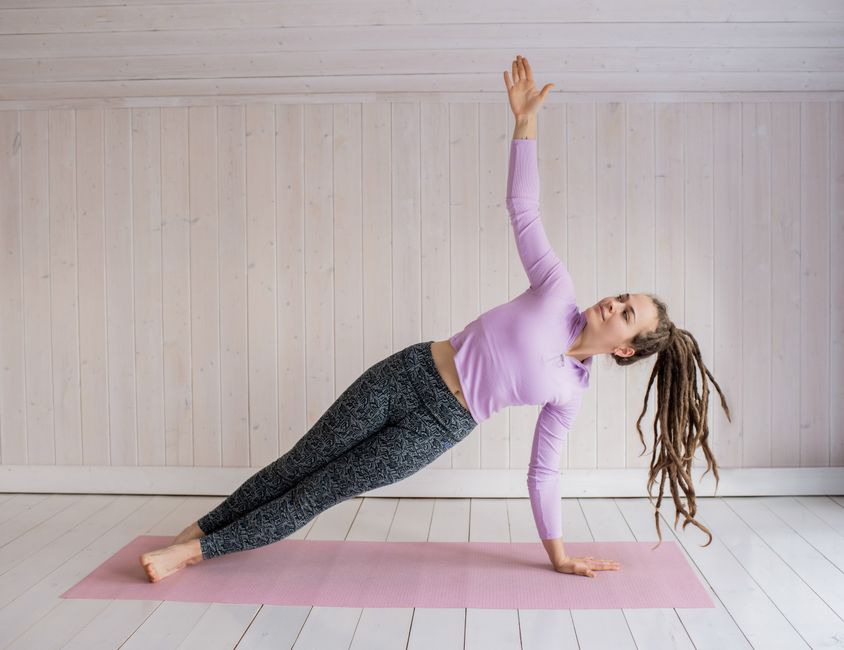
Balance moves are simple: standing on one foot, the heel-to-toe walk, walking backward or sideways, practicing standing up from a chair, and tai chi. Keep a sturdy chair, a counter or a wall within reach, and hold on with both hands at first, then one. The guidelines also suggest weaving balance into other exercise, for example standing on one foot while doing biceps curls. Strengthening the back, abdomen and legs improves balance too, which is where our list of core exercises helps.
A sample week
This plan reaches 150 minutes of moderate cardio, 2 strength days and 3 balance sessions, the amounts named by the guidelines and the NIA. Strength days are not back to back, so each muscle group gets a day to recover, as the NIA suggests. Start with less if you need to and build up over weeks.
| Day | Cardio | Strength | Balance |
|---|---|---|---|
| Monday | 30 min brisk or Nordic walk | Full body: sit-to-stands, wall or counter push-ups, band rows, step-ups (1 to 2 sets of 8 to 12) | 5 min: one-foot stands at the counter |
| Tuesday | 30 min stationary bike or water aerobics | Rest | None |
| Wednesday | 20 min walk | Rest | 20 to 30 min tai chi class or video |
| Thursday | 30 min swim, rower or bike | Full body again, adding a little weight if the last reps felt easy | 5 min: heel-to-toe walk along a hallway |
| Friday | 30 min walk | Rest | None |
| Saturday | 10 to 30 min dancing, gardening or a game of pickleball | Rest | Dancing counts as balance work |
| Sunday | Rest or an easy stroll | Rest | None |
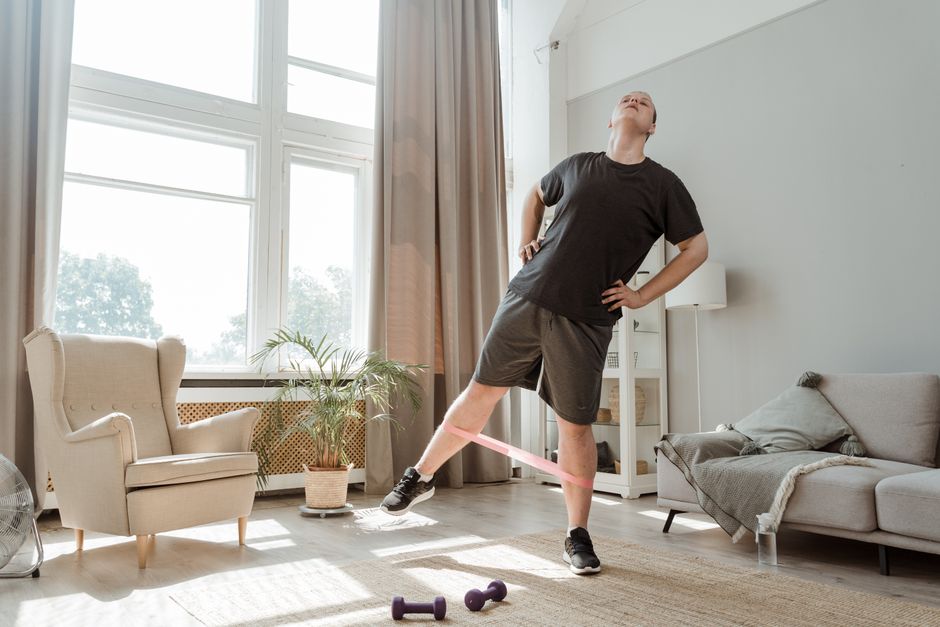
For strength, the NIA and the guidelines say one set of 8 to 12 repetitions of each exercise is effective, though 2 or 3 sets may be more effective, and each set should end when another rep would be hard. Breathe out during the effort and don’t hold your breath. If you are new to it, try the moves without weights first. A set of resistance bands is the gentlest way to add load, and our best home workouts list shows how to do sit-to-stands and counter push-ups. For cardio gear, see our picks of exercise bikes and walking shoes.
How hard should it feel?
The guidelines ask older adults to judge effort relative to their own fitness, so “moderate” for one person may be a slow walk and for another a jog. The NIA’s talk test is a simple guide: if you are breathing hard but can still talk easily, that is moderate; if you can say only a few words before taking a breath, that is vigorous. Aerobic exercise should not cause dizziness, chest pain or pressure, or nausea. A gentle warm-up and cool-down of easy walking helps.
How this list differs from our other workout lists
Our low-impact workouts list ranks joint-friendly cardio for any age and doesn’t cover strength or balance. Our best exercises for weight loss list compares every kind of exercise by calories, including running and HIIT. This list is built around what the guidelines ask of older adults: cardio, strength and balance in the same week, with energy costs from the Older Adult Compendium for people 60 and over. Our cardio vs strength training comparison digs into how the two work together.
What exercise can’t do on its own
Exercise by itself usually brings modest weight loss. The American College of Sports Medicine found that 150 to 250 minutes a week of moderate activity gives only modest loss, that more than 250 minutes is linked with clinically meaningful loss, and that activity helps most alongside a moderate calorie cut. That is why the trial above paired exercise with a diet program. A steady calorie deficit does most of the work; exercise protects muscle, bone, balance and fitness while it happens. Resting metabolism is lower in older adults (the reason the Older Adult Compendium uses a lower resting value); our guide to metabolism and weight loss explains what that means in practice, and enough protein matters for keeping muscle (our protein calculator gives a range to discuss with your clinician). The calories burned calculator estimates any session for your weight, and walkers will find more in our walking for weight loss guide.