
History
The real history of weight-loss hoaxes: mail-order fat reducers, tapeworm pills, slimming soap, thyroid remedies, DNP and sauna suits, what regulators did, and the modern versions.
Key takeaways
- The AMA reported in 1912 that one mail-order "fat reducer" contained thyroid gland, poke root and toasted bread and claimed it "turns fat into muscle."[2]
- Tapeworm diet pills were mostly a myth: the 1912 story was called false by the Surgeon General, but modern online "worm egg" capsules have caused serious infections.[4]
- Sauna-style suits remove water, not fat; three college wrestlers died in 1997 while using them with dehydration to make weight.[11]
- DNP, sold for slimming from 1933, was labeled "extremely dangerous and not fit for human consumption" in 1938; 62 deaths had been reported by 2011.[10]
- The FTC says claims of substantial weight loss from something worn on the body or rubbed into the skin can never be true.[15]
In short: For as long as people have wanted to lose weight, someone has sold a shortcut. Mail-order “fat reducers” of the early 1900s could contain thyroid gland; “slimming soaps” promised to wash fat away; tapeworm diet pills were mostly a myth, but the idea still hurts people today; and rubber sweat suits only ever removed water, sometimes with deadly results. Regulators slowly caught up, and the same promises now come back as patches, teas, creams and “body-slimming” clothing. The pattern is the useful part: if a product says you can lose weight without changing what you eat or how you move, history says it is a hoax.
This page looks at the best-known weight-loss hoaxes and dangerous fads, what was actually in them, what regulators did, and the modern version of each. It sits alongside our history of weight loss and the histories of diet fads and weight-loss drugs. Nothing here is a recommendation; several of these products were dangerous.
Weight-loss hoaxes at a glance
- 1906-1912The Food and Drugs Act passes; the AMA exposes mail-order "fat reducers".
- 1912-2013Tapeworm diet pills: a scare story, a fake poster and later real copycats.
- c1926-1937La-Mar Reducing Soap promises to "wash away fat."
- 1931-1938The Supreme Court limits the FTC; Congress gives it power over ads, and the new drug law calls DNP extremely dangerous.
- 1997Three college wrestlers die using sweat suits to drop weight; the same year the FTC launches "Operation Waistline."
- 2006-2020The FTC acts on slimming soap, a sprinkle-on powder, caffeine shapewear and detox tea.
Early 1900s: mail-order “fat reducers”
Before 1906, there was no federal law against selling a mislabeled medicine. The original Food and Drugs Act was passed by Congress on June 30, 1906, and in 1912 Congress added the Sherley Amendment to cover false therapeutic claims, according to the FDA’s history office. That same year, the American Medical Association collected its investigations into patent medicines in a book called Nostrums and Quackery, with a full chapter on products sold to make people thinner.
One example was Kellogg’s Safe Fat Reducer, sold by a mail-order businessman from Battle Creek, Michigan. The AMA reported that it had been sold as “Kellogg’s Obesity Food” with the claim that it “turns fat into muscle,” and that federal chemists found it contained poke root, toasted bread and thyroid gland. Thyroid in a slimming product would reach the Supreme Court two decades later (see below). The same seller ran a company that sold a pill to put weight on, from the same building. The AMA also described the business model: a “free” sample, then a bill and a series of letters lowering the price each time. Another chapter covered Marjorie Hamilton’s “drugless” mail-order fat treatment.
Verdict: hoax, and sometimes dangerous. Modern version: the FDA’s list of tainted weight-loss products, which keeps growing with diet pills, “fat-burning” pills, supplements and teas found to contain hidden drug ingredients. The FDA says its list covers “only a small fraction” of the contaminated products on the market. Our guides to fat burners and “Nature’s Ozempic” supplements check the modern claims.
Tapeworm diet pills: mostly myth, still dangerous
The tapeworm diet is the most famous weight-loss hoax of all, and it is mostly a hoax about a hoax. A 2023 review in the medical humanities journal Hektoen International traces the story to a 1912 newspaper report from Peoria, Illinois, in which a husband supposedly had his wife’s diet pills analyzed and found tapeworm in them. The U.S. Surgeon General at the time, Rupert Blue, said in the Washington Post that the story was false. A widely shared poster advertising “sanitized” tapeworms turned out to be a fake, stitched together from other advertisements. Other reports of real tapeworm pills from that era, the review notes, were unverified.
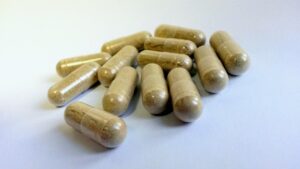
The danger is modern. In 2013, a woman in Iowa bought a “tapeworm pill” online and swallowed it, then saw her doctor, who contacted the state health department. In a 2021 case report in the American Journal of Tropical Medicine and Hygiene, a 20-year-old woman in Beijing bought capsules sold online as beef tapeworm eggs to lose weight. She appears to have swallowed pork tapeworm eggs instead and developed cysticercosis, with cysts in her brain, tongue, muscles, liver and other organs; she needed four courses of antiparasitic medicine before recovering. The authors’ conclusion: deliberate parasitic infection for weight loss is dangerous.
Verdict: historical hoax; never try it. Tapeworm infection can cause pain, nausea, diarrhea, anemia and, with some species, serious disease far from the gut.
Slimming soap: “wash away fat”
Soap that dissolves fat sounds like a joke, but it sold. The Royal Pharmaceutical Society’s museum in London holds a box of La-Mar Reducing Soap, dated about 1926 to 1937: three wrapped bars in a box whose lid promised to “Wash away fat and years of age,” with drawings of a woman growing slimmer in three stages. Soap cleans skin; it can’t reach or remove the fat beneath it.
The idea came back. In October 2006, the Federal Trade Commission sued the sellers of the “Centro Natural de Salud Obesity Treatment,” three pills plus a bar of “special soap” sold with promises like “Lose 35 pounds in 2 months” and weight loss with no dieting, no skipped dinners and no calorie counting. The FTC said the claims were false and unsubstantiated. Verdict: hoax. Modern version: slimming creams and lotions. In 2014 the FTC settled with L’Occitane over skin creams said to “trim 1.3 inches in just 4 weeks.”
1931 to 1938: thyroid, DNP and new laws
The FTC’s early fight against weight-loss ads hit a wall. In FTC v. Raladam Co., decided May 25, 1931, the Supreme Court looked at a preparation sold to treat obesity that contained desiccated thyroid. The FTC had ordered the seller to stop advertising it as a scientific remedy unless it warned that it could not be taken safely without medical direction. The Court agreed there was evidence the product could endanger health, but ruled that the FTC had overstepped, because it had not shown harm to competing businesses. In 1938, the Wheeler-Lea Act gave the FTC clear authority over advertising for products the FDA regulates.
The same decade brought a far deadlier product. In 1933, Maurice Tainter at Stanford found that the industrial chemical 2,4-dinitrophenol (DNP) caused rapid weight loss in people, and it was soon sold as a slimming drug. It works by making the body waste energy as heat, which can push body temperature out of control. A 2011 review in the Journal of Medical Toxicology notes that the 1938 Federal Food, Drug, and Cosmetic Act labeled DNP “extremely dangerous and not fit for human consumption,” that it can cause cataracts, and that 62 deaths had been reported in the medical literature, with internet sales bringing it back. Verdict: dangerous; never take it.
Sauna suits and sweat belts: losing water, not fat
Rubber and plastic “sauna” suits make you sweat, and the scale drops right away, which is why they keep coming back. What you lose is water, and it returns when you drink. Used hard, they can be fatal. In November and December 1997, three college wrestlers in North Carolina, Wisconsin and Michigan, aged 19 to 22, died while trying to lose weight quickly before competitions. The CDC reported that they had restricted food and fluids and tried to maximize sweating by wearing vapor-impermeable suits under cotton warm-ups while exercising hard in hot environments. On average, each had aimed to drop about 30 pounds between preseason and competition, roughly 15% of body weight.
After the deaths, the NCAA banned vapor-impermeable suits, rooms hotter than 79°F, laxatives, diuretics, vomiting and excessive food and fluid restriction for making weight, according to the CDC’s report. Verdict: water loss only; dangerous in heat or with exercise. Modern version: sweat belts, waist trainers and “fat-burning” clothing. In 2014, two shapewear makers paid about $1.5 million to settle FTC charges over caffeine-infused garments said to slim thighs and reduce cellulite; the head of the FTC’s consumer bureau warned to steer clear if someone says you can lose weight by wearing their clothes. Our waist trainer guide explains what tight garments can and can’t do, and our history of exercise fads covers vibrating belts and electric ab belts.
The cost of shortcuts
- 62published deaths linked to DNP, a 1930s slimming chemical still sold onlineGrundlingh J et al., J Med Toxicol 2011
- 3college wrestlers who died in 1997 using sweat suits and dehydration to make weightCDC, MMWR 1998
- $6 billionestimated yearly U.S. spending on fraudulent diet products in 1997FTC, Operation Waistline (1997)
Checked on October 7, 2026
1997 to 2020: patches, powders and detox tea
In March 1997, the FTC launched “Operation Waistline” against misleading weight-loss claims, including fat-burner supplements, a skin patch, shoe insoles said to work through reflexology, and “fat-blocking” products. It estimated that Americans were spending about $6 billion a year on fraudulent diet products. In January 2014, the FTC announced settlements of about $34 million with four marketers: Sensa ($26.5 million), a powder sold with the line “sprinkle, eat, and lose weight”; L’Occitane’s slimming creams; HCG Diet Direct, which promised up to a pound a day; and LeanSpa, which used fake news websites to sell acai and colon-cleanse products. In March 2020, the FTC settled with Teami, a seller of detox teas whose “30 Day Detox Pack” was promoted for weight loss through paid celebrity Instagram posts with hidden disclosures; a $15.2 million judgment was suspended after a $1 million payment. Our guide to detox teas and cleanses explains what these products actually do.
Hoax then, modern equivalent now
| Then | What it really was | Modern equivalent | Closest FTC “gut check” claim |
|---|---|---|---|
| Mail-order “fat reducers” (1900s-1910s) | One contained thyroid gland, poke root and toast | Supplements with hidden drug ingredients | Causes substantial weight loss no matter what you eat |
| Tapeworm pills (1912 story) | Mostly a myth; real copycats sold online now | “Parasite” and worm-egg capsules | Weight loss without dieting or exercise |
| La-Mar Reducing Soap (c1926-1937) | Ordinary soap | Slimming creams and lotions | Weight loss by rubbing a product into the skin |
| Thyroid “obesity” remedy (1931 case) | A hormone with real risks | Unapproved or counterfeit prescription drugs | Causes permanent weight loss |
| DNP (1933) | An industrial chemical; deadly | DNP still sold online | Safely lose more than 3 pounds a week |
| Sauna suits and sweat belts | Water loss only | Waist trainers, caffeine shapewear | Weight loss by wearing a product |
| Cleanses and laxative teas | Laxative effects; no good evidence for weight (NIH) | Detox teas promoted by influencers | Substantial weight loss for all users |
How to spot the next weight-loss hoax
In 2014, the FTC published a “gut check” for the media listing seven weight-loss claims that can’t be true. They are: weight loss of 2 pounds or more a week for a month or more without dieting or exercise; substantial weight loss no matter what or how much you eat; permanent weight loss even after you stop the product; blocking fat or calorie absorption enough to lose substantial weight; safely losing more than 3 pounds a week for more than four weeks; substantial weight loss for everyone; and substantial weight loss from something you wear or rub on your skin. Every hoax on this page made at least one of them.
Real options look different. They come with realistic numbers, tell you about side effects, and ask for changes in eating or activity, or come from a licensed prescriber. Our weight-loss myths page checks common claims, the guide to losing weight fast, safely explains what a realistic pace looks like, and every FDA-approved weight-loss medication compared shows what proven treatments actually do. If you are shopping for supplements, start with our supplements hub, and if you are choosing a program, use our 12 questions to ask. For the story of corsets, girdles and modern contouring, see our history of body shaping.
Records in this article
Related guides
 Shapewear vs Compression Garments vs Waist TrainersShapewear, compression garments and waist trainers compared: what each does and doesn't do, compression levels in…
 Weight-Loss Meal Plan: A 7-Day Plan at 1,500 and 1,800 CaloriesA free 7-day weight-loss meal plan at 1,500 and 1,800 calories, with grams and calories for…
 Alternate-Day Fasting vs 16:8 vs 5:2: Fasting Methods ComparedTypes of intermittent fasting compared: 16:8, 5:2 and alternate-day fasting, what a week looks like on…
 GLP-1 Medication vs a Diet Program: Results, Costs and Trade-offsGLP-1 medication vs a diet program compared: average weight loss in STEP, SURMOUNT, Look AHEAD and…
Questions to ask a professional
- Is this weight-loss product or supplement safe with my medicines and health conditions?
- What realistic weight change could I expect, and over what time?
- Are there proven options, including prescription ones, that might suit me?
- How do I report a product that made me feel unwell?
Frequently asked questions
Did people really take tapeworm pills to lose weight?
There is little evidence that tapeworm pills were ever really sold in the early 1900s; a 1912 story was called false by the U.S. Surgeon General and a famous poster was a fake. But modern capsules sold online as tapeworm eggs have caused serious infections, so the idea is dangerous.
Do sauna suits help you lose weight?
They make you sweat out water, which comes back when you drink. They do not remove fat, and combined with heat, exercise and fluid restriction they can cause dangerous overheating and dehydration, as the deaths of three college wrestlers in 1997 showed.
Can soap or cream wash away fat?
No. Products like La-Mar Reducing Soap (c1926-1937) promised to "wash away fat," and the FTC has acted against soaps and slimming creams since. The FTC says substantial weight loss from rubbing a product into the skin is never a true claim.
What was DNP?
An industrial chemical that became a slimming drug in 1933. It makes the body waste energy as heat, which can be fatal. The 1938 drug law labeled it extremely dangerous, but it is still sold online and has been linked to dozens of reported deaths.
How can I tell if a weight-loss product is a scam?
Use the FTC's gut check: be wary of any promise of big weight loss without diet or exercise, no matter what you eat, permanently after you stop, for everyone, or from something you wear or rub on your skin.
References
- Milestones in U.S. Food and Drug Law. U.S. Food and Drug Administration. (accessed October 7, 2026) Government page
- Nostrums and Quackery: Articles on the Nostrum Evil and Quackery Reprinted from The Journal of the American Medical Association (2nd ed., 1912), chapter “Obesity”. American Medical Association Press (Internet Archive scan), 1912. (accessed October 7, 2026) Other
- Weight loss product notifications (tainted products). U.S. Food and Drug Administration. (accessed October 7, 2026) Government page
- Fischer H.. The tapeworm diet: Myth, mostly. Hektoen International, 2023. (accessed October 7, 2026) Review
- Zhang HY, Wang GX, Xing YY, Xie MR. Case Report: Disseminated Cysticercosis due to Intentional Ingestion of Parasitic Worm Eggs for Weight Loss. American Journal of Tropical Medicine and Hygiene, 2021. doi:10.4269/ajtmh.21-0760 · PMID 34844206 (accessed October 7, 2026) Other
- La-Mar Reducing Soap, c1926-1937 (object LDRPS:H 35). Royal Pharmaceutical Society Museum. (accessed October 7, 2026) Other
- FTC: Three Pills and Special Soap Obesity Treatment Won’t Wash Away the Pounds. Federal Trade Commission, 2006. (accessed October 7, 2026) Government page
- Sensa and Three Other Marketers of Fad Weight-Loss Products Settle FTC Charges in Crackdown on Deceptive Advertising. Federal Trade Commission, 2014. (accessed October 7, 2026) Government page
- Federal Trade Commission v. Raladam Co., 283 U.S. 643 (1931). U.S. Supreme Court (Library of Congress, U.S. Reports), 1931. (accessed October 7, 2026) Government page
- Grundlingh J, Dargan PI, El-Zanfaly M, Wood DM. 2,4-dinitrophenol (DNP): a weight loss agent with significant acute toxicity and risk of death. Journal of Medical Toxicology, 2011. doi:10.1007/s13181-011-0162-6 · PMID 21739343 (accessed October 7, 2026) Review
- Hyperthermia and Dehydration-Related Deaths Associated with Intentional Rapid Weight Loss in Three Collegiate Wrestlers: North Carolina, Wisconsin, and Michigan, November-December 1997. Centers for Disease Control and Prevention (MMWR 47(6):105-108), 1998. PMID 9480411 (accessed October 7, 2026) Government page
- Norm Thompson Outfitters and Wacoal America Settle FTC Charges Over Weight-Loss Claims for Caffeine-infused Shapewear. Federal Trade Commission, 2014. (accessed October 7, 2026) Government page
- FTC Announces “Operation Waistline”: a Law Enforcement and Consumer Education Effort Designed to Stop Misleading Weight Loss Claims. Federal Trade Commission, 1997. (accessed October 7, 2026) Government page
- Tea Marketer Misled Consumers, Didn’t Adequately Disclose Payments to Well-Known Influencers, FTC Alleges (Teami). Federal Trade Commission, 2020. (accessed October 7, 2026) Government page
- Gut Check: A Reference Guide for Media on Spotting False Weight Loss Claims. Federal Trade Commission, 2014. (accessed October 7, 2026) Government page
- “Detoxes” and “Cleanses”: What You Need To Know. National Center for Complementary and Integrative Health (NIH). (accessed October 7, 2026) Government page
- Poison Help (1-800-222-1222). Health Resources and Services Administration (HHS). (accessed October 7, 2026) Government page
Facts checked on October 7, 2026
Educational information, not medical advice. Talk with a qualified healthcare professional about your own situation. In an emergency call 911.
Leave a Reply