Best picks
The 10 best bodyweight exercises for home workouts, ranked by energy cost (2024 Compendium), muscle benefit and joint load, with form cues and a sample 20-minute plan.
Key takeaways
- Vigorous intervals with burpees, mountain climbers and squat jumps are rated 11.0 METs; push-ups and lunges 3.8; squats 3.0; planks 2.8.[1]
- In an 8-week trial, push-ups at a load like 40% of a maximum bench press built strength and chest muscle comparably to light bench pressing.[5]
- Adults should do muscle-strengthening activity for all major muscle groups on at least 2 days a week.[3]
- Resistance training reduced lean-mass loss during weight loss by about 0.8 kg on average.[7]
In short: The bodyweight exercises that burn the most are fast, whole-body moves such as burpees, squat jumps and mountain climbers, rated 11 METs in vigorous intervals. For building muscle with no equipment, push-ups, lunges and squats do the heavy lifting, and a push-up can build chest strength about as well as a light bench press. A 20-minute circuit of these moves, done 2 to 3 times a week, covers the guidelines’ muscle-strengthening advice and adds roughly 135 to 180 calories per session for people weighing 150 to 200 pounds.
No gym, no gear and no commute: that is the appeal of a home workout. Below are the ten moves we would build a home routine around, ranked with published energy costs, followed by how to do the main moves and a sample 20-minute plan. For the wider picture of exercise and weight loss, see our exercise hub and our strength training guide. If you have heart, lung, joint or back problems, or have been inactive for a long time, ask your clinician which moves and intensities suit you.
How we ranked them
Our exercise lists rank by energy cost first, then muscle benefit, then joint load and accessibility, then equipment. Energy costs come from the 2024 Adult Compendium of Physical Activities, which rates bodyweight exercise in groups rather than move by move: vigorous intervals with burpees, mountain climbers and squat jumps (11.0 METs), vigorous calisthenics such as jumping jacks (7.5), moderate calisthenics such as push-ups and lunges (3.8), general bodyweight resistance such as squats (3.0) and light core work such as planks (2.8). One MET is the energy you use sitting quietly. Moves in the same group were ordered by how much muscle they work, then by how kind they are to your joints.
Calories below are MET x body weight in kg x 0.5 hour, for 150 lb (68 kg) and 200 lb (91 kg). Nobody does 30 minutes of nonstop burpees, so read the high numbers as the rate during the work intervals, not a session total.
The 10 best bodyweight exercises for home
10 bodyweight exercises for home, ranked
1. Burpees
Best for Short, hard intervals that work the whole body
- 11.0 METs in vigorous intervals
- about 374 kcal per 30 min at 150 lb, 499 at 200 lb (work-interval rate)
- legs, chest, shoulders and core
Maker-stated specs
Price Free (checked Oct 6, 2026)
Drawback High impact and very hard for beginners; step back instead of jumping to start
2. Squat jumps
Best for Leg power and a fast heart rate
- 11.0 METs in vigorous intervals
- about 374 kcal per 30 min at 150 lb (work-interval rate)
- thighs and glutes
Maker-stated specs
Price Free (checked Oct 6, 2026)
Drawback Landing loads the knees; swap for fast bodyweight squats if they ache
3. Mountain climbers
Best for Cardio and core with no jumping
- 11.0 METs in vigorous intervals
- about 374 kcal per 30 min at 150 lb (work-interval rate)
- core, shoulders and hip flexors
Maker-stated specs
Price Free (checked Oct 6, 2026)
Drawback Wrists carry weight; do them with hands on a bench or counter to ease the load
4. Jumping jacks
Best for A simple warm-up or cardio burst
- 7.5 METs as vigorous calisthenics
- about 255 kcal per 30 min at 150 lb, 340 at 200 lb
Maker-stated specs
Price Free (checked Oct 6, 2026)
Drawback Repeated landings; step-jacks (one foot at a time) are the low-impact version
5. Stair climbing or step-ups
Best for Leg strength and cardio using stairs you have
- 6.8 METs for general stair climbing (9.3 fast)
- about 231 kcal per 30 min at 150 lb, 308 at 200 lb
Maker-stated specs
Price Free (stairs or a sturdy step) (checked Oct 6, 2026)
Drawback Needs stairs; hold the rail and watch your footing
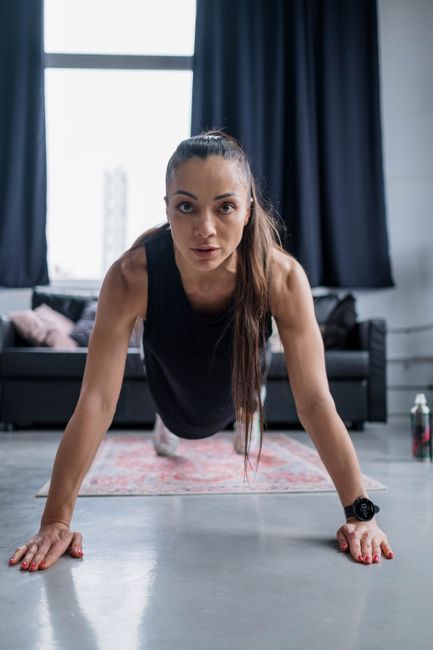
6. Push-ups (wall, counter, knee or floor)
Best for Chest, shoulder and arm strength
- 3.8 METs as moderate calisthenics (6.5 at high intensity)
- about 129 kcal per 30 min at 150 lb
- in trials, push-ups built strength like a light bench press
Maker-stated specs
Price Free (checked Oct 6, 2026)
Drawback Full floor push-ups are hard at first; start against a wall or counter
7. Lunges (reverse or split)
Best for Legs and balance, one side at a time
- 3.8 METs as moderate calisthenics
- about 129 kcal per 30 min at 150 lb, 172 at 200 lb
Maker-stated specs
Price Free (checked Oct 6, 2026)
Drawback Can strain knees if the front knee caves in; reverse lunges are usually easier
8. Bodyweight squats
Best for The foundation move for legs and glutes
- 3.0 METs general, 6.5 at high intensity
- about 102 kcal per 30 min at 150 lb at a general pace
Maker-stated specs
Price Free (checked Oct 6, 2026)
Drawback Feels easy once you are strong; slow the lowering or add a pause to progress
9. Chair sit-to-stands
Best for Beginners, older adults and anyone with sore knees
- 2.8 METs at 6 to 12 a minute, 4.0 at 18 to 24 a minute
- about 95 to 136 kcal per 30 min at 150 lb
Maker-stated specs
Price Free (a sturdy chair) (checked Oct 6, 2026)
Drawback Limited challenge for fit people; it is a starting point
10. Plank and other core holds
Best for Core strength that supports every other move
- 2.8 METs as light calisthenics (planks, curl-ups, crunches)
- about 95 kcal per 30 min at 150 lb
Maker-stated specs
Price Free (a mat helps) (checked Oct 6, 2026)
Drawback Burns little and won't flatten your belly on its own
All 10 exercises side by side
| # | Pick | Best for | Key specs (maker-stated) | Price range | Last checked |
|---|---|---|---|---|---|
| 1 | Burpees | Short, hard intervals that work the whole body | 11.0 METs in vigorous intervals; about 374 kcal per 30 min at 150 lb, 499 at 200 lb (work-interval rate); legs, chest, shoulders and core | Free | Oct 6, 2026 |
| 2 | Squat jumps | Leg power and a fast heart rate | 11.0 METs in vigorous intervals; about 374 kcal per 30 min at 150 lb (work-interval rate); thighs and glutes | Free | Oct 6, 2026 |
| 3 | Mountain climbers | Cardio and core with no jumping | 11.0 METs in vigorous intervals; about 374 kcal per 30 min at 150 lb (work-interval rate); core, shoulders and hip flexors | Free | Oct 6, 2026 |
| 4 | Jumping jacks | A simple warm-up or cardio burst | 7.5 METs as vigorous calisthenics; about 255 kcal per 30 min at 150 lb, 340 at 200 lb | Free | Oct 6, 2026 |
| 5 | Stair climbing or step-ups | Leg strength and cardio using stairs you have | 6.8 METs for general stair climbing (9.3 fast); about 231 kcal per 30 min at 150 lb, 308 at 200 lb | Free (stairs or a sturdy step) | Oct 6, 2026 |
| 6 | Push-ups (wall, counter, knee or floor) | Chest, shoulder and arm strength | 3.8 METs as moderate calisthenics (6.5 at high intensity); about 129 kcal per 30 min at 150 lb; in trials, push-ups built strength like a light bench press | Free | Oct 6, 2026 |
| 7 | Lunges (reverse or split) | Legs and balance, one side at a time | 3.8 METs as moderate calisthenics; about 129 kcal per 30 min at 150 lb, 172 at 200 lb | Free | Oct 6, 2026 |
| 8 | Bodyweight squats | The foundation move for legs and glutes | 3.0 METs general, 6.5 at high intensity; about 102 kcal per 30 min at 150 lb at a general pace | Free | Oct 6, 2026 |
| 9 | Chair sit-to-stands | Beginners, older adults and anyone with sore knees | 2.8 METs at 6 to 12 a minute, 4.0 at 18 to 24 a minute; about 95 to 136 kcal per 30 min at 150 lb | Free (a sturdy chair) | Oct 6, 2026 |
| 10 | Plank and other core holds | Core strength that supports every other move | 2.8 METs as light calisthenics (planks, curl-ups, crunches); about 95 kcal per 30 min at 150 lb | Free (a mat helps) | Oct 6, 2026 |
Why muscle moves sit lower but still matter
Push-ups, lunges and squats rank lower because they burn fewer calories per minute, not because they matter less. Their job is to keep and build muscle, which is especially important while you are losing weight. A 2021 overview of 12 systematic reviews found that resistance training reduced lean-mass loss during weight loss by about 0.8 kg (1.8 lb) on average.
Bodyweight moves can build real strength. In an 8-week trial, young men who did push-ups adjusted to a load similar to 40% of their maximum bench press gained strength and chest muscle thickness comparable to a group doing light bench presses. In a 4-week trial, a progressive push-up program raised bench-press strength in moderately trained men, as bench training did. Both studies were small and in young men, so the results are a guide rather than a guarantee.
What the push-up trials found
- 8 weeksof push-ups matched light bench pressing for strength and chest muscle gains (18 men)Kikuchi and Nakazato, J Exerc Sci Fit 2017
- 61.1 to 64.2 kgaverage bench-press maximum before and after the push-up programKikuchi and Nakazato, J Exerc Sci Fit 2017
- 2 daysa week of muscle-strengthening activity for all major muscle groups, at leastHHS, Physical Activity Guidelines for Americans
Checked on October 6, 2026
How to do the main moves
Good form matters more than speed. Move slowly at first, breathe out on the effort, and stop a rep or two before your form breaks down. These cues are general guidance; a physical therapist or certified trainer can check your form in person.
Form cues for six key moves
- SquatFeet shoulder-width apart, sit your hips back and down as if onto a chair, chest up, knees tracking over your toes; stand tall.
- Push-upHands under your shoulders on a wall, counter or the floor; body in one straight line; lower your chest, then press away.
- Reverse lungeStep one foot back and lower until both knees bend, front knee over the ankle; push through the front heel to stand.
- PlankForearms under shoulders, body straight from head to heels (or knees); squeeze your glutes and breathe for 15 to 30 seconds.
- Mountain climberFrom a high plank (hands on a bench to start), drive one knee toward your chest, then switch at a steady pace.
- Burpee, beginner versionSquat, place hands down, step back to a plank, step forward and stand; add the jump only when this feels easy.
A sample 20-minute home workout
This plan mixes strength and cardio moves in a simple circuit. The Compendium rates bodyweight circuit training at 6.0 METs, which works out to roughly 136 calories in 20 minutes at 150 lb and 181 at 200 lb. Do it 2 to 3 days a week on non-consecutive days; the American College of Sports Medicine suggests 2 to 3 strength days a week for beginners.
Sample 20-minute bodyweight plan
- Warm up, 3 minMarch in place, arm circles and 20 step-jacks.
- Strength circuit, 12 min3 rounds of 40 seconds on and 20 seconds rest: squats, push-ups (wall or counter to start), reverse lunges, plank.
- Cardio finisher, 3 min3 rounds of 30 seconds of mountain climbers or step-ups and 30 seconds of easy marching.
- Cool down, 2 minWalk slowly around the room and stretch your thighs, hips and chest.
- Progress weeklyAdd a round, slow the lowering, or move to the next push-up level when the last round feels easy.
Too hard? Use chair sit-to-stands instead of squats and wall push-ups, and march instead of the finisher. Too easy? Add squat jumps or burpees to the finisher, or hold a backpack with books for squats and lunges. To add load without weights, a set of resistance bands is the cheapest step up; for heavier progress, see our list of adjustable dumbbells.
Fitting it into your week
The Physical Activity Guidelines for Americans recommend 150 to 300 minutes of moderate aerobic activity a week plus muscle-strengthening activity at least 2 days a week, and say any amount of activity counts. A home circuit covers the strength part; for the aerobic part, many people add daily walks for weight loss or a walking pad on workdays. If your knees or hips complain about jumping, our list of low-impact workouts has joint-friendly cardio, and the best exercises for weight loss list compares every type of exercise by calories.
- Make space: a clear area about the size of a yoga mat is enough for every move here.
- Use a non-slip surface: a mat or rug that stays put protects your hands and knees.
- Pick a time and keep it: the same slot each day (before breakfast, at lunch) makes it a habit.
- Track it simply: write down rounds and reps, or use a tracker; see our fitness trackers list for what they measure well.
What home workouts can’t do
Planks and crunches strengthen your core, but they don’t burn belly fat from that spot (see weight-loss myths science has busted and our belly fat guide). Most weight loss comes from a steady calorie deficit; exercise helps you keep muscle, improves fitness and makes it easier to keep weight off. If you want to lose fat while building muscle, our page on body recomposition shows how strength work and protein fit together, and the calories burned calculator estimates a session for your weight.
Records in this article

Related guides
 Shapewear vs Compression Garments vs Waist TrainersShapewear, compression garments and waist trainers compared: what each does and doesn't do, compression levels in…
 Weight-Loss Meal Plan: A 7-Day Plan at 1,500 and 1,800 CaloriesA free 7-day weight-loss meal plan at 1,500 and 1,800 calories, with grams and calories for…
 Alternate-Day Fasting vs 16:8 vs 5:2: Fasting Methods ComparedTypes of intermittent fasting compared: 16:8, 5:2 and alternate-day fasting, what a week looks like on…
 GLP-1 Medication vs a Diet Program: Results, Costs and Trade-offsGLP-1 medication vs a diet program compared: average weight loss in STEP, SURMOUNT, Look AHEAD and…
Questions to ask a professional
- Are jumping moves safe for my knees, hips, back or bones?
- Which bodyweight exercises should I avoid with my condition or injury?
- How hard should I push my heart rate when I start?
- Would a session with a physical therapist help me learn good form?
Frequently asked questions
What is the best bodyweight exercise for weight loss?
Burpees, squat jumps and mountain climbers burn the most (11.0 METs in vigorous intervals), but push-ups, lunges and squats matter just as much because they help you keep muscle while you lose fat.
Can you lose weight with home workouts only?
Yes, alongside a moderate calorie deficit. Home workouts cover strength training; adding regular walking or other aerobic activity helps you reach 150 to 300 minutes a week.
How many calories does a 20-minute bodyweight workout burn?
Bodyweight circuit training is rated 6.0 METs, about 136 calories in 20 minutes for a 150-pound person and 181 for a 200-pound person. Effort and rest times change the real number.
How often should I do bodyweight workouts?
Two to three days a week on non-consecutive days suits beginners, in line with the Physical Activity Guidelines (at least 2 days) and ACSM advice for new lifters (2 to 3 days).
Are push-ups as good as lifting weights?
For building chest and arm strength in beginners, small trials found push-ups comparable to a light bench press. Over time you need harder variations or added load to keep progressing.
References
- 2024 Adult Compendium (activity lists and PDF). Compendium of Physical Activities, 2024. (accessed October 7, 2026) Other
- Herrmann SD, Willis EA, Ainsworth BE, et al.. 2024 Adult Compendium of Physical Activities: A third update of the energy costs of human activities. Journal of Sport and Health Science, 2024. doi:10.1016/j.jshs.2023.10.010 · PMID 38242596 (accessed October 7, 2026) Review
- Physical Activity Guidelines for Americans, 2nd edition: top 10 things to know. U.S. Department of Health and Human Services (ODPHP). (accessed October 7, 2026) Guideline
- American College of Sports Medicine. American College of Sports Medicine position stand. Progression models in resistance training for healthy adults. Medicine & Science in Sports & Exercise, 2009. doi:10.1249/MSS.0b013e3181915670 · PMID 19204579 (accessed October 7, 2026) Society statement
- Kikuchi N, Nakazato K.. Low-load bench press and push-up induce similar muscle hypertrophy and strength gain. Journal of Exercise Science and Fitness, 2017. doi:10.1016/j.jesf.2017.06.003 · PMID 29541130 (accessed October 6, 2026) Randomized trial
- Kotarsky CJ, Christensen BK, Miller JS, Hackney KJ.. Effect of Progressive Calisthenic Push-up Training on Muscle Strength and Thickness. Journal of Strength and Conditioning Research, 2018. doi:10.1519/JSC.0000000000002345 · PMID 29466268 (accessed October 6, 2026) Randomized trial
- Bellicha A, van Baak MA, Battista F, et al.. Effect of exercise training on weight loss, body composition changes, and weight maintenance in adults with overweight or obesity: An overview of 12 systematic reviews and 149 studies. Obesity Reviews, 2021. doi:10.1111/obr.13256 · PMID 33955140 (accessed October 7, 2026) Review
Facts checked on October 6, 2026
Educational information, not medical advice. Talk with a qualified healthcare professional about your own situation. In an emergency call 911.
Leave a Reply