
What's new
"GLP-1 friendly" and companion foods explained: what the label means (and doesn't), what people on GLP-1 medicines need from food, and everyday foods that do the job. Checked October 7, 2026.
Fact-checked against FDA labels and official sources; not yet reviewed by a licensed clinician. This page is education, not medical advice. Talk to your doctor before starting, stopping or changing any treatment.
Key takeaways
- "GLP-1 friendly" has no regulatory definition: it is not FDA-regulated, and the USDA says there is no standard for the term.[2]
- People on GLP-1 medicines eat about 16% to 39% fewer calories, so protein and nutrient density matter more.[1]
- Under FDA rules, "high" means 20% or more of the Daily Value per serving: about 10 g of protein or 5.6 g of fiber.[4]
- Everyday foods such as Greek yogurt, fish, eggs, lentils, beans and berries meet these levels without a special label.[7]
In short: “GLP-1 friendly” and “GLP-1 companion” foods are ordinary foods, usually higher in protein and fiber and portioned smaller, that companies now market to people taking medicines like Wegovy, Zepbound and Ozempic. The term has no official definition: the FDA does not regulate it, and the USDA, which approved it on some meat-containing products, says there is no regulatory standard for it. You do not need special products to eat well on a GLP-1. What the evidence supports is enough protein, fiber and nutrients in smaller meals, which everyday foods can provide; branded options can be a convenience if you check the label. Our GLP-1 diet guide covers the full eating plan. Checked on October 7, 2026.
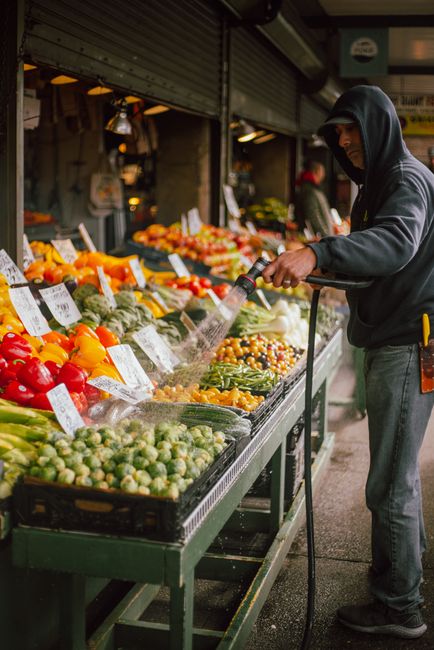
This page explains why these foods appeared, how to judge one in 30 seconds, and how to cover the same needs with groceries you already know. It is general nutrition education, not individual advice; if you take a GLP-1 medicine, a registered dietitian or your prescriber can help you set your own targets.
Why “GLP-1 friendly” foods appeared
The short answer is scale. In a KFF poll taken from late October to early November 2025, 12% of U.S. adults said they were currently taking a GLP-1 drug, for weight loss, diabetes or another condition, up 6 percentage points from May 2024, and 18% said they had ever taken one. These medicines reduce appetite: according to a 2025 joint nutrition advisory from the American College of Lifestyle Medicine, the American Society for Nutrition, the Obesity Medicine Association and The Obesity Society, people on them eat about 16% to 39% fewer calories. Eating less changes what people buy, and food companies noticed.
The GLP-1 food trend in numbers
- 12%U.S. adults currently taking a GLP-1 drug (Oct-Nov 2025)KFF Health Tracking Poll
- 16-39%lower calorie intake reported with GLP-1 medicinesJoint advisory, Obesity Pillars 2025
- 26Healthy Choice frozen meals Conagra badged "GLP-1 Friendly" in early 2025 (reported)Associated Press, Jan 14, 2026
- 0official U.S. definitions of "GLP-1 friendly"
Checked on October 7, 2026
An Associated Press report in January 2026 listed some of the launches: Nestlé’s Vital Pursuit frozen meals (fall 2024), “GLP-1 Friendly” badges on 26 Healthy Choice frozen meals from Conagra Brands (early 2025), a “GLP-1 Support Menu” at Smoothie King, “GLP-1 Balance” meal kits from Factor, a high-protein, high-fiber yogurt from Lactalis, and protein-heavy menu items at restaurant chains such as Chipotle and Shake Shack. The AP reported that the labels “are not regulated by the U.S. Food and Drug Administration”, and that the USDA’s Food Safety and Inspection Service approved the term on some products because it appeared with protein and fiber statements and was not misleading, while noting there is no regulatory standard for it.
What people on GLP-1 medicines actually need from food
The 2025 joint advisory is the most detailed guidance so far. It names the main nutrition challenges as digestive side effects, falling short on nutrients when eating much less, loss of muscle and bone, and weight regain if the medicine stops. Its practical points:
- Protein first. The advisory discusses about 1.2 to 1.6 grams of protein per kilogram of body weight a day during active weight loss (or roughly 80 to 120 grams a day as an alternative way to express it), and not less than 0.4 to 0.5 g/kg. Our protein calculator shows these ranges for your weight; your clinician or dietitian can say which fits you.
- Nutrient density. Below about 1,200 calories a day for women or 1,800 for men, it becomes hard to meet nutrient needs. Vitamin D, calcium and vitamin B12 are among the nutrients it flags.
- Gentler meals for side effects. Smaller, more frequent meals, and going easy on fatty foods, can help with nausea. The advisory also suggests keeping alcohol minimal, since it may worsen nausea and reflux, and staying hydrated.
- Movement to protect muscle. Strength training at least three times a week plus at least 150 minutes of moderate aerobic activity, adapted to the person. See our strength training guide and muscle loss on GLP-1s.
- Professional support. It recommends counseling from a registered dietitian where possible.
Notice what is not on that list: no special product, ingredient or “GLP-1 activating” food. The advisory’s food advice is about familiar things, such as lean proteins, vegetables, fruit, legumes and whole grains, in amounts that fit a smaller appetite. Our high-protein eating guide shows how to build meals around protein.
How to judge a “GLP-1 friendly” product in 30 seconds
Ignore the badge and use the rules that do have legal definitions. Under FDA regulations, a food can say it is a “good source” of a nutrient when one serving provides 10% to 19% of the Daily Value, and “high” or “excellent source” when it provides 20% or more. The Daily Value for protein is 50 grams and for fiber 28 grams. In practice that means a serving with about 10 grams of protein meets “high protein”, and a serving with about 2.8 grams of fiber is a “good source” of fiber, with 5.6 grams or more counting as “high”. (Those gram figures are our arithmetic from the FDA percentages.) The FDA’s own rule of thumb is that 5% DV or less of a nutrient per serving is low and 20% or more is high.
Nutrient-density label check
- ProteinLook for roughly 10 g or more per serving (20% DV). With a smaller appetite, each bite should count.
- Fiber3 to 6 g or more per serving helps fullness and regularity; build up slowly if you are not used to it.
- Calories and portionCheck the serving size and whether the package is one serving or two.
- Added sugars and sodium5% DV or less is low; 20% DV or more is high. Frozen meals often run high in sodium.
- Ingredients and priceCompare with a homemade or simpler option that gives the same protein and fiber for less.
Two more claims are worth knowing. The FDA updated the meaning of “healthy” on food labels in a rule announced on December 19, 2024: a “healthy” food must now contain a meaningful amount from a food group, such as fruit, vegetables, grains, low-fat dairy or protein foods, and stay under limits for added sugars, sodium and saturated fat. That is a stricter test than “GLP-1 friendly”. And claims that a food helps you lose weight, controls appetite or “supports GLP-1” are marketing unless backed by evidence you can see; a food is not a medicine.

Everyday foods that already do the job
Many unbranded foods meet the “high protein” or “good source of fiber” bar on their own. The values below come from the USDA’s FoodData Central database for common portions.
Put together, a small plate can cover a lot. Using the same USDA values, a 6-ounce container of plain nonfat Greek yogurt with a cup of raspberries comes to about 165 calories, 18 grams of protein and 8 grams of fiber; 3 ounces of cooked cod with a cup of cooked broccoli is about 145 calories, 23 grams of protein and 5 grams of fiber; and half a cup of cooked lentils alone gives about 115 calories, 9 grams of protein and 8 grams of fiber. Each of those reaches or comes close to the “high protein” level and is at least a “good source” of fiber, without any special packaging. A few caveats from the advisory apply here too. High-fiber foods can worsen bloating or nausea for some people early in treatment, so it is fine to go slowly, and fatty or fried versions of these foods are harder on a GLP-1 stomach. Our lists of filling foods and healthy snacks have more ideas, and our new look at the fibermaxxing trend covers how to raise fiber comfortably.
Product types you will see, and what to check
| Product type | What it usually offers | What to check on the label |
|---|---|---|
| Frozen meals with a GLP-1 badge | Smaller portions with added protein and fiber | Protein per serving, sodium (% DV), whether vegetables are a real part of the meal |
| High-protein, high-fiber yogurts and dairy drinks | Protein in a small, easy-to-eat volume | Added sugars, serving size, protein source |
| Protein shakes and bars | Convenient protein when meals are small | Protein per 100 calories, added sugars and sugar alcohols, third-party testing |
| Meal kits and prepared-meal plans | Portion-controlled dinners | Calories and protein per meal, price per meal, delivery area |
| Restaurant “GLP-1” or protein menus | Smaller or protein-forward portions | Posted calories, fried or creamy items, sauces on the side |
When a branded product can help
There are fair reasons to use them. A portioned, high-protein frozen meal can be easier than cooking when you have little appetite, and some people find it simpler to know exactly what is in a serving. Prepared-meal services can save time; our researched list of meal delivery services for weight loss compares calorie and protein transparency, and our protein powder picks focus on third-party testing. The trade-offs are usually cost and sodium, and a badge does not make one product better than a similar one without it.
One thing to keep separate: drinks, capsules and powders sold as “GLP-1 boosters” or “natural GLP-1” are a different category from foods, and the evidence for them is weak. Our myth-buster on “Nature’s Ozempic” products covers what the research says.
After the medicine: why food habits matter even more
The advisory lists weight regain after stopping as one of the main challenges of GLP-1 treatment, and calls nutrition after stopping an area that needs more research. Habits built while on the medicine, such as protein at each meal, plenty of vegetables and legumes, regular strength training and paying attention to fullness, are the ones that carry over. Branded “GLP-1” products are, by design, aimed at the time on the medicine; ordinary foods work before, during and after. Our guide to life after GLP-1 medicines covers that transition, and our GLP-1 medications guide and side effects guide explain the medicines themselves.
Bottom line: “GLP-1 friendly” is a useful reminder of what matters (protein, fiber, nutrients, smaller portions), not a requirement. Read the panel, not the badge, and choose whatever helps you eat that way consistently. For the wider food picture, visit the InstaTuck nutrition hub.
Records in this article
Related guides
 Online Dietitian Services Compared: Insurance, Cost and What’s IncludedFive online dietitian services compared, alphabetical and not ranked: insurance, self-pay prices, visit length, messaging, states…
 Weight-Loss Meal Plan: A 7-Day Plan at 1,500 and 1,800 CaloriesA free 7-day weight-loss meal plan at 1,500 and 1,800 calories, with grams and calories for…
 Alternate-Day Fasting vs 16:8 vs 5:2: Fasting Methods ComparedTypes of intermittent fasting compared: 16:8, 5:2 and alternate-day fasting, what a week looks like on…
 Fiber Supplements Compared: Psyllium vs Glucomannan vs Inulin (Rated by Evidence)Fiber supplements compared and rated by evidence for weight: psyllium, inulin, beta-glucan, glucomannan, guar gum, wheat…
Questions to ask a professional
- What protein range should I aim for while on my medicine?
- Which nutrients should I watch, and do I need any blood tests?
- How can I eat enough when I have little appetite or nausea?
- Could a registered dietitian help me plan meals, and is it covered?
Frequently asked questions
What does "GLP-1 friendly" mean on food?
It is a marketing term for foods that are usually higher in protein and fiber and portion-controlled. It has no official definition; the FDA does not regulate it and the USDA says there is no regulatory standard for it.
Do I need special foods when taking Wegovy or Zepbound?
No. A 2025 joint nutrition advisory focuses on enough protein, nutrient-dense whole foods, smaller meals for side effects and strength training, which ordinary groceries can cover.
How much protein should I eat on a GLP-1?
The joint advisory discusses about 1.2 to 1.6 g per kilogram of body weight a day during active weight loss, and not less than 0.4 to 0.5 g/kg. Ask your clinician or dietitian what fits you.
Are GLP-1 friendly frozen meals healthy?
Some are a convenient source of protein and fiber in a small portion, but check the Nutrition Facts panel for sodium, added sugars and serving size. The badge itself is not a health claim.
Can foods increase GLP-1 like the medicine?
No food works like a prescription GLP-1 medicine. Products marketed as natural GLP-1 boosters have weak evidence.
References
- Mozaffarian D, Agarwal M, Aggarwal M, et al.. Nutritional priorities to support GLP-1 therapy for obesity: a joint advisory from ACLM, ASN, OMA and TOS. Obesity Pillars, 2025. doi:10.1016/j.obpill.2025.100181 · PMID 40673264 (accessed October 7, 2026) Guideline
- Food companies are targeting users of weight-loss drugs with “GLP-1 Friendly” labels (Dee-Ann Durbin). Associated Press (via Yahoo Health), 2026. (accessed October 7, 2026) News (reported facts only)
- KFF Health Tracking Poll: Prescription Drug Costs, Views on Trump Administration Actions, and GLP-1 Use. KFF, 2025. (accessed October 7, 2026) Other
- 21 CFR 101.54: Nutrient content claims for “good source,” “high,” “more,” and “high potency”. Electronic Code of Federal Regulations. (accessed October 7, 2026) Government page
- Daily Value on the Nutrition and Supplement Facts Labels. U.S. Food and Drug Administration. (accessed October 7, 2026) Government page
- Use of the “Healthy” Claim on Food Labeling (final rule announced December 19, 2024). U.S. Food and Drug Administration. (accessed October 7, 2026) Government page
- FoodData Central (SR Legacy, April 2018 release). U.S. Department of Agriculture, Agricultural Research Service, 2018. (accessed October 7, 2026) Government page
Facts checked on October 7, 2026
Educational information, not medical advice. Talk with a qualified healthcare professional about your own situation. In an emergency call 911.
Leave a Reply