What's new
How accurate is AI calorie counting from food photos? What 2023-2026 studies found for photo apps and chatbots, why they undercount, and how to get better numbers. Checked October 7, 2026.
Key takeaways
- Four photo-based apps underestimated calories in 102 lab-prepared meals by about a third (252 to 345 kcal) and fat by about 30 g (preliminary NIH study, 2026).[1]
- ChatGPT and Claude had a 35.8% average calorie error from standardized food photos, underestimating more as portions grew.[3]
- Across 52 AI studies, average calorie errors ranged from 0.10% to 38.3%, lower for single, simple foods.[4]
- People also misjudge food: guessing portion weights without an aid had a 23.5% median error.[7]
- Self-monitoring is consistently linked to weight loss, so faster logging can help if you double-check key foods.[8]
In short: AI photo logging is fast, but it is not yet precise. In a 2026 study from the National Institutes of Health, four popular photo-based apps underestimated the calories in carefully prepared meals by about a third, or roughly 250 to 345 calories per meal, and missed about 30 grams of fat. General-purpose AI chatbots were off by about 36% on average for calories in a 2025 study. Photo logging works best for simple, visible foods and worst for mixed dishes, sauces and oils. If you use it, treat the number as a rough estimate, check it against labels or a kitchen scale for foods you eat often, and remember that your daily calorie target (from a tool like our calorie calculator) is an estimate too. Checked on October 7, 2026.
InstaTuck did not test these apps. This page summarizes published and presented research on how well AI estimates calories from food photos, why it misses, and how to get the most from it. For app features, prices and privacy labels, see our researched list of weight-loss and calorie-tracking apps.
AI photo calorie estimates in numbers
- ~33%average underestimate of meal calories by four photo-based apps (NIH study, 102 meals)American Society for Nutrition, July 25, 2026
- ~30 gaverage fat missed per meal by the same apps
- 35.8%average error for calories by ChatGPT and Claude from standardized food photos (2025)Current Developments in Nutrition 2025
- 0.1% to 38.3%range of average calorie errors across 52 AI studies (2010 to 2023)Annals of Medicine 2023
Checked on October 7, 2026
How photo calorie counting works
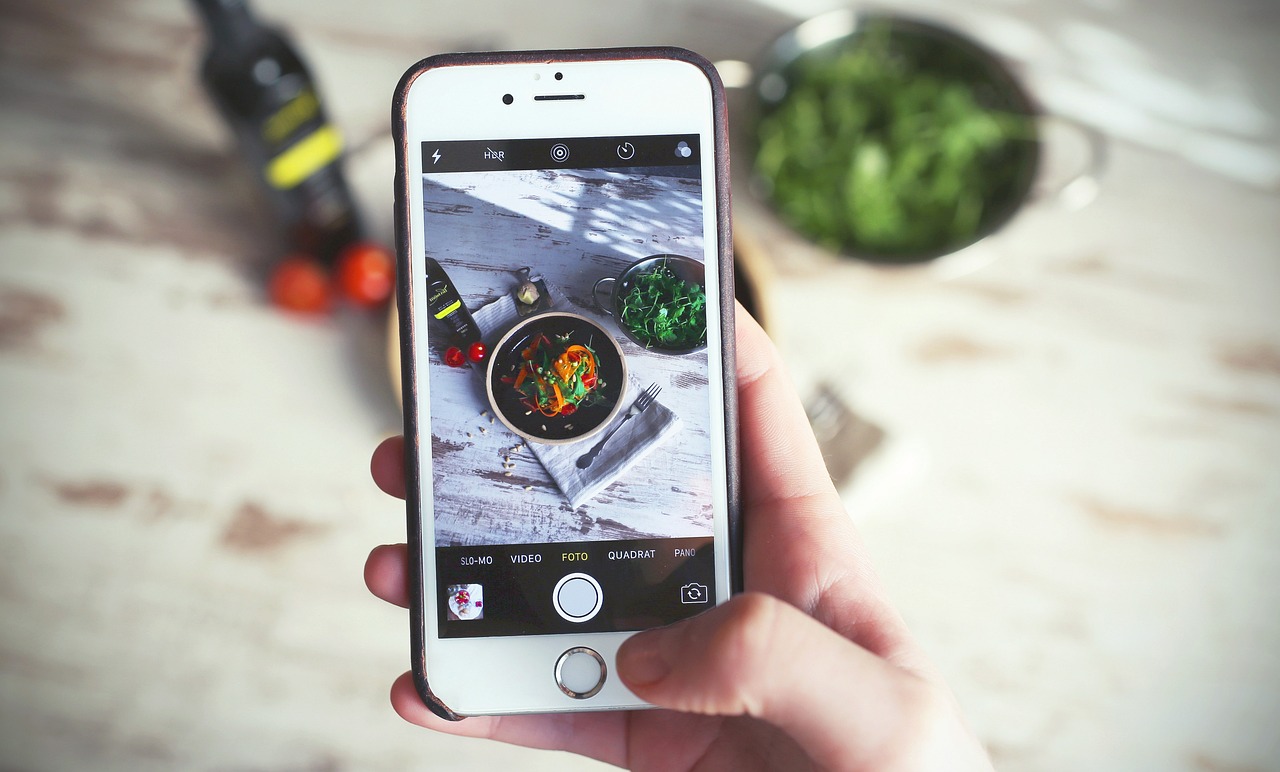
Most photo-logging features do three things in a row. First, they recognize what is on the plate (a computer-vision step that has become quite good). Second, they estimate how much of each food is there, usually from the image alone, sometimes with a plate or utensil as a size reference. Third, they look up nutrition values in a food database and multiply by the estimated amount. Newer tools also use large language models, the same kind of AI behind chatbots, to describe the meal and estimate nutrients in one step.
Each step can add error, but research keeps pointing at the second one. A photo is flat, so it cannot show how deep a bowl is, how much oil soaked into vegetables, or what is hidden under a sauce. Two meals that look similar can differ by hundreds of calories because of butter, dressing or cooking oil. That is why fat is the nutrient these tools miss most.
What the studies found
Commercial apps vs meals made in a metabolic kitchen (2026). At the American Society for Nutrition’s NUTRITION 2026 meeting in July, researchers from the NIH’s National Institute of Diabetes and Digestive and Kidney Diseases presented a test of four apps with AI photo features: Appediet, Cal AI, Lose It! and MyFitnessPal. They photographed 102 meals prepared in a metabolic kitchen, where every ingredient is weighed and the nutrition is known precisely. All four apps underestimated calories, on average by 252 calories (Appediet), 327 (MyFitnessPal), 333 (Lose It!) and 345 (Cal AI), and underestimated fat by about 30 grams. Carbohydrates were estimated most consistently. Lose It! and MyFitnessPal were more accurate for higher-calorie meals than for lower-calorie ones, and the apps struggled most with low-carbohydrate, high-fat (ketogenic) meals. These are preliminary conference results that had not been published in a peer-reviewed journal when we checked.
General AI chatbots (2025). A study in Current Developments in Nutrition gave ChatGPT-4o, Claude 3.5 Sonnet and Gemini 1.5 Pro the same 52 standardized food photos, single foods and full meals in small, medium and large portions, with cutlery and plates in view for scale. Compared with weighed reference values, ChatGPT and Claude had an average error of 35.8% for calories and around 36% to 37% for food weight; Gemini’s errors were much larger. All three underestimated more as portions got bigger. The authors concluded these models are not yet suitable for precise dietary assessment, although their accuracy was similar to people’s own self-reports.
Australian app review (2024). Researchers who screened the top nutrition apps in Australia’s app stores compared AI food-image recognition in seven apps against food records for Western, Asian and recommended diets. They found automatic energy estimates were inaccurate, even though some apps recognized foods well, and that mixed dishes and culturally diverse foods were a particular weakness. Manual logging apps also drifted: they overestimated energy for a Western diet and underestimated it for an Asian one.
The research as a whole (2023). A systematic review in the Annals of Medicine found 52 studies from 2010 to 2023 that compared fully automated AI estimates from food images with known values. Average calorie errors ranged from 0.10% to 38.3%, depending on the system and the foods, and errors were lower when images showed single or simple foods. The studies differed too much to be pooled. Many of the best results came from research systems tested on curated photo sets, not the apps people download.
Is AI worse than doing it yourself?
Not necessarily. People are not very good at estimating food either. In a 1992 study in the New England Journal of Medicine, people who said they could not lose weight despite eating little were found, with precise measurements, to underreport what they ate by 47% on average. In a 2017 study of portion estimation, people’s median error was 23.5% when they guessed food weights with no aid, and 87.7% when they used household measuring cups; a simple size reference cut the error to 18.9%.
So the honest comparison is not AI vs perfect, but AI vs the way most of us log food: quickly and imperfectly. The two kinds of error also lean the same way. Both people and photo apps tend to undercount, especially for large, rich meals, which means a food log often shows fewer calories than were eaten. That can make a plateau confusing. Our guide to calorie deficits explains how to adjust when results do not match the numbers.
Does a 300-calorie miss matter?
It depends on what you use the number for. U.S. obesity guidelines from the American Heart Association, American College of Cardiology and The Obesity Society describe a typical weight-loss plan as a daily deficit of about 500 to 750 calories. If an app undercounts one meal a day by around 300 calories, as in the NIH test, a plan that looks like a 500-calorie deficit on screen could in reality be closer to 200. Undercount two or three meals and the “deficit” may disappear. That is one reason people sometimes see their weight stall while their log says they are on track.
For other uses, a rough number is fine. If you mainly want to notice patterns, such as late-night snacking, sugary drinks or how often you eat out, a photo log that is consistently a little low still shows those patterns clearly. And because the error tends to run in the same direction, comparing this week’s log with last week’s is more meaningful than any single day’s total. The simplest check is your own trend: if your weight is not moving after a few weeks, assume the log is low and adjust portions, rather than eating less than a safe minimum.
Why logging still helps
Accuracy is only half the story. Self-monitoring, writing down what you eat in any form, is one of the most consistent habits linked to weight loss in behavioral research, according to a 2011 systematic review. In a 2019 study of 142 adults using online food logging, the most successful participants logged in more often, while the time spent per day fell from about 23 minutes in the first month to about 15 minutes by month six. Speed matters because people stop logging when it feels like a chore, and that is the real promise of photo logging: lowering the effort enough that people keep going.
The trade-off is that a fast, rough log can lull you into trusting a number that is a third too low. The fix is to use photos for convenience and double-check where it counts. If tracking every bite is not for you, structured approaches like intermittent fasting work without counting; our comparison of intermittent fasting vs calorie counting looks at what trials found.
When photo estimates are most and least reliable
| Usually easier for AI | Usually harder for AI |
|---|---|
| Single, whole foods (an apple, a boiled egg, a slice of bread) | Mixed dishes (stews, casseroles, curries, stir-fries) |
| Packaged foods with a visible label or barcode | Hidden fats: cooking oil, butter, dressings, sauces |
| Foods spread out on a plate, photographed from above | Deep bowls, stacked or overlapping foods |
| Standard portions of common foods | Large portions and high-fat, low-carb meals |
| Foods common in the app’s training data | Home-cooked and culturally diverse dishes |
How to get better numbers from a photo app
Five habits for more accurate photo logging
- Edit the guessCheck the foods and portions the app suggests and fix anything wrong, especially oil, butter and sauces.
- Weigh your regularsUse a kitchen scale a few times for foods you eat often, then save them as custom entries.
- Use labels when you have themScan the barcode for packaged foods instead of photographing them.
- Shoot from above, spread outGood light and a top-down view of a plate, not a bowl, help with portion size.
- Watch the trend, not the mealCompare your log with your weight trend over two to four weeks and adjust.
A kitchen scale is the cheapest accuracy upgrade there is; our researched list of kitchen scales explains what features matter. Our macro calculator and TDEE calculator help set targets, and the nutrition hub covers which foods help with fullness. If you follow a low-carb or keto pattern, be extra careful with photo logs, since the NIH study found these high-fat meals were the hardest; see our keto diet guide.
Privacy: what a food photo can reveal
Food photos are personal data. Depending on the app, they may be stored on the company’s servers, used to improve its AI, or linked to your account along with weight and health details. Apple’s App Store privacy labels show what each app says it collects and whether it is linked to you; we summarize those labels in our app list. Before uploading photos, check the app’s privacy settings and whether you can delete your images.
The bottom line
AI photo logging is a real step forward in convenience, and it will likely keep improving. Today, it is best used as a quick first draft of your food log, not a precise measurement. Combine it with labels, a scale for foods you eat often and an eye on your weight trend, and it can support the habit that matters most: keeping track. For the longer story of how people have tried to manage weight, see our history of weight loss; for other new tracking tools, our explainer on continuous glucose monitors for weight loss; and for keeping results over time, our guide to maintaining weight loss.
Records in this article
Related guides
 Online Dietitian Services Compared: Insurance, Cost and What’s IncludedFive online dietitian services compared, alphabetical and not ranked: insurance, self-pay prices, visit length, messaging, states…
 Shapewear vs Compression Garments vs Waist TrainersShapewear, compression garments and waist trainers compared: what each does and doesn't do, compression levels in…
 Weight-Loss Meal Plan: A 7-Day Plan at 1,500 and 1,800 CaloriesA free 7-day weight-loss meal plan at 1,500 and 1,800 calories, with grams and calories for…
 Alternate-Day Fasting vs 16:8 vs 5:2: Fasting Methods ComparedTypes of intermittent fasting compared: 16:8, 5:2 and alternate-day fasting, what a week looks like on…
Questions to ask a professional
- Is calorie tracking a good fit for me, or would another approach work better?
- How should I adjust my targets if my log and my weight trend do not match?
- Could tracking food affect my relationship with eating?
- Would a few sessions with a registered dietitian help me estimate portions?
Frequently asked questions
How accurate are AI calorie counting apps?
Not very precise yet. In a 2026 NIH study presented at a nutrition meeting, four photo-based apps underestimated meal calories by about a third on average. Accuracy is better for simple foods and worse for mixed dishes and hidden fats.
Is Cal AI accurate?
In the 2026 NIH test of 102 lab-prepared meals, Cal AI underestimated calories by 345 on average, similar to the other three apps tested (252 to 333). The results were preliminary and apps update often.
Can ChatGPT count calories from a photo?
It can estimate, but in a 2025 study ChatGPT-4o was off by about 36% on average for calories from standardized photos, and it underestimated large portions more. Treat it as a rough guide.
Why do photo apps underestimate calories?
A photo cannot show depth, hidden ingredients or cooking oil. Portion size and fat are the hardest parts to judge, so rich, mixed and large meals are undercounted most.
Is photo logging still worth using?
It can be, because logging what you eat is linked to weight loss and photos make it quicker. Edit the app's guesses, weigh foods you eat often, and watch your weight trend over a few weeks.
References
- Photo-based calorie-tracking apps may underestimate energy in meals (NUTRITION 2026 abstract, NIDDK researchers). American Society for Nutrition (via EurekAlert!), 2026. (accessed October 7, 2026) News (reported facts only)
- AI photo-based calorie-tracking tools underestimate them by 33%. Healio, 2026. (accessed October 7, 2026) News (reported facts only)
- Fridolfsson J, Sjöberg E, Thiwång M, Pettersson S.. Performance Evaluation of 3 Large Language Models for Nutritional Content Estimation from Food Images. Current Developments in Nutrition, 2025. doi:10.1016/j.cdnut.2025.107556 · PMID 41081011 (accessed October 7, 2026) Other
- Shonkoff E, Cara KC, Pei XA, et al.. AI-based digital image dietary assessment methods compared to humans and ground truth: a systematic review. Annals of Medicine, 2023. doi:10.1080/07853890.2023.2273497 · PMID 38060823 (accessed October 7, 2026) Review
- Li X, Yin A, Choi HY, et al.. Evaluating the Quality and Comparative Validity of Manual Food Logging and Artificial Intelligence-Enabled Food Image Recognition in Apps for Nutrition Care. Nutrients, 2024. doi:10.3390/nu16152573 · PMID 39125452 (accessed October 7, 2026) Other
- Lichtman SW, Pisarska K, Berman ER, et al.. Discrepancy between self-reported and actual caloric intake and exercise in obese subjects. New England Journal of Medicine, 1992. doi:10.1056/NEJM199212313272701 · PMID 1454084 (accessed October 7, 2026) Other
- Bucher T, Weltert M, Rollo ME, et al.. The international food unit: a new measurement aid that can improve portion size estimation. International Journal of Behavioral Nutrition and Physical Activity, 2017. doi:10.1186/s12966-017-0583-y · PMID 28899402 (accessed October 7, 2026) Other
- Burke LE, Wang J, Sevick MA. Self-monitoring in weight loss: a systematic review of the literature. Journal of the American Dietetic Association, 2011. doi:10.1016/j.jada.2010.10.008 · PMID 21185970 (accessed October 7, 2026) Review
- Harvey J, Krukowski R, Priest J, et al.. Log Often, Lose More: Electronic Dietary Self-Monitoring for Weight Loss. Obesity, 2019. doi:10.1002/oby.22382 · PMID 30801989 (accessed October 7, 2026) Other
- Jensen MD, Ryan DH, Apovian CM, et al.. 2013 AHA/ACC/TOS Guideline for the Management of Overweight and Obesity in Adults. Circulation, 2014. doi:10.1161/01.cir.0000437739.71477.ee · PMID 24222017 (accessed October 7, 2026) Guideline
- Apple Privacy Labels. Apple. (accessed October 7, 2026) Other
Facts checked on October 7, 2026
Educational information, not medical advice. Talk with a qualified healthcare professional about your own situation. In an emergency call 911.
Leave a Reply