Trend check
Viral workouts checked against the research: 12-3-30 incline walking, Japanese interval walking and cozy cardio, with METs, calories and who each suits. Checked October 7, 2026.
Key takeaways
- In a 2025 lab study, a 30-minute 12-3-30 session burned about 307 calories, at about 10.2 kcal a minute vs 13.1 for running.[1]
- Japanese interval walking improved leg strength (13% to 17%) and aerobic capacity (8% to 9%) more than steady walking in a 5-month trial of 246 older adults.[2]
- Cozy cardio at a slow walking-pad pace is about 2.8 METs: easy to sustain, but the lightest of the three.[3]
- Adults are advised to get 150 to 300 minutes of moderate activity a week plus strength training on two days.[5]
In short: All three viral workouts are forms of walking, and all three can help, in different ways. 12-3-30 (12% incline, 3 mph, 30 minutes) is the hardest: in a 2025 lab study it burned about 10 calories a minute, a bit slower than running but with no impact. Japanese walking (3 minutes fast, 3 minutes easy, repeated) has the best research behind it: a 2007 trial in older adults found bigger gains in leg strength, fitness and blood pressure than steady walking. Cozy cardio (gentle walking at home, made pleasant) burns the least per minute but may be the easiest to keep doing. None of them burns off body fat on its own; weight loss still depends on your overall calorie balance and on doing it consistently. Our walking guide covers the basics. Checked on October 7, 2026.
Three trends, three kinds of evidence
- 307 kcalburned in a 30-minute 12-3-30 session in a 2025 lab study (average adult, 75 kg)International Journal of Exercise Science 2025
- 246adults (average age 63) in the 2007 trial behind Japanese walkingMayo Clinic Proceedings 2007
- 2.8 METsenergy cost of slow treadmill-desk walking, typical of cozy cardio2024 Adult Compendium
- 150-300 minmoderate activity a week recommended for adults, plus strength work on 2 daysPhysical Activity Guidelines for Americans
Checked on October 7, 2026
Below, each trend is checked against the research: what it is, what is known about it, who it suits, and how to try it safely. We researched these workouts; we did not test them. For how to turn any activity into a calorie estimate for your own weight, use our calories burned calculator.
A quick guide to METs
Exercise scientists rate effort in METs (metabolic equivalents). One MET is the energy you use sitting quietly; an activity of 5 METs uses about five times as much. The 2024 Adult Compendium of Physical Activities is the standard reference. Because 1 MET is roughly 1 calorie per kilogram of body weight per hour, a common estimate is: calories = METs × weight in kg × hours. These are averages, and individual results vary with fitness, body size and how hard you actually go.
12-3-30: the incline treadmill walk
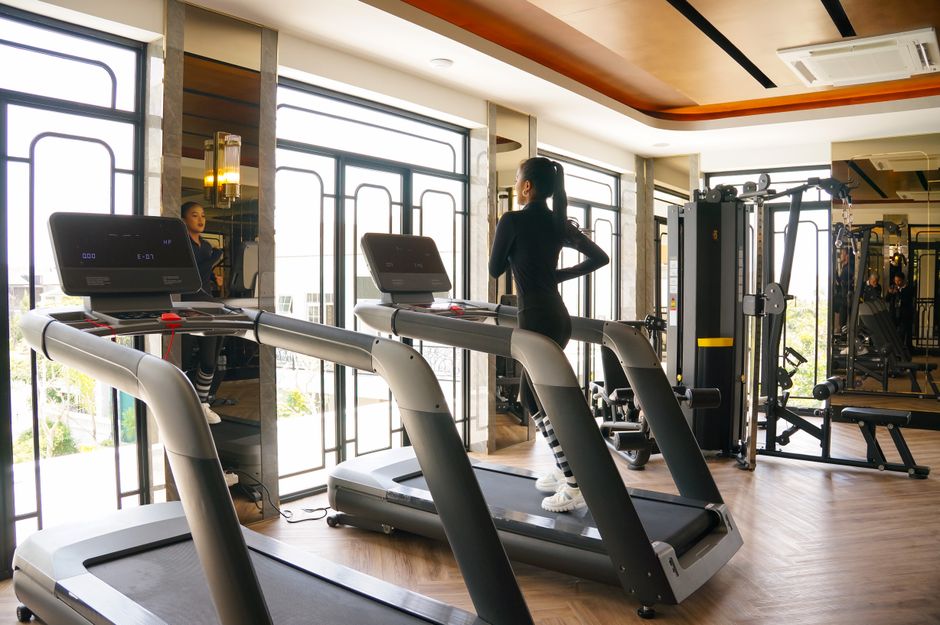
What it is. Set a treadmill to a 12% incline and 3 miles per hour, and walk for 30 minutes. Influencer Lauren Giraldo first shared the routine on YouTube in 2019 and on Instagram and TikTok in 2020, where her video drew more than 2 million likes, according to ABC News. She said she arrived at it by trial and error because running was not working for her.
What the research says. Until recently there was no peer-reviewed study of 12-3-30 itself. In 2025, researchers compared it with self-paced treadmill running in 14 young, recreationally active adults, matching the two sessions for total energy. Both burned about 310 calories. The 12-3-30 session took 30 minutes and burned about 10.2 calories a minute; the run took about 24 minutes and burned about 13.1 a minute. During 12-3-30, about 41% of the energy came from fat vs 33% during running. The authors concluded it is less time-efficient than running for burning energy, but may suit people who want a low-impact option.
What that means. 12-3-30 is a genuinely vigorous workout for most people, close to running in effort, without the pounding. The “fat-burning” claims are overstated, though: using a higher share of fat during a workout is not the same as losing more body fat over weeks, and the study did not measure fat loss. Over time, total calories burned, total calories eaten and consistency matter far more than which fuel your muscles used in a session. Participants in the study were not allowed to hold the handrails; holding on lowers the effort.
Who it suits, and cautions. People with a treadmill who are already walking comfortably and want more intensity without running. A Cleveland Clinic sports medicine physician quoted by ABC News suggested building up gradually (flat walking first, then a treadmill, then adding incline), said using the handrails at first is fine, and recommended mixing in strength training to avoid overuse problems. If you have joint, calf or back problems, start at a lower incline and check with a clinician. If you are choosing equipment, our comparison of a walking pad vs a treadmill covers the differences in incline and speed.
Japanese walking: intervals for your legs and heart
What it is. Interval walking training was developed by Shinshu University researchers Hiroshi Nose and Shizue Masuki in Japan, and went viral as “Japanese walking” in 2025. The format: about 3 minutes of fast walking at a pace that feels “somewhat hard”, then 3 minutes of easy walking, repeated five times for at least 30 minutes, at least four days a week.
What the research says. The key study, published in Mayo Clinic Proceedings in 2007, randomly assigned 246 middle-aged and older adults (60 men and 186 women, average age 63) to no training, steady moderate walking (8,000 or more steps a day, at least four days a week) or interval walking, for five months. In the interval group, knee extension strength rose 13%, knee flexion strength 17%, and peak aerobic capacity 8% to 9%, all significantly more than with steady walking, and resting systolic blood pressure fell more. Not everyone kept it up: in the interval group, 42 of 87 participants met the training targets, a reminder that intervals are harder to sustain.
| Item | Value |
|---|---|
| Knee extension strength | 13% |
| Knee flexion strength | 17% |
| Peak aerobic capacity, cycling | 8% |
| Peak aerobic capacity, walking | 9% |
All gains were significantly greater than with steady moderate walking. Weight change was not a main outcome in the abstract.
Source: Nemoto K et al., Mayo Clinic Proceedings 2007 (246 adults, average age 63) (checked on October 7, 2026)
What that means. This is the trend with the most solid evidence, but the evidence is for fitness, strength and blood pressure in older adults, not specifically for weight loss. Intervals do let you spend part of your walk at a higher effort, which adds some calories compared with a steady easy stroll. As an exercise physiologist writing in The Conversation in 2025 noted, reaching a daily step count has stronger long-term evidence than any one walking style; the best routine is the one you keep.
Who it suits. Almost anyone who can walk briskly, including older adults, and people who get bored with steady walks. No equipment is needed; a watch or phone timer is enough. If you like to track your walks, see our fitness tracker picks, and our comparison of walking vs running shows how walking stacks up.
Cozy cardio: making movement feel good
What it is. TikTok creator Hope Zuckerbrow popularized “cozy cardio”: low-intensity movement, often on a walking pad, in a comfortable setting with soft lighting, a favorite drink and a show or podcast. According to TODAY, her first video drew nearly 2 million views. She has said she created it to rebuild a positive relationship with exercise after intense workouts had left her anxious about it.
What the research says. There are no studies of cozy cardio as such. Its usual pace, slow treadmill or walking-pad walking, is rated at about 2.8 METs in the Compendium, more than double sitting but well below a brisk walk. So per minute it burns the least of the three. Its argument is not intensity but consistency: an activity you look forward to is one you are more likely to repeat.
What that means. For someone who is not exercising at all, 30 to 45 minutes of cozy walking most days is a real step up, and every minute of moderate effort counts toward the guidelines. Light walking at a very slow pace may not reach “moderate” intensity for everyone, so it is worth nudging the speed up over time, or pairing cozy sessions with a couple of brisker or strength days. Our researched lists of walking pads and low-impact workouts have options, and the walking pad guide explains what to look for.
Side by side: calories in 30 minutes
| Item | 150 lb (68 kg) | 200 lb (91 kg) |
|---|---|---|
| Cozy cardio, slow walking pad (2.8 METs) | 95 kcal | 127 kcal |
| Japanese walking, half very brisk and half easy (about 4.2 METs) | 141 kcal | 188 kcal |
| Brisk walk, flat (4.8 METs) | 163 kcal | 218 kcal |
| 12-3-30 (about 8.1 METs) | 276 kcal | 367 kcal |
| Running, 6 mph (9.3 METs) | 316 kcal | 422 kcal |
Estimates. The Japanese walking value is our approximation (average of 5.5 and 2.8 METs). Your numbers will differ.
Source: 2024 Adult Compendium MET values; 12-3-30 from Wong et al. 2025; calories = METs x kg x 0.5 hour (checked on October 7, 2026)
To put those numbers in context, U.S. weight-management guidelines describe a typical daily deficit of about 500 to 750 calories. One 30-minute workout of any of these kinds covers part of that, not all of it. The American College of Sports Medicine’s position stand on weight loss notes that 150 to 250 minutes of activity a week usually leads to modest weight loss, that more than 250 minutes a week is linked with larger losses, and that activity combined with eating changes works better than either alone. Our guide to calorie deficits and the comparison of cardio vs strength training explain how activity fits in.
The verdict
| Trend | Effort | Best evidence for | Main caution |
|---|---|---|---|
| 12-3-30 | Vigorous (about 8 METs measured) | Burning energy without impact; one small lab study | Demanding for beginners; needs a treadmill that inclines to 12% |
| Japanese walking | Moderate to vigorous in bursts | Leg strength, aerobic fitness and blood pressure in older adults (randomized trial) | Harder to stick with; about half met targets in the trial |
| Cozy cardio | Light (about 2.8 METs at slow pace) | Enjoyment and getting started; no direct studies | May not reach moderate intensity unless the pace rises |
How to try them safely
Starting any viral walking workout
- Start with flat walkingIf you are new to exercise, build up to 20 to 30 minutes of comfortable walking first.
- Add one thing at a timeRaise speed, incline or interval length gradually over weeks, not all at once.
- Use the talk testModerate means you can talk but not sing; vigorous means you cannot say more than a few words without pausing for breath (CDC).
- Mix in strengthAdd muscle-strengthening work on two days a week, as the guidelines recommend.
- Check in if neededAsk a clinician first if you have heart, joint or balance problems, or new symptoms with exercise.
The best workout is the one you will do again next week. You can rotate all three: cozy sessions on tired days, intervals outdoors when the weather is good, and an incline walk when you want a challenge. For more ideas, see our exercise hub, the list of best exercises for weight loss with calories for each, our strength training guide, and, for perspective on how today’s trends compare with yesterday’s, the history of exercise fads.
Records in this article

Related guides
 Fitness Tracker vs Smart Ring vs Smartwatch for Weight LossFitness band vs smart ring vs smartwatch for weight loss: maker-stated battery, price and membership checked…
 Smart Scale vs DEXA vs Tape Measure: How to Measure Body FatSmart scale vs DEXA vs tape measure compared: how close each comes to DEXA in validation…
 Cardio vs Strength Training for Weight Loss: What the Trials FoundCardio vs strength training for weight loss: what the STRRIDE AT/RT and LITOE trials found about…
 Walking Pad vs Treadmill: Which Should You Buy?Walking pad vs treadmill compared: speed, incline, deck size, weight limit, size and price for four…
Questions to ask a professional
- Is a vigorous incline workout safe for my heart and joints right now?
- How much activity per week would help my weight goals?
- Should I add strength training, and how should I start?
- Are any of my medicines a reason to change how hard I exercise?
Frequently asked questions
Does the 12-3-30 workout help you lose weight?
It is a vigorous, low-impact workout that burned about 307 calories in 30 minutes in a 2025 lab study. It can help as part of a calorie deficit, but it does not burn body fat on its own, and the study did not measure weight loss.
What is Japanese walking?
Interval walking: about 3 minutes fast ("somewhat hard") and 3 minutes easy, repeated five times, at least four days a week. It was developed by researchers at Shinshu University in Japan.
Is Japanese walking better than 10,000 steps?
In a 2007 trial, interval walking improved strength, fitness and blood pressure more than steady walking of 8,000+ steps a day. But fewer people kept it up, and daily step totals have strong long-term evidence too.
Does cozy cardio count as exercise?
Yes. Slow walking-pad walking is about 2.8 METs, more than double sitting. To count toward the guidelines' moderate activity, aim to raise the pace over time.
Is 12-3-30 safe for beginners?
It is demanding. Build up from flat walking, add incline gradually, and check with a clinician if you have heart, joint, calf, Achilles or back problems.
References
- Wong MWH, Davis DW, Perez OR, et al.. An Exploratory Study Comparing the Metabolic Responses between the 12-3-30 Treadmill Workout and Self-Paced Treadmill Running. International Journal of Exercise Science, 2025. doi:10.70252/ubix5911 · PMID 39917588 (accessed October 7, 2026) Other
- Nemoto K, Gen-no H, Masuki S, Okazaki K, Nose H.. Effects of high-intensity interval walking training on physical fitness and blood pressure in middle-aged and older people. Mayo Clinic Proceedings, 2007. doi:10.4065/82.7.803 · PMID 17605959 (accessed October 7, 2026) Randomized trial
- 2024 Adult Compendium (activity lists and PDF). Compendium of Physical Activities, 2024. (accessed October 7, 2026) Other
- Herrmann SD, Willis EA, Ainsworth BE, et al.. 2024 Adult Compendium of Physical Activities: A third update of the energy costs of human activities. Journal of Sport and Health Science, 2024. doi:10.1016/j.jshs.2023.10.010 · PMID 38242596 (accessed October 7, 2026) Review
- Physical Activity Guidelines for Americans, 2nd edition: top 10 things to know. U.S. Department of Health and Human Services (ODPHP). (accessed October 7, 2026) Guideline
- What to know about the TikTok-famous “12-3-30” treadmill workout. ABC News (Good Morning America), 2023. (accessed October 7, 2026) News (reported facts only)
- “Cozy cardio”: The latest fitness trend you can do in your pajamas. TODAY, 2024. (accessed October 7, 2026) News (reported facts only)
- Japanese walking: the benefits of this fitness trend (Sean Pymer). The Conversation, 2025. (accessed October 7, 2026) News (reported facts only)
- Donnelly JE, Blair SN, Jakicic JM, et al.. American College of Sports Medicine Position Stand: Appropriate physical activity intervention strategies for weight loss and prevention of weight regain for adults. Medicine & Science in Sports & Exercise, 2009. doi:10.1249/MSS.0b013e3181949333 · PMID 19127177 (accessed October 7, 2026) Society statement
- Measuring Physical Activity Intensity (talk test). Centers for Disease Control and Prevention. (accessed October 7, 2026) Government page
- Jensen MD, Ryan DH, Apovian CM, et al.. 2013 AHA/ACC/TOS Guideline for the Management of Overweight and Obesity in Adults. Circulation, 2014. doi:10.1161/01.cir.0000437739.71477.ee · PMID 24222017 (accessed October 7, 2026) Guideline
Facts checked on October 7, 2026
Educational information, not medical advice. Talk with a qualified healthcare professional about your own situation. In an emergency call 911.
Leave a Reply