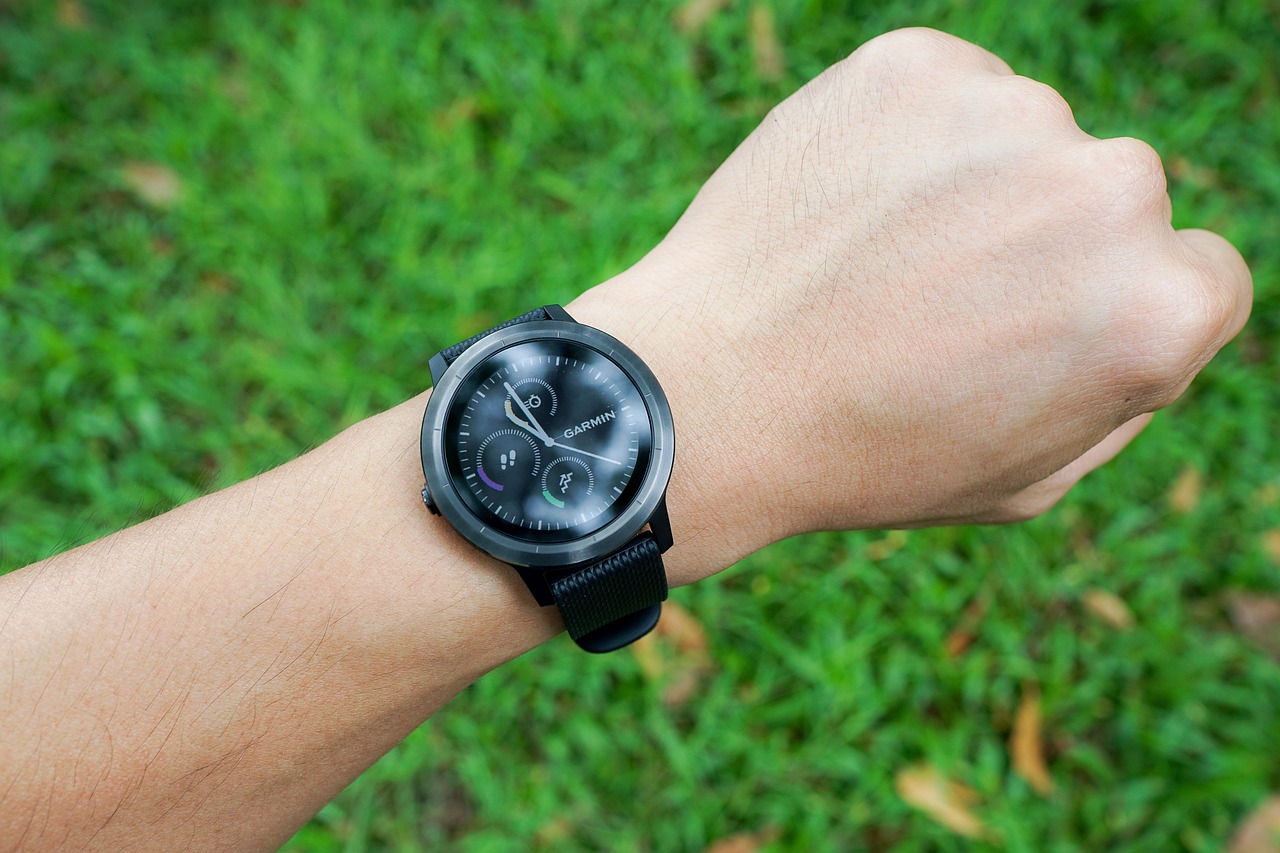
Fitness band vs smart ring vs smartwatch for weight loss: maker-stated battery, price and membership checked Oct 7, 2026, plus what studies show about steps, heart rate, sleep and calories.
Key takeaways
- Across 158 studies, wearables counted steps accurately in the lab, heart rate was more variable, and no brand estimated calories burned accurately.[12]
- In a lab study of 7 wrist devices, median heart-rate error ran from 2.0% to 6.8%, but calorie error from 27.4% to 92.6%.[16]
- The Oura Ring underestimated exercise effort more as intensity rose, by about 3.5 METs during a very fast run, and counted about 2,124 more steps a day than reference monitors.[17]
- Activity trackers were linked with about 1,800 more steps a day and about 1 kg less body weight across 39 systematic reviews.[22]
In short: Fitness bands, smart rings and smartwatches measure the same core things (steps, heart rate and sleep) with similar strengths and weaknesses: they count steps and track heart rate fairly well, and they all estimate calories burned poorly. The real differences are form, screen, GPS, battery and cost: bands are the cheapest, rings are the most discreet but have no screen and often a membership, and smartwatches do the most but usually need charging every day. Any of them can help with weight loss in the same way, by nudging you to move more.

This page compares the three types side by side using maker-stated specifications (checked on October 7, 2026) and independent validation studies. It does not name a winner, because the right one depends on what you will actually wear. For specific models, see our researched list of the best fitness trackers for weight loss; a separate list of smart rings is on the way. This is general education, not medical advice: none of these devices diagnoses a condition, and sleep or heart concerns belong with your clinician.
The three in one minute
| Fitness band | Smart ring | Smartwatch | |
|---|---|---|---|
| Examples (maker-stated) | Fitbit Charge 6, Fitbit Inspire 3, Garmin vivosmart 5, Amazfit Bip 6 | Oura Ring 5, Samsung Galaxy Ring | Apple Watch SE 3 and Series 12, Garmin vivoactive 5 |
| Where you wear it | Wrist | Finger | Wrist |
| Screen | Small screen | None: everything is in the phone app | Large screen, apps and notifications |
| Built-in GPS | Some (Charge 6 yes; Inspire 3 and vivosmart 5 use your phone’s GPS) | No | Yes on the models listed |
| Battery (maker-stated) | 7 to 14 days | 6 to 9 days | 18 hours to 11 days |
| Price (checked Oct 7, 2026) | $69.99 to $159.95 | From $299.99 to $399 | From $249 to from $399 |
| Membership | Optional on Fitbit (some insights need Google Health Premium) | Oura: $5.99 a month or $69.99 a year for most insights | Not required for the core features |
| Steps, heart rate, sleep | Yes | Yes | Yes |
| Calorie estimate | Yes, but inaccurate | Yes, but inaccurate | Yes, but inaccurate |
Battery life: rings and bands last longest
Battery matters more than it sounds for weight loss. A device on the charger can’t count your steps, and one you take off at night can’t track your sleep. Bands and rings typically last close to a week or more; most smartwatches need a charge every day or two.
| Item | Low | High |
|---|---|---|
| Apple Watch SE 3 (watch) | 0.75 days | 0.75 days |
| Apple Watch Series 12 (watch) | 1 days | 1 days |
| Samsung Galaxy Ring (ring) | 6 days | 7 days |
| Oura Ring 5 (ring) | 6 days | 9 days |
| Fitbit Charge 6 (band) | 7 days | 7 days |
| Garmin vivosmart 5 (band) | 7 days | 7 days |
| Fitbit Inspire 3 (band) | 10 days | 10 days |
| Garmin vivoactive 5 (watch) | 11 days | 11 days |
| Amazfit Bip 6 (band) | 14 days | 14 days |
Apple rates the SE 3 at up to 18 hours and the Series 12 at up to 24 hours of normal use. Galaxy Ring: up to 6 days for smaller sizes, 7 days for sizes 12 and 13. Makers' best case; GPS and always-on screens shorten it.
Source: Maker product and spec pages (apple.com, samsung.com, ouraring.com, Google Store, garmin.com, us.amazfit.com) (checked on October 7, 2026)
Apple rates the Watch SE 3 at up to 18 hours of normal use and up to 32 hours in Low Power Mode, and the Series 12 at up to 24 hours (38 in Low Power Mode). Oura says one charge of the Ring 5 lasts 6 to 9 days depending on ring size and use. Samsung rates the Galaxy Ring at up to 7 days for sizes 12 and 13 and up to 6 days for smaller sizes. Among bands, Fitbit rates the Charge 6 at 7 days and the Inspire 3 at up to 10, Garmin rates the vivosmart 5 at up to 7 days, and Amazfit rates the Bip 6 at up to 14 days.
Price and the cost of a membership
On price, bands sit at the bottom, and rings and watches overlap. A membership changes the math: Oura Ring 5 costs $399, and Oura Membership is $5.99 a month or $69.99 a year, so the first year with an annual plan comes to about $469. Oura says the ring and app still work without a membership, but the insights and data you get are “much more limited.” Samsung’s Galaxy Ring pages we read did not list a membership. On Fitbit, some insights such as the daily readiness score need a paid Google Health Premium plan.
| Item | Low | High |
|---|---|---|
| Fitness bands (Bip 6 to Charge 6) | $69.99 USD | $159.95 USD |
| Smartwatches (SE 3 to Series 12) | $249 USD | $399 USD |
| Smart rings (Galaxy Ring to Oura Ring 5) | $299.99 USD | $399 USD |
| Oura Ring 5, first year with annual membership | $468.99 USD | $468.99 USD |
List prices before tax, trade-ins or sales. Apple and Samsung prices are starting prices. Oura first year = $399 ring + $69.99 annual membership.
Source: Maker store pages: Google Store, us.amazfit.com, garmin.com, apple.com, samsung.com, ouraring.com (checked on October 7, 2026)
Prices checked on October 7, 2026: Amazfit Bip 6 $69.99, Fitbit Inspire 3 $99.95, Garmin vivosmart 5 $149.99, Fitbit Charge 6 $159.95, Apple Watch SE 3 from $249, Garmin vivoactive 5 $269.99, Samsung Galaxy Ring from $299.99, Apple Watch Series 12 from $399 and Oura Ring 5 $399. Prices change often; check the maker’s store before buying.
How accurate are they? Steps and heart rate
Accuracy depends more on what is being measured than on the shape of the device. A systematic review of 158 studies found that, in lab settings, Fitbit, Apple Watch and Samsung devices counted steps accurately; heart rate was more variable, with Apple Watch and Garmin the most accurate and Fitbit tending to read low. A 2022 review of 65 studies found that the Fitbit Charge (and Charge HR) counted steps with a mean absolute percentage error under 25% across 20 studies, and the Apple Watch measured heart rate with an error under 10% in 2 studies.
A 2025 meta-analysis of 56 studies on the Apple Watch found heart rate and step counts generally accurate, with heart rate errors under the 10% validity threshold in every subgroup, while some step subgroups went above 10%. For rings, the best-known study compared the Oura Ring with reference monitors over 14 days of free living in 32 people. Step counts were closely correlated with the reference, but the ring counted on average 2,124 more steps a day, with wide variation between people. That means a ring’s step count is useful for spotting your own trend, less so for comparing your number with someone else’s.
Calories burned: the weak spot for all three
This is the number that matters most for weight loss, and it is the one no device type gets right. The 158-study review found that no brand measured energy expenditure accurately. A meta-analysis of 60 studies in the British Journal of Sports Medicine found accuracy varied by activity and that adding heart rate to motion sensing reduced the error for most activities, but the authors still called for better estimates. In a Stanford study of seven wrist devices in 60 adults, no device estimated calories with less than 20% error.
| Item | Low | High |
|---|---|---|
| Heart rate (best to worst device) | 2% | 6.8% |
| Calories burned (best to worst device) | 27.4% | 92.6% |
Older wrist models than those sold today. A 2022 review of 65 studies also found calorie errors above 30% for every brand.
Source: Shcherbina et al., Journal of Personalized Medicine 2017 (60 adults, indirect calorimetry) (checked on October 7, 2026)
Rings are no exception. In the Oura validation study, the ring tracked big changes between activities well (its estimates correlated closely with indirect calorimetry in the lab), but it underestimated effort more as exercise got harder. During a very fast run, it read about 3.5 METs lower than the lab measurement.
The practical lesson is the same whatever you wear: don’t eat back the “calories burned” number. Adding those calories back as food can cancel out the calorie deficit you are working toward. Estimate your daily needs with our TDEE calculator or calorie calculator instead, and for a specific workout, the calories burned calculator uses published energy costs rather than a sensor’s guess.
Sleep tracking: where rings get attention
Rings are often bought for sleep, because they are comfortable to wear in bed. The research suggests all three types detect sleep well and wake less well, and that sleep stages are the least reliable part.
What sleep studies against polysomnography found
- 95% or moresensitivity for telling sleep from wake for Oura Ring Gen3, Fitbit Sense 2 and Apple Watch Series 8Robbins et al., Sensors 2024
- 0.18 to 0.54specificity for detecting wake across 7 consumer sleep trackers (sleep detection was 0.93 or higher)Chinoy et al., Sleep 2021
- About 3 minaverage difference in total sleep time between Oura Ring and sleep studies, not significant (6 studies, 388 people)Khan et al., OTO Open 2025
Checked on October 7, 2026
In a one-night lab study of 35 healthy adults, the Oura Ring Gen3 did not differ from polysomnography (the lab sleep test) for light, deep or REM sleep, while the Fitbit Sense 2 underestimated deep sleep by about 15 minutes and the Apple Watch Series 8 by about 43 minutes. One author of that study sits on Oura’s medical advisory board, and the devices tested are older than today’s models, so treat it as one data point. In a larger study of 11 sleep trackers in 75 people, agreement on sleep stages varied widely between devices, and wearables tended to misjudge sleep efficiency.
Why does sleep matter for weight? Short or broken sleep can make it harder to stick with eating and activity plans, and loud snoring with daytime sleepiness can be a sign of sleep apnea. A tracker can’t diagnose that; our page on sleep apnea and weight explains what to ask a clinician.
Do any of them help you lose weight?
Modestly, and through the same route: moving more. An umbrella review in The Lancet Digital Health pooled 39 systematic reviews covering about 164,000 people. Activity trackers were linked with about 1,800 more steps a day, about 40 more minutes of walking a day and about 1 kg (2.2 lb) less body weight. Those studies mostly used wrist trackers and pedometers; we found no trial showing a ring or a watch leads to more weight loss than a band.
That puts the device in its place. It works as a reminder and a scoreboard for walking for weight loss and other daily movement. It doesn’t replace an eating plan or the two or more days a week of strength training that help protect muscle while you lose weight. And because trends matter more than single days, the same habit of checking weekly averages is one of the habits that help keep weight off.
What people weigh up
- Lowest cost: bands start at $69.99 (Amazfit Bip 6) and $99.95 (Fitbit Inspire 3) with no required membership, and still count steps and track sleep.
- Something you forget you are wearing: a ring has no screen to distract you and is easy to wear to bed. You can’t glance at your step count during the day without opening the app.
- Walks without your phone: built-in GPS (Fitbit Charge 6, Apple Watch, Garmin vivoactive 5) records distance and pace on its own. The rings and some bands don’t have it.
- Workouts and apps: smartwatches show workouts on the wrist, run apps and handle notifications, in exchange for daily charging and a higher price.
- Phone match: Apple Watches need an iPhone, and Samsung’s pages describe pairing the Galaxy Ring with a compatible Galaxy phone. Check the maker’s compatibility page for your phone before buying.
- Ongoing cost: add any membership to the price. Over two years, Oura’s annual plan adds about $140 to the ring.
- Privacy: all three collect heart rate, sleep and often location. Check sharing settings and how to export or delete your data.
Getting the most from whichever you wear
Use any tracker this way
- Find your baselineWear it normally for a week before setting any goal.
- Set a small step goalAim 500 to 1,000 steps a day above your average, then build.
- Ignore the calorie numberPlan meals from a calculator, not the device's estimate.
- Watch weekly trendsWeekly averages show real change; single days bounce around.
- Pair it with other dataWeight trends from a scale and a waist measurement fill in the picture.
A smart scale shows the weight trend your extra activity supports, and our comparison of body-fat measurement methods explains why a tape measure often beats a device’s body-fat estimate. To add steps on workdays, a walking pad is one option. Our workout apps list works with most watches and bands, and the gear hub covers the rest of the equipment we write about. More side-by-side pages are in our comparisons hub.
Related guides
 Calorie Deficit: how much, how to create one, how to keep itCalorie deficit explained: how big a deficit is reasonable, how to create one you can live…
 Alternate-Day Fasting vs 16:8 vs 5:2: Fasting Methods ComparedTypes of intermittent fasting compared: 16:8, 5:2 and alternate-day fasting, what a week looks like on…
 Cardio vs Strength Training for Weight Loss: What the Trials FoundCardio vs strength training for weight loss: what the STRRIDE AT/RT and LITOE trials found about…
 Every FDA-Approved Weight-Loss Medication Compared (2026)Every FDA-approved weight-loss medication side by side (checked October 6, 2026): how each is taken, who…
Tools for this topic
 TDEE and Maintenance Calories CalculatorFree TDEE calculator: estimate your total daily energy expenditure and maintenance calories, learn TDEE vs BMR…
 Calories Burned Calculator for 100+ activitiesFree calories burned calculator for 100+ activities using 2024 Compendium MET values, with examples, walking pad…
Latest research
 The 10,000 Steps Myth: How Many Steps You Really NeedWhere the 10,000 steps goal came from and what the big studies found: most of the…
 How to Read a Weight-Loss Study Headline in 5 StepsFive questions to ask before believing a weight-loss headline: who was studied, how many, how long,…
 Brown Fat, Cold Plunges and Saunas: Do They Help Weight Loss?Do cold plunges, brown fat and saunas help weight loss? What human studies show: brown fat…
Questions to ask a professional
- Is my sleep or heart-rate data a reason to get checked for sleep apnea or a heart rhythm problem?
- How many steps or active minutes a day would be a safe goal for me to build toward?
- Should I use my tracker data to adjust my eating plan, and if so how?
- Are there activities I should avoid or limit with my health conditions?
Frequently asked questions
Is a smart ring or a fitness tracker better for weight loss?
Neither has been shown to cause more weight loss. Both count steps and track heart rate and sleep, and both estimate calories poorly. Bands cost less and have a screen; rings are more discreet and are easy to wear to bed but often need a membership.
Do smart rings count steps accurately?
Reasonably for your own trend. In a 14-day study, Oura Ring steps correlated closely with reference monitors but averaged about 2,124 more steps a day, with wide variation between people.
Does the Oura Ring need a subscription?
Oura says the ring and app still work without one, but most insights need Oura Membership, which was $5.99 a month or $69.99 a year when we checked on October 7, 2026.
Which tracks sleep best: a ring, a band or a watch?
All three detect sleep well and wake less well. In one lab study, an Oura Ring matched the lab test for sleep stages more closely than a Fitbit and an Apple Watch, but studies are small and sleep stages remain the least reliable measure.
Should I eat back the calories my tracker says I burned?
It is safer not to. Studies find calorie estimates off by 20% to more than 90%. Use a calculator to estimate your daily needs and treat the device as a step and activity counter.
References
- Fitbit Charge 6 (Google Store product page). Google. (accessed October 7, 2026) Other
- Fitbit Inspire 3 (Google Store product page). Google. (accessed October 7, 2026) Other
- Garmin vivosmart 5 (product page) and owner’s manual specifications. Garmin. (accessed October 7, 2026) Other
- Garmin vivoactive 5 (product page) and owner’s manual battery life. Garmin. (accessed October 7, 2026) Other
- Amazfit Bip 6 Smartwatch (product page). Amazfit (Zepp Health). (accessed October 7, 2026) Other
- Apple Watch SE 3 technical specifications. Apple. (accessed October 7, 2026) Other
- Apple Watch Series 12 technical specifications. Apple. (accessed October 7, 2026) Other
- Buy Apple Watch (starting prices). Apple. (accessed October 7, 2026) Other
- Oura Ring 5 (store page) and Oura Membership pricing. Oura. (accessed October 7, 2026) Other
- Oura Membership. Oura. (accessed October 7, 2026) Other
- Galaxy Ring (product page). Samsung. (accessed October 7, 2026) Other
- Fuller D, Colwell E, Low J, et al.. Reliability and validity of commercially available wearable devices for measuring steps, energy expenditure, and heart rate: systematic review. JMIR mHealth and uHealth, 2020. doi:10.2196/18694 · PMID 32897239 (accessed October 7, 2026) Review
- Germini F, Noronha N, Borg Debono V, et al.. Accuracy and acceptability of wrist-wearable activity-tracking devices: systematic review of the literature. Journal of Medical Internet Research, 2022. doi:10.2196/30791 · PMID 35060915 (accessed October 7, 2026) Review
- Choe JP, Kang M. Apple watch accuracy in monitoring health metrics: a systematic review and meta-analysis. Physiological Measurement, 2025. doi:10.1088/1361-6579/adca82 · PMID 40199339 (accessed October 7, 2026) Meta-analysis
- O'Driscoll R, Turicchi J, Beaulieu K, et al.. How well do activity monitors estimate energy expenditure? A systematic review and meta-analysis of the validity of current technologies. British Journal of Sports Medicine, 2020. doi:10.1136/bjsports-2018-099643 · PMID 30194221 (accessed October 7, 2026) Meta-analysis
- Shcherbina A, Mattsson CM, Waggott D, et al.. Accuracy in Wrist-Worn, Sensor-Based Measurements of Heart Rate and Energy Expenditure in a Diverse Cohort. Journal of Personalized Medicine, 2017. doi:10.3390/jpm7020003 · PMID 28538708 (accessed October 7, 2026) Other
- Kristiansson E, Fridolfsson J, Arvidsson D, et al.. Validation of Oura ring energy expenditure and steps in laboratory and free-living. BMC Medical Research Methodology, 2023. doi:10.1186/s12874-023-01868-x · PMID 36829120 (accessed October 7, 2026) Other
- Robbins R, Weaver MD, Sullivan JP, et al.. Accuracy of three commercial wearable devices for sleep tracking in healthy adults. Sensors, 2024. doi:10.3390/s24206532 · PMID 39460013 (accessed October 7, 2026) Other
- Chinoy ED, Cuellar JA, Huwa KE, et al.. Performance of seven consumer sleep-tracking devices compared with polysomnography. Sleep, 2021. doi:10.1093/sleep/zsaa291 · PMID 33378539 (accessed October 7, 2026) Other
- Khan S, Ibrahim AF, Vasudevan SS, et al.. The Oura Ring versus medical-grade sleep studies: a systematic review and meta-analysis. OTO Open, 2025. doi:10.1002/oto2.70181 · PMID 41230431 (accessed October 7, 2026) Meta-analysis
- Lee T, Cho Y, Cha KS, et al.. Accuracy of 11 wearable, nearable, and airable consumer sleep trackers: prospective multicenter validation study. JMIR mHealth and uHealth, 2023. doi:10.2196/50983 · PMID 37917155 (accessed October 7, 2026) Other
- Ferguson T, Olds T, Curtis R, et al.. Effectiveness of wearable activity trackers to increase physical activity and improve health: a systematic review of systematic reviews and meta-analyses. The Lancet Digital Health, 2022. doi:10.1016/S2589-7500(22)00111-X · PMID 35868813 (accessed October 7, 2026) Review
Facts checked on October 7, 2026
Educational information, not medical advice. Talk with a qualified healthcare professional about your own situation. In an emergency call 911.