How-to
How to get a flatter stomach: the four things that shape your middle (fat, bloating, posture and muscle) and what the research says works for each.
Key takeaways
- Six weeks of daily ab exercises improved curl-ups (47 vs 32) but did not change belly fat or waist size.[1]
- Aerobic exercise reduced visceral fat in a meta-analysis of 35 trials; resistance training alone did not show a significant effect.[2]
- NIDDK suggests eating slowly and limiting gum, fizzy drinks and straws to reduce swallowed air and gas.[7]
- The AGA advises against probiotics to treat bloating and distention and suggests a dietitian guide restrictive diets.[8]
- Health risk rises with a waist above 35 inches in women and 40 inches in men.[5]
In short: How flat your stomach looks depends on four things: the fat under the skin and around the organs, bloating from gas and digestion, posture, and the strength of your core muscles. Fat comes down only with overall fat loss, from a steady calorie deficit and regular aerobic exercise; crunches alone don’t remove it. Bloating often responds to eating more slowly, fewer fizzy drinks and a closer look at trigger foods. Strength and posture work makes your middle firmer and taller, and shapewear can smooth the outline for an occasion.
If your main goal is losing fat around your middle, our full guide on how to lose belly fat has the detailed plan, and our page on visceral fat explains the health side. This page is about the everyday question “how do I get a flatter stomach?”, which is broader: a stomach can look rounder on Friday evening than on Monday morning without any change in fat. Below, we take the four factors one at a time and show what the research supports for each.
The four things that shape how your stomach looks
- FatFat under the skin and visceral fat around the organs. Changes over weeks with overall fat loss.
- BloatingGas, constipation and swallowed air. Changes within hours or days.
- PostureHow you stand and hold your ribs and pelvis. Changes in seconds.
- Muscle toneCore strength and endurance. Changes over weeks of training.
1. Fat: the part that needs overall fat loss
There are two kinds of belly fat. Subcutaneous fat sits under the skin and is the part you can pinch. Visceral fat lies deeper, around the liver and intestines, and pushes the belly out from inside; it is the type most linked with heart disease and type 2 diabetes. Both come down when your body fat comes down overall, and neither can be targeted with one exercise. In a six-week trial, adults who did seven ab exercises five days a week got much better at curl-ups but saw no change in belly fat or waist size. Our spot reduction explainer covers the full evidence.
| Item | Value |
|---|---|
| Curl-ups, ab exercise group | 47 |
| Curl-ups, control group | 32 |
Curl-up repetitions at the end of the trial. There was no significant change in belly fat, body fat percentage or waist circumference.
Source: Vispute SS et al., Journal of Strength and Conditioning Research 2011 (24 adults, 6 weeks) (checked on October 7, 2026)
What does work for fat around the middle:
- Aerobic exercise. A meta-analysis of 35 trials that measured visceral fat by CT or MRI found that aerobic exercise reduced it compared with no exercise, while resistance training alone did not show a significant effect. Even amounts below the usual weight-loss recommendations may help. Brisk walking counts.
- A steady calorie deficit. Choose an eating pattern you can keep up; our calorie deficit guide shows how to set one.
- Enough sleep. In a 2022 inpatient study, two weeks of 4-hour nights with free access to food made people eat more and gain weight, and fat inside the abdomen increased, both under the skin and around the organs. Another 2022 trial found that adults who usually slept less than 6.5 hours and extended their sleep by about 1.2 hours a night ate about 270 fewer calories a day.
Waist numbers worth knowing
- 35 in / 40 inwaist sizes above which health risk rises for women / men, measured just above the hip bones after breathing outNHLBI (NIH)
- Under halfa waist below half your height is the healthy range in UK NICE guidance (waist-to-height ratio under 0.5)NICE NG246
- 270 kcalless eaten per day after sleep was extended by about 1.2 hours a nightTasali E et al., JAMA Internal Medicine 2022
Checked on October 7, 2026
2. Bloating: the part that changes by the hour
Many people who feel their stomach “isn’t flat” are describing bloating: a sense of fullness or pressure, sometimes with visible swelling that builds through the day. Common causes are swallowed air, gas made when gut bacteria ferment certain carbohydrates, and constipation. The National Institute of Diabetes and Digestive and Kidney Diseases (NIDDK) lists foods and drinks that often cause gas, and simple habits that help:
- Eat slowly, ideally sitting down, and avoid talking while you chew, to swallow less air.
- Cut back on chewing gum, hard candy, fizzy drinks and drinking through a straw, which all add air.
- Try smaller, more frequent meals instead of large ones.
- Notice common gas triggers: beans and lentils; broccoli, cauliflower and other cruciferous vegetables; apples, pears and fruit juice; milk products for people with lactose intolerance; drinks with high-fructose corn syrup; and sugar alcohols such as sorbitol, xylitol, erythritol and maltitol found in “sugar-free” foods.
Many of these foods are healthy and filling, so the goal is not to cut them all. Raise fiber gradually and drink enough water, as our fibermaxxing explainer describes, and keep a short food-and-symptom note for two weeks to find your own triggers. The American Gastroenterological Association’s 2023 expert review on bloating advises that when a restrictive plan such as a low-FODMAP diet is needed, a gastroenterology dietitian should preferably guide it, and that probiotics should not be used to treat bloating and distention.
Interestingly, visible belly swelling is not always about how much gas is inside. A 2011 study found that in many people with bloating, the diaphragm moves down and the front belly wall relaxes, pushing the belly out. The AGA review lists diaphragmatic breathing as a treatment for this pattern. Detox teas and laxative “flat tummy” products are not the answer; our page on detox teas and cleanses explains why.
3. Posture: the part you can change right now
Stand sideways to a mirror and let your shoulders round and your pelvis tip forward, then stand tall with your ribs stacked over your hips. The difference in how your stomach looks can be striking, with no change in the body itself. Plastic surgeons point out the same effect in photos: an article from the American Society of Plastic Surgeons describes the flanks looking full with arms down and slimmer with arms raised. You don’t need to hold your breath or suck in all day; gentle cues such as “tall through the crown of the head” and “ribs down” are enough, and a stronger back and core make them easier to keep.
4. Muscle tone: the part that makes the middle firmer
Core training won’t remove fat, but it does build strength and endurance in the muscles that wrap around your middle. That makes the area feel firmer and makes a tall posture easier to hold. A balanced routine trains the whole trunk, front, sides and back, rather than doing only crunches:
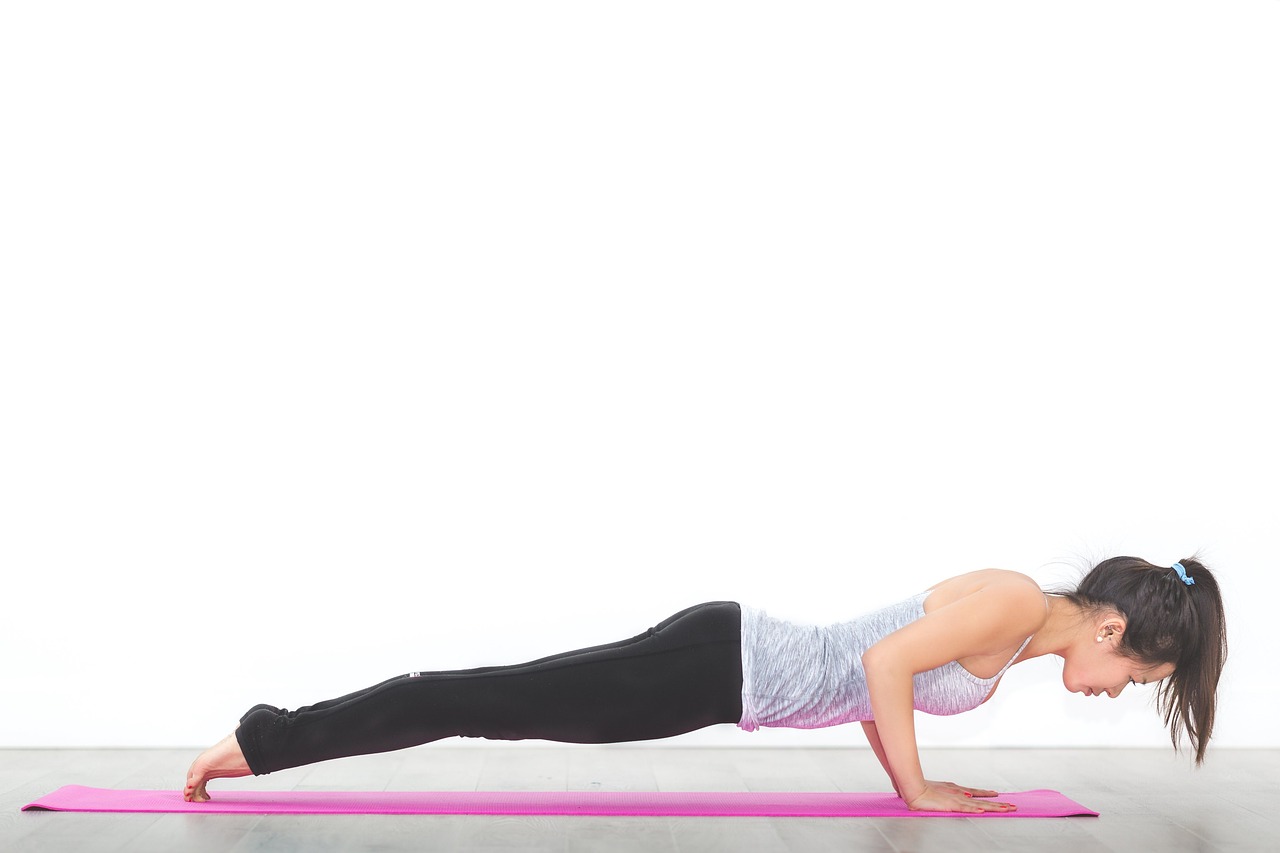
- Anti-extension: planks, dead bugs.
- Anti-rotation and side work: side planks, suitcase carries, pallof presses with a band.
- Back and hips: bird-dogs, glute bridges, hip hinges.
Fold these into two or more full-body strength sessions a week, the amount the Physical Activity Guidelines suggest; our strength training guide and best home workouts list have routines. Strength work also helps protect muscle while you lose weight: a 2021 overview of reviews found resistance training reduced lean-mass loss by about 0.8 kg.
Other things that change your middle
Menopause. Many women notice their shape changing in midlife. A 2012 review in Climacteric explains that while weight gain itself can’t be blamed on the menopause transition, the hormonal change at menopause is linked with more total body fat and more fat around the abdomen. The same habits help, with extra attention to strength training and protein, and it is worth discussing symptoms and options with your clinician.
Alcohol. The National Institute on Alcohol Abuse and Alcoholism notes that alcoholic drinks supply calories but few nutrients and may contribute to unwanted weight gain. Its free alcohol calorie calculator shows how quickly a few drinks a week add up, and cutting back is often one of the simplest changes to make.
Constipation. A backed-up bowel can make the belly feel full and look rounder. The AGA review suggests that when bloating comes with constipation, treating the constipation should be considered, and that a pelvic floor problem may be the cause when emptying is difficult. Fiber from food, fluids and daily movement are the usual first steps; a clinician can help if it lasts.
What doesn’t work
- Hundreds of crunches a day to “burn” belly fat. They build endurance, not fat loss.
- Sweat belts and waist trainers worn to slim the waist permanently. They hold you in while you wear them; see our waist trainer guide.
- Detox teas and “flat tummy” laxatives. They move water and stool, which come back.
- “Belly fat burner” pills. None has good evidence; our fat burners page explains the risks.
Shapewear, and when the issue is skin
For an event or simply for comfort, tummy-control shapewear can smooth the outline under clothes. It does not change fat or muscle, and it should never feel painful or restrict breathing. Our shapewear guide explains fit and comfort, and the best tummy-control shapewear list compares options. After a big weight loss or pregnancy, a stomach that won’t flatten may be partly loose skin rather than fat. Our loose skin guide and the page on tummy tucks cover that, and our non-surgical tummy tuck explainer checks the claims of “no-surgery” options. Body contouring is not weight loss.
A four-week plan for a flatter stomach
Do these next, 1-2-3-4
- Measure once, then waitMeasure your waist just above the hip bones after breathing out, at the same time of day. Re-measure in 4 weeks, not daily.
- Move most daysBuild toward 150 to 300 minutes of brisk walking or other aerobic activity a week.
- Train your core twice a weekPlanks, side planks, bird-dogs and carries inside two full-body strength sessions.
- Calm the bloatEat slowly, cut fizzy drinks and gum, and keep a two-week food-and-symptom note.
- Protect your sleepAim for 7 hours or more, which the CDC recommends for adults.
Track how your clothes fit, your energy and your strength as well as your waist; our guide to tracking progress without the scale lists more measures. And remember that a stomach that is soft, rounded or changes through the day is normal. The goal is a healthier middle and feeling good in your body, not a perfectly flat line.
Records in this article


Related guides
 Shapewear vs Compression Garments vs Waist TrainersShapewear, compression garments and waist trainers compared: what each does and doesn't do, compression levels in…
 Weight-Loss Meal Plan: A 7-Day Plan at 1,500 and 1,800 CaloriesA free 7-day weight-loss meal plan at 1,500 and 1,800 calories, with grams and calories for…
 Alternate-Day Fasting vs 16:8 vs 5:2: Fasting Methods ComparedTypes of intermittent fasting compared: 16:8, 5:2 and alternate-day fasting, what a week looks like on…
 GLP-1 Medication vs a Diet Program: Results, Costs and Trade-offsGLP-1 medication vs a diet program compared: average weight loss in STEP, SURMOUNT, Look AHEAD and…
Questions to ask a professional
- Could my bloating be caused by constipation, lactose intolerance, celiac disease or another condition?
- Is my waist measurement in a range that raises my health risk?
- Would a dietitian or a low-FODMAP trial make sense for me?
- Which core exercises are safe for my back, or after pregnancy?
Frequently asked questions
How can I get a flat stomach fast?
Bloating and posture can change within hours: eat slowly, skip fizzy drinks and gum, and stand tall. Fat takes weeks of a steady calorie deficit and regular aerobic exercise; no exercise or product removes belly fat quickly.
Do sit-ups give you a flat stomach?
They strengthen your core but don't remove belly fat. In a six-week trial, daily ab exercises did not change belly fat or waist size. Combine core work with aerobic exercise and a calorie deficit.
Why is my stomach flat in the morning and bloated at night?
Gas, food and drink build up through the day, and many people swallow more air while eating and drinking. That is normal. If bloating is severe, worsening or comes with alarm signs such as blood or unexplained weight loss, see a clinician.
Which foods cause bloating?
NIDDK lists beans and lentils, cruciferous vegetables, some fruits and juices, milk products for people with lactose intolerance, high-fructose corn syrup drinks and sugar alcohols. Many are healthy, so find your own triggers rather than cutting them all.
Can shapewear flatten my stomach?
It smooths your outline while you wear it but doesn't change fat or muscle. Choose a size that lets you breathe and move comfortably.
References
- Vispute SS, Smith JD, LeCheminant JD, Hurley KS. The effect of abdominal exercise on abdominal fat. Journal of Strength and Conditioning Research, 2011. doi:10.1519/JSC.0b013e3181fb4a46 · PMID 21804427 (accessed October 7, 2026) Randomized trial
- Ismail I, Keating SE, Baker MK, Johnson NA. A systematic review and meta-analysis of the effect of aerobic vs. resistance exercise training on visceral fat. Obesity Reviews, 2012. doi:10.1111/j.1467-789X.2011.00931.x · PMID 21951360 (accessed October 7, 2026) Meta-analysis
- Covassin N, Singh P, McCrady-Spitzer SK, et al.. Effects of Experimental Sleep Restriction on Energy Intake, Energy Expenditure, and Visceral Obesity. Journal of the American College of Cardiology, 2022. doi:10.1016/j.jacc.2022.01.038 · PMID 35361348 · NCT01580761 (accessed October 7, 2026) Randomized trial
- Tasali E, Wroblewski K, Kahn E, et al.. Effect of Sleep Extension on Objectively Assessed Energy Intake Among Adults With Overweight in Real-life Settings: A Randomized Clinical Trial. JAMA Internal Medicine, 2022. doi:10.1001/jamainternmed.2021.8098 · PMID 35129580 · NCT02253368 (accessed October 7, 2026) Randomized trial
- Assessing Your Weight and Health Risk. National Heart, Lung, and Blood Institute (NIH). (accessed October 7, 2026) Government page
- Overweight and obesity management (NG246): identifying and assessing overweight, obesity and central adiposity. National Institute for Health and Care Excellence (NICE), 2025. (accessed October 7, 2026) Guideline
- Eating, Diet, & Nutrition for Gas in the Digestive Tract. National Institute of Diabetes and Digestive and Kidney Diseases (NIH). (accessed October 7, 2026) Government page
- Moshiree B, Drossman D, Shaukat A. AGA Clinical Practice Update on Evaluation and Management of Belching, Abdominal Bloating, and Distention: Expert Review. Gastroenterology, 2023. doi:10.1053/j.gastro.2023.04.039 · PMID 37452811 (accessed October 7, 2026) Guideline
- Villoria A, Azpiroz F, Burri E, et al.. Abdomino-phrenic dyssynergia in patients with abdominal bloating and distension. American Journal of Gastroenterology, 2011. doi:10.1038/ajg.2010.408 · PMID 21540894 (accessed October 7, 2026) Other
- Can you trust before and after photos?. American Society of Plastic Surgeons, 2024. (accessed October 7, 2026) Society statement
- Physical Activity Guidelines for Americans, 2nd edition: Executive Summary. U.S. Department of Health and Human Services, 2018. (accessed October 7, 2026) Guideline
- About Sleep. Centers for Disease Control and Prevention. (accessed October 7, 2026) Government page
- Bellicha A, van Baak MA, Battista F, et al.. Effect of exercise training on weight loss, body composition changes, and weight maintenance in adults with overweight or obesity: An overview of 12 systematic reviews and 149 studies. Obesity Reviews, 2021. doi:10.1111/obr.13256 · PMID 33955140 (accessed October 7, 2026) Review
- Davis SR, Castelo-Branco C, Chedraui P, et al.. Understanding weight gain at menopause. Climacteric, 2012. doi:10.3109/13697137.2012.707385 · PMID 22978257 (accessed October 7, 2026) Review
- Alcohol Calorie Calculator (Rethinking Drinking). National Institute on Alcohol Abuse and Alcoholism (NIH). (accessed October 7, 2026) Government page
Facts checked on October 7, 2026
Educational information, not medical advice. Talk with a qualified healthcare professional about your own situation. In an emergency call 911.
Leave a Reply