Category: Exercises & workouts

  • 10 Best Exercises for Adults Over 50 Losing Weight

    10 Best Exercises for Adults Over 50 Losing Weight

    In short: After 50, the exercises that burn the most while staying kind to your joints are stationary cycling, social dancing and lap swimming, at roughly 200 calories per 30 minutes for a 150-pound person. But the best week mixes three kinds of movement: cardio for calories and heart health, strength training to keep muscle while you lose weight, and balance work such as tai chi to prevent falls. In a trial of older adults who were dieting, those who combined cardio and weights lost the same 9% of their weight but kept more muscle and gained the most physical function.

    It is never too late to start. Federal guidelines say older adults gain substantial health benefits from regular activity, and that some activity is better than none. This list is for people in their 50s, 60s and beyond who want to lose weight and stay strong and steady on their feet. For the bigger picture, see our guide to losing weight and the exercise hub. If you have heart disease, diabetes, arthritis, osteoporosis, balance problems or have been inactive for a long time, ask your clinician which activities and intensities suit you before you step up your effort.

    How we ordered them

    We used our standard order for exercise lists: energy cost first, then muscle and strength benefit, then joint load and accessibility, then equipment. Energy costs come from two references. The 2024 Adult Compendium of Physical Activities covers adults aged 19 to 59, so it fits people in their 50s; the calorie estimates below use it (MET x body weight in kg x 0.5 hour, for 150 lb and 200 lb). The 2024 Older Adult Compendium covers people 60 and older and uses a lower resting value (2.7 instead of 3.5 ml of oxygen per kg per minute), because resting metabolism is lower later in life. Its “MET60+” numbers therefore look higher and can’t be compared one-to-one with adult METs. We show both.

    One honest adjustment: for adults 65 and older, the guidelines ask for multicomponent activity, meaning cardio, strength and balance together, and the American College of Sports Medicine’s position stand on older adults also calls for aerobic, strengthening and flexibility exercise. Strength training and balance work rank lower here only because they burn fewer calories per minute. They are not optional, and the weekly plan below includes both. Ties were broken by muscle benefit, then joint load.

    The 10 best exercises after 50

    10 exercises for adults over 50 losing weight, ranked

    1. 1. Stationary cycling

      Best for Steady cardio with your weight fully supported

      • 6.0 METs at 90 to 100 watts (MET60+ 6.3)
      • 4.3 MET60+ at an easy 30 to 50 watts
      • about 204 kcal per 30 min at 150 lb, 272 at 200 lb

      Maker-stated specs

      Price Gym, or a home bike (checked Oct 7, 2026)

      Drawback Little upper-body or balance work; set the seat so your knee stays slightly bent

    2. 2. Social or ballroom dancing

      Best for Cardio and balance with company and music

      • 6.0 METs for recreational ballroom (waltz, foxtrot, swing), MET60+ 6.0
      • about 204 kcal per 30 min at 150 lb
      • the guidelines count ballroom dancing as cardio plus balance

      Maker-stated specs

      Price Free at home, or a class (checked Oct 7, 2026)

      Drawback Turns can bother unstable knees; slow ballroom is rated only 3.0 METs

    3. 3. Lap swimming

      Best for Arthritis, back pain or a higher body weight

      • 5.8 METs for slow, recreational freestyle
      • about 197 kcal per 30 min at 150 lb, 263 at 200 lb
      • water carries your weight

      Maker-stated specs

      Price Pool access (checked Oct 7, 2026)

      Drawback Needs a pool and some skill; adds no bone-loading impact

    4. 4. Nordic walking (with poles)

      Best for Turning a walk into upper- and lower-body work

      • 5.3 METs at 3.6 to 4.4 mph (MET60+ 7.0)
      • about 180 kcal per 30 min at 150 lb, 240 at 200 lb
      • poles add support on uneven ground

      Maker-stated specs

      Price Walking poles (checked Oct 7, 2026)

      Drawback Takes a few sessions to learn the arm swing

    5. 5. Water aerobics

      Best for Group exercise with almost no joint stress

      • 5.3 METs for water aerobics and water calisthenics
      • about 180 kcal per 30 min at 150 lb, 240 at 200 lb
      • NIA counts it as more than one type of exercise

      Maker-stated specs

      Price Pool class (checked Oct 7, 2026)

      Drawback Class times and pool access vary; easy to underdo the effort

    6. 6. Rowing machine

      Best for Seated full-body cardio

      • 5.0 METs under 100 watts
      • MET60+ 6.5 at 50 to 99 watts
      • about 170 kcal per 30 min at 150 lb, 227 at 200 lb
      • legs, back and arms

      Maker-stated specs

      Price Gym, or a home rower (checked Oct 7, 2026)

      Drawback Poor technique strains the lower back; learn legs, then hips, then arms

    7. 7. Brisk walking

      Best for Starting from zero and building a daily habit

      • 4.8 METs at 3.5 to 3.9 mph (MET60+ 6.0 at 3.3 to 3.7 mph)
      • about 163 kcal per 30 min at 150 lb, 218 at 200 lb
      • can be split into short walks

      Maker-stated specs

      Price Free (supportive shoes) (checked Oct 7, 2026)

      Drawback Slow, easy walking alone does not seem to cut fall injuries; add balance work

    8. 8. Strength training (weights, bands or machines)

      Best for Keeping muscle while you lose weight

      • 3.5 METs for 8 to 15 reps at varied resistance (MET60+ 4.3)
      • about 119 kcal per 30 min at 150 lb
      • in a 121-trial review it had a large effect on strength in older adults

      Maker-stated specs

      Price Free with body weight; bands or dumbbells help (checked Oct 7, 2026)

      Drawback Burns less per minute; needs good form and gradual increases

    9. 9. Tai chi

      Best for Balance, leg strength and calm

      • 3.3 METs (MET60+ 3.8
      • 2.8 seated)
      • about 112 kcal per 30 min at 150 lb
      • may cut the rate of falls by about 19%

      Maker-stated specs

      Price Free with videos, or a class (checked Oct 7, 2026)

      Drawback Burns little; class quality varies, so look for a qualified instructor

    10. 10. Chair sit-to-stands and balance drills

      Best for Beginners, people with sore knees and anyone working on steadiness

      • 2.8 METs at 6 to 12 stands a minute, 4.0 at 18 to 24
      • heel-to-toe walking and standing on one foot have no Compendium code
      • strength training helped chair rising in trials

      Maker-stated specs

      Price Free (a sturdy chair) (checked Oct 7, 2026)

      Drawback Low calorie burn; keep a counter or wall within reach

    All 10 exercises side by side

    #PickBest forKey specs (maker-stated)Price rangeLast checked
    1Stationary cyclingSteady cardio with your weight fully supported6.0 METs at 90 to 100 watts (MET60+ 6.3); 4.3 MET60+ at an easy 30 to 50 watts; about 204 kcal per 30 min at 150 lb, 272 at 200 lbGym, or a home bikeOct 7, 2026
    2Social or ballroom dancingCardio and balance with company and music6.0 METs for recreational ballroom (waltz, foxtrot, swing), MET60+ 6.0; about 204 kcal per 30 min at 150 lb; the guidelines count ballroom dancing as cardio plus balanceFree at home, or a classOct 7, 2026
    3Lap swimmingArthritis, back pain or a higher body weight5.8 METs for slow, recreational freestyle; about 197 kcal per 30 min at 150 lb, 263 at 200 lb; water carries your weightPool accessOct 7, 2026
    4Nordic walking (with poles)Turning a walk into upper- and lower-body work5.3 METs at 3.6 to 4.4 mph (MET60+ 7.0); about 180 kcal per 30 min at 150 lb, 240 at 200 lb; poles add support on uneven groundWalking polesOct 7, 2026
    5Water aerobicsGroup exercise with almost no joint stress5.3 METs for water aerobics and water calisthenics; about 180 kcal per 30 min at 150 lb, 240 at 200 lb; NIA counts it as more than one type of exercisePool classOct 7, 2026
    6Rowing machineSeated full-body cardio5.0 METs under 100 watts; MET60+ 6.5 at 50 to 99 watts; about 170 kcal per 30 min at 150 lb, 227 at 200 lb; legs, back and armsGym, or a home rowerOct 7, 2026
    7Brisk walkingStarting from zero and building a daily habit4.8 METs at 3.5 to 3.9 mph (MET60+ 6.0 at 3.3 to 3.7 mph); about 163 kcal per 30 min at 150 lb, 218 at 200 lb; can be split into short walksFree (supportive shoes)Oct 7, 2026
    8Strength training (weights, bands or machines)Keeping muscle while you lose weight3.5 METs for 8 to 15 reps at varied resistance (MET60+ 4.3); about 119 kcal per 30 min at 150 lb; in a 121-trial review it had a large effect on strength in older adultsFree with body weight; bands or dumbbells helpOct 7, 2026
    9Tai chiBalance, leg strength and calm3.3 METs (MET60+ 3.8; 2.8 seated); about 112 kcal per 30 min at 150 lb; may cut the rate of falls by about 19%Free with videos, or a classOct 7, 2026
    10Chair sit-to-stands and balance drillsBeginners, people with sore knees and anyone working on steadiness2.8 METs at 6 to 12 stands a minute, 4.0 at 18 to 24; heel-to-toe walking and standing on one foot have no Compendium code; strength training helped chair rising in trialsFree (a sturdy chair)Oct 7, 2026
    Energy cost: adult METs (ages 19 to 59) and MET60+ (ages 60 and older)
    Energy cost: adult METs (ages 19 to 59) and MET60+ (ages 60 and older)
    ItemAdult METMET60+
    Stationary cycling, 90 to 100 W66.3
    Recreational ballroom dancing66
    Nordic walking5.37
    Rowing machine, moderate56.5
    Brisk walking4.86
    Strength training, 8 to 15 reps3.54.3
    Tai chi, general3.33.8

    MET60+ uses a lower resting value (2.7 ml/kg/min), so it reads higher; it is not a higher calorie burn. Speed and watt bands differ slightly between editions.

    Source: 2024 Adult and Older Adult Compendium of Physical Activities (checked on October 7, 2026)

    Why strength training matters more after 50

    When you lose weight, some of what you lose is muscle, and muscle is harder to rebuild later in life. The clearest trial in older adults put 160 dieters with obesity into four groups for 6 months: weight management plus cardio, plus weights, plus both, or no program. All three exercise groups lost about 9% of their body weight. The groups that lifted kept more muscle and bone at the hip, and the combined group improved most on a physical performance test (21%, against 14% for cardio alone or weights alone).

    Lean mass lost in 6 months of dieting, by exercise type (older adults)Values in %
    Lean mass lost in 6 months of dieting, by exercise type (older adults)
    ItemValue
    Cardio only5%
    Weights only2%
    Cardio plus weights3%

    All three groups lost about 9% of body weight. Lower is better: less muscle and other lean tissue lost.

    Source: Villareal DT et al., NEJM 2017 (checked on October 7, 2026)

    Strength also rose more with weights: 18% in the combined group and 19% in the weights group, against 4% with cardio alone. A Cochrane review of 121 trials with 6,700 older people found progressive strength training had a large effect on muscle strength and a moderate-to-large effect on getting up from a chair. Our strength training guide explains how to start, and our list of strength moves that protect muscle picks the best lifts for a calorie deficit. If you take a GLP-1 medicine, our guide to muscle loss on GLP-1s covers the extra reasons to lift.

    The older-adult dieting trial in numbers

    Checked on October 7, 2026

    Balance work: the part most plans skip

    The National Institute on Aging (NIA) suggests about three sessions of balance exercise a week, and the federal guidelines note that fall-prevention programs generally include about three sessions a week. A Cochrane review of 108 trials with 23,407 people aged 60 and older living at home found exercise cut the rate of falls by 23%. Programs built on balance and functional exercises, and those that mixed several types (usually balance plus strength), did best.

    How much exercise programs cut the rate of falls in people 60 and olderValues in %
    How much exercise programs cut the rate of falls in people 60 and older
    ItemValue
    Several types combined (mostly balance plus strength)34%
    Balance and functional exercises24%
    All exercise types23%
    Tai chi19%

    Reduction in the rate of falls versus control. Certainty: high for all types and balance work, moderate for combined, low for tai chi.

    Source: Sherrington C et al., Cochrane Database of Systematic Reviews 2019 (checked on October 7, 2026)

    Balance moves are simple: standing on one foot, the heel-to-toe walk, walking backward or sideways, practicing standing up from a chair, and tai chi. Keep a sturdy chair, a counter or a wall within reach, and hold on with both hands at first, then one. The guidelines also suggest weaving balance into other exercise, for example standing on one foot while doing biceps curls. Strengthening the back, abdomen and legs improves balance too, which is where our list of core exercises helps.

    A sample week

    This plan reaches 150 minutes of moderate cardio, 2 strength days and 3 balance sessions, the amounts named by the guidelines and the NIA. Strength days are not back to back, so each muscle group gets a day to recover, as the NIA suggests. Start with less if you need to and build up over weeks.

    DayCardioStrengthBalance
    Monday30 min brisk or Nordic walkFull body: sit-to-stands, wall or counter push-ups, band rows, step-ups (1 to 2 sets of 8 to 12)5 min: one-foot stands at the counter
    Tuesday30 min stationary bike or water aerobicsRestNone
    Wednesday20 min walkRest20 to 30 min tai chi class or video
    Thursday30 min swim, rower or bikeFull body again, adding a little weight if the last reps felt easy5 min: heel-to-toe walk along a hallway
    Friday30 min walkRestNone
    Saturday10 to 30 min dancing, gardening or a game of pickleballRestDancing counts as balance work
    SundayRest or an easy strollRestNone
    About 150 to 170 minutes of cardio, 2 strength days and 3 balance sessions. Based on the Physical Activity Guidelines for Americans and NIA advice, checked 2026-10-07.

    For strength, the NIA and the guidelines say one set of 8 to 12 repetitions of each exercise is effective, though 2 or 3 sets may be more effective, and each set should end when another rep would be hard. Breathe out during the effort and don’t hold your breath. If you are new to it, try the moves without weights first. A set of resistance bands is the gentlest way to add load, and our best home workouts list shows how to do sit-to-stands and counter push-ups. For cardio gear, see our picks of exercise bikes and walking shoes.

    How hard should it feel?

    The guidelines ask older adults to judge effort relative to their own fitness, so “moderate” for one person may be a slow walk and for another a jog. The NIA’s talk test is a simple guide: if you are breathing hard but can still talk easily, that is moderate; if you can say only a few words before taking a breath, that is vigorous. Aerobic exercise should not cause dizziness, chest pain or pressure, or nausea. A gentle warm-up and cool-down of easy walking helps.

    How this list differs from our other workout lists

    Our low-impact workouts list ranks joint-friendly cardio for any age and doesn’t cover strength or balance. Our best exercises for weight loss list compares every kind of exercise by calories, including running and HIIT. This list is built around what the guidelines ask of older adults: cardio, strength and balance in the same week, with energy costs from the Older Adult Compendium for people 60 and over. Our cardio vs strength training comparison digs into how the two work together.

    What exercise can’t do on its own

    Exercise by itself usually brings modest weight loss. The American College of Sports Medicine found that 150 to 250 minutes a week of moderate activity gives only modest loss, that more than 250 minutes is linked with clinically meaningful loss, and that activity helps most alongside a moderate calorie cut. That is why the trial above paired exercise with a diet program. A steady calorie deficit does most of the work; exercise protects muscle, bone, balance and fitness while it happens. Resting metabolism is lower in older adults (the reason the Older Adult Compendium uses a lower resting value); our guide to metabolism and weight loss explains what that means in practice, and enough protein matters for keeping muscle (our protein calculator gives a range to discuss with your clinician). The calories burned calculator estimates any session for your weight, and walkers will find more in our walking for weight loss guide.
  • 10 Best Strength Moves to Protect Muscle While Losing Weight

    10 Best Strength Moves to Protect Muscle While Losing Weight

    In short: To keep muscle while you lose weight, train your biggest muscles with moves you can make steadily heavier: squats, deadlifts, lunges, push-ups and rows, plus kettlebell swings if you want the highest calorie burn (9.8 METs). Two to three full-body sessions a week is enough to start. In a review of six trials in older adults who were cutting calories, adding strength training three times a week prevented about 93% of the lean mass they would otherwise have lost.

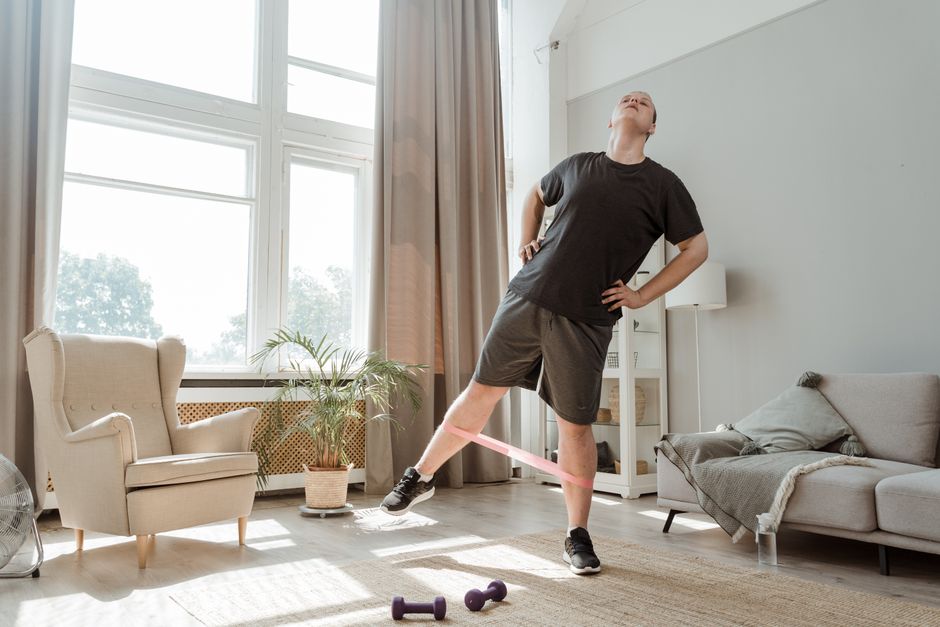
    Man performs exercise in living room with resistance band, promoting home fitness.
    Photo: MART PRODUCTION / Pexels

    When you eat less, your body loses fat and some lean tissue, including muscle. A 2017 review notes that this lean-mass loss could raise the risk of sarcopenia (low muscle mass and poor muscle function), and it is one reason weight loss with a GLP-1 medicine comes with advice to lift (see our guide to muscle loss on GLP-1s). Strength training is the best-studied way to hold on to that muscle. This list picks the moves that give that signal best. For the basics of sets, reps and getting started, see our strength training guide. If you have heart, joint or back problems, or take medicines that affect blood pressure or blood sugar, ask your clinician which moves and loads suit you.

    How we ordered them

    Our exercise lists rank by energy cost first (2024 Adult Compendium of Physical Activities), then muscle and strength benefit, then joint load and accessibility, then equipment. The Compendium rates strength work by type, not by single exercise: kettlebell swings 9.8 METs, weighted squats and deadlifts 5.0, moderate calisthenics such as push-ups, pull-ups and lunges 3.8, and general weight training with several exercises of 8 to 15 reps 3.5. Within each group we put the moves that train the largest muscles across several joints first, which matches the American College of Sports Medicine (ACSM) advice to do large-muscle, multi-joint exercises before small ones. Then came joint load and equipment. Loaded carries have no Compendium code, so they come last on energy, though not on usefulness.

    Calories below are MET x body weight in kg x 0.5 hour, for 150 lb (68 kg) and 200 lb (91 kg). Strength sessions include rest between sets, so read them as the rate while you are working, not a promise for every half hour at the gym.

    The 10 best strength moves for keeping muscle

    10 strength moves to protect muscle during weight loss, ranked

    1. 1. Kettlebell swing

      Best for Power and conditioning in one move

      • 9.8 METs
      • about 333 kcal per 30 min at 150 lb, 445 at 200 lb (work rate)
      • glutes, hamstrings, back and grip

      Maker-stated specs

      Price One kettlebell (checked Oct 7, 2026)

      Drawback Needs a solid hip hinge first; learn it with a coach or video and a light bell

    2. 2. Goblet or barbell squat

      Best for The main lower-body builder

      • 5.0 METs for weighted squats and deadlifts
      • about 170 kcal per 30 min at 150 lb, 227 at 200 lb
      • thighs, glutes and core

      Maker-stated specs

      Price A dumbbell or kettlebell; barbell optional (checked Oct 7, 2026)

      Drawback Knees or hips may complain at depth; squat to a box or bench to start

    3. 3. Romanian deadlift (hip hinge)

      Best for Hamstrings, glutes and a strong back

      • 5.0 METs
      • about 170 kcal per 30 min at 150 lb
      • trains the back of the body that sitting neglects

      Maker-stated specs

      Price Dumbbells, kettlebells or a barbell (checked Oct 7, 2026)

      Drawback Rounding the back loads the spine; keep it flat and the weights close to your legs

    4. 4. Split squat or reverse lunge

      Best for Leg strength one side at a time, with balance

      • 3.8 METs as moderate calisthenics (lunges)
      • about 129 kcal per 30 min at 150 lb, 172 at 200 lb
      • add dumbbells to progress

      Maker-stated specs

      Price Free (body weight); dumbbells help (checked Oct 7, 2026)

      Drawback Balance-heavy; hold a wall or chair at first

    5. 5. Push-up (incline to floor)

      Best for Chest, shoulders and arms with no equipment

      • 3.8 METs as moderate calisthenics
      • about 129 kcal per 30 min at 150 lb
      • raise or lower your hands to set the difficulty

      Maker-stated specs

      Price Free (body weight) (checked Oct 7, 2026)

      Drawback Hard to load heavily; a weighted vest or dumbbell press takes over later

    6. 6. Assisted pull-up or lat pulldown

      Best for The upper back and arms that pull

      • 3.8 METs for pull-ups as moderate calisthenics
      • 3.5 as general weight training
      • band-assisted versions make it possible early

      Maker-stated specs

      Price Pull-up bar with a band, or a cable machine (checked Oct 7, 2026)

      Drawback Needs a bar or machine; rows (next) are the home alternative

    7. 7. One-arm dumbbell or band row

      Best for Upper back and posture

      • 3.5 METs as general weight training (8 to 15 reps)
      • about 119 kcal per 30 min at 150 lb, 159 at 200 lb
      • supported on a bench

      Maker-stated specs

      Price A dumbbell or band (checked Oct 7, 2026)

      Drawback Easy to shrug or twist; keep the shoulder down and the hips square

    8. 8. Overhead press (dumbbells)

      Best for Shoulders and arms for reaching and lifting

      • 3.5 METs as general weight training
      • about 119 kcal per 30 min at 150 lb
      • seated version adds back support

      Maker-stated specs

      Price Dumbbells (checked Oct 7, 2026)

      Drawback Can bother painful shoulders; go lighter and ask a physical therapist about other angles

    9. 9. Chair sit-to-stand

      Best for Beginners, older adults and anyone with sore knees

      • 2.8 METs at 6 to 12 a minute, 4.0 at 18 to 24
      • about 95 to 136 kcal per 30 min at 150 lb
      • hold a dumbbell to progress

      Maker-stated specs

      Price Free (a sturdy chair) (checked Oct 7, 2026)

      Drawback Light for fit people; it is the first step toward squats

    10. 10. Farmer's carry

      Best for Grip, posture and whole-body tension

      • Walk with a heavy weight in each hand
      • NSCA lists carries for building strength and control
      • no separate Compendium code

      Maker-stated specs

      Price Dumbbells, kettlebells or shopping bags (checked Oct 7, 2026)

      Drawback Grip gives out first; set the weights down before your posture slips

    All 10 strength moves side by side

    #PickBest forKey specs (maker-stated)Price rangeLast checked
    1Kettlebell swingPower and conditioning in one move9.8 METs; about 333 kcal per 30 min at 150 lb, 445 at 200 lb (work rate); glutes, hamstrings, back and gripOne kettlebellOct 7, 2026
    2Goblet or barbell squatThe main lower-body builder5.0 METs for weighted squats and deadlifts; about 170 kcal per 30 min at 150 lb, 227 at 200 lb; thighs, glutes and coreA dumbbell or kettlebell; barbell optionalOct 7, 2026
    3Romanian deadlift (hip hinge)Hamstrings, glutes and a strong back5.0 METs; about 170 kcal per 30 min at 150 lb; trains the back of the body that sitting neglectsDumbbells, kettlebells or a barbellOct 7, 2026
    4Split squat or reverse lungeLeg strength one side at a time, with balance3.8 METs as moderate calisthenics (lunges); about 129 kcal per 30 min at 150 lb, 172 at 200 lb; add dumbbells to progressFree (body weight); dumbbells helpOct 7, 2026
    5Push-up (incline to floor)Chest, shoulders and arms with no equipment3.8 METs as moderate calisthenics; about 129 kcal per 30 min at 150 lb; raise or lower your hands to set the difficultyFree (body weight)Oct 7, 2026
    6Assisted pull-up or lat pulldownThe upper back and arms that pull3.8 METs for pull-ups as moderate calisthenics; 3.5 as general weight training; band-assisted versions make it possible earlyPull-up bar with a band, or a cable machineOct 7, 2026
    7One-arm dumbbell or band rowUpper back and posture3.5 METs as general weight training (8 to 15 reps); about 119 kcal per 30 min at 150 lb, 159 at 200 lb; supported on a benchA dumbbell or bandOct 7, 2026
    8Overhead press (dumbbells)Shoulders and arms for reaching and lifting3.5 METs as general weight training; about 119 kcal per 30 min at 150 lb; seated version adds back supportDumbbellsOct 7, 2026
    9Chair sit-to-standBeginners, older adults and anyone with sore knees2.8 METs at 6 to 12 a minute, 4.0 at 18 to 24; about 95 to 136 kcal per 30 min at 150 lb; hold a dumbbell to progressFree (a sturdy chair)Oct 7, 2026
    10Farmer's carryGrip, posture and whole-body tensionWalk with a heavy weight in each hand; NSCA lists carries for building strength and control; no separate Compendium codeDumbbells, kettlebells or shopping bagsOct 7, 2026
    Energy cost of strength training types, in METsValues in METs
    Energy cost of strength training types, in METs
    ItemValue
    Kettlebell swings9.8 METs
    Bodyweight exercises, high intensity6.5 METs
    Weight lifting, vigorous (power lifting, body building)6 METs
    Weighted squats and deadlifts5 METs
    Moderate calisthenics (push-ups, pull-ups, lunges)3.8 METs
    Weight training, several exercises, 8 to 15 reps3.5 METs
    Bodyweight exercises, general3 METs
    Sit to stand, 6 to 12 a minute2.8 METs

    1 MET is the energy used sitting quietly. Strength work is rated by type, not by single exercise.

    Source: 2024 Adult Compendium of Physical Activities (checked on October 7, 2026)

    What the trials found about keeping muscle

    The evidence is consistent. A 2018 meta-analysis pooled six randomized trials in older adults with obesity who were cutting calories, measuring body composition with DXA scans. The trials used strength training three times a week for 12 to 24 weeks. Adding strength training reduced the lean mass lost through dieting by 93.5% (0.82 kg), while fat and weight loss were similar with or without it. An overview of 12 systematic reviews in adults with overweight or obesity found strength training cut lean-mass loss during weight loss by about 0.8 kg on average.

    Strength training during a calorie deficit

    Checked on October 7, 2026

    A 2017 trial in 160 dieting older adults with obesity shows the same pattern in detail. Everyone in the exercise groups lost about 9% of their weight over 6 months. Those doing cardio only lost 2.7 kg of lean mass, those lifting weights 1.0 kg, and those doing both 1.7 kg. Strength rose 19% with weights alone and 18% with both, against 4% with cardio alone.

    Lean mass lost in 6 months of dieting, by exercise typeValues in kg
    Lean mass lost in 6 months of dieting, by exercise type
    ItemValue
    Cardio only2.7 kg
    Weights only1 kg
    Cardio plus weights1.7 kg

    160 older adults with obesity; all exercise groups lost about 9% of body weight. Lower is better.

    Source: Villareal DT et al., NEJM 2017 (checked on October 7, 2026)

    Two notes keep this honest. Lifting doesn’t speed up weight loss much: the ACSM’s weight-loss position stand found resistance training does not enhance weight loss but may increase fat-free mass and fat loss. And a 2017 review found that diet-induced weight loss reduces muscle mass without harming muscle strength, and that both cardio and strength exercise help preserve muscle, with strength training also improving strength. The goal is not a bigger number on the scale; it is making sure the weight you lose is mostly fat.

    How to do the main moves

    Pick a weight you can lift 8 to 12 times with good form, with the last rep or two feeling hard; the ACSM suggests that range for beginners. These cues are general guidance; a certified trainer or physical therapist can check your form in person.

    Form cues for six key moves

    1. Goblet squatHold one weight at your chest, feet shoulder-width apart; sit your hips back and down, chest tall, knees tracking over your toes; stand by pushing through your whole foot.
    2. Romanian deadliftSoft knees, weights against your thighs; push your hips back until you feel your hamstrings stretch, back flat, then squeeze your glutes to stand.
    3. Reverse lungeStep one foot back and lower until both knees bend, front knee over the ankle; push through the front heel to return.
    4. Push-upHands under your shoulders on a counter, bench or the floor; body in one straight line; lower your chest, then press away.
    5. One-arm rowOne hand and knee on a bench, back flat; pull the weight toward your hip, elbow close to your side, then lower slowly.
    6. Kettlebell swingHinge (don't squat), hike the bell back between your legs, then snap your hips forward so it floats to chest height; arms just guide it.

    A simple 2-day plan

    The ACSM recommends 2 to 3 days a week for beginners, large-muscle exercises before small ones, and raising the load by 2 to 10% once you can do 1 or 2 reps more than your target. For muscle size it recommends multiple sets in the 6 to 12 rep range with 1 to 2 minutes of rest. The plan below follows those rules. Do Day A and Day B on non-consecutive days (for example Monday and Thursday), and add a third session when you are ready.

    Two full-body days

    1. Warm-up, both days, 5 minBrisk walk or bike, then one light set of the first exercise.
    2. Day AGoblet squat, push-up, one-arm row, farmer's carry: 2 to 3 sets of 8 to 12 (carry 30 to 40 steps), 1 to 2 minutes rest.
    3. Day BRomanian deadlift, reverse lunge or split squat, assisted pull-up or pulldown, overhead press: 2 to 3 sets of 8 to 12.
    4. Optional finisher5 rounds of 10 kettlebell swings or 10 fast sit-to-stands, resting 30 to 45 seconds.
    5. ProgressWhen you beat your target reps by 1 or 2 on every set, add 2 to 10% more weight next time.

    Equipment can be simple. A pair of adjustable dumbbells covers every move except pull-ups, and resistance bands handle rows, presses and assisted pull-ups for less. If you train with no equipment at all, our best home workouts list covers bodyweight versions of these moves; this list differs because it focuses on moves you can load heavier over months, which is what keeps muscle during a long deficit.

    Protein: the other half of keeping muscle

    Training works best with enough protein. A meta-analysis of 24 trials with 1,063 people found that higher-protein diets at the same calories kept about 0.43 kg more fat-free mass than standard-protein diets during weight loss. The 2017 review mentioned above suggests adequate, but not excessive, protein. Our protein calculator gives a range for your weight and activity, our high-protein diet guide shows how to build meals around it, and the protein powders list helps if food alone falls short. Your clinician or a dietitian can set a target that suits your kidneys and health.

    How this list differs from our other workout lists

    Our low-impact workouts list is about cardio that spares your joints, and our core exercises list is about the trunk only. If you are over 50, our exercises for adults over 50 list adds balance work and a full weekly plan. If you are trying to lose fat and gain muscle at the same time, our guide to body recomposition explains when that is realistic. And if you have read about drugs designed to protect muscle during weight loss, our report on muscle-preserving weight-loss drugs covers that research; none of them replaces lifting.

    What strength training can’t do

    It can’t stop all lean-mass loss, and it won’t make the scale drop faster. Some of what you lose will still be lean tissue; the aim is to keep most of your muscle and strength. Weight loss itself still comes from a calorie deficit. Track progress with strength, waist size and how clothes fit as well as weight; our body fat calculator gives a rough estimate. For how cardio fits alongside, see our cardio vs strength training comparison.

  • 10 Best Core Exercises (for Strength, Not Spot Reduction)

    10 Best Core Exercises (for Strength, Not Spot Reduction)

    In short: The core exercises worth your time are the ones that make your trunk work hard while it holds steady: mountain climbers (the biggest calorie burn, 11.0 METs in hard intervals), goblet squats and deadlifts (core work while your legs and back get stronger) and roll-outs (the highest abdominal muscle activity in lab tests). Side planks, bird dogs and planks round out a strong, back-friendly routine. None of them burns belly fat from that spot: a 6-week trial of daily ab exercises changed no measure of belly fat at all.

    A strong core helps you lift, carry, twist and stay steady on your feet. That is reason enough to train it. What it won’t do is flatten your stomach by itself, so this list is about strength, posture and comfort, not “ab burn”. If belly fat is your main worry, start with our guide to getting a flatter stomach and the research behind the spot reduction myth, then come back here for the moves. If you have back pain, a hernia, are pregnant or recently gave birth, ask your clinician or a physical therapist which core moves suit you.

    How we ordered them

    All our exercise lists use the same order: energy cost first (from the 2024 Adult Compendium of Physical Activities), then muscle and strength benefit, then joint load and accessibility, then equipment. For core work we had to adapt it honestly. The Compendium does not rate core moves one by one: planks, curl-ups and crunches sit together at 2.8 METs, exercise-ball work at 2.8, sit-ups with other moderate calisthenics at 3.8, and floor back exercises at 3.5. That spread is worth only about 1 calorie a minute for a 150-pound person, so energy cost can’t separate most core moves.

    So energy cost decides only the top of the list: the two moves that work the whole body and burn clearly more (mountain climbers in intervals at 11.0 METs, weighted squats and deadlifts at 5.0), plus loaded carries, which have no Compendium code but are whole-body loaded work like the lifts. Everything else is ordered by muscle and strength benefit, using lab studies that measured muscle activity (EMG, as a percentage of each person’s maximum contraction), then by how kind each move is to your back and joints, then by equipment.

    The 10 best core exercises

    10 core exercises for strength, ranked

    1. 1. Mountain climbers

      Best for Core work with a real cardio burn

      • 11.0 METs in vigorous intervals
      • about 374 kcal per 30 min at 150 lb, 499 at 200 lb (work-interval rate)
      • core, shoulders and hip flexors

      Maker-stated specs

      Price Free (body weight) (checked Oct 7, 2026)

      Drawback Hard on wrists and very tiring; start with hands on a bench or counter

    2. 2. Goblet squat or dumbbell deadlift

      Best for Training your core while legs and back get stronger

      • 5.0 METs for weighted squats and deadlifts
      • about 170 kcal per 30 min at 150 lb
      • ground-based lifts match or beat unstable moves for core activation (CSEP)

      Maker-stated specs

      Price Free with a backpack; a dumbbell or kettlebell helps (checked Oct 7, 2026)

      Drawback Needs good form; learn the hip hinge with light weight first

    3. 3. Farmer's and suitcase carries

      Best for Grip, posture and a steady trunk for daily life

      • Walk while holding weights at your sides (farmer's) or in one hand (suitcase)
      • NSCA lists carries for core strength and control
      • no separate Compendium code

      Maker-stated specs

      Price Free with shopping bags; dumbbells or kettlebells help (checked Oct 7, 2026)

      Drawback Grip tires before the core; set the weights down before your posture slips

    4. 4. Roll-out (ab wheel or exercise ball)

      Best for The strongest abdominal challenge for intermediate exercisers

      • Highest abdominal EMG in a 10-exercise lab study: upper abs 63%, lower abs 53%, both obliques 46% of maximum
      • 2.8 METs as exercise-ball work

      Maker-stated specs

      Price Exercise ball or ab wheel (checked Oct 7, 2026)

      Drawback Can strain the lower back if your hips sag; start kneeling and roll out only a little

    5. 5. Exercise-ball pike or knee tuck

      Best for Advanced obliques and lower-ab work

      • Pike: external obliques 84%, lower abs 55%, internal obliques 56% of maximum in the same study
      • 2.8 METs as exercise-ball work

      Maker-stated specs

      Price Exercise ball (checked Oct 7, 2026)

      Drawback Balance-heavy and advanced; master the plank first

    6. 6. Side plank

      Best for Obliques, side hips and a back-friendly core

      • Side bridge reached strengthening-level activity for the external obliques and gluteus medius
      • 2.8 METs as light calisthenics

      Maker-stated specs

      Price Free (a mat helps) (checked Oct 7, 2026)

      Drawback Loads the bottom shoulder; do it from the knees to start

    7. 7. Plank (including the long-lever version)

      Best for Building trunk endurance with no movement of the spine

      • A long-lever, pelvis-tucked plank raised abdominal activity over a standard plank
      • 2.8 METs as light calisthenics

      Maker-stated specs

      Price Free (a mat helps) (checked Oct 7, 2026)

      Drawback Gets boring; longer holds add little, so make it harder instead

    8. 8. Bird dog

      Best for Beginners and anyone with a cranky lower back

      • Opposite arm and leg reach from hands and knees
      • may help strengthen the glutes
      • 3.5 METs as floor back exercises

      Maker-stated specs

      Price Free (a mat helps) (checked Oct 7, 2026)

      Drawback Easy to rush; slow, steady reps matter more than count

    9. 9. Glute bridge

      Best for Hips and lower back with very little joint load

      • Lab activity for bridges stayed below the strengthening level, so they suit endurance and control
      • no separate Compendium code

      Maker-stated specs

      Price Free (a mat helps) (checked Oct 7, 2026)

      Drawback Needs added load or one-leg versions to keep progressing

    10. 10. Curl-up or crunch

      Best for Simple ab endurance you can track

      • In a 6-week trial, ab training raised curl-ups to 47 versus 32 in controls but changed no belly-fat measure
      • 2.8 METs

      Maker-stated specs

      Price Free (body weight) (checked Oct 7, 2026)

      Drawback Works mainly the front abs; pair it with side and back moves

    All 10 core exercises side by side

    #PickBest forKey specs (maker-stated)Price rangeLast checked
    1Mountain climbersCore work with a real cardio burn11.0 METs in vigorous intervals; about 374 kcal per 30 min at 150 lb, 499 at 200 lb (work-interval rate); core, shoulders and hip flexorsFree (body weight)Oct 7, 2026
    2Goblet squat or dumbbell deadliftTraining your core while legs and back get stronger5.0 METs for weighted squats and deadlifts; about 170 kcal per 30 min at 150 lb; ground-based lifts match or beat unstable moves for core activation (CSEP)Free with a backpack; a dumbbell or kettlebell helpsOct 7, 2026
    3Farmer's and suitcase carriesGrip, posture and a steady trunk for daily lifeWalk while holding weights at your sides (farmer's) or in one hand (suitcase); NSCA lists carries for core strength and control; no separate Compendium codeFree with shopping bags; dumbbells or kettlebells helpOct 7, 2026
    4Roll-out (ab wheel or exercise ball)The strongest abdominal challenge for intermediate exercisersHighest abdominal EMG in a 10-exercise lab study: upper abs 63%, lower abs 53%, both obliques 46% of maximum; 2.8 METs as exercise-ball workExercise ball or ab wheelOct 7, 2026
    5Exercise-ball pike or knee tuckAdvanced obliques and lower-ab workPike: external obliques 84%, lower abs 55%, internal obliques 56% of maximum in the same study; 2.8 METs as exercise-ball workExercise ballOct 7, 2026
    6Side plankObliques, side hips and a back-friendly coreSide bridge reached strengthening-level activity for the external obliques and gluteus medius; 2.8 METs as light calisthenicsFree (a mat helps)Oct 7, 2026
    7Plank (including the long-lever version)Building trunk endurance with no movement of the spineA long-lever, pelvis-tucked plank raised abdominal activity over a standard plank; 2.8 METs as light calisthenicsFree (a mat helps)Oct 7, 2026
    8Bird dogBeginners and anyone with a cranky lower backOpposite arm and leg reach from hands and knees; may help strengthen the glutes; 3.5 METs as floor back exercisesFree (a mat helps)Oct 7, 2026
    9Glute bridgeHips and lower back with very little joint loadLab activity for bridges stayed below the strengthening level, so they suit endurance and control; no separate Compendium codeFree (a mat helps)Oct 7, 2026
    10Curl-up or crunchSimple ab endurance you can trackIn a 6-week trial, ab training raised curl-ups to 47 versus 32 in controls but changed no belly-fat measure; 2.8 METsFree (body weight)Oct 7, 2026
    Energy cost of core-type exercise, in METsValues in METs
    Energy cost of core-type exercise, in METs
    ItemValue
    Vigorous intervals (mountain climbers, burpees)11 METs
    Weighted squats and deadlifts5 METs
    Moderate calisthenics (sit-ups, push-ups)3.8 METs
    Floor back exercises, general3.5 METs
    Bodyweight exercises, general3 METs
    Light calisthenics (planks, curl-ups, crunches)2.8 METs
    Exercise-ball (Fitball) exercise2.8 METs
    Pilates, general2.8 METs
    Pilates, traditional mat1.8 METs

    1 MET is the energy used sitting quietly. The Compendium rates core work in groups, not move by move.

    Source: 2024 Adult Compendium of Physical Activities (checked on October 7, 2026)

    Why roll-outs and pikes rank high

    In a 2010 lab study, 18 people did 8 exercise-ball moves plus crunches and bent-knee sit-ups while sensors measured how hard each core muscle worked. The roll-out and the pike beat most of the other moves for the upper and lower abs and both obliques, while keeping the lower-back muscles and hip flexors quiet. Other moves ranged from 7% to 53% of maximum for the upper abs. That is why they sit above the plank and the crunch here, even though they burn about the same calories.

    Core muscle activity in the roll-out and the pike (% of maximum)Values in %
    Core muscle activity in the roll-out and the pike (% of maximum)
    ItemRoll-outPike
    Upper abs63%46%
    Lower abs53%55%
    External obliques46%84%
    Internal obliques46%56%

    Surface EMG in 18 people, as a percentage of each muscle's maximum voluntary contraction.

    Source: Escamilla RF et al., J Orthop Sports Phys Ther 2010 (checked on October 7, 2026)

    Muscle activity is not the only thing that matters. A 2007 study of nine rehab exercises found that the side bridge reached the level the authors linked to strength gains (above 45% of maximum) for the external obliques and the side-hip muscle, and the bird dog may help strengthen the glutes. Front planks and bridges stayed below that level, so they are better for endurance and control. A 2014 study of 19 people found that a plank with the elbows set further forward and the pelvis tucked under raised activity in the upper abs, lower-ab stabilizers and external obliques compared with a standard plank. That is an easy way to make planks harder without holding them for minutes.

    Whole-body lifts count as core training too. A position stand from the Canadian Society for Exercise Physiology found that ground-based free-weight lifts such as squats and deadlifts can reach core activation similar to or higher than exercises on wobbly surfaces. It also found that bracing (tightening your whole midsection as if about to be nudged) steadies the spine better than “hollowing” (sucking your belly button in). The National Strength and Conditioning Association (NSCA) suggests mixing static holds, dynamic moves and loaded carries, and notes that one-arm or one-leg exercises make the core work harder.

    How to do the main moves

    Move slowly, breathe out on the effort and stop a rep or two before your form slips. These cues are general guidance; a physical therapist or certified trainer can check your form in person, which is worth it if you have had back trouble.

    Form cues for seven core moves

    1. Brace firstBefore each rep, tighten your whole midsection as if someone were about to poke your stomach; keep breathing behind the brace.
    2. Goblet squatHold one weight at your chest, feet shoulder-width apart; sit your hips back and down, chest tall, then stand without leaning forward.
    3. Suitcase carryHold a weight in one hand, stand tall with shoulders level, and walk slowly for 20 to 30 steps; switch hands.
    4. Kneeling roll-outKneel with hands on the ball or wheel; brace and roll forward only as far as you can without your lower back sagging, then pull back.
    5. Side plankElbow under shoulder, knees or feet stacked, hips lifted so your body forms a straight line; hold 10 to 20 seconds per side to start.
    6. Bird dogOn hands and knees, reach one arm forward and the opposite leg back without twisting your hips; pause, return slowly and switch.
    7. Glute bridgeLie on your back, knees bent and feet flat; squeeze your glutes to lift your hips until knees, hips and shoulders line up, then lower.

    A simple 15-minute core routine

    Do this 2 to 3 days a week, on its own or after a strength session. The Physical Activity Guidelines for Americans ask adults to do muscle-strengthening activity for all major muscle groups, including the abdomen and back, on at least 2 days a week. The NSCA’s sample program uses about 3 sets of 12 for a core exercise placed between bigger lifts, which is a good guide for rep counts.

    Sample 15-minute core plan

    1. Warm up, 2 minMarch in place, then 5 slow bird dogs per side.
    2. Loaded block, 5 min3 rounds: 10 goblet squats, then a 30-step suitcase carry on each side.
    3. Core block, 6 min3 rounds: side plank 15 to 20 seconds per side, 6 to 10 kneeling roll-outs (or a plank), 10 glute bridges.
    4. Finisher, 1 min2 rounds of 20 seconds of mountain climbers (hands on a bench) and 10 seconds of rest.
    5. Cool down, 1 minWalk around the room and breathe slowly.

    To progress, make one thing harder each week: roll out a little further, lengthen the plank lever, carry heavier weights, or switch to one-leg bridges. Adding seconds to a plank helps less than making the position harder. A pair of adjustable dumbbells covers squats, deadlifts and carries, and a set of resistance bands adds load to bridges. Our home gym essentials list covers mats and balls.

    How this list differs from our other workout lists

    Our best bodyweight exercises for home list is about whole-body workouts with no gear, so it ranks burpees and squat jumps first and includes the plank only as a supporting move. Our low-impact workouts list is about joint-friendly cardio, such as cycling and swimming. This page is only about the trunk: which moves build core strength best and how to do them safely. If you are over 50, our list of exercises for adults over 50 adds balance work, and if you are losing weight, the strength moves that protect muscle are the bigger priority.

    What core exercises can’t do

    They can’t burn the fat that sits over your abs. In a 2011 trial, 24 inactive adults did 7 ab exercises, 2 sets of 10, 5 days a week for 6 weeks while keeping their diet steady. Their ab endurance rose, but body weight, body-fat percentage, belly fat on a body scan, waist size and skinfolds did not change. A 2022 meta-analysis of 13 studies with 1,158 people found that training one area had no effect on the fat over that area.

    What the spot-reduction studies found

    Checked on October 7, 2026

    One small 2023 trial in 16 men with overweight did find a little more trunk fat loss when long sets of crunches and torso rotations replaced part of a treadmill session, while total fat loss was similar in both groups. It is one small study and it used nearly an hour of ab work per session, so it doesn’t change the practical advice. Belly fat comes off with overall fat loss, from a steady calorie deficit plus regular activity; our belly fat guide and visceral fat guide explain what works. Waist trainers don’t help either (see our waist trainer guide).

    Core work can help in other ways. A 2012 meta-analysis of 5 trials with 414 people with chronic low back pain found core stability exercise reduced pain and disability more than general exercise in the short term, though the difference was gone at 6 and 12 months. That makes core work a reasonable part of a back-care routine, not a fix on its own. For the full picture of how strength work fits weight loss, see our strength training guide, the exercise hub and our roundup of weight-loss myths. The calories burned calculator estimates a session for your weight.

  • 10 Best Bodyweight Exercises You Can Do at Home

    10 Best Bodyweight Exercises You Can Do at Home

    In short: The bodyweight exercises that burn the most are fast, whole-body moves such as burpees, squat jumps and mountain climbers, rated 11 METs in vigorous intervals. For building muscle with no equipment, push-ups, lunges and squats do the heavy lifting, and a push-up can build chest strength about as well as a light bench press. A 20-minute circuit of these moves, done 2 to 3 times a week, covers the guidelines’ muscle-strengthening advice and adds roughly 135 to 180 calories per session for people weighing 150 to 200 pounds.

    No gym, no gear and no commute: that is the appeal of a home workout. Below are the ten moves we would build a home routine around, ranked with published energy costs, followed by how to do the main moves and a sample 20-minute plan. For the wider picture of exercise and weight loss, see our exercise hub and our strength training guide. If you have heart, lung, joint or back problems, or have been inactive for a long time, ask your clinician which moves and intensities suit you.

    How we ranked them

    Our exercise lists rank by energy cost first, then muscle benefit, then joint load and accessibility, then equipment. Energy costs come from the 2024 Adult Compendium of Physical Activities, which rates bodyweight exercise in groups rather than move by move: vigorous intervals with burpees, mountain climbers and squat jumps (11.0 METs), vigorous calisthenics such as jumping jacks (7.5), moderate calisthenics such as push-ups and lunges (3.8), general bodyweight resistance such as squats (3.0) and light core work such as planks (2.8). One MET is the energy you use sitting quietly. Moves in the same group were ordered by how much muscle they work, then by how kind they are to your joints.

    Calories below are MET x body weight in kg x 0.5 hour, for 150 lb (68 kg) and 200 lb (91 kg). Nobody does 30 minutes of nonstop burpees, so read the high numbers as the rate during the work intervals, not a session total.

    The 10 best bodyweight exercises for home

    10 bodyweight exercises for home, ranked

    1. 1. Burpees

      Best for Short, hard intervals that work the whole body

      • 11.0 METs in vigorous intervals
      • about 374 kcal per 30 min at 150 lb, 499 at 200 lb (work-interval rate)
      • legs, chest, shoulders and core

      Maker-stated specs

      Price Free (checked Oct 6, 2026)

      Drawback High impact and very hard for beginners; step back instead of jumping to start

    2. 2. Squat jumps

      Best for Leg power and a fast heart rate

      • 11.0 METs in vigorous intervals
      • about 374 kcal per 30 min at 150 lb (work-interval rate)
      • thighs and glutes

      Maker-stated specs

      Price Free (checked Oct 6, 2026)

      Drawback Landing loads the knees; swap for fast bodyweight squats if they ache

    3. 3. Mountain climbers

      Best for Cardio and core with no jumping

      • 11.0 METs in vigorous intervals
      • about 374 kcal per 30 min at 150 lb (work-interval rate)
      • core, shoulders and hip flexors

      Maker-stated specs

      Price Free (checked Oct 6, 2026)

      Drawback Wrists carry weight; do them with hands on a bench or counter to ease the load

    4. 4. Jumping jacks

      Best for A simple warm-up or cardio burst

      • 7.5 METs as vigorous calisthenics
      • about 255 kcal per 30 min at 150 lb, 340 at 200 lb

      Maker-stated specs

      Price Free (checked Oct 6, 2026)

      Drawback Repeated landings; step-jacks (one foot at a time) are the low-impact version

    5. 5. Stair climbing or step-ups

      Best for Leg strength and cardio using stairs you have

      • 6.8 METs for general stair climbing (9.3 fast)
      • about 231 kcal per 30 min at 150 lb, 308 at 200 lb

      Maker-stated specs

      Price Free (stairs or a sturdy step) (checked Oct 6, 2026)

      Drawback Needs stairs; hold the rail and watch your footing

    6. 6. Push-ups (wall, counter, knee or floor)

      Best for Chest, shoulder and arm strength

      • 3.8 METs as moderate calisthenics (6.5 at high intensity)
      • about 129 kcal per 30 min at 150 lb
      • in trials, push-ups built strength like a light bench press

      Maker-stated specs

      Price Free (checked Oct 6, 2026)

      Drawback Full floor push-ups are hard at first; start against a wall or counter

    7. 7. Lunges (reverse or split)

      Best for Legs and balance, one side at a time

      • 3.8 METs as moderate calisthenics
      • about 129 kcal per 30 min at 150 lb, 172 at 200 lb

      Maker-stated specs

      Price Free (checked Oct 6, 2026)

      Drawback Can strain knees if the front knee caves in; reverse lunges are usually easier

    8. 8. Bodyweight squats

      Best for The foundation move for legs and glutes

      • 3.0 METs general, 6.5 at high intensity
      • about 102 kcal per 30 min at 150 lb at a general pace

      Maker-stated specs

      Price Free (checked Oct 6, 2026)

      Drawback Feels easy once you are strong; slow the lowering or add a pause to progress

    9. 9. Chair sit-to-stands

      Best for Beginners, older adults and anyone with sore knees

      • 2.8 METs at 6 to 12 a minute, 4.0 at 18 to 24 a minute
      • about 95 to 136 kcal per 30 min at 150 lb

      Maker-stated specs

      Price Free (a sturdy chair) (checked Oct 6, 2026)

      Drawback Limited challenge for fit people; it is a starting point

    10. 10. Plank and other core holds

      Best for Core strength that supports every other move

      • 2.8 METs as light calisthenics (planks, curl-ups, crunches)
      • about 95 kcal per 30 min at 150 lb

      Maker-stated specs

      Price Free (a mat helps) (checked Oct 6, 2026)

      Drawback Burns little and won't flatten your belly on its own

    All 10 exercises side by side

    #PickBest forKey specs (maker-stated)Price rangeLast checked
    1BurpeesShort, hard intervals that work the whole body11.0 METs in vigorous intervals; about 374 kcal per 30 min at 150 lb, 499 at 200 lb (work-interval rate); legs, chest, shoulders and coreFreeOct 6, 2026
    2Squat jumpsLeg power and a fast heart rate11.0 METs in vigorous intervals; about 374 kcal per 30 min at 150 lb (work-interval rate); thighs and glutesFreeOct 6, 2026
    3Mountain climbersCardio and core with no jumping11.0 METs in vigorous intervals; about 374 kcal per 30 min at 150 lb (work-interval rate); core, shoulders and hip flexorsFreeOct 6, 2026
    4Jumping jacksA simple warm-up or cardio burst7.5 METs as vigorous calisthenics; about 255 kcal per 30 min at 150 lb, 340 at 200 lbFreeOct 6, 2026
    5Stair climbing or step-upsLeg strength and cardio using stairs you have6.8 METs for general stair climbing (9.3 fast); about 231 kcal per 30 min at 150 lb, 308 at 200 lbFree (stairs or a sturdy step)Oct 6, 2026
    6Push-ups (wall, counter, knee or floor)Chest, shoulder and arm strength3.8 METs as moderate calisthenics (6.5 at high intensity); about 129 kcal per 30 min at 150 lb; in trials, push-ups built strength like a light bench pressFreeOct 6, 2026
    7Lunges (reverse or split)Legs and balance, one side at a time3.8 METs as moderate calisthenics; about 129 kcal per 30 min at 150 lb, 172 at 200 lbFreeOct 6, 2026
    8Bodyweight squatsThe foundation move for legs and glutes3.0 METs general, 6.5 at high intensity; about 102 kcal per 30 min at 150 lb at a general paceFreeOct 6, 2026
    9Chair sit-to-standsBeginners, older adults and anyone with sore knees2.8 METs at 6 to 12 a minute, 4.0 at 18 to 24 a minute; about 95 to 136 kcal per 30 min at 150 lbFree (a sturdy chair)Oct 6, 2026
    10Plank and other core holdsCore strength that supports every other move2.8 METs as light calisthenics (planks, curl-ups, crunches); about 95 kcal per 30 min at 150 lbFree (a mat helps)Oct 6, 2026
    Energy cost of bodyweight exercise types, in METsValues in METs
    Energy cost of bodyweight exercise types, in METs
    ItemValue
    Vigorous intervals (burpees, mountain climbers, squat jumps)11 METs
    Vigorous calisthenics (jumping jacks)7.5 METs
    Stair climbing, general6.8 METs
    Bodyweight exercises, high intensity6.5 METs
    Bodyweight circuit training6 METs
    Moderate calisthenics (push-ups, lunges)3.8 METs
    Bodyweight exercises, general (squats)3 METs
    Light calisthenics (planks, crunches)2.8 METs

    The Compendium rates bodyweight exercise in groups. 1 MET is the energy used sitting quietly.

    Source: 2024 Adult Compendium of Physical Activities (checked on October 6, 2026)

    Why muscle moves sit lower but still matter

    Push-ups, lunges and squats rank lower because they burn fewer calories per minute, not because they matter less. Their job is to keep and build muscle, which is especially important while you are losing weight. A 2021 overview of 12 systematic reviews found that resistance training reduced lean-mass loss during weight loss by about 0.8 kg (1.8 lb) on average.

    Bodyweight moves can build real strength. In an 8-week trial, young men who did push-ups adjusted to a load similar to 40% of their maximum bench press gained strength and chest muscle thickness comparable to a group doing light bench presses. In a 4-week trial, a progressive push-up program raised bench-press strength in moderately trained men, as bench training did. Both studies were small and in young men, so the results are a guide rather than a guarantee.

    What the push-up trials found

    Checked on October 6, 2026

    How to do the main moves

    Good form matters more than speed. Move slowly at first, breathe out on the effort, and stop a rep or two before your form breaks down. These cues are general guidance; a physical therapist or certified trainer can check your form in person.

    Form cues for six key moves

    1. SquatFeet shoulder-width apart, sit your hips back and down as if onto a chair, chest up, knees tracking over your toes; stand tall.
    2. Push-upHands under your shoulders on a wall, counter or the floor; body in one straight line; lower your chest, then press away.
    3. Reverse lungeStep one foot back and lower until both knees bend, front knee over the ankle; push through the front heel to stand.
    4. PlankForearms under shoulders, body straight from head to heels (or knees); squeeze your glutes and breathe for 15 to 30 seconds.
    5. Mountain climberFrom a high plank (hands on a bench to start), drive one knee toward your chest, then switch at a steady pace.
    6. Burpee, beginner versionSquat, place hands down, step back to a plank, step forward and stand; add the jump only when this feels easy.

    A sample 20-minute home workout

    This plan mixes strength and cardio moves in a simple circuit. The Compendium rates bodyweight circuit training at 6.0 METs, which works out to roughly 136 calories in 20 minutes at 150 lb and 181 at 200 lb. Do it 2 to 3 days a week on non-consecutive days; the American College of Sports Medicine suggests 2 to 3 strength days a week for beginners.

    Sample 20-minute bodyweight plan

    1. Warm up, 3 minMarch in place, arm circles and 20 step-jacks.
    2. Strength circuit, 12 min3 rounds of 40 seconds on and 20 seconds rest: squats, push-ups (wall or counter to start), reverse lunges, plank.
    3. Cardio finisher, 3 min3 rounds of 30 seconds of mountain climbers or step-ups and 30 seconds of easy marching.
    4. Cool down, 2 minWalk slowly around the room and stretch your thighs, hips and chest.
    5. Progress weeklyAdd a round, slow the lowering, or move to the next push-up level when the last round feels easy.

    Too hard? Use chair sit-to-stands instead of squats and wall push-ups, and march instead of the finisher. Too easy? Add squat jumps or burpees to the finisher, or hold a backpack with books for squats and lunges. To add load without weights, a set of resistance bands is the cheapest step up; for heavier progress, see our list of adjustable dumbbells.

    Fitting it into your week

    The Physical Activity Guidelines for Americans recommend 150 to 300 minutes of moderate aerobic activity a week plus muscle-strengthening activity at least 2 days a week, and say any amount of activity counts. A home circuit covers the strength part; for the aerobic part, many people add daily walks for weight loss or a walking pad on workdays. If your knees or hips complain about jumping, our list of low-impact workouts has joint-friendly cardio, and the best exercises for weight loss list compares every type of exercise by calories.

    • Make space: a clear area about the size of a yoga mat is enough for every move here.
    • Use a non-slip surface: a mat or rug that stays put protects your hands and knees.
    • Pick a time and keep it: the same slot each day (before breakfast, at lunch) makes it a habit.
    • Track it simply: write down rounds and reps, or use a tracker; see our fitness trackers list for what they measure well.

    What home workouts can’t do

    Planks and crunches strengthen your core, but they don’t burn belly fat from that spot (see weight-loss myths science has busted and our belly fat guide). Most weight loss comes from a steady calorie deficit; exercise helps you keep muscle, improves fitness and makes it easier to keep weight off. If you want to lose fat while building muscle, our page on body recomposition shows how strength work and protein fit together, and the calories burned calculator estimates a session for your weight.

  • 10 Best Low-Impact Workouts for Weight Loss (Joint-Friendly)

    10 Best Low-Impact Workouts for Weight Loss (Joint-Friendly)

    In short: The low-impact workouts that burn the most calories are incline walking, stationary cycling and lap swimming, at roughly 200 to 320 calories per 30 minutes for people weighing 150 to 200 pounds. Water aerobics, Nordic walking, rowing, the elliptical and brisk walking follow close behind. All of them keep at least one foot (or your body weight) supported, which makes them easier on knees, hips and backs than running or jumping.

    This list is for people who want to lose weight without pounding their joints: those with knee or hip pain, arthritis, a higher body weight, or who are coming back from a long break. If joints are not a concern, our list of the best exercises for weight loss ranks every type of exercise, including running and HIIT. For the bigger picture, see our exercise hub. If you have a joint, heart or lung condition, ask your clinician which activities and intensities suit you.

    What “low impact” means here

    We counted a workout as low impact when there is no jumping or running phase: you keep a foot on the ground, a pedal or the water carries your weight. The CDC lists brisk walking, cycling, dancing, tai chi, swimming and water exercise as joint-friendly activities for people with arthritis, and every workout below fits that idea.

    We then ranked them the same way as all our exercise lists: first by energy cost in METs from the 2024 Adult Compendium of Physical Activities (the reference researchers use), then by muscle benefit, then by joint load and accessibility, then by equipment. One MET is the energy you use sitting quietly, about 1 calorie per kilogram of body weight per hour. Calories below are MET x body weight in kg x 0.5 hour, for 150 lb (68 kg) and 200 lb (91 kg). The 2024 edition was built for adults aged 19 to 59, so treat the numbers as averages.

    The 10 best low-impact workouts

    10 low-impact workouts for weight loss, ranked

    1. 1. Incline walking or hill walking

      Best for Walkers who want running-level effort without the pounding

      • 7.0 METs on a 6 to 10% grade at a moderate-to-brisk pace
      • about 238 kcal per 30 min at 150 lb, 318 at 200 lb
      • strong leg and glute work

      Maker-stated specs

      Price Free outdoors, or a treadmill with incline (checked Oct 6, 2026)

      Drawback Steep grades load the calves and Achilles; build up the incline gradually

    2. 2. Stationary cycling

      Best for Knee-friendly cardio you can do while watching TV

      • 6.0 METs at 90 to 100 watts (4.0 at 50 watts, light)
      • about 204 kcal per 30 min at 150 lb, 272 at 200 lb
      • seated and fully supported

      Maker-stated specs

      Price Gym, or a bike at home (checked Oct 6, 2026)

      Drawback Little upper-body work; set the seat height so your knee stays slightly bent at the bottom

    3. 3. Swimming laps

      Best for Arthritis, back pain or a higher body weight

      • 5.8 METs for slow, recreational freestyle
      • about 197 kcal per 30 min at 150 lb, 263 at 200 lb
      • water supports your weight

      Maker-stated specs

      Price Pool access (checked Oct 6, 2026)

      Drawback Needs a pool and some skill; burn depends a lot on technique

    4. 4. Water aerobics

      Best for Group fun with almost no joint stress

      • 5.5 METs for general water aerobics (3.8 for water resistance exercises)
      • about 187 kcal per 30 min at 150 lb, 249 at 200 lb
      • no swimming skill needed

      Maker-stated specs

      Price Pool class (checked Oct 6, 2026)

      Drawback Class times and pool access vary; the shallow-end effort is easy to underdo

    5. 5. Nordic walking (with poles)

      Best for Adding arms to a walk and taking load off the knees

      • 5.3 METs at 3.6 to 4.4 mph on level ground
      • about 180 kcal per 30 min at 150 lb, 240 at 200 lb
      • works shoulders and back too

      Maker-stated specs

      Price Walking poles (checked Oct 6, 2026)

      Drawback Poles take a few sessions to use well

    6. 6. Rowing machine, moderate

      Best for Full-body cardio while seated

      • 5.0 METs at under 100 watts (7.5 at 100 to 149 watts)
      • about 170 kcal per 30 min at 150 lb, 227 at 200 lb
      • legs, back and arms

      Maker-stated specs

      Price Gym, or a rower at home (checked Oct 6, 2026)

      Drawback Technique matters for the lower back; learn the leg-hip-arm order first

    7. 7. Elliptical trainer

      Best for Steady, smooth cardio at the gym

      • 5.0 METs at moderate effort (9.0 vigorous)
      • about 170 kcal per 30 min at 150 lb, 227 at 200 lb
      • feet never leave the pedals

      Maker-stated specs

      Price Gym, or a machine at home (checked Oct 6, 2026)

      Drawback Easy to coast; the machine's calorie display may not match your real burn

    8. 8. Brisk walking

      Best for Beginners and anyone building a daily habit

      • 4.8 METs at 3.5 to 3.9 mph on level ground
      • about 163 kcal per 30 min at 150 lb, 218 at 200 lb
      • can be split into 10-minute walks

      Maker-stated specs

      Price Free (walking shoes) (checked Oct 6, 2026)

      Drawback Burns less per minute, so it takes more time

    9. 9. Low-impact aerobic dance

      Best for People who would rather move to music than count laps

      • 4.8 METs at moderate effort
      • about 163 kcal per 30 min at 150 lb, 218 at 200 lb
      • balance and coordination too

      Maker-stated specs

      Price Free with online videos, or a class (checked Oct 6, 2026)

      Drawback Turns and side steps can bother unstable knees; keep moves small at first

    10. 10. Power yoga

      Best for Strength, flexibility and balance in one session

      • 4.0 METs (hatha yoga 2.3)
      • about 136 kcal per 30 min at 150 lb, 181 at 200 lb
      • holds build muscle endurance

      Maker-stated specs

      Price Free with a mat (checked Oct 6, 2026)

      Drawback Burns the least on this list; some poses need changes for wrist, knee or back problems

    All 10 low-impact workouts side by side

    #PickBest forKey specs (maker-stated)Price rangeLast checked
    1Incline walking or hill walkingWalkers who want running-level effort without the pounding7.0 METs on a 6 to 10% grade at a moderate-to-brisk pace; about 238 kcal per 30 min at 150 lb, 318 at 200 lb; strong leg and glute workFree outdoors, or a treadmill with inclineOct 6, 2026
    2Stationary cyclingKnee-friendly cardio you can do while watching TV6.0 METs at 90 to 100 watts (4.0 at 50 watts, light); about 204 kcal per 30 min at 150 lb, 272 at 200 lb; seated and fully supportedGym, or a bike at homeOct 6, 2026
    3Swimming lapsArthritis, back pain or a higher body weight5.8 METs for slow, recreational freestyle; about 197 kcal per 30 min at 150 lb, 263 at 200 lb; water supports your weightPool accessOct 6, 2026
    4Water aerobicsGroup fun with almost no joint stress5.5 METs for general water aerobics (3.8 for water resistance exercises); about 187 kcal per 30 min at 150 lb, 249 at 200 lb; no swimming skill neededPool classOct 6, 2026
    5Nordic walking (with poles)Adding arms to a walk and taking load off the knees5.3 METs at 3.6 to 4.4 mph on level ground; about 180 kcal per 30 min at 150 lb, 240 at 200 lb; works shoulders and back tooWalking polesOct 6, 2026
    6Rowing machine, moderateFull-body cardio while seated5.0 METs at under 100 watts (7.5 at 100 to 149 watts); about 170 kcal per 30 min at 150 lb, 227 at 200 lb; legs, back and armsGym, or a rower at homeOct 6, 2026
    7Elliptical trainerSteady, smooth cardio at the gym5.0 METs at moderate effort (9.0 vigorous); about 170 kcal per 30 min at 150 lb, 227 at 200 lb; feet never leave the pedalsGym, or a machine at homeOct 6, 2026
    8Brisk walkingBeginners and anyone building a daily habit4.8 METs at 3.5 to 3.9 mph on level ground; about 163 kcal per 30 min at 150 lb, 218 at 200 lb; can be split into 10-minute walksFree (walking shoes)Oct 6, 2026
    9Low-impact aerobic dancePeople who would rather move to music than count laps4.8 METs at moderate effort; about 163 kcal per 30 min at 150 lb, 218 at 200 lb; balance and coordination tooFree with online videos, or a classOct 6, 2026
    10Power yogaStrength, flexibility and balance in one session4.0 METs (hatha yoga 2.3); about 136 kcal per 30 min at 150 lb, 181 at 200 lb; holds build muscle enduranceFree with a matOct 6, 2026
    Energy cost of each low-impact workout, in METsValues in METs
    Energy cost of each low-impact workout, in METs
    ItemValue
    Incline walking, 6 to 10% grade7 METs
    Stationary cycling, 90 to 100 W6 METs
    Swimming laps, slow freestyle5.8 METs
    Water aerobics, general5.5 METs
    Nordic walking, 3.6 to 4.4 mph5.3 METs
    Rowing machine, under 100 W5 METs
    Elliptical, moderate5 METs
    Brisk walking, 3.5 to 3.9 mph4.8 METs
    Low-impact aerobic dance4.8 METs
    Power yoga4 METs
    Tai chi, general3.3 METs
    Pilates, general2.8 METs

    1 MET is the energy used sitting quietly. Tai chi and Pilates are shown for comparison; they are not in the top 10.

    Source: 2024 Adult Compendium of Physical Activities (checked on October 6, 2026)

    Why the order looks the way it does

    Energy cost comes first, so incline walking (7.0 METs) leads and power yoga (4.0) closes the list. Ties were broken by the next criterion: rowing sits above the elliptical (both 5.0 METs) because it works the back and arms harder, and brisk walking sits above low-impact dance (both 4.8) because it needs no class or video and has the steadiest joint load. Tai chi (3.3 METs) and Pilates (2.8) didn’t make the top 10 on calories, but they are excellent for balance and core strength, and tai chi is on the CDC’s list of joint-friendly activities.

    The intensity inside each workout matters as much as the choice. On a stationary bike, going from 50 watts (4.0 METs) to 90 to 100 watts (6.0) raises the burn by half; in the pool, fast freestyle is rated 9.8 METs against 5.8 for slow laps. You can climb the effort ladder over weeks without ever adding impact. Our calories burned calculator does the math for your weight and session length.

    Estimated calories in 30 minutes, by body weightValues in kcal
    Estimated calories in 30 minutes, by body weight
    Item150 lb200 lb
    Incline walking238 kcal318 kcal
    Stationary cycling, 90 to 100 W204 kcal272 kcal
    Swimming laps, slow197 kcal263 kcal
    Water aerobics187 kcal249 kcal
    Nordic walking180 kcal240 kcal
    Rowing, under 100 W170 kcal227 kcal
    Elliptical, moderate170 kcal227 kcal
    Brisk walking163 kcal218 kcal

    Calories = MET x body weight in kg x 0.5 hour, rounded. Averages for adults 19 to 59; your own burn will differ.

    Source: 2024 Adult Compendium of Physical Activities (MET values); InstaTuck calculation (checked on October 6, 2026)

    How much to do

    The guidelines, for everyone and for people with arthritis

    Checked on October 6, 2026

    The CDC’s advice for adults with arthritis matches the general guidelines: at least 150 minutes a week of moderate aerobic activity and at least 2 days of muscle-strengthening activity, with balance work added for older adults. It also says physical activity can reduce joint pain and improve function and mood. For weight loss specifically, the American College of Sports Medicine found that 150 to 250 minutes a week of moderate activity gives modest weight loss on its own, more than 250 minutes a week is linked with clinically significant loss, and activity works better combined with a moderate calorie deficit.

    A sample joint-friendly week

    Sample week (about 150 to 200 minutes)

    1. 3 walks30 to 40 minutes each, brisk on flat ground; add a gentle hill once a week when it feels easy.
    2. 2 machine or pool days30 minutes of cycling, rowing, the elliptical, swimming or water aerobics.
    3. 2 strength sessions20 minutes of chair squats, wall push-ups, band rows and glute bridges.
    4. 1 balance sessionTai chi, yoga or Pilates, or 10 minutes of balance moves after a walk.
    5. Short bouts countTwo or three 10-minute walks add up the same as one long one.

    Strength work matters because it helps you keep muscle while you lose fat. Our strength training guide explains how to start, our list of bodyweight home workouts includes chair-friendly moves, and resistance band sets add load without heavy weights. For walking tips by pace and step count, see walking for weight loss, and a walking pad can add light walking on workdays.

    Picking the right one for your situation

    • Knee or hip pain: water-based workouts and the stationary bike carry the least body weight through the joints. Many people start in the pool, then add flat walking as pain allows.
    • A higher body weight: the same MET value burns more calories the more you weigh, so even a brisk walk or a moderate bike ride adds up quickly. Check the maker’s user-weight limit on any machine before you buy or use it.
    • Older adults: the CDC suggests a mix of aerobic, muscle-strengthening and balance activities each week. Nordic walking, tai chi and water exercise all help with balance as well as fitness. Note that the 2024 Adult Compendium was built for adults aged 19 to 59.
    • Short on time: incline walking and the stationary bike let you raise the effort without impact, so a 20-minute session can still be a solid workout.
    • Bored easily: rotate. A walk, a dance video and a pool class in the same week keep things fresh, and enjoying it is what keeps you going.

    Starting safely with sore or stiff joints

    The CDC’s guidance is to start slowly and pay attention to how your body feels. Some pain, stiffness or swelling is normal when you begin or step up activity, and joint pain from activity should get better over time; if it doesn’t, contact your healthcare provider. A few practical tips:

    • Warm up for 5 minutes at an easy pace before you push the effort.
    • Change one thing at a time: longer, then faster, then steeper, not all three in the same week.
    • Mix your days. Alternating walking with the pool or bike spreads the load across different joints and muscles.
    • Choose supportive shoes for walking and keep a water bottle handy.

    What low-impact exercise can’t do

    No workout burns fat from one chosen spot; water aerobics won’t shrink your thighs any faster than walking will (our weight-loss myths page and belly fat guide explain why). Most weight loss still comes from eating a little less than you burn, and exercise helps you keep muscle, keep weight off and feel better. The TDEE calculator shows how activity changes your daily energy needs, and our guide to keeping weight off covers life after the first months. To compare walking with running directly, see walking vs running for weight loss.

  • The 10 Best Exercises for Weight Loss (and Calories Each Burns)

    The 10 Best Exercises for Weight Loss (and Calories Each Burns)

    In short: The exercises that burn the most calories per minute are running, indoor cycling and circuit-style strength training, at roughly 250 to 420 calories per 30 minutes for people weighing 150 to 200 pounds. But the best exercise for weight loss is the one you will do most weeks: brisk walking burns less per session, yet it is easy on the joints and easy to repeat. Pair any cardio with strength training to keep muscle while you lose weight.

    We ranked these ten exercises with published energy costs from the 2024 Adult Compendium of Physical Activities, the reference researchers use, plus muscle benefit, joint load and the equipment each one needs. Nothing here is a product, and we do not run a lab. For the wider picture of moving more, see our exercise hub. If you have heart, lung or joint problems, or have been inactive for a long time, ask your clinician which activities and intensities are right for you.

    How we worked out the calories

    The Compendium lists each activity’s energy cost in METs. One MET is the energy you use sitting quietly, about 1 calorie per kilogram of body weight per hour. To estimate calories, multiply the MET value by your weight in kilograms and by the hours you exercise. A 150-pound person is about 68 kg, and a 200-pound person about 91 kg. The 2024 edition was built for adults aged 19 to 59 from 912 measured activity values, so treat these numbers as averages: your own burn depends on fitness, effort and body size. Our calories burned calculator does this math for your weight and any activity time.

    Estimated calories burned in 30 minutesValues in kcal
    Estimated calories burned in 30 minutes
    Item150 lb200 lb
    Running, 6 mph316 kcal422 kcal
    Indoor cycling class306 kcal408 kcal
    Circuit training, vigorous255 kcal340 kcal
    Rowing machine, 100 to 149 W255 kcal340 kcal
    HIIT, moderate effort238 kcal318 kcal
    Walking uphill, 6 to 10% grade238 kcal318 kcal
    Stair climbing, general231 kcal308 kcal
    Swimming laps, slow freestyle197 kcal263 kcal
    Elliptical, moderate170 kcal227 kcal
    Brisk walk, 3.5 to 3.9 mph163 kcal218 kcal

    Calories = MET x body weight in kg x 0.5 hour. Averages for adults 19 to 59; your own burn will differ.

    Source: 2024 Adult Compendium of Physical Activities (MET values); InstaTuck calculation (checked on October 6, 2026)

    The 10 best exercises for weight loss

    The 10 best exercises for weight loss, ranked

    1. 1. Running or jogging

      Best for People who want the most calories in the least time

      • 9.3 METs at 6 mph (8.5 at 5 mph)
      • about 316 kcal per 30 min at 150 lb, 422 at 200 lb
      • no gym needed

      Maker-stated specs

      Price Free outdoors (running shoes) (checked Oct 6, 2026)

      Drawback High impact on knees, hips and feet; build up slowly

    2. 2. Indoor cycling (spin class or stationary bike)

      Best for High burn with less pounding on the joints

      • 9.0 METs in a spin class, 6.0 at a moderate 90 to 100 watts
      • about 306 kcal per 30 min at 150 lb in a class
      • seated and low impact

      Maker-stated specs

      Price Gym class, or a bike at home (checked Oct 6, 2026)

      Drawback Needs a bike or class; little upper-body work

    3. 3. Circuit strength training

      Best for Burning calories while building muscle

      • 7.5 METs for vigorous circuits with minimal rest (5.0 moderate)
      • about 255 kcal per 30 min at 150 lb
      • works the major muscle groups

      Maker-stated specs

      Price Dumbbells, kettlebells or body weight (checked Oct 6, 2026)

      Drawback Good form matters; learn the moves before adding speed

    4. 4. Rowing machine

      Best for Full-body cardio that is easy on the joints

      • 7.5 METs at 100 to 149 watts (5.0 under 100 watts)
      • about 255 kcal per 30 min at 150 lb
      • legs, back and arms

      Maker-stated specs

      Price Gym, or a rower at home (checked Oct 6, 2026)

      Drawback Learning good rowing technique takes a few sessions

    5. 5. High-intensity interval training (HIIT)

      Best for Short workouts when time is tight

      • 7.0 METs at moderate effort, 11.0 for vigorous burpees and squat jumps
      • about 238 kcal per 30 min at 150 lb (moderate)
      • can be done with body weight only

      Maker-stated specs

      Price Free (body weight) (checked Oct 6, 2026)

      Drawback Hard on beginners and joints at full intensity; not a daily workout

    6. 6. Incline walking or hiking

      Best for Walkers who want more burn without running

      • 7.0 METs walking up a 6 to 10% grade (5.3 for a normal-pace hike)
      • about 238 kcal per 30 min at 150 lb on the incline
      • low impact

      Maker-stated specs

      Price Free outdoors, or a treadmill with incline (checked Oct 6, 2026)

      Drawback Steep grades feel tough on the calves at first; build up gradually

    7. 7. Stair climbing

      Best for Short, hard sessions using stairs you already have

      • 6.8 METs for general stair climbing (9.3 on a stair machine)
      • about 231 kcal per 30 min at 150 lb
      • strong leg work

      Maker-stated specs

      Price Free (stairs), or a stair machine (checked Oct 6, 2026)

      Drawback Hard work for beginners; hold the rail and go at your own pace

    8. 8. Swimming laps

      Best for Joint pain, arthritis or a higher body weight

      • 5.8 METs for slow freestyle laps, 9.8 for fast
      • about 197 kcal per 30 min at 150 lb (slow)
      • water supports your weight

      Maker-stated specs

      Price Pool access (checked Oct 6, 2026)

      Drawback Needs a pool and some skill; the burn depends a lot on technique

    9. 9. Elliptical trainer

      Best for Steady cardio with very low impact

      • 5.0 METs at moderate effort, 9.0 vigorous
      • about 170 kcal per 30 min at 150 lb (moderate)
      • arms and legs

      Maker-stated specs

      Price Gym, or a machine at home (checked Oct 6, 2026)

      Drawback Easy to coast at low effort; the machine display may not match your real burn

    10. 10. Brisk walking

      Best for Beginners and anyone who wants a daily habit

      • 4.8 METs at 3.5 to 3.9 mph (5.5 at 4.0 to 4.4 mph)
      • about 163 kcal per 30 min at 150 lb
      • the lowest-impact cardio choice on this list

      Maker-stated specs

      Price Free (walking shoes) (checked Oct 6, 2026)

      Drawback Burns the least per minute, so it takes more time

    All 10 exercises side by side

    #PickBest forKey specs (maker-stated)Price rangeLast checked
    1Running or joggingPeople who want the most calories in the least time9.3 METs at 6 mph (8.5 at 5 mph); about 316 kcal per 30 min at 150 lb, 422 at 200 lb; no gym neededFree outdoors (running shoes)Oct 6, 2026
    2Indoor cycling (spin class or stationary bike)High burn with less pounding on the joints9.0 METs in a spin class, 6.0 at a moderate 90 to 100 watts; about 306 kcal per 30 min at 150 lb in a class; seated and low impactGym class, or a bike at homeOct 6, 2026
    3Circuit strength trainingBurning calories while building muscle7.5 METs for vigorous circuits with minimal rest (5.0 moderate); about 255 kcal per 30 min at 150 lb; works the major muscle groupsDumbbells, kettlebells or body weightOct 6, 2026
    4Rowing machineFull-body cardio that is easy on the joints7.5 METs at 100 to 149 watts (5.0 under 100 watts); about 255 kcal per 30 min at 150 lb; legs, back and armsGym, or a rower at homeOct 6, 2026
    5High-intensity interval training (HIIT)Short workouts when time is tight7.0 METs at moderate effort, 11.0 for vigorous burpees and squat jumps; about 238 kcal per 30 min at 150 lb (moderate); can be done with body weight onlyFree (body weight)Oct 6, 2026
    6Incline walking or hikingWalkers who want more burn without running7.0 METs walking up a 6 to 10% grade (5.3 for a normal-pace hike); about 238 kcal per 30 min at 150 lb on the incline; low impactFree outdoors, or a treadmill with inclineOct 6, 2026
    7Stair climbingShort, hard sessions using stairs you already have6.8 METs for general stair climbing (9.3 on a stair machine); about 231 kcal per 30 min at 150 lb; strong leg workFree (stairs), or a stair machineOct 6, 2026
    8Swimming lapsJoint pain, arthritis or a higher body weight5.8 METs for slow freestyle laps, 9.8 for fast; about 197 kcal per 30 min at 150 lb (slow); water supports your weightPool accessOct 6, 2026
    9Elliptical trainerSteady cardio with very low impact5.0 METs at moderate effort, 9.0 vigorous; about 170 kcal per 30 min at 150 lb (moderate); arms and legsGym, or a machine at homeOct 6, 2026
    10Brisk walkingBeginners and anyone who wants a daily habit4.8 METs at 3.5 to 3.9 mph (5.5 at 4.0 to 4.4 mph); about 163 kcal per 30 min at 150 lb; the lowest-impact cardio choice on this listFree (walking shoes)Oct 6, 2026

    Why the order looks the way it does

    Our first criterion is energy cost, so higher-MET activities rank higher. When two activities have the same MET value, we break the tie with muscle benefit, then joint load, then equipment. That is why circuit training sits above rowing (both 7.5 METs) and HIIT above incline walking (both 7.0). Jumping rope has an even higher MET value (11.8 at 100 to 120 skips a minute) but few people can keep it up for 30 minutes, so we mention it here rather than in the list.

    Rank is not destiny. A 30-minute brisk walk you do six days a week burns more over the week than one hard run you skip twice. Our walking for weight loss guide shows how to build up steps and pace, and a walking pad can add light activity on workdays.

    Turn up the effort without changing the activity

    You don’t have to switch activities to burn more. Within the same activity, pace and incline raise the energy cost a lot, which is useful if you love walking and don’t want to run. The Compendium values for walking show how much speed alone matters:

    Walking pace (level, firm surface)METskcal per 30 min at 150 lbkcal per 30 min at 200 lb
    2.0 to 2.4 mph, slow2.895127
    2.8 to 3.4 mph, moderate3.8129172
    3.5 to 3.9 mph, brisk4.8163218
    4.0 to 4.4 mph, very brisk5.5187249
    4.5 to 4.9 mph, very, very brisk7.0238318
    Uphill, 6 to 10% grade, moderate to brisk7.0238318
    2024 Adult Compendium of Physical Activities (codes 17152, 17190, 17200, 17220, 17230, 17035); calories = MET x kg x 0.5 hour, rounded. Checked on 2026-10-06.

    The same is true for machines: a rowing machine at under 100 watts is rated 5.0 METs and at 150 to 199 watts 11.0, and an elliptical goes from 5.0 at moderate effort to 9.0 at vigorous effort. Build intensity gradually over weeks. If you are 60 or older, note that the 2024 Adult Compendium was built for adults aged 19 to 59; a separate Older Adult Compendium covers people 60 and over.

    How much exercise helps with weight loss

    The numbers behind the advice

    Checked on October 6, 2026

    The American College of Sports Medicine reviewed the evidence in 2009: 150 to 250 minutes a week of moderate activity helps prevent weight gain but gives only modest weight loss on its own, while more than 250 minutes a week has been linked with clinically significant weight loss. Activity also improves weight loss when combined with a moderate calorie deficit. Exercise alone can work: in the Midwest Exercise Trial 2, sedentary adults who did supervised exercise five days a week for 10 months, burning 400 or 600 calories a session, lost 3.9 kg and 5.2 kg on average, while the control group gained a little.

    Midwest Exercise Trial 2: weight lost in 10 months of exercise aloneValues in lb
    Midwest Exercise Trial 2: weight lost in 10 months of exercise alone
    ItemValue
    400 kcal per session, 5 days a week8.6 lb
    600 kcal per session, 5 days a week11.5 lb

    Reported as 3.9 kg (4.3%) and 5.2 kg (5.7%) among people who completed at least 90% of sessions; the control group gained 0.5 kg. No diet changes were asked for.

    Source: Donnelly JE et al., Obesity 2013 (Midwest Exercise Trial 2, 141 adults) (checked on October 6, 2026)

    Don’t skip strength training

    Strength work burns fewer calories per minute than cardio (a standard weight session with 8 to 15 repetitions is rated 3.5 METs), which is why plain weight lifting is not on the list. Its value is different: the ACSM notes that resistance training does not add much weight loss on its own, but it may increase fat-free mass and fat loss and lowers health risks. Keeping muscle matters more while you are losing weight, whether through diet or medication. See our guides to strength training, body recomposition and protecting muscle on GLP-1 medicines.

    A simple week that uses this list

    Sample week for a beginner

    1. 3 brisk walks30 minutes each; add an incline or hills when it feels easy.
    2. 2 strength sessions20 to 30 minutes of a simple circuit: squats, push-ups against a counter, rows, lunges.
    3. 1 longer sessionPick one you enjoy: a bike ride, a swim or a hike.
    4. Move more, sit lessShort walks after meals and stretches between meetings all count.

    What exercise can’t do

    No exercise burns fat from one chosen spot: crunches strengthen your core but do not shrink belly fat by themselves (see weight-loss myths science has busted and our belly fat guide). Machine and watch calorie counts are estimates, too. Most of the weight loss still comes from what you eat, while exercise helps you keep muscle, keep weight off and feel better. For a daily total that includes activity, try the TDEE calculator, and for life after the first months, read how to keep weight off.