What's new
Over-the-counter continuous glucose monitors for weight loss without diabetes: what the FDA cleared, what normal glucose looks like, what trials found and how to use one wisely. Checked October 7, 2026.
Fact-checked against FDA labels and official sources; not yet reviewed by a licensed clinician. This page is education, not medical advice. Talk to your doctor before starting, stopping or changing any treatment.
Key takeaways
- The FDA cleared the first over-the-counter CGM on March 5, 2024, for adults who do not use insulin; it does not warn of dangerous lows.[1]
- A 2026 meta-analysis of 23 studies in people without diabetes found no significant effect of CGM use on BMI.[7]
- A six-month diet personalized to glucose responses did not lead to more weight loss than a low-fat diet (-3.26% vs -4.31%).[9]
- People without diabetes spend about 96% of the day between 70 and 140 mg/dL; short rises after meals are normal.[5]
- A CGM measures glucose, not calories or fat, and is not a diagnostic test; prediabetes is diagnosed with lab tests.[6]
In short: Since 2024, you can buy a continuous glucose monitor (CGM) without a prescription, and many people without diabetes now wear one hoping it will help them lose weight. The evidence so far is thin. Pooled trials in people without diabetes found no significant effect on BMI, and a six-month trial of a diet built around each person’s blood-sugar responses did not beat a standard low-fat diet. A CGM can show how meals, walks and sleep affect your glucose, which some people find motivating, but it does not measure calories or fat. If you have signs of prediabetes or insulin resistance, a lab test and a talk with your clinician come first. Checked on October 7, 2026.

This page explains what over-the-counter CGMs are cleared to do, what normal glucose looks like on one, what the weight-loss research shows and how to get useful information from a sensor if you try one. It is general education, not medical advice, and it does not recommend any device.
Over-the-counter CGMs at a glance
- Mar 5, 2024FDA clears the first over-the-counter CGM (Dexcom Stelo)FDA
- 18+age on the labels, for people not using insulinStelo; Lingo
- 14-15 dayshow long one sensor lasts (maker-stated)
- 0large, long-term trials showing CGMs cause weight loss in people without diabetes
Checked on October 7, 2026
What a CGM is, and what the FDA cleared
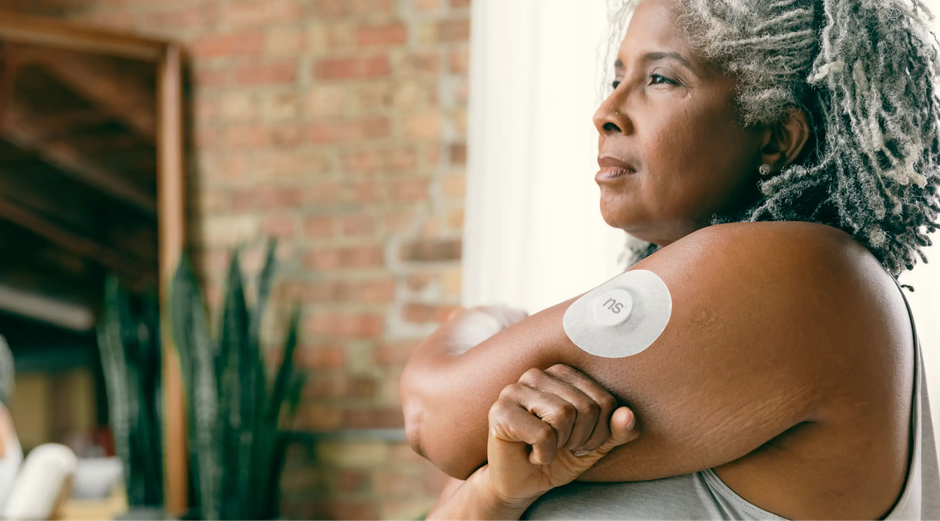
A CGM is a small sensor worn on the upper arm or belly with a tiny filament under the skin. It measures glucose in the fluid between cells (not in blood directly) every few minutes and sends readings to a phone app. For years, CGMs were prescription devices for people with diabetes, especially those using insulin.
On March 5, 2024, the FDA cleared the first over-the-counter CGM, Dexcom’s Stelo, for adults 18 and older who do not use insulin, including people with diabetes managed with oral medicines and people without diabetes who want to learn how diet and exercise affect their blood sugar. The FDA said it is not for people with problematic low blood sugar, because it does not alert users to dangerous lows, and that users should not make medical decisions based on it without talking to a health care provider. In June 2024, Abbott announced FDA clearance of two more: Lingo, for consumers 18 and older “looking to improve their overall health and wellness”, and Libre Rio, for adults with type 2 diabetes who do not use insulin. Abbott states that Lingo is “not intended for diagnosis of diseases, including diabetes.”
As of October 7, 2026, the makers list Stelo at $89 a month by subscription for two 15-day sensors, and Lingo at $54 for a two-week plan with one 14-day sensor (maker-stated prices, checked today; they change). That is roughly $1,000 to $1,400 a year for continuous use.
What normal glucose looks like on a CGM
One of the most useful things to know before wearing a CGM is that glucose rises after meals in everyone, and that a rise is not a problem in itself. A 2019 study of 153 healthy, non-pregnant people without diabetes (ages 7 to 80) who wore a blinded CGM for up to 10 days found an average glucose of 98 to 99 mg/dL in most age groups (104 mg/dL over age 60). They spent a median of 96% of the day between 70 and 140 mg/dL, about 30 minutes a day above 140 mg/dL and about 15 minutes a day below 70 mg/dL.
| Item | Value |
|---|---|
| 70-140 mg/dL | 96% |
| Above 140 mg/dL | 2.1% |
| Below 70 mg/dL | 1.1% |
Median share of time in each range. Short spikes above 140 mg/dL are normal after meals.
Source: Shah VN et al., Journal of Clinical Endocrinology and Metabolism 2019 (153 healthy participants) (checked on October 7, 2026)
Diagnosis does not use CGM readings. The CDC lists the standard lab cut-offs: an A1C below 5.7% is normal, 5.7% to 6.4% is prediabetes and 6.5% or above is diabetes; a fasting plasma glucose of 99 mg/dL or below is normal, 100 to 125 mg/dL is prediabetes and 126 mg/dL or above is diabetes. If your CGM shows numbers that worry you, those tests, ordered by a clinician, are the way to find out what is going on.
| Lab test | Normal | Prediabetes | Diabetes |
|---|---|---|---|
| A1C | Below 5.7% | 5.7% to 6.4% | 6.5% or above |
| Fasting plasma glucose | 99 mg/dL or below | 100 to 125 mg/dL | 126 mg/dL or above |
| 2-hour oral glucose tolerance test | 140 mg/dL or below | 140 to 199 mg/dL | 200 mg/dL or above |
Where the idea came from
Interest in CGMs for people without diabetes grew out of research on “personalized nutrition”. In a widely cited 2015 study in the journal Cell, Israeli researchers had 800 people wear glucose monitors for a week and measured their responses to 46,898 meals. Responses to identical meals varied a lot from person to person. The team built a computer model that predicted each person’s response from their blood tests, habits, body measurements, activity and gut bacteria, and in a small trial, diets tailored by that model lowered after-meal glucose.
Notice what that study measured: blood sugar after meals, not weight. Lower glucose rises are a reasonable goal for people with prediabetes or diabetes, but the step from “steadier glucose” to “more weight loss” is an assumption that has to be tested on its own. Many consumer programs now combine a sensor with an app and coaching and market the package for weight. That is where the research below comes in.
What the research says about CGMs and weight
Pooled studies in people without diabetes. A 2026 systematic review and meta-analysis in the European Journal of Medical Research gathered 23 studies with 1,074 participants without diabetes from 11 countries (7 of them randomized trials). CGM use modestly improved average blood glucose compared with controls, but there was no significant difference in BMI. The review found CGM use was linked with better adherence to programs and some specific diet changes, and that glucose benefits showed up in people with prediabetes rather than in healthy people with normal glucose.
Pooled trials across people with and without diabetes. A 2024 meta-analysis of 25 randomized trials (2,996 participants, mostly with type 2 diabetes) found that CGM-based feedback lowered HbA1c by 0.28 percentage points and increased time in range, with non-significant effects on BMI and weight. Eleven of the 25 studies reported conflicts of interest linked to CGM makers, and only 4 measured diet changes.
Personalized glucose diets. The idea behind many CGM programs is that people respond differently to the same foods, so a diet that keeps your own glucose steady should work better. The Personal Diet Study tested this in 204 adults with obesity and prediabetes or early type 2 diabetes. For six months, one group got a personalized diet based on a machine-learning prediction of their glucose responses, with color-coded meal scores in an app; the other got a standard low-fat diet. Both had 14 counseling sessions. Weight loss was -3.26% with the personalized diet and -4.31% with the low-fat diet, which was not a significant difference.
A small positive trial. In a 2026 randomized trial of 35 women with overweight or obesity, all of whom had supervised exercise and the same diet counseling, those who wore a CGM at three points during 12 weeks lost 5.5 kg on average vs 0.2 kg in the comparison group, which wore it only at the start and end. The authors say larger, longer trials are needed. Small, short studies like this can show what is possible, but they often shrink or disappear in bigger trials.
| Item | Personalized glucose-based diet | Standard low-fat diet |
|---|---|---|
| Average weight loss | 3.26% | 4.31% |
The difference (1.05 percentage points) was not statistically significant. Bars show percent of starting weight lost.
Source: Popp CJ et al., JAMA Network Open 2022 (Personal Diet Study, 204 adults) (checked on October 7, 2026)
What a CGM can and can’t tell you
That last point matters for weight loss. Weight change still comes down to energy balance over time, as our calorie deficit guide explains. A glucose rise tells you how a meal affected your blood sugar, not how many calories it had or how full it kept you. Treating every rise as a problem could steer someone away from fruit, beans or whole grains, foods whose fiber is linked with better long-term health in large reviews. Our list of filling foods and our nutrition hub focus on what helps with hunger and calories.
There is also the question of accuracy. CGMs read fluid under the skin rather than blood, so readings will not always match a fingerstick test. Abbott’s own instructions for Libre Rio tell users to check with a fingerstick meter when readings do not match how they feel. Some people find the constant numbers stressful. Abbott advises people with a history of eating disorders to talk to a professional before making diet or exercise changes with Lingo, and anyone whose CGM is making them anxious about eating should take that seriously.
Who might get more out of one
The research so far suggests the clearest glucose benefits are in people who already have raised blood sugar, such as prediabetes, rather than in people whose glucose is normal. That group should start with a clinician, because a lab diagnosis opens the door to structured prevention programs and to treatment if needed. Our guides to type 2 diabetes and weight and PCOS and weight explain where glucose fits in. People who use insulin need a prescription CGM with low-glucose alerts, not an over-the-counter wellness sensor.
For people without diabetes, a CGM is best thought of as an optional, short experiment that some find motivating, not a weight-loss treatment. If the cost is a stretch, the habits it tends to encourage, like walking after meals, pairing carbohydrates with protein and fiber, and sleeping enough, are free and backed by broader research. Our guide to metabolism and weight covers what really changes how much energy you burn.
If you decide to try one
Getting useful information from a two-week CGM trial
- Check you are in the labelOver-the-counter sensors are for adults 18+ not using insulin. If you use insulin or have frequent lows, ask for a prescription device.
- Pick one or two questionsFor example, "does a 10-minute walk after dinner change my readings?" rather than tracking everything.
- Log meals and activityReadings mean more next to notes on what you ate, how much you moved and how you slept.
- Look for patterns, not spikesA single rise after a meal is normal; look at repeated patterns over days.
- Share results with a clinicianEspecially readings that seem high when fasting, which may call for a lab test.
Pair any sensor with the basics that have the strongest evidence: a steady calorie deficit you can live with (our calorie calculator gives a starting point), regular walking and strength work, and an eating pattern you enjoy, such as the Mediterranean diet. If you like data, our fitness tracker picks and smart scale picks cover other self-tracking tools, and our explainer on AI calorie counting from photos looks at another new tracking technology. For the bigger picture of what has changed in weight loss, see 10 innovations that changed weight loss.
Records in this article


Related guides
 Online Dietitian Services Compared: Insurance, Cost and What’s IncludedFive online dietitian services compared, alphabetical and not ranked: insurance, self-pay prices, visit length, messaging, states…
 Shapewear vs Compression Garments vs Waist TrainersShapewear, compression garments and waist trainers compared: what each does and doesn't do, compression levels in…
 Weight-Loss Meal Plan: A 7-Day Plan at 1,500 and 1,800 CaloriesA free 7-day weight-loss meal plan at 1,500 and 1,800 calories, with grams and calories for…
 Alternate-Day Fasting vs 16:8 vs 5:2: Fasting Methods ComparedTypes of intermittent fasting compared: 16:8, 5:2 and alternate-day fasting, what a week looks like on…
Questions to ask a professional
- Should I have an A1C or fasting glucose test before trying a CGM?
- Do my readings suggest anything that needs follow-up?
- Would a diabetes prevention program be a better use of my time and money?
- Is a CGM safe for me with my medicines and health history?
Frequently asked questions
Can a CGM help me lose weight if I don't have diabetes?
It might help some people stay motivated, but pooled studies in people without diabetes found no significant effect on BMI, and a personalized glucose diet did not beat a low-fat diet in a six-month trial. It is a learning tool, not a weight-loss treatment.
What is a normal glucose spike after eating?
In a study of 153 healthy people, glucose was above 140 mg/dL for about 30 minutes a day and between 70 and 140 mg/dL about 96% of the time. Rises after meals are normal; repeated high fasting readings are worth discussing with a clinician.
Do I need a prescription for a CGM?
Not for the over-the-counter models cleared since 2024, which are for adults 18 and older who do not use insulin. People who use insulin or have problematic low blood sugar need a prescription CGM with alerts.
How much does an over-the-counter CGM cost?
As of October 7, 2026, makers list Stelo at $89 a month by subscription (two 15-day sensors) and Lingo at $54 for a two-week plan. Prices change; check the maker.
Can a CGM tell me if I have prediabetes?
No. Over-the-counter CGMs are not diagnostic. Prediabetes is diagnosed with lab tests such as A1C (5.7% to 6.4%) or fasting plasma glucose (100 to 125 mg/dL).
References
- FDA Clears First Over-the-Counter Continuous Glucose Monitor. U.S. Food and Drug Administration, 2024. (accessed October 7, 2026) Government page
- Abbott Receives U.S. FDA Clearance for Two New Over-the-Counter Continuous Glucose Monitoring Systems (Lingo and Libre Rio). Abbott (press release), 2024. (accessed October 7, 2026) News (reported facts only)
- Stelo Glucose Biosensor: intended use and prices (maker-stated). Dexcom. (accessed October 7, 2026) Other
- Lingo: intended use and prices (maker-stated). Abbott. (accessed October 7, 2026) Other
- Shah VN, DuBose SN, Li Z, et al.. Continuous Glucose Monitoring Profiles in Healthy Nondiabetic Participants: A Multicenter Prospective Study. Journal of Clinical Endocrinology and Metabolism, 2019. doi:10.1210/jc.2018-02763 · PMID 31127824 (accessed October 7, 2026) Other
- Diabetes Testing. Centers for Disease Control and Prevention. (accessed October 7, 2026) Government page
- Liao X, Li Y, Tang S, et al.. Continuous glucose monitoring in non-diabetic populations: a systematic review of observational and interventional studies with meta-analysis. European Journal of Medical Research, 2026. doi:10.1186/s40001-026-03920-0 · PMID 41588451 (accessed October 7, 2026) Meta-analysis
- Richardson KM, Jospe MR, Bohlen LC, et al.. The efficacy of using continuous glucose monitoring as a behaviour change tool in populations with and without diabetes: a systematic review and meta-analysis of randomised controlled trials. International Journal of Behavioral Nutrition and Physical Activity, 2024. doi:10.1186/s12966-024-01692-6 · PMID 39716288 (accessed October 7, 2026) Meta-analysis
- Popp CJ, Hu L, Kharmats AY, et al.. Effect of a Personalized Diet to Reduce Postprandial Glycemic Response vs a Low-fat Diet on Weight Loss in Adults With Abnormal Glucose Metabolism and Obesity (Personal Diet Study). JAMA Network Open, 2022. doi:10.1001/jamanetworkopen.2022.33760 · PMID 36169954 · NCT03336411 (accessed October 7, 2026) Randomized trial
- Zeevi D, Korem T, Zmora N, et al.. Personalized Nutrition by Prediction of Glycemic Responses. Cell, 2015. doi:10.1016/j.cell.2015.11.001 · PMID 26590418 (accessed October 7, 2026) Other
- Reynolds A, Mann J, Cummings J, et al.. Carbohydrate quality and human health: a series of systematic reviews and meta-analyses. The Lancet, 2019. doi:10.1016/s0140-6736(18)31809-9 · PMID 30638909 (accessed October 7, 2026) Meta-analysis
- Gradiser M, Bilic-Curcic I, Okun I, et al.. Intermittently Scanned Continuous Glucose Monitoring Enhances Weight Loss and Adherence in Women with Obesity: A Randomized Controlled Trial. Diabetes Technology and Therapeutics, 2026. doi:10.1177/15209156261423952 · PMID 41700684 (accessed October 7, 2026) Randomized trial
Facts checked on October 7, 2026
Educational information, not medical advice. Talk with a qualified healthcare professional about your own situation. In an emergency call 911.
Leave a Reply