Best picks
The 10 best strength moves to protect muscle while losing weight, ranked by energy cost and muscle benefit, with form cues, a 2-day plan and what the lean-mass trials found.
Key takeaways
- In 6 trials of older adults with obesity who were cutting calories, strength training 3 times a week prevented 93.5% of the lean mass lost through dieting.[5]
- In a 6-month trial, dieters doing cardio only lost 2.7 kg of lean mass, against 1.0 kg with weights and 1.7 kg with both, at the same 9% weight loss.[7]
- Beginners do well with loads they can lift 8 to 12 times, 2 to 3 days a week, adding 2 to 10% when they beat their target by 1 or 2 reps.[3]
- Higher-protein diets at the same calories kept about 0.43 kg more fat-free mass during weight loss.[9]
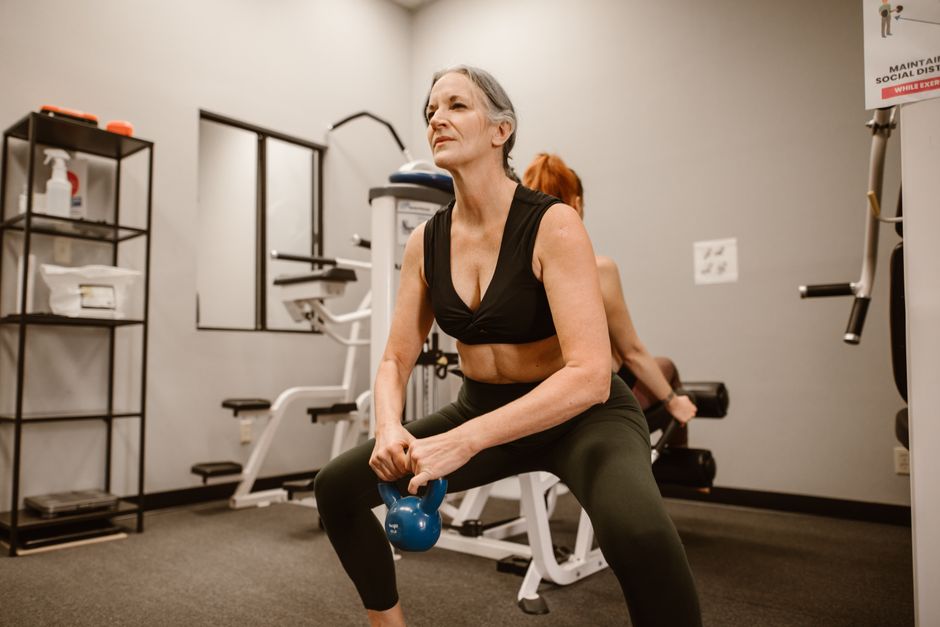
In short: To keep muscle while you lose weight, train your biggest muscles with moves you can make steadily heavier: squats, deadlifts, lunges, push-ups and rows, plus kettlebell swings if you want the highest calorie burn (9.8 METs). Two to three full-body sessions a week is enough to start. In a review of six trials in older adults who were cutting calories, adding strength training three times a week prevented about 93% of the lean mass they would otherwise have lost.
When you eat less, your body loses fat and some lean tissue, including muscle. A 2017 review notes that this lean-mass loss could raise the risk of sarcopenia (low muscle mass and poor muscle function), and it is one reason weight loss with a GLP-1 medicine comes with advice to lift (see our guide to muscle loss on GLP-1s). Strength training is the best-studied way to hold on to that muscle. This list picks the moves that give that signal best. For the basics of sets, reps and getting started, see our strength training guide. If you have heart, joint or back problems, or take medicines that affect blood pressure or blood sugar, ask your clinician which moves and loads suit you.
How we ordered them
Our exercise lists rank by energy cost first (2024 Adult Compendium of Physical Activities), then muscle and strength benefit, then joint load and accessibility, then equipment. The Compendium rates strength work by type, not by single exercise: kettlebell swings 9.8 METs, weighted squats and deadlifts 5.0, moderate calisthenics such as push-ups, pull-ups and lunges 3.8, and general weight training with several exercises of 8 to 15 reps 3.5. Within each group we put the moves that train the largest muscles across several joints first, which matches the American College of Sports Medicine (ACSM) advice to do large-muscle, multi-joint exercises before small ones. Then came joint load and equipment. Loaded carries have no Compendium code, so they come last on energy, though not on usefulness.
Calories below are MET x body weight in kg x 0.5 hour, for 150 lb (68 kg) and 200 lb (91 kg). Strength sessions include rest between sets, so read them as the rate while you are working, not a promise for every half hour at the gym.
The 10 best strength moves for keeping muscle
10 strength moves to protect muscle during weight loss, ranked
1. Kettlebell swing
Best for Power and conditioning in one move
- 9.8 METs
- about 333 kcal per 30 min at 150 lb, 445 at 200 lb (work rate)
- glutes, hamstrings, back and grip
Maker-stated specs
Price One kettlebell (checked Oct 7, 2026)
Drawback Needs a solid hip hinge first; learn it with a coach or video and a light bell
2. Goblet or barbell squat
Best for The main lower-body builder
- 5.0 METs for weighted squats and deadlifts
- about 170 kcal per 30 min at 150 lb, 227 at 200 lb
- thighs, glutes and core
Maker-stated specs
Price A dumbbell or kettlebell; barbell optional (checked Oct 7, 2026)
Drawback Knees or hips may complain at depth; squat to a box or bench to start
3. Romanian deadlift (hip hinge)
Best for Hamstrings, glutes and a strong back
- 5.0 METs
- about 170 kcal per 30 min at 150 lb
- trains the back of the body that sitting neglects
Maker-stated specs
Price Dumbbells, kettlebells or a barbell (checked Oct 7, 2026)
Drawback Rounding the back loads the spine; keep it flat and the weights close to your legs
4. Split squat or reverse lunge
Best for Leg strength one side at a time, with balance
- 3.8 METs as moderate calisthenics (lunges)
- about 129 kcal per 30 min at 150 lb, 172 at 200 lb
- add dumbbells to progress
Maker-stated specs
Price Free (body weight); dumbbells help (checked Oct 7, 2026)
Drawback Balance-heavy; hold a wall or chair at first
5. Push-up (incline to floor)
Best for Chest, shoulders and arms with no equipment
- 3.8 METs as moderate calisthenics
- about 129 kcal per 30 min at 150 lb
- raise or lower your hands to set the difficulty
Maker-stated specs
Price Free (body weight) (checked Oct 7, 2026)
Drawback Hard to load heavily; a weighted vest or dumbbell press takes over later
6. Assisted pull-up or lat pulldown
Best for The upper back and arms that pull
- 3.8 METs for pull-ups as moderate calisthenics
- 3.5 as general weight training
- band-assisted versions make it possible early
Maker-stated specs
Price Pull-up bar with a band, or a cable machine (checked Oct 7, 2026)
Drawback Needs a bar or machine; rows (next) are the home alternative
7. One-arm dumbbell or band row
Best for Upper back and posture
- 3.5 METs as general weight training (8 to 15 reps)
- about 119 kcal per 30 min at 150 lb, 159 at 200 lb
- supported on a bench
Maker-stated specs
Price A dumbbell or band (checked Oct 7, 2026)
Drawback Easy to shrug or twist; keep the shoulder down and the hips square
8. Overhead press (dumbbells)
Best for Shoulders and arms for reaching and lifting
- 3.5 METs as general weight training
- about 119 kcal per 30 min at 150 lb
- seated version adds back support
Maker-stated specs
Price Dumbbells (checked Oct 7, 2026)
Drawback Can bother painful shoulders; go lighter and ask a physical therapist about other angles
9. Chair sit-to-stand
Best for Beginners, older adults and anyone with sore knees
- 2.8 METs at 6 to 12 a minute, 4.0 at 18 to 24
- about 95 to 136 kcal per 30 min at 150 lb
- hold a dumbbell to progress
Maker-stated specs
Price Free (a sturdy chair) (checked Oct 7, 2026)
Drawback Light for fit people; it is the first step toward squats
10. Farmer's carry
Best for Grip, posture and whole-body tension
- Walk with a heavy weight in each hand
- NSCA lists carries for building strength and control
- no separate Compendium code
Maker-stated specs
Price Dumbbells, kettlebells or shopping bags (checked Oct 7, 2026)
Drawback Grip gives out first; set the weights down before your posture slips
All 10 strength moves side by side
| # | Pick | Best for | Key specs (maker-stated) | Price range | Last checked |
|---|---|---|---|---|---|
| 1 | Kettlebell swing | Power and conditioning in one move | 9.8 METs; about 333 kcal per 30 min at 150 lb, 445 at 200 lb (work rate); glutes, hamstrings, back and grip | One kettlebell | Oct 7, 2026 |
| 2 | Goblet or barbell squat | The main lower-body builder | 5.0 METs for weighted squats and deadlifts; about 170 kcal per 30 min at 150 lb, 227 at 200 lb; thighs, glutes and core | A dumbbell or kettlebell; barbell optional | Oct 7, 2026 |
| 3 | Romanian deadlift (hip hinge) | Hamstrings, glutes and a strong back | 5.0 METs; about 170 kcal per 30 min at 150 lb; trains the back of the body that sitting neglects | Dumbbells, kettlebells or a barbell | Oct 7, 2026 |
| 4 | Split squat or reverse lunge | Leg strength one side at a time, with balance | 3.8 METs as moderate calisthenics (lunges); about 129 kcal per 30 min at 150 lb, 172 at 200 lb; add dumbbells to progress | Free (body weight); dumbbells help | Oct 7, 2026 |
| 5 | Push-up (incline to floor) | Chest, shoulders and arms with no equipment | 3.8 METs as moderate calisthenics; about 129 kcal per 30 min at 150 lb; raise or lower your hands to set the difficulty | Free (body weight) | Oct 7, 2026 |
| 6 | Assisted pull-up or lat pulldown | The upper back and arms that pull | 3.8 METs for pull-ups as moderate calisthenics; 3.5 as general weight training; band-assisted versions make it possible early | Pull-up bar with a band, or a cable machine | Oct 7, 2026 |
| 7 | One-arm dumbbell or band row | Upper back and posture | 3.5 METs as general weight training (8 to 15 reps); about 119 kcal per 30 min at 150 lb, 159 at 200 lb; supported on a bench | A dumbbell or band | Oct 7, 2026 |
| 8 | Overhead press (dumbbells) | Shoulders and arms for reaching and lifting | 3.5 METs as general weight training; about 119 kcal per 30 min at 150 lb; seated version adds back support | Dumbbells | Oct 7, 2026 |
| 9 | Chair sit-to-stand | Beginners, older adults and anyone with sore knees | 2.8 METs at 6 to 12 a minute, 4.0 at 18 to 24; about 95 to 136 kcal per 30 min at 150 lb; hold a dumbbell to progress | Free (a sturdy chair) | Oct 7, 2026 |
| 10 | Farmer's carry | Grip, posture and whole-body tension | Walk with a heavy weight in each hand; NSCA lists carries for building strength and control; no separate Compendium code | Dumbbells, kettlebells or shopping bags | Oct 7, 2026 |
What the trials found about keeping muscle
The evidence is consistent. A 2018 meta-analysis pooled six randomized trials in older adults with obesity who were cutting calories, measuring body composition with DXA scans. The trials used strength training three times a week for 12 to 24 weeks. Adding strength training reduced the lean mass lost through dieting by 93.5% (0.82 kg), while fat and weight loss were similar with or without it. An overview of 12 systematic reviews in adults with overweight or obesity found strength training cut lean-mass loss during weight loss by about 0.8 kg on average.
Strength training during a calorie deficit
- 93.5%of diet-related lean-mass loss prevented by strength training in 6 trials of older adults with obesitySardeli AV et al., Nutrients 2018
- 0.8 kgless lean mass lost with strength training during weight loss, across 12 systematic reviewsBellicha A et al., Obesity Reviews 2021
- 3 daysa week of strength training for 12 to 24 weeks in the pooled trialsSardeli AV et al., Nutrients 2018
Checked on October 7, 2026
A 2017 trial in 160 dieting older adults with obesity shows the same pattern in detail. Everyone in the exercise groups lost about 9% of their weight over 6 months. Those doing cardio only lost 2.7 kg of lean mass, those lifting weights 1.0 kg, and those doing both 1.7 kg. Strength rose 19% with weights alone and 18% with both, against 4% with cardio alone.
| Item | Value |
|---|---|
| Cardio only | 2.7 kg |
| Weights only | 1 kg |
| Cardio plus weights | 1.7 kg |
160 older adults with obesity; all exercise groups lost about 9% of body weight. Lower is better.
Source: Villareal DT et al., NEJM 2017 (checked on October 7, 2026)
Two notes keep this honest. Lifting doesn’t speed up weight loss much: the ACSM’s weight-loss position stand found resistance training does not enhance weight loss but may increase fat-free mass and fat loss. And a 2017 review found that diet-induced weight loss reduces muscle mass without harming muscle strength, and that both cardio and strength exercise help preserve muscle, with strength training also improving strength. The goal is not a bigger number on the scale; it is making sure the weight you lose is mostly fat.
How to do the main moves
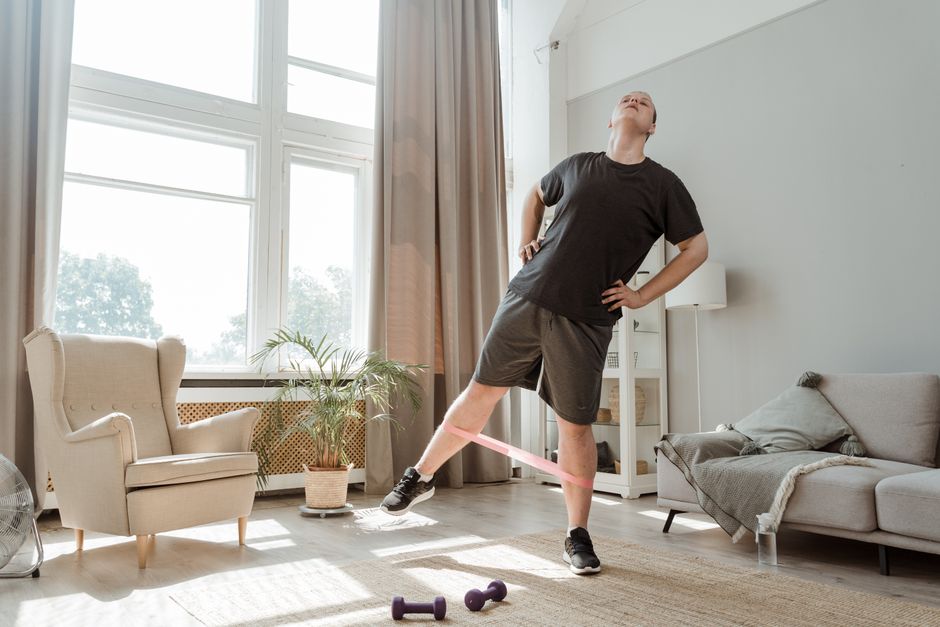
Pick a weight you can lift 8 to 12 times with good form, with the last rep or two feeling hard; the ACSM suggests that range for beginners. These cues are general guidance; a certified trainer or physical therapist can check your form in person.
Form cues for six key moves
- Goblet squatHold one weight at your chest, feet shoulder-width apart; sit your hips back and down, chest tall, knees tracking over your toes; stand by pushing through your whole foot.
- Romanian deadliftSoft knees, weights against your thighs; push your hips back until you feel your hamstrings stretch, back flat, then squeeze your glutes to stand.
- Reverse lungeStep one foot back and lower until both knees bend, front knee over the ankle; push through the front heel to return.
- Push-upHands under your shoulders on a counter, bench or the floor; body in one straight line; lower your chest, then press away.
- One-arm rowOne hand and knee on a bench, back flat; pull the weight toward your hip, elbow close to your side, then lower slowly.
- Kettlebell swingHinge (don't squat), hike the bell back between your legs, then snap your hips forward so it floats to chest height; arms just guide it.
A simple 2-day plan
The ACSM recommends 2 to 3 days a week for beginners, large-muscle exercises before small ones, and raising the load by 2 to 10% once you can do 1 or 2 reps more than your target. For muscle size it recommends multiple sets in the 6 to 12 rep range with 1 to 2 minutes of rest. The plan below follows those rules. Do Day A and Day B on non-consecutive days (for example Monday and Thursday), and add a third session when you are ready.
Two full-body days
- Warm-up, both days, 5 minBrisk walk or bike, then one light set of the first exercise.
- Day AGoblet squat, push-up, one-arm row, farmer's carry: 2 to 3 sets of 8 to 12 (carry 30 to 40 steps), 1 to 2 minutes rest.
- Day BRomanian deadlift, reverse lunge or split squat, assisted pull-up or pulldown, overhead press: 2 to 3 sets of 8 to 12.
- Optional finisher5 rounds of 10 kettlebell swings or 10 fast sit-to-stands, resting 30 to 45 seconds.
- ProgressWhen you beat your target reps by 1 or 2 on every set, add 2 to 10% more weight next time.
Equipment can be simple. A pair of adjustable dumbbells covers every move except pull-ups, and resistance bands handle rows, presses and assisted pull-ups for less. If you train with no equipment at all, our best home workouts list covers bodyweight versions of these moves; this list differs because it focuses on moves you can load heavier over months, which is what keeps muscle during a long deficit.
Protein: the other half of keeping muscle
Training works best with enough protein. A meta-analysis of 24 trials with 1,063 people found that higher-protein diets at the same calories kept about 0.43 kg more fat-free mass than standard-protein diets during weight loss. The 2017 review mentioned above suggests adequate, but not excessive, protein. Our protein calculator gives a range for your weight and activity, our high-protein diet guide shows how to build meals around it, and the protein powders list helps if food alone falls short. Your clinician or a dietitian can set a target that suits your kidneys and health.
How this list differs from our other workout lists
Our low-impact workouts list is about cardio that spares your joints, and our core exercises list is about the trunk only. If you are over 50, our exercises for adults over 50 list adds balance work and a full weekly plan. If you are trying to lose fat and gain muscle at the same time, our guide to body recomposition explains when that is realistic. And if you have read about drugs designed to protect muscle during weight loss, our report on muscle-preserving weight-loss drugs covers that research; none of them replaces lifting.
What strength training can’t do
It can’t stop all lean-mass loss, and it won’t make the scale drop faster. Some of what you lose will still be lean tissue; the aim is to keep most of your muscle and strength. Weight loss itself still comes from a calorie deficit. Track progress with strength, waist size and how clothes fit as well as weight; our body fat calculator gives a rough estimate. For how cardio fits alongside, see our cardio vs strength training comparison.
Records in this article


Related guides
 Shapewear vs Compression Garments vs Waist TrainersShapewear, compression garments and waist trainers compared: what each does and doesn't do, compression levels in…
 Weight-Loss Meal Plan: A 7-Day Plan at 1,500 and 1,800 CaloriesA free 7-day weight-loss meal plan at 1,500 and 1,800 calories, with grams and calories for…
 Alternate-Day Fasting vs 16:8 vs 5:2: Fasting Methods ComparedTypes of intermittent fasting compared: 16:8, 5:2 and alternate-day fasting, what a week looks like on…
 GLP-1 Medication vs a Diet Program: Results, Costs and Trade-offsGLP-1 medication vs a diet program compared: average weight loss in STEP, SURMOUNT, Look AHEAD and…
Questions to ask a professional
- How heavy can I safely lift with my blood pressure, heart, joints or bones?
- How much protein should I aim for while I am losing weight?
- Should I check my muscle or body composition during weight loss, and how?
- If I take a GLP-1 or diabetes medicine, does that change how I should train or eat around workouts?
Frequently asked questions
What exercise is best for keeping muscle while losing weight?
Strength training that works the big muscle groups and gets steadily heavier: squats, deadlifts, lunges, push-ups and rows. In trials, adding strength training to a diet preserved most of the lean mass that dieting alone would have cost.
How many days a week should I lift while dieting?
The ACSM recommends 2 to 3 days a week for beginners, and the trials that protected muscle used 3 days a week. Two full-body sessions on non-consecutive days is a good start.
Can I keep muscle with bodyweight exercises only?
At first, yes, if the moves are hard enough that the last reps feel difficult. Over months you need harder versions or added load, such as bands, dumbbells or a weighted vest, to keep progressing.
Does lifting weights make you lose weight faster?
Not much. The ACSM weight-loss position stand found resistance training does not enhance weight loss but may increase fat-free mass and fat loss. It changes what you lose, not how fast the scale moves.
Do I need extra protein too?
Protein helps. In a meta-analysis of 24 trials, higher-protein diets at the same calories kept about 0.43 kg more fat-free mass. A review suggests adequate but not excessive amounts; ask your clinician or a dietitian for a target that suits you.
References
- 2024 Adult Compendium (activity lists and PDF). Compendium of Physical Activities, 2024. (accessed October 7, 2026) Other
- Herrmann SD, Willis EA, Ainsworth BE, et al.. 2024 Adult Compendium of Physical Activities: A third update of the energy costs of human activities. Journal of Sport and Health Science, 2024. doi:10.1016/j.jshs.2023.10.010 · PMID 38242596 (accessed October 7, 2026) Review
- American College of Sports Medicine. American College of Sports Medicine position stand. Progression models in resistance training for healthy adults. Medicine & Science in Sports & Exercise, 2009. doi:10.1249/MSS.0b013e3181915670 · PMID 19204579 (accessed October 7, 2026) Society statement
- Donnelly JE, Blair SN, Jakicic JM, et al.. American College of Sports Medicine Position Stand: Appropriate physical activity intervention strategies for weight loss and prevention of weight regain for adults. Medicine & Science in Sports & Exercise, 2009. doi:10.1249/MSS.0b013e3181949333 · PMID 19127177 (accessed October 7, 2026) Society statement
- Sardeli AV, Komatsu TR, Mori MA, Gáspari AF, Chacon-Mikahil MPT.. Resistance Training Prevents Muscle Loss Induced by Caloric Restriction in Obese Elderly Individuals: A Systematic Review and Meta-Analysis. Nutrients, 2018. doi:10.3390/nu10040423 · PMID 29596307 (accessed October 7, 2026) Meta-analysis
- Bellicha A, van Baak MA, Battista F, et al.. Effect of exercise training on weight loss, body composition changes, and weight maintenance in adults with overweight or obesity: An overview of 12 systematic reviews and 149 studies. Obesity Reviews, 2021. doi:10.1111/obr.13256 · PMID 33955140 (accessed October 7, 2026) Review
- Villareal DT, Aguirre L, Gurney AB, et al.. Aerobic or Resistance Exercise, or Both, in Dieting Obese Older Adults. New England Journal of Medicine, 2017. doi:10.1056/NEJMoa1616338 · PMID 28514618 · NCT01065636 (accessed October 7, 2026) Randomized trial
- Cava E, Yeat NC, Mittendorfer B.. Preserving Healthy Muscle during Weight Loss. Advances in Nutrition, 2017. doi:10.3945/an.116.014506 · PMID 28507015 (accessed October 7, 2026) Review
- Wycherley TP, Moran LJ, Clifton PM, Noakes M, Brinkworth GD. Effects of energy-restricted high-protein, low-fat compared with standard-protein, low-fat diets: a meta-analysis of randomized controlled trials. American Journal of Clinical Nutrition, 2012. doi:10.3945/ajcn.112.044321 · PMID 23097268 (accessed October 7, 2026) Meta-analysis
- O'Toole K.. Implementing Core Training Concepts Into Strength Training for Sport (NSCA Coach 7.1). National Strength and Conditioning Association, 2020. (accessed October 7, 2026) Society statement
Facts checked on October 7, 2026
Educational information, not medical advice. Talk with a qualified healthcare professional about your own situation. In an emergency call 911.
Leave a Reply